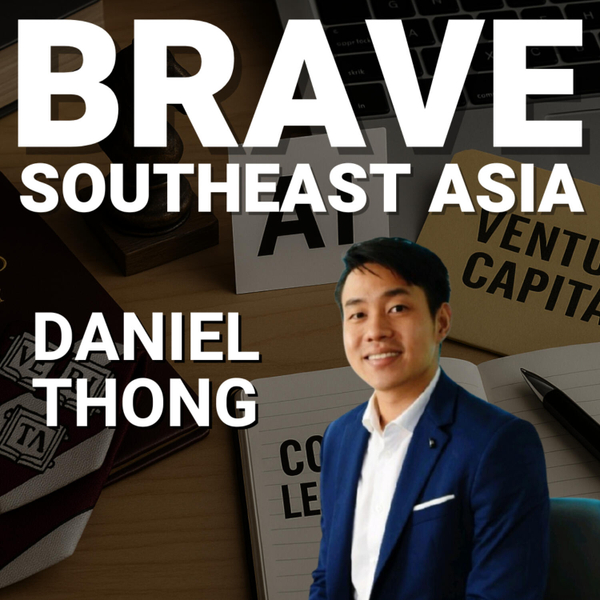
"The challenge for us is growth. As we crack eight-figure revenue, how do we get to nine? What I learned is that each revenue milestone is like a new boss. Your first million ARR is one boss. Five million is very different from one million, and ten million is different again. Figuring out ten to twenty is what we still have to solve as a company." - Daniel Thong, founder of Nimbus
"Hire faster, fire faster, or hire slow and get it right. My conclusion is that it’s very contextual. For my industry, it’s unsexy and doesn’t pay that well because clients sometimes don’t pay well for essential services. You can’t get a Harvard MBA guy joining you. In my case, hiring slow and getting it right matters because the cost of losing continuity is huge. If you're managing 400 distributed workers and HR keeps leaving, workers think something’s wrong with the firm. It’s way better for me than hiring fast and firing faster, just because of the nature of the business." - Daniel Thong, founder of Nimbus
Secure your privacy with Surfshark! Enter coupon code BRAVESEA for an extra 4 months at www.surfshark.com/BRAVESEA
Daniel Thong, founder of Nimbus, returns to BRAVE to share how he built a profitable, tech-enabled service business without venture capital. He and Jeremy Au unpack the rise and fall of tech companies like Zilingo, examine the structural issues behind finance misconduct, and explore how AI is reshaping service operations. Daniel discusses why bootstrapping gave him more control, how he spun off a new AI startup from within, and what it takes to retain talent and stay healthy as a founder. The conversation offers a grounded look at sustainable growth, founder philosophy, and the realities of Southeast Asia’s startup landscape.
06:25 Bootstrapping helped Nimbus outlast VC-backed clients: Daniel avoided risky burn rates and pointed to Zilingo as a cautionary tale.
11:45 AI-enabled WhatsApp sales sparked a spinout: After AI sold painting services over the weekend, Daniel launched ChatAvocado with his tech team as co-founders.
13:50 Spinning off helped retain talent: Rather than cutting R&D, Daniel gave capital and ownership to the team and kept the business ecosystem strong.
16:27 AI now improves routing, HR, and customer service: Generative AI reduces headcount by handling job matching and admin tasks internally.
19:35 Survival beats ambition in Southeast Asia: Daniel emphasized Buffett’s rule to never lose money and stay close to revenue.
26:50 Retention comes from delivering promises: Daniel saw founders renege on ESOPs and vowed to be consistent, realistic, and trustworthy with his team.
35:37 Founding cost him family presence and health: Daniel admits he neglected the intangibles and is now trying to balance better.
Jeremy Au (00:00)
Hey Daniel, good to see you again after 3 years!
Daniel Thong (00:00)
Hey! Yes, it's been a while. How are you Jeremy?
Jeremy Au (00:05)
Good. Busy, having kids running around.
Daniel Thong (00:08)
Last we spoke, we spoke about different ways to build business. Yeah. And we spoke a lot about how we chose to intentionally build the business without much venture funding, especially just after a tiny seed round from angel investors. Yeah. So, that's been what we've been doing and that hasn't changed.
Jeremy Au (00:28)
Yeah, definitely. So, for those who want to check it out obviously, check out episode 175 where he discussed what was it like to be a philosophy major? What it was like to get out in sexy business? And now we're at you know, kind of like over 600 episodes and time flies. So but for those who don't know yet, could you introduce yourself?
Daniel Thong (00:43)
Yes. So, hi everyone, I'm Daniel. I'm the founder of Nimbus. And what we did is we started out building a software business but quickly realized that it's better to build a service business for frontline workers to service offices as well as homes. So we run this platform called Nimbus Homes for consumers where we provide part-time help for people who need not a full-time helper but a part-time helper coming to their house on demand and we quickly expanded into other categories like cleaning, aircon, handyman services and more. And we also serve high-end offices where primarily like tech companies or co-op spaces or service offices that require integrated facility which is really a simple word for saying we provide you all the hard and soft facility services that you require to power your office behind the scenes. So your technicians, your janitorial staff, your pantry lady etc. So, we've become like the backend for a lot of our customers' operations and rest day.
Jeremy Au (01:48)
Yeah, fantastic. And I think it's interesting to see all of that happening. I'm kind of curious, what would you say has changed over the past three years? What would things stand out when you say things have changed?
Daniel Thong (02:00)
Yeah, so some things haven't changed. Our philosophy to kind of run a business model that is very cash flow generative has not changed. So we provide a service, we charge more than we pay our staff for it, and it's a labor-hungry charge model that has not changed. What has changed is the size and scale of the business. We have close to about 400 frontline teams now versus three years ago, and I'm sure the number was slightly different. And we definitely
have gone bigger into the consumer segment and we've also kind of gone broader in terms of the service offerings that we can facilitate to our customers. So I think, recently we've gone quite deep into AirCon servicing as well. So, those are like new category verticals. And we also kind of spun out new business, but there's so many things to share about that there. But yeah, generally, the fundamental principles have not changed, but
the company size and scale and the way we operate the business class at a higher level and we're trying to crack a level even higher than that because this industry is just quite massive.
Jeremy Au (03:04)
So I think there's so much to unpack here because I think the tides have shifted. I think three years ago when we were hanging out, very much everybody has to raised VC money. We were debating that, I would say, four years ago about that, whether VC was a good fit. And I think we both came to the agreement that VC was not a fit. At that time, it was in VC. I was just kind of curious, you know, how do you feel about that decision back then?
Yeah, it's interesting. I think the first startup I ever helped build was venture back. So, I kind of understood that game and the returns that VCs want and need to actually return money back to their investors, right? So, essentially, it's quite binary. You really need like a unicorn company, you need a few hundred million dollar company in your portfolio for you to cover all your diversified bets and
it meant a certain kind of company that needed to A, get to that sizedness and B, in a certain compressed timeline like 10 years. And we felt that from the perspective of a service business in terms of cleaning frontline workers, we felt that there was a huge opportunity to be a lot more efficient, but we were unsure about whether that timeline to get to a 100 million dollar revenue company would be reasonable in a five to 10 year horizon. And don't get me wrong, there are massive,
massive companies here in Singapore alone doing general services that's above $100 million. But we just felt like the time compression was not necessarily a good fit. But the second thing is that we actually felt that building ostensibly a service business, but then at the back end, we built some sort of technology to make margins more efficient and to help run distributed teams with less supervision and all that could actually be cash flow generative enough for you to not require
like an explosion of equity shareholders, which also makes for a longer time horizon from the founder perspective. So, that's why we didn't take venture funding. I think we took a small seat round from Angel Central, which is kind of like a syndicate SPV. And pretty much we've been self-sustaining since then. One caveat here is during COVID, and I think we may have covered it or not, but during COVID, you know when offices were shut down, we were also kind of
hit there and then we innovated towards the home segment, but that was the period time where the government was giving out very cheap bank loans. So, that was the first time we actually took debt as a means of kind of growing the business and I think that time the interest rates were 2 to 2.5%. So, that's kind of how we financed the business. So, I would say most businesses are in the sense that you know when interest rates are low you take that, when interest rates are high you know you give out some equity and I think that was
really at the beginning of our seed stage and we never kind of needed to kind of felt like we need to finance the business because our business is sustainable. I think the challenge for us is growth, right? As we crack towards eight figure revenue, how do we get to nine figure revenue? So, what I learned along the way is that each revenue milestone, it's like a new boss.
So your first million ARR, it's like you've tackled this boss, level one boss, level two boss or whatever and then you know five million is very different for one million business and then ten million is very different and then how do you do for 10 - 20? So, those are the stuff that I think we as a company still have to figure out along the way.
Jeremy Au (06:20)
And how do you feel about that decision since then when you decided not to go to venture capital?
Daniel Thong (06:25)
Yeah, I think it's a good decision. I think since then, we've seen a lot of startups kind of implode or are having more difficult runway and I don't know about the venture landscape but from my peers on the ground they tell me that you know, like funding is also getting very difficult, certain funds they can't raise new rounds so the gunpowder is also drying up which makes for a very difficult venture
climate and I think a lot of startups that depend, I mean their business model or their strategy depends on equity financing severely disrupted. So from the perspective, I'm very thankful that we didn't need to rely on anybody but our customers for financing. So I think, that's kind of a relief from that perspective and maybe it's a bit Darwinian, it's like we want to survive first, right? Like the first rule of business is not to lose money.
But of course, the corollary of this is that we also miss out the opportunity to make lots and lots of money if we perhaps taken a lot of venture funding and that is the other type two error that we may have forgotten. But generally, I still feel like survival is kind of important and as an entrepreneur. From my perspective, you only have one business to build so you don't want to be game over. I think generally, given what has transpired, perhaps that decision was justified
because we're still, you know, alive. In fact, some of our clients who are tech companies did not survive. So most notably Zilingo was one of them. So, I think from that perspective, it's nice that we kind of endure longer than even some tech companies that we serve.
Jeremy Au (07:59)
So, let's talk about that because you know what's interesting is that you and I have done both right you and I have done both push ups and sets as well as VC back in obviously the past four years has been a very Darwinian shrinkage.
Daniel Thong (08:11)
Yes.
Jeremy Au (08:12)
He was busy, fighting each other. And I
remember at that time he made that very contrary decision at that time that he wasn't right fit.
Daniel Thong (08:20)
Yes.
Yeah,
yeah, yeah. And I think also, there is a valuation problem now when you see companies that take up venture funding and each round is an up round and eventually, you know, can they live up to their valuation? Who is the next buyer? So, you start facing problems like that where your valuation is pushed too high and you need to ultimately IPO or get a buyer that's accepting that valuation and
the IPO market is getting softer because they don't like uncertainties you know there was a tech bubble that happened you know like a mini tech crash that happens and there's always this fear of bubble so it cascades down and from that perspective I also observed that it's harder for tech founders to exit even though let's say on paper they are worth more from our perspective because we took like a seat round and essentially just to build kind of software
to have software enablement, to be efficient, we only answer to our board led by our syndicate lead and essentially they are already in the money and then the question is, how high up the money we need to find a good exit for everybody? So from that perspective, I also realized that it's easier for Bootstrap slash very minimal diluted founder, versus a founder that has lost control of
in terms of equity is really diluted down. I think that creates a lot of risk as well even on paper it might be better but even then they also own lesser of the pie and as a founder that bootstrap you own more of a smaller pie, I think it looks like the same.
Jeremy Au (09:58)
Yeah, exactly. I think especially in this environment and macro environment. You know, I think what's interesting is that, you know, during this time frame, you also talked about how you're building like a services business and then you're using technology to power it.
Because your thinking evolved about the concept of tech enable, tech power.
Daniel Thong (10:16)
Yeah. So, I didn't really care about labels. I just cared if fundamentally, I think a business is ultimately judged by the money they make and the returns they have on equity, right? So, in the long run, that's kind of like my benchmark. And so, when we felt the need to run like large teams of generators or distributed staff because you book an app, the worker has to know where's the job.
It's just them and the app and incentives running the whole system. We felt that we need a software to do that. Whether or not people call it a service business, or a tech business, it didn't really bother me, but it was a customer experience that I think we tried to prioritize, right? I think Jeff Bezos had that famous saying, right? Like it didn't really matter whether you thought Amazon was a warehouse company with lots of logistics and all I can't think of whether it's a software company or not. It's just what would help in the long run. So, we felt the need to build that software,
and we found investors that were willing to support the vision. And then along the way, of course, as we grew, we felt that as we grew profits, we could pay out dividend or we could reinvest in the business and grow different new vertical segments. And that's what we chose to do because it's more efficient from a pre-tax earning perspective to do that. And eventually, I think along the way, recently we spin off our tech team, essentially, because
we're going to go accounting here, right? R &D is an expense on the P &L. But really, it's really the software team and the teams that really do new service verticals that call R &D. Actually, people see this as a hit on your losses, right? But actually, I find a very efficient way to grow your business, because it's very efficient.
You can use your pre-tax earnings to compound versus like you go and pay out a dividend and then you get taxed at that level right so and it's legal. And so, what we realized after a while is that when investors started to be more jittery when the market is demanding that know startups must be profitable, it was very easy for us to say let's take this R &D team we've built certain software that we found it very interesting and they have been proven to scale to other SMBs or enterprises,
let's turn them into a separate company, let's spin it off and then suddenly, now we are showing like cash flow positive and all that kind of thing that investors want and I think the degree of control was very valuable to me because we could continue to compound and continue to grow and we didn't have stress of saying like oh we have a 18-20 months runaway. So the software that we eventually split up was not our fundamental back end system but it was more of during our
experience running a consumer business, we noticed that WhatsApp was heavily used to inquire and book a service and then we basically introduced AI into it and the "aha moment" was when over the weekends and stuff like that, AI was selling painting services and cleaning services for us. It was an "aha moment" And so, we realized that there is a huge thing to help other SMBs engage in all kinds of services and products
to use AI to really run their WhatsApp efficiently and you don't have to pay for a customer service to manage 24/7 and that's kind of how we decided to spin it off as called chatavocado and basically our tech lead now became a CEO, and then we took that customer service team and turned them into founders. And so we kept it in the ecosystem you know and it's something I'm very proud of so I don't run that business anymore it's like I made my employees like founders and they have a stake in it,
we have a stake in it, everybody's happy and then they're off to the races.
Jeremy Au (13:43)
And I think what's interesting is that when you do that, isn't that scary because you're losing control, you're off doing something.
Daniel Thong (13:50)
How do you feel about
that? Yeah, so I feel like after seven years, eight years, we built a business that is mature and there's operational structures around it and you know, we felt that our tech for our core service business has . I think of talent as very hard to assemble in Southeast Asia. Really it's very hard to find good technical talent, software talent. So, if you have good technical talent, software talent, do you
cut off your R &D costs and then you become instantly profitable showing hundreds and thousands of millions of dollars of net profit, or you find a way to continue that long term relationship with your employees? So, I chose the latter. There's no right or wrong. Lots of people slashed their R &D costs during this tech phase where there was a correction but I felt that we had enough cash flow and confidence to spin off giving the tech team the bit of our
parent company capital and they put in some of their own capital and then it's a win-win right? So I thought that was a good way to kind of recycle talent and build new founders. So, it was quite a proud moment for me. And it is probably possible if you were the controlling shareholder founder. It's very different if you were a diluted founder in a big unicorn company where you really are just kind of,
there's less room to maneuver. I have a service business that is cash flow generative and then I have a SaaS business which we are saying that it should get super venture like returns that we have not had a VC that really is pressuring us on the timeline.
Jeremy Au (15:21)
I think what's interesting is that there is that dynamic where you're separating and differentiating those two growth rates and profiles. So, how do you spend your time nowadays?
Daniel Thong (15:31)
Yeah, so my focus is still on my core business. So, I'm a type 1 survivor guy. So, I'm still naturally more gravitating towards capital business. And then my tech lead is now a founder and CEO, so he has to kind of after the capital and the initial support structure, and we still support them administratively, but he has to
deal with all the strategy and operations and sales. So in this sense, my focus is still on my business and that's a good compromise because I'm not a believer in splitting myself two or three times. I don't think I'm a serial entrepreneur that can run like five concurrent business. I think one is hard enough to be so honest with you. I don't know how people do two or three businesses at the same time. I've never found success in that.
Jeremy Au (16:15)
And when you think about obviously, you know, AI and these technologies, you know, let's say chatavocado wouldn't have been possible without the AI, how else do you think AI changing the business?
Daniel Thong (16:27)
Yeah.
So, I think AI has really made a difference in customer service and pre-sales like the amount of human effort and energy is now better spent on really qualified needs and real hair on fire customer service problems and the need for the sheer number of humans doing this is going to get reduced from AI. That's why we saw the opportunity in helping other SMBs to become
more efficient on those fronts with chatavocado or basically embedding AI into WhatsApp and all their social media, making them very productive. I think AI as well for service sector is also going to be very interesting because we're experimenting how to embed AI within our back-end system so that in the past, you're very dependent on the supervisor to plan routes and to assess who is the best fit to replace a shift or to
go there and I think there is huge opportunities for AI to scour our data to really make that natural language process a lot faster for supervisors and therefore also reducing a lot of supervisory costs and needs. And AI is also going to be very useful in HR because when you are screening for frontline workers the funnel is very large. A lot of people are inquiring for jobs and you really need AI to help you to kind of administer questions,
ask, get all the information you need before a human actually go and make a filtering layer because that is a lot of headspace and hours as well doing that. So I think, AI will have tremendous impact on our firm's productivity and we are really trying to go deeper into generating AI to help out with those sorts of efficiency at our level. So, that's how I feel like it can help in terms of the HQ cost,
and in terms of what can help for top line for other films as well.
Jeremy Au (18:16)
As you build the business, you hang out with these other founders. What do think is the mode of the ground today for other founders?
Daniel Thong (18:24)
I think a lot of founders feel like the exit options are limited. If they are a large firm, I mentioned the IPO market is soft valuation is too large to be acquired. If they are like a series B, series C type of company, they feel like funding is drying up. It's very hard for them to execute their vision and they slashing R &D is the name of the thing,
the flavor of the day right? And I think for early stage founders that wants to start on a pure sales business they will find it very hard to get that lift off because of the upfront R &D costs so I think it's tough for all of them and I think in some way it stress test our ecosystem as well right whether or not our funding is deep enough or whether or not we can find a more resilient type of founder that can actually maybe arguably you get better quality founders
that can cut through the noise and float at the top. But I feel it's a bit more pessimistic than it was. I don't really agree that there was three, four years ago when we were talking about it.
Jeremy Au (19:24)
Yeah, I mean, you made an argument that people last time were too optimistic, and now people are just skeptical. I think it's a little bit of a dimension POV.
Daniel Thong (19:35)
I think regardless, you know, like it goes back to what kind of error you want to make in your business, right? You want an error of commission or an error of you know, you don't survive, right? So for me, you know, survival and Buffett talks about it, right? Rule number one, investing, never lose money. Rule number two, don't forget rule number one.
I think staying very close to customer cash flow and financing is quite important for Southeast Asian businesses. I've been to the US actually, so what changes though, I spent some time understanding US companies, investing in US companies, there is so much exuberance still. You know, like, the C stage valuations are so high. It's sometimes some of our series B companies, and these are companies that come out of accelerators in three to six months. And valuations just rise really fast.
In weeks not months.
Well, if you look at the unicorns, that I can think about that comes to mind, you talk about Grab, Lazada, talk about PatSnap, they all have tremendous cash flow actually. They're all providing some sort of essential service of service. And behind that layer maybe is there some tech involvement. But it seems that it's a very like bread and butter cash flow first revenue, very revenue centric kind of software.
Well there's a few deep tech companies that really have no revenue, that have raised subsequent rounds, but very fine few exceptions to that. There's a brilliant space tech company called Trans-Celestial that I think is still very like pre-monetization space tech, but it's really the norm, like not the norm, it's an exception. So I don't think those kind of companies are emerging out of Southeast Asia, but they will emerge in the US right, there's all these, you read in TechCrime all these like pre-revenue...
unicorn companies that are out there, you know, the CTO of OpenAI raised the round and there was no revenue. So I think in America you can kind of can find venture funds that will underwrite that. I think it's obvious, let's look at your revenue and let's focus on bread and butter you should get it off.
Jeremy Au (21:35)
So you mentioned a lot about Warren Buffett, types of errors, type one operator, type two type of errors. So these are all psychology and philosophy concepts and thoughts. So how has your thinking on VR philosophy or conceptual thinking changed over the past few years from your perspective?
Daniel Thong (21:48)
Yes.
I think just reading, I think a humanities degree is useful in terms of the fact that it gives you a lot of high level perspective on this, you're just very curious about the natural world, social world, you read a lot and reading on statistics, reading about investments, I think helped me to become a better operator because you kind of like learn what makes a good company good and what's not so good a company.
So I think those are stuff that you digest from investment, from statistics. I think humanities or philosophy put everything together so that you see everything in a more big picture perspective. I think philosophy really is useful for me from that ability to synthesize, to summarize, and to think of a strategy on a very big picture level so that it's useful
when you are doing day to day, you are not like the boss, right? So I think that's very important from a perspective of a CEO. But of course, I think ultimately, you know, it doesn't help you escape from the day to day fire that happens in a startup. And that's where I think there are some limits towards
you know like strategy and big picture thinking and all that kind of thing. I think operators don't really have the luxury to really sometimes go deep into like just big picture without focusing on their actual ground operations. So I like zooming out and zooming in, so it's fine but it can be quite challenging and I think the training of philosophy helps with the zooming out but the zooming in is definitely like nothing prepares you quite for it except just getting your hands dirty and...
and doing that. So, It's just hard. There's just so many things to learn. So many things to juggle.
Jeremy Au (23:38)
Some
things that you think you're still learning about entrepreneurship?
Daniel Thong (23:40)
I think one thing that I try to do is I try to seek out peer support or learn from people that have built stuff and been there and done that and I think one of our mentors taught us that a good way to improve is to know what good looks like. So talking to your peers, talking to later stage companies, seeing how they operate, how they do their OKRs, how they think about their HR, remuneration, all that thing,
helps you to kind of benchmark where is your company. Because building your own company can be quite lonely and your organization is a manifestation of your abilities, right? So you don't know really what is good. You have to look at benchmark, you know, like people you admire and how they build their companies. So that's something that I think I've learned a lot from entrepreneurship and about like people around me. So I benchmark like, okay, this is how good...
startup looks like from an operational perspective even though it's not my industry. So I constantly try to seek that out now because there's only so much that books can go because if you talk about OKRs right it's like okay I understand the concept I try to implement it but how does that other company do it? How are they looking at you know we know incentives are important but how are they doing it for their employees? So that's kind of how I learn. So it's a lot of very bottom up, not very top down.
Jeremy Au (25:01)
How do you get to see other people? Because I think one of the tricky parts obviously is if I was like a zero stage founder, there's a lot of books about what a better founder looks like. But now that you you kind of have a stable business, in Singapore it feels like the number of founders who are the next tier above, I think obviously is the last number. Also, it's a more private group right?
There's also organizations like YPO right in the business associations so those are helpful when you meet more mature companies, listed companies even and you see how those founders operate that's helpful for me. I think Angel Central recently has a program called Scalar Program it's for
after post $1 million revenue companies that want to scale up their operations. So that's helpful as well. So that's the kind of formal and informal structures we seek. Nothing necessarily relationship driven, but there are loose forums out there that you can find.
Jeremy Au (25:58)
And it's of the kind of books you're reading these days.
Daniel Thong (26:01)
Nowadays? I read more about So there's a book now I'm reading by a famous Indian investor called Pulak Prasad. I think it's called What I Learned About Investing from Darwin or something like that. That's quite interesting. It has a lot of principles that we talked about.
Jeremy Au (26:04)
Are there any books you recommend?
Daniel Thong (26:22)
What kind of companies tend to do well and what can evolution teach us about good companies. And so I really enjoyed that. It's not really a technical book, it's more of an evolutionary book. And how can we learn from deers and antelopes and how does it translate into, like investing. So I think that for me, it's always this curiosity about what makes a great business great. And that's the kind of books that I tend to read nowadays.
Jeremy Au (26:44)
I'm kind curious, what do you think are the company qualities that make your company?
Daniel Thong (26:50)
I don't know whether we are great yet but I think we have a great team that has been together for like seven to eight years and I think that's quite rare compared to a lot of startups where I think a lot of the founding team leave. I think if I look at it really objectively, we've done very well with talent retention and I think
either I'm very lucky or blessed or I did something right. But I think that longevity and that continuity has really, really helped our company's success. We have some really strong founding employees. And I don't think many startups have employees that stay really long. They tend to leave after two, three years. So I have employees that stay for like seven, eight, coming eight years. honestly, that's really been a blessing.
I think that's one real secret sauce that we have besides you talk about IP, talk about brand, talk about our unit economics being better than our competitors because we own the supply stack of janitorial services. We also have certain licenses that we have that are important for our industry. There's some barriers to entry there but I think there's no one thing you can pin down. Everything kind of just stacks up. Little bit, little bit, little bit. Little bit more high tech than the next guy,
little bit better in building mobile app, little bit better in digitizing your finance, little bit better in doing your payroll. So everything just kind of compounds over time. And so I think that's kind of how we got to where we are now. And really, honestly, there's so much to learn to get to. Like nine digit revenue, that's going to be like a really hard challenge for me.
Jeremy Au (28:26)
And I think what's interesting that you mentioned is about retention as your secret sauce. And let's talk about that, right? Because I think, first of all, the numbers you mentioned, seven years is actually long. Then eight millennials is shorter. And then Gen Z is even shorter as well. So I'm just kind of curious, what are your principles for talent retention from your perspective?
Daniel Thong (28:36)
Thank you.
Yes ⁓
Yeah, actually I was a founding employee of lots of startups and so I think I learned to be a better boss by learning what not to do. So when I was working as a founding employee in the various startups before that, before I started my own business, I always felt that founders in Southeast Asia were not very good at
delivering their promises on things like ESOP or reneging on lot of promises when things change. So I learned a lot about how do you manage expectations of employees while selling the dream as well. So I think the earlier companies that I worked for, as I mentioned, they sell you a dream, they tell you you're going to give yourself shares, those shares were never given, company implode. And so when I have...
my early batch of employees, I think I was really a lot more deliberate and intentional and focused on their learning, their upside and their black and the promises that I say I will deliver and I was really very intentional about delivering them. So, I think I spent a lot of time just making sure my employees are taken care of as best as I can and despite the financial constraints that I faced. And I found that if you are very strict with your employees and very honest, I think it helps.
Even if you can't pay up, versus what an MNC can pay, I think if you are very consistent with what you say and do, you're not a bad person, I think it really helps a long way. I don't know whether there's anything I did that's different, but I felt that really helped with my talent retention in a super big way. So I was not over-selling, was not telling you that this company is supposed to be like a billion dollar, a hundred million dollar.
I was always very realistic along the way of what I feel the company's worth, where I see your benefit are to stay on, what the company can give you, what I've promised you, I deliver. So those are really things that I think do a lot of good will along the way. And I think that the highest level, I think Charlie Munger talks about it right? It's a seamless web of deserved trust. So a firm at its highest level has the trust of the employee, the trust of the customer, the trust of its shareholder.
And that is like reputation consistency and just being a very very very consistent person yeah so I think that really is something I try to aspire towards.
Jeremy Au (31:09)
I think it's interesting because I really resonate with what you said. Founders give me promises, they promise customers this. And then the different promises is the trust. How do you do beyond that? Obviously, it's delivering on your stock shares, it's delivering on...
Daniel Thong (31:13)
Yeah. I'm
Jeremy Au (31:26)
not over promising on the growth trajectory very clearly. Other stuff like cash pay or town hall, AR, ⁓ how does it, because I think so many people in Southeast Asia, so many founders struggle with retaining strong people.
Jeremy Au (31:48)
In fact, I can tell you right now that I just got a WhatsApp from a very good executive. I know he's a hard worker and everything. He just used to say like, I'm out after six months because of the pandemic. In the press, he's super amazing. But now, he's just like a nightmare behind the scenes.
Daniel Thong (32:04)
So, I don't think most founders I know don't know how to do that, run OKR or run KPI. I think more importantly is sitting down with the employees,
really letting them hear your inner voice like, here's how I think about my business, how it will be valued, it'll be a multiple of what, you know, so here's what I think is really worth right now, here's what I think it will be worth, and how you can always track that against my words, right? And here's how we try to, if an opportunity happens, for example, we gave, investors that needed to cash out, like the opportunity to cash out, you know some investors that really needed money.
So those things help our investors, also help our employees. When we say something like, we'll give you additional shares because you're really important and those things are delivered on time in a consistent manner. And I think we continually try to build up that web of deserved trust because we're trying to say that we say what we do and we do what we say. And I think that really, honestly, these soft factors help more than whether we run town halls, we have...
lot of meals together these are all true but I think really just trying to be very intentional about not I think a lot of people get pissed off with the founder when they founder is like this HSI is going to be more like millions and they're not you know or like we're gonna give you a raise and then it doesn't happen I think it really affects the employees state of mind and they feel like this guy can't be trusted
Jeremy Au (33:26)
race you
Daniel Thong (33:35)
So think trust is very very precious, very fragile. Anything can break it and I think the founder really needs to think very deeply about it. Especially in the early stage. You're not MNC, you can't just replace people. You can't just feel like your talent pulls infinite. You really have to take every precious talent as that. And then there's something to be said about the filtering process as well. I think a lot of people screen for your aptitude but they don't really screen for values like attitude, aptitude. But like the value system of the person needs to be aligned.
For us, we manage front-line teams, we care a about the likelihoods of the worst off. The founding team that we have, they resonate with that and that was something that I look forward to as well. So that's definitely something that helped value alignment.
Jeremy Au (34:20)
I
think one interesting debate that's always had is like should you really focus more on like a churn? Like look for young talent, MCO, Canadian, let me take a do it.
Daniel Thong (34:27)
yeah
Jeremy Au (34:38)
Not old school maybe, but I'm just kind of curious.
Daniel Thong (34:40)
So
hire faster, fire faster or like hire slow and get it right. And I think my conclusion with this is and the books and all this right, is that it's actually very contextual. So for my industry, it's very unsexy, doesn't pay that well because you know, clients sometimes don't pay well for essential services. And so you can't get like Harvard MBA guy joining you. So you have to make sure that
in my case to hire really slow and get it right because the cost of that loss of continuity is huge. If you're hiring like 400, managing 400 distributed workforce, your HR keeps leaving. Your worker will think that your HR is not up, something's wrong with the firm. And so, slow getting it right and then it's way better for me than hiring fast and firing faster. Just because of the nature of business.
Jeremy Au (35:30)
And I'm starting to wrap things up here, but if you could travel back in time to like four years ago, or three years ago when you did the last podcast, any advice you would give yourself?
Daniel Thong (35:37)
I think that I, by the way I'm writing a book for my own newest journey. I'm writing it chapter by chapter. And I think one thing that I was reflecting on when I thought about what I would do differently is that I think entrepreneurship comes at a cost to your health and your loved ones. And I think that I've always been very eager to focus on my business and...
quite nonchalant about burning certain things that I don't see, the intangibles, I think I should probably pay more attention to that, three years ago. Right now I also make the effort to kind of focus on my health a bit more, focus on just like spending intentional time, being present with your family. So presence is very important, like sometimes people say that, you know, my wife or my kid will say that I'm here but not here, right?
So I think those things are very common in entrepreneurs or people who are workaholics. I hope that I would give myself that advice. But with all that said, I cannot think of a successful entrepreneur who is not crazy focused and obsessive about his business. So I feel that's really the cost of doing business. It's really cutthroat, it's really Darwinian. It's survival of the most efficient. Not the fittest, but the efficient is
the name of the game in business right? And I feel like that really demands your singular obsession with it. It actually doesn't need high IQ. I think it just requires singular obsession with it. I don't know whether I could have ultimately find that balance, but I'm trying to find that balance now, but I feel like it's so hard to juggle the ball. If I focus too much here, here breaks. I find it, I really find it very hard to juggle everything. ⁓
Jeremy Au (37:02)
Thanks Bricks. Define about your identity as a dad?
Daniel Thong (37:23)
I think it's meaningful. I think as you get more successful, at least for myself, I feel that money is not... I don't really consume stuff. So I feel that if you can't pass it on, what is it for? So I think having a kid, having children, having family seems to be more meaningful and purposeful in the long run. So I'm trying to focus on that.
And I think it gives me a lot of purpose. I think, just consuming stuff and being a consumer can be a bit numbing after a while. Yeah. Yeah. So, I don't think that's for me. I've tried that for a while, I just travel a lot, consuming service is also like a consumption. It can be numbing after a while, totally. I have a stepdaughter.
She's 10 now so she's really going through a phase where she's very emotional, questioning you. I think it teaches me a lot that how you say something is more important than what the content you're trying to say. So when you're a CEO, when you're a founder, you should do X. It's not going to work well with a kid. Solution giving is not going to be very useful when sometimes people just want to be understood. So a friend who told me, it's very important
to have the intention to understand or the intention to be with someone. That's as important as saying you should do X. So even though you want to say you should consider X, you need to hear the emotion out, you need to feel the emotion, you need to be with the person. And then let that settle in first before they are ready to hear how they should change because they are no longer like three or four years old where...
daddy say X, you do X, right? You really have to kind of now be mindful of the way you communicate. And I think that applies to your family members, your partner and all that kind of thing. I learned that as an individual, as a human, and I'm trying to apply that now more consciously because when you run a business and you're founder, you're just very used to saying, you should do X, you should do Y. And there's no one to argue with you because, you know, I'm the boss or, only...
certain people would dare to argue because in Asian culture they tend to be more agreeable. So that's an adjustment. It's a big adjustment I'm trying to get used to.
Jeremy Au (39:27)
I think one interesting challenge is that a lot of founders also, like I said, really struggle that balance of being a parent.
Daniel Thong (39:33)
Yes.
Jeremy Au (39:33)
That feels like the top two. Then maybe health is a distant third. So, in what ways are they synergistic, I guess, or support each other? Or in what ways are they also like trade-offs from the other side?
Daniel Thong (39:47)
Yeah, I think I don't have a good answer here except that I found that when I tilt towards one side, as I mentioned to you, I feel that the family side suffered. Then when I tilt more to the family side, then sometimes the business suffers. So I think finding that balance is important by experimentation. And also I think sometimes you just have to be
deliberately imbalance like for example if I'm going through a critical stage in my business I need to be more intentional in communicating to my wife, my kid, that for example daddy's not going to be as home a lot these next three months but after that I'll be back to normal so you consciously know like this period of time I'm going to trade out this and then that and then if I'm going to spend more time here then I'm going to talk to my colleagues and let them know that I'm going to be a little bit less present here.
So I think I'm trying to focus a lot on the communication part and being more intentional with, okay today I'm going to trade, this month I'm going to trade off a bit here and there. Yeah, for health, I found that paying for a personal trainer now just helps because I pay money, I feel bad that I paid money, I show up. Like that gets me going. And just like investing or anything, like starting is the most important thing. When you start, then you go somewhere.
Also recently my colleague signed me up for high rocks so we're doing high rocks as a pair and then really I realized that forced me to start exercising for high rocks or whatever so I think I learned how to hack myself and realized like you pay for something you're gonna get your health in order so I don't have a good solution beyond that Jeremy you can teach me if you find something.
Jeremy Au (41:22)
Well
I concur with you about the personal trainer that's actually buying it but also I was like oh wait the personal trainer will really help. Sure.
Daniel Thong (41:26)
Yeah.
Yes, you walk, right?
And here's a hack, your personal trainer if he's a good one will double up as your nutritionist. So you'll be like, this is what I ate.
So I find it to be useful for me to manage the chaos.
Jeremy Au (41:45)
On that note, thank you so much for sharing. I'd love to summarize the two takeaways. First, thanks so much for sharing about, an update on the business about building an unsexy business, but also thinking through about why not thinking VC money was a great position in retrospect over the past four years. Secondly, thanks for sharing about how technology and AI is shaping the business from a tech and evil service perspective, but also how you're approaching the business differently as well in terms of spitting off,
Daniel Thong (42:12)
Yeah. ⁓
Jeremy Au (42:13)
new profile, different debt and equity profiles. And lastly thanks so much for sharing about your own personal journey in terms of how you evolved in terms of balancing family health in the business but also thinking true about the advice that you would give yourself back then as well. So on that note, thank you so much.
Daniel Thong (42:19)
See you.
Thank you Jeremy for having me.