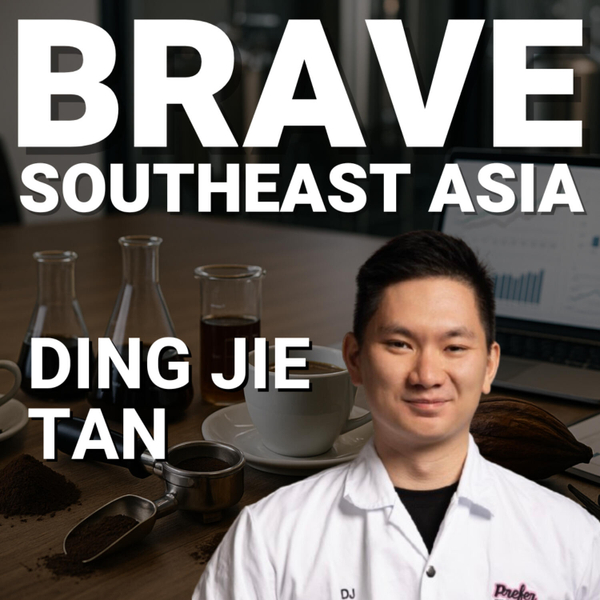
"Folks have gotten allergic to being bashed on the head by greenwashing messages. They have seen the hypocrisy of certain big companies, corporates, even government leaders, how they will pay lip service to sustainability and the environment but run policies entirely counter to that. So people are sick of that. They realize that this is a problem, but at this point, they are so jaded that they don't want to move towards it. What's the point?" - DJ, Co-Founder and CTO of Prefer
"What has evolved over time and where we realized we were wrong has been our approach. When we started out, we were quite naive. We figured we would put out a good product, put it in the market, and it would move itself. What we learned is that is not how things work. Even if we have a 9 out of 10 product, you still need someone to push. The reality is that you will never have a 10 out of 10 product. You need your engineer or your technical salesperson to sit next to the customer, guide them, walk them through how to use the product, see how they tinker with it, see how they fail at using it, bring that information back to the dev team, improve the product, and ship it out again." - DJ, Co-Founder and CTO of Prefer
" We are not ashamed about failing. If you sign up for our newsletter, you can see our metrics month on month. If this month is bad, it is there. That transparency creates trust. People trust you to report when things are not good, they trust you to seek help when things are not good. A lot of founders try hard to fix things internally and only when it gets to the eleventh month say they have one month left and need help, and then it is too late for anyone to do anything. Here we are saying this is what we know, where we are lacking, please help us. And it can only be good for the company." - DJ, Co-Founder and CTO of Prefer
Jeremy Au and DJ Tan sit down to discuss how Prefer grew from a bold bean-free coffee experiment into a flavor house tackling climate-threatened ingredients. They explore the evolution from naive product launches to customer-driven adoption, why B2B positioning makes more sense than B2C in food tech, and how shifting investor expectations shaped their fundraising strategy. Their conversation covers product development cycles with baristas, the science of replicating flavors like coffee and chocolate, and how climate change is forcing businesses to rethink supply chains. DJ also shares lessons on storytelling, scaling options, and the importance of founder transparency when building trust with investors.
02:28 Founding Mission Expands: Prefer was co-founded in 2022 with the mission to make coffee without beans and has since expanded into chocolate while building towards a broader sustainable flavor house.
04:25 Customer Adoption Through Blends: Cafe partners showed reluctance to add a completely new menu item so Prefer gained traction by becoming part of blends such as cappuccinos with ten percent inclusion instead of selling as a separate bean-free option.
09:19 Messaging Shifts to Flavor House: Messaging evolved from pitching only bean-free coffee to presenting Prefer as a flavor house once traction with coffee and chocolate proved product market fit.
16:12 Designing for Applications: Coffee used in cocktails, tiramisu, iced cans or espresso requires different flavor formulations and the R and D team now designs products to fit specific applications.
19:38 Climate Change Disrupts Supply: Climate change has created volatility in coffee, cocoa, vanilla, hazelnut and citrus supplies with events like a blight wiping out most of Florida’s orange harvest and forcing shifts in supermarket juice offerings.
24:05 B2B Model Prevails Over B2C: The B2C experiments validated that consumers were unwilling to pay premiums but B2B customers valued Prefer for protecting margins, supply continuity and preventing shrinkflation.
37:30 Fundraising with Clear Milestones: DJ emphasized raising funds by starting with the end in mind asking investors what metrics will matter in 18 months and working towards those clear goals.
Jeremy Au (01:05)
Hey DJ, Prince of Fermentation. Excited to have you back.
DJ Tan (01:09)
Good Jeremy, nice to be back and in person.
Jeremy Au (01:12)
I'm excited to have you back because congratulations, you just announced your fundraise. So what was the size, what was the quantum?
DJ Tan (01:18)
So yeah, we raised about US $4.2 million led by investors At One Ventures, a US-based climate-focused fund, and also co-led by Chancery Hill Ventures, sustainable green infrastructure fund. And of course, our lead investor from the last round, Forge Ventures, also participated.
Jeremy Au (01:38)
Yeah, mean, think Tiang was on the previous episode twice as well on the episode and I think he said good things about you as well.
So I think it's fantastic that you're off to the races. So I think for those who don't know, can you explain very quickly who you are and also what Prefer is?
DJ Tan (01:54)
Yeah, so I'm DJ, co-founder and CTO of Prefer. So I graduated with a degree in chemistry from UCL on A*STAR scholarship upon graduation, came back to Singapore, worked in research. Started my career in organic chemistry, moved on to create flavors and fragrances from fermentation. Along the way, I got a bit jaded board of research, started my own consulting gig and there I was working with Michelin star restaurants, cocktail bars in Singapore, helped them develop.
fermentation-based recipes, flavors, techniques. Went back to A*STAR because they were calling me back to serve my bond. Worked in creating serum-free media for cultivated meat and that really got me back to the food tech startup space. And about almost exactly three years ago, I co-founded Prefer with my co-founder and CEO Jake.
Jeremy Au (02:36)
So obviously lots of stories to be had and lots of changes. So obviously we're not going to recap everything. think episode 460 is the one to watch. So it talks about you in A*STAR brewing kombucha and kimchi and all these other stuff. So lots of good stuff there. But I'm sure I'm interested because I think over the past three years, you've really changed a lot, both as a company, but also as a person. I think we really want to get into that because
myself and a lot of people are always curious about the changes and the learnings that you had along the way. So I guess maybe we'll start with the company. Could you share a little bit more about when Prefer was founded at the earliest of days with Jake? What was that product market fit thesis versus today and how that is similar and how that is different?
DJ Tan (03:20)
Yeah, so I think very broadly, it's still the same company. Prefer
in 2022. started out on a mission to make coffee without coffee beans. Today, if you look at the press release that we put out from the fundraise, fundraising announcement, we look at our website. We don't just do coffee, we also do chocolates. And I think that's really the big, hairy audacious goal that we had three years ago as Prefer.
We are not here to be a coffee company. We call ourselves a bioflavours or flavour house. The goal really is to be able to provide a portfolio of different ingredients, solutions to our partners. If you need coffee flavours, you chocolate flavours, you need vanilla flavours, we have them and we can create them all through using sustainable processes, using by-products or other green by-processes.
And we knew that we wanted to start with coffee. So I think that fundamental mission hasn't changed. I think what has evolved over time and where we realized we were wrong has been our approach. When we started out, we were arguably quite naive about it. We figured we'll put out a good product, put it in the market, and it would move itself. What we've learned along the way is that that's just not how things work. if we have a...
10 out of 10, 9 out of 10 product, you still need someone to push. again, the reality is that you will never have a 10 out of 10 product. So you need your engineer, your technical salesperson to sit next to the customer and really guide them and walk them through how to use the product, see how they tinker with it, see how they fail at using it, bring that information back to the dev team to improve the product and ship it out again.
Jeremy Au (04:53)
Okay, so obviously that makes a lot of sense, especially in software, So that's the case, but for you, you're talking about flavors and obviously product. So how does that cycle work? Is it like what you're, some engineers watching to some barista make coffee, somebody's drinking it. Like, how does that, can you give me an example?
DJ Tan (05:08)
So exactly, so we would pass our cafe partners, our barista partners a bag of ground prefer. We will see them use it, we will see them taste it, we will see them offer to customers, we will see how customers react to it. And what we realized was after a while, folks weren't very keen on having a new offering on the menu. So when you launch a product that is a 100 % bean-free coffee, it looks like a totally different menu item.
And that we see presents a hurdle to people trying it. And what we found to be the better way to get people to want to use it, get people to want to try it is to include it as a formulation as part of an existing menu item. So instead of having one cappuccino, one bean-free prefer cappuccino on the menu, hey, why not just have a cappuccino, but maybe
10 % of your beans is made with Prefer. And we found that that increases takeout weight, that encourages people to want to try it. And when you say, hey, I don't see the difference, that is exactly the answer that we're looking for. Prefer isn't here to change how people appreciate and drink coffee. We simply want to make the coffee drinking experience a bit more affordable, a bit more sustainable.
Jeremy Au (06:14)
Yeah, so actually let's talk about that right because there's actually a very interesting I would say marketing discovery right or customer insight that's actually really important because I think when we saw that first 100 % bean free coffee and also there was also a tagline in the early days as well everybody's like why do I want a bean free coffee right you know like I want my coffee bean in my you know coffee so do think that the future is more like Barista saying
you have a choice between this bean versus prefer after the word Americano, for example, or do you think it's more like Americano and then it's like this is a blend that we have and includes 10 % prefer? Which one do you think is the future you think more likely?
DJ Tan (06:52)
Yeah, so it is I think exactly that scenario that you described. So if you go to a hipster cafe today, you could order an Americano and they may offer you different choices of beans. Hey, this is our house blend. It's made with beans from Columbia, Guatemala. You can have our single origin coffee and they will have different price points. And what we could see in the future is hey, we have a house blend and we also have a house blend with a 50 % inclusion on Prefer.
and it may be more affordable or it may have a slight green tick next to it just to indicate that Prefer is eight times more climate friendly than conventional coffee. So there are things like that that we think could help customers appreciate what we are doing and hopefully nudge them towards a more affordable solution allowing them to work with their wallets.
Jeremy Au (07:35)
I do actually like that. that is actually a much, I want to say that is actually a stroke of insight or genius from my I think that's a very good way of because I think, first of all, are many house plans that happen everywhere anyway. And you're just trusting the barista and the flavor. You take it and there's a little bit of novelty in the sense that you're trusting the house plan. Obviously, it varies over time. But of course, the trust, the taste is good, right? So I think that's a good way for you to
lower the trust burden from Prefer back to the barista who's saying, I trust that this blend is tasty and good, right?
DJ Tan (08:06)
And it's going to take us three years to get to it. think that? That seems obvious, right? And beyond just the cafes, even on a B2C scale, that is where we truly play, Prefer it's a B2B company, you look at the products that are out on the supermarket shelves, you think, hey, if you launch entirely new packaging, people will be like, oh, I've not tried this new packaging before. What is this product? Let me stick to my usual.
Jeremy Au (08:08)
Hahaha
DJ Tan (08:31)
And people judge by color, like, I'll my usual green color coffee. I'll take my usual, you red color coffee. if it's green, but with an asterisk made using a blend, including Prefer, people won't think twice. And I think on that B2B scale is where we can truly see impact at a mainstream level.
beyond your hipster cafes, beyond your house plans that you know in the hopper of the grinders.
Jeremy Au (08:54)
Yeah, no, I think there's a really good way of putting it and I think it's a wonderful insight. And I think one thing I also want to say is that, you know, you said about how your vision hasn't changed. I think actually it's quite interesting because if you ask me, having met you several years ago, I felt like when I met you, was all about bean-free coffee. I think there was a lot of like investor kind of like question marks about that. But when you say flavor house for Asia, that's like sustainable.
and fast moving. I don't know, to me, I think it's much more of a no-brainer. You can ask me right now. I guess because one is I can see the business on one side, is there are flavor houses in America, but very few flavor houses in Asia. That's one. And also most flavor houses in America, least they tend to be much more on the artificial food scientists. mean, on the spectrum, they're artificial, but mean, obviously they're natural flavors, but they're not explicitly designed to be
DJ Tan (09:23)
Okay, okay.
Jeremy Au (09:44)
sustainable approach, right? In that sense. So I think that's that you asked me it's clearer this way actually.
DJ Tan (09:52)
Even our messaging has evolved, even how we pitch, even how we sell the business. So I think when we started out, we knew that we didn't want to pitch the big, hairy audacious goal right from the get-go. Because then I imagine folks will have lot of questions. You say you're a flavor house, where's your portfolio of solutions? You have nothing. How do you claim to be a flavor house?
So we said, you know what, let's not pitch. We have this audacious goal in the back of our minds. We work towards it. But let's pitch step one. Let's do coffee flavors. We want to be a coffee flavor house. We want to be a company selling bean-fed coffee. And now that we have proven this, there is traction. There is what we think to be product market fit. There are customers. Now let's launch our second product, chocolate. And then we believe that once we have chocolate, we have coffee.
we can say that we have a sweet portfolio of flavors, we can call ourselves a flavor house. just working towards this goal, once we the time, trying to line up the dominoes and knock them down.
Jeremy Au (10:44)
Yeah, no, I think it makes sense. mean, I just, I just saying that, uh, it means the classic, I'll say like founder dilemma in terms of storytelling. Yeah. Because I think some people are like, if you say this big vision, then everyone's like, Oh, but you can't even get step one. Step one. Now some investors are too small. I don't get it. I want to see the big vision, right? You know, I always remember that, and I went to, Casper in New York. it's like, you know, the sleep mattresses.
DJ Tan (10:52)
Yeah.
Yeah.
Jeremy Au (11:10)
was the OG direct to consumer sleep mattresses. And we were sitting around the table chatting with the founder. And I thought the founder was interested because he said, Jeremy, our job is to be the Nike of sleep. Most people think Nike is the best shoes.
So how have you changed how you pitch to investors now? Because now you said you graduated from coffee to now coffee and chocolate. So I guess when you say that now you start pitching more flavors, more approaches, more verticals, how do you think about it?
DJ Tan (11:33)
I think, and this ties back to the final dilemma that you mentioned earlier, right? So one of concern that we had internally was to make sure that we weren't distracting ourselves. If we say that we are flavor house and we try to do 10 different flavors, you won't see product market fit within a time frame for anyone. So we figured, hey, we need to really focus on coffee, get coffee right or at least at an acceptable standard first.
before we graduate and move on and try different things. And that's exactly what we pitch to investors. Like, this is the vision of the company. This is the track trend that we have shown with product A. We are now at the cuffs of launching product B. We have products C and D and E and F in a pipeline. Now that we have proven product A, you trust us to execute on the rest.
And of course, we try to show prototypes of what we have. When we have them, we show them. We tell them that we have nothing for products X, Y, and Z because we're not quite there yet. some investors get it, some don't. And that's the business. But we always want to see how we can almost de-risk the approach and the process for them. a lot of them are looking for market traction. And we try to get that data.
them, whether it's customer conversations on coffee, the next stage of coffee development, whether it's customer conversations on product formats for cocoa and chocolate. think all of that data helps investors understand what is a problem that we solving and if there truly is demand for what we bringing to market.
Jeremy Au (12:55)
keep mentioning chocolate and cocoa, the difference in the approach that you formulated for coffee versus chocolate.
DJ Tan (13:04)
fundamental biochemical perspective, if you look at flavor creation in coffee and chocolate, existing in industry, they follow a similar process. So the key processing step that you're doing here is roasting. So roasting creates Maillard compounds where you are essentially, to talk geeky, you are subjecting amino acids and sugars
to whole range of cascade of different chemical reactions. So the amino acids and sugars degrade, they transform, they recombine. And it's through this process that you get a whole host, a whole bouquet of different volatile aroma compounds. And these are what we call the Maillard compounds. So these are Pyrazines, these are Furans, these are Phenols, Guaiacols, and they confer caramel, they confer roasty burnt.
ashy, smoky flavors in your coffee and your chocolate. So what we try to do, or what we have done with coffee, is to look at this class of compounds, understand how we could reverse engineer them, use amino acids and sugars derived from food manufacturing byproducts, processed by fermentation to create the same compounds. So when we look at chocolate, we see that we can do the same thing. So it's like...
almost exact same process, almost exact same equipment, which allows us to scale pretty quickly. We just have to change ingredients, we just change fermentation processes, and we get to something that's perceived to be entirely different.
Jeremy Au (14:22)
And I guess the question I have here is, is it like in a lab? it in like a next to a bioreactor? Like, how do you go there? What does the day in the life look like?
DJ Tan (14:33)
in the lab and the good thing about our current setup is that our lab is right next to our demo scale line. So what we find out in the lab, can quickly, right now in a formula book, recipe book, hand it over to the team that is responsible for scaling it up. And their job is to just make 10x, 100x of the same stuff to test if it's consistent, to test if it's...
reproducible at scale. And I think that's really fun for the team to see that the adjustments, the improvements that they make can be readily translated into a difference and that gets rolled out within the day, the week.
Jeremy Au (15:08)
So you're like eating chocolate every day and like you're like, what's a bowl of chocolate powder and what bowl of your powder? Like, like how's...
DJ Tan (15:11)
What what?
Yes, that is exactly what what happens we do a lot of tastings we have Comparisons, know, we would take commercial coffee commercial chocolate Do a side-by-side test We would test them in different Factors different form factors. so the one thing that we have also learned along the way is Coffee isn't coffee isn't coffee right chocolate Yeah,
Jeremy Au (15:33)
I want to hear.
Coffee isn't coffee isn't coffee. Chocolate isn't chocolate isn't chocolate.
DJ Tan (15:38)
Yeah, we know that coffee, chocolate or lot of these agricultural ingredients, depending on their origin, how they're processed, will have different flavors. We know Brazilian coffee tastes different from Ethiopian coffee tastes different from Indonesian coffee. What we've also learned along the way is how their use matters. So Brazilian coffee, if you brew it in a V60, will taste different from Brazilian coffee, brew it in a special machine. And critically for our B2B customers,
Jeremy Au (15:55)
Thanks
DJ Tan (16:02)
Brazilian coffee in a cocktail will behave very differently from Brazilian coffee in a tiramisu. It will behave differently from Brazilian coffee in a plastic or canned way to drink coffee, with iced coffee in a fridge, in a supermarket shelf. And you fundamentally have to design your solution, if you're a flavor house, you design your solution to fit to the customer's applications and expectations. So when I drink iced coffee out of a can,
Jeremy Au (16:25)
Interesting.
DJ Tan (16:29)
I expect a certain flavor profile. expect it to be maybe milky, I expect it to be intense in aroma. In a tiramisu, I expect it to have an alcoholic kick. If I chase it in an espresso, expect to see caramel, I expect to see texture. And you have to almost design a different product for different applications. And that's what the R&D team today is quite busy with. It's solely just applications.
Yeah.
Jeremy Au (16:52)
And that's interesting because I think traditionally most people think about coffee as like this, you know, coffee beans and then it gets processed into different applications. So what you're telling me is that in Prefer you actually have, I don't know, not just like the flavor profile, but you actually have sub applications, SKUs and sense of this is the coffee flavor for baking. This is the coffee flavor for different formulations.
DJ Tan (17:12)
Yeah, this is what we are working towards. We know that we make ground coffee, but not all customers can use ground coffee. So we have to process it bit differently. We have to extract the flavors a bit differently in order to optimize it for their uses. And this is something that, this is again a new insight, Previously we thought, I'll make ground coffee, it goes out my door and my job is done. Today, hey, not so much. We have to do some hand holding.
And this is actually what coffee industry does. It all happens behind the scenes. The flavor and fragrance houses do it so well that you don't even notice it, you don't even perceive it. But there are subtle differences. One of my favorite stories is how you think of pandan flavor as this monolith, as this platonic ideal of green, grassy, vegetal flavors. A bit nutty, a bit earthy. But the reality is that if you go to
you know like a pun huat or red man you go to a flavour frequency house and you see they ask for pandan flavour they will have two shelves of pandan flavourings for you and you ask you okay what do want to use it for? Do you want to use it ice cream because then you need a pandan flavouring that works in cold temperatures that works that is fat soluble so you have your creamer carry the flavour or do you want pandan flavouring that works in a chiffon cake because then you want air to be your carrier or you want it to survive baking or you want it to be
in a bread because then it's denser, less air, know, need more dough. So pandan flavor isn't pandan flavor. the learning that we've taken away from that is coffee flavor isn't coffee flavor, chocolate flavor isn't chocolate flavor. You have to really design it with your customer in mind.
Jeremy Au (18:40)
Yeah, well, this is so interesting because my wife is super about pandan flavor for chiffon cake. a lot of pandan cakes, they're using artificial coloring. So she only wants cakes that only have pandan in it. Now.
I actually don't understand it, but I don't know whether it's like the pandan is being ground or extracted, but to her, I think the natural flavor is important. And of course the cakes come out less vibrant green
DJ Tan (19:06)
Less radioactive green, right?
Jeremy Au (19:08)
But what's interesting here is obviously I think it sounds like I'm really starting to hear like a product roadmap, right? So I'm seeing like not just coffee, chocolate, but you also mentioned other flavors like vanilla, pandan. I guess you can add durian to that.
DJ Tan (19:20)
So our focus really is on flavors and ingredients that we see to be threatened by climate we see coffee, cocoa prices before COVID, after COVID, five act difference, seven act difference. So that's crazy. We also see certain signs of other flavors facing similar supply conscious vanilla, hazelnut, even citrus.
Most recently there was a blight in Florida that wiped out almost the entire orange harvest. And you see that in the supermarket. So previously, maybe it's just my neighbor's supermarket. So if you go to some markets, you could readily see orange juice not made from concentrate. And those were everywhere. Those took out like half the shelf. Today, all of those ranges gone, all made from concentrate. So that tells me that,
there is a supply issue and it's very quickly trickled down to your supermarket shelves.
Jeremy Au (20:09)
That makes sense. But I think that's a good example because the way it doesn't show up, it doesn't show up as a price difference, right? It just shows up as it disappeared.
DJ Tan (20:17)
It's the same color packaging. So again, goes back to don't launch entirely new product, just click the formation, change it on a label.
Jeremy Au (20:23)
So the label is roughly the same, but now it's just the concept.
DJ Tan (20:25)
It's
instead of not made for concentrate, it's made for concentrate. And if you're not picky about it, it's still good orange juice. But if you were looking specifically for something not made for concentrate, you wouldn't realize that it's changed.
Jeremy Au (20:39)
Yeah, exactly. That's actually really helpful. I'm just kind of curious, at least in this scenario, what's the difference between drinking... Frankly, I don't drink orange juice anymore. It's like Jeremy's been told to be like, no more sugars. That'd be healthy and stuff. But from your perspective, I guess from a flavor scientist perspective, what's the difference between orange juice that's made from concentrate versus what is not made from concentrate? Maybe either from taste, but also maybe later from process.
DJ Tan (21:04)
I think from a flavor perspective, these companies are very experienced in designing a product that matches the same sensory experience. So you probably won't perceive a major difference. And that's good. You're not meant to perceive it. And fundamentally, from a processing point of view, they're not very much different. orange juice made from concentrate is simply concentrated. It is water reduced.
transported, you know want to reduce water transported so it's easier transport and then reconstituted with added water. So chemically, no big difference. But what I've noticed is freshly squeezed orange juice is very different from carton orange juice and that's the orange essential oils. Those are very volatile, very hard to capture and that's something that if and when Prefer is to look at citrus and orange juice, we need to also understand how essential oils work in our
sensory perception of food products.
Jeremy Au (21:53)
Yeah, I think one of my favorite tricks for my kids now is I take the orange peel and then I kind of squeeze it so that the essential oil comes out, right? And then they kind of like get surprised that some oil, you know, sprays out from the skin and then, but it smells actually very free.
DJ Tan (22:07)
Very frequent, very automatic.
Jeremy Au (22:09)
I again, I learned it because I watched people do it at a bar, right? like, the moment I can also squeeze the peel and get the oil out, but you know, it's a beautiful smell. So I think, okay, so, you know, what's interesting, obviously, is that you're looking at this from a sustainability perspective, but this was a price dynamic as well, right? Which is, I think, kind of like hand in hand, right? Like if climate change kills all the product, then price will go off, you know, off the charts, which makes it, I think, viable for people to start switching.
Because I think, like you said, people are not really going to take the normal dynamic. And the normal dynamic is, and I think this would be like the equivalent for grab, right? It's like, if there are no drivers on the road and you still want to go, lots of people want to go, then they're just going to raise the prices. And a lot of people who are stuck outside the Taylor Swift concert would just be like, well, it's a $50, right? But I have to go home and I'm stuck in the rain. So I have no choice but to call this cab, right?
DJ Tan (22:55)
I have to go home.
Jeremy Au (23:00)
But I think what you said, I think the difference from orange juice is that people are not going to pay like double or triple the price. It's tough. It's tough, right? Because it will substitute something else, like soy milk, apple juice or something else that is there. So I think I kind of understand what you're mentioning earlier is that I think businesses will feel squeezed between, you know, your raw material going up, but your consumer doesn't actually have a high willingness to pay a lot more. And so I think there's something you can do in between. But I'm just kind of curious how you think about.
that dynamic.
DJ Tan (23:27)
Yeah, that's exactly where we fit in. We see ourselves as a B2B company because the hell-fire problem that you just described is only faced by the businesses. Consumers don't see it. So I think initially when we trying out products, we had a B2C angle and we saw that the B2C angle wasn't quite taking. And that tells us that, we've done this experiment, it validated our hypothesis, we should really be doubling down on B2B.
And that's where a lot of the interest in the B2B play is. And it's not simply to help businesses cut costs. That's, I think, a very simple way of looking at it, but not the full picture. Really, it's about protecting value for the end consumer. So if you're an end consumer, you're buying your three-in-one Nescafe or any of your favorite instant coffee mix, you would see shrinkflation happening slowly.
packaging size, usually reducing, you may see more fillers used in the product. Here we can say, we can allow businesses to protect their profits and then allow them to transfer the cost savings down to the end user. And you can enjoy better value. You can get the same sensory experience, same morning cup of coffee without having to pay more or without having to sacrifice on quality or quantity.
Because that's the other side of climate change. It's not just affecting prices, it's not just affecting supply. Whatever supply that comes out that survives the frosts, the typhoons, see inconsistent quality. And that has forced a lot of our buyers to hedge their coffee purchases for the year. So if I need one ton of coffee from Colombia, I will buy one ton of coffee from Colombia. I will also buy one ton of coffee from Guatemala, in case that Colombian harvests.
For whatever reason goes bad, I still have coffee to sell. So by using fermentation, by using our platform process to create flavors, we are able to tell our customers, hey, this is a consistent supply for your year. You don't have to worry about not getting what you need for the year. And you can then, in turn, pass these products on to your consumers.
Jeremy Au (25:18)
Yeah,
I think that makes a lot of sense and that lets you kind of give the business some certainty which is they have a third leg of the tripod, right? So it's not just, you know, like Guatemala and another country but also Prefer, you know, some level of balance across all of that. I'm just kind of curious because obviously we're talking about climate change and we know that climate change startups and I'll say like the whole food tech scene has really taken a hit. I think it's definitely a winter obviously for all startups globally around the world unless you're an AI company in America.
DJ Tan (25:45)
Good for you.
Jeremy Au (25:46)
But I mean, for everyone else it's been winter, but especially so I think for food tech as well. So I'm just kind of curious how you're seeing it from your perspective.
DJ Tan (25:53)
I'll borrow the words of Shiyan, Tiang, who have been on your podcast and have said these words before, is that we believe that the good startups will continue to get funding, the good ideas will continue to get support. You do need to adapt and we have adapted in a way to change how we want to get to profitability. We change how we want to,
much we're to burn and how much runway we would need for the next for this round. it is tough out there and you have to believe that if you are good, you will continue to survive and you will continue to get the traction that you need. You will continue to get the funding you need. And I think the one critical change that we see in a lot of startups that are persevering today is they fundamentally change how they want to get money. It's no longer about, hey, know, let me just
make my next pitch deck and I'll get 5 million in. Now it's about how can I get 3 million more customers instead? And I think that is the right focus, I feel. You should be pleasing customers, you should be getting money from them, not purely seeking to get money from investors. So I think this is the right focus. But again, it's tough and we will see good setups that for whatever reason, misfortune or ill luck, not make that cut. And I think that's just...
part of the business.
Jeremy Au (26:59)
Yeah. I think that's a really interesting angle because what we are questioning ourselves a little bit is obviously good companies will survive.
But I think it's interesting because food tech seems to be pivoting. And I think one thing I've noticed on my end is that I think a of the food tech companies, or even also to some extent, the climate change companies, I think they've moved away from climate change as the slight one. The slight one now, like I said, is businesses are dealing with this, right? And therefore, they are customers. So a little bit more customer electricity rather than, I'll say, the big picture mission, I would say. So I don't know how you feel about that.
DJ Tan (27:29)
Yeah, that's exactly the same insight that we've discovered in the past three years. I think folks have gotten honestly quite allergic to being bashed on the head by greenwashing messages. They have seen, to put it bluntly, the hypocrisy of certain big companies, corporates, even government leaders, how they will pay lip service to sustainability and the environment, but...
run policies entirely counter to that. So people are quite sick of that. They realize that this is a problem, but I think at this point, almost so jaded that they don't want to move towards it. What's the point? And therefore, yeah, you're exactly right. We don't want to live with that. We know that that is still the behavior they want to encourage. But how do we get businesses and consumers alike?
to move, we say they work with their wallets, let's impact the wallets. Let's impact their business continuity plans. So if we can provide a product out there that's more affordable, that provides continuity to supply shocks, this is that people are incentivized to work towards. And as a happy buy product, hey, by the way, eight times less carbon intensive. Okay, this is, you had me at the first two points, the third point is a nice bonus that I can report to the public and can report to my shareholders.
And that's what we see with other companies as well. More folks are either dropping the green messaging entirely or moving it to slide 3, slide 4. And they fundamentally need to find a value proposition that isn't first green. And need to find a value proposition that people would actually pay them for that isn't just saving turtles. Because as nice as this, as beautiful as this,
No one's paying for that.
Jeremy Au (29:03)
Nobody's Nobody is paying to save the world. I agree with that statement.
DJ Tan (29:07)
I mean Superman is unpaid right so
Jeremy Au (29:09)
Superman is unpaid, that's right.
DJ Tan (29:10)
There is an extent to which you can rely on volunteers. At some point, someone is like, what am doing this for? I have a day job. Should I just do my day job? Who pays my bills? Who pays my landlord?
Jeremy Au (29:20)
Superman has to work a job as a journalist to earn some money to pay the rent.
DJ Tan (29:24)
Even Superman needs to pay bills, think of all your other entrepreneurs and As much as I love this green messaging, this green mission, I need to find something that pays.
Jeremy Au (29:33)
Yeah, exactly. And I think that's really interesting because, you know, when we think about food tech or cost is, I think there was also this dynamic, obviously, where I think it was not just hard because of the environment component, but also it's hard because it seemed like there was this huge, I would say consumer interest in alternative proteins. Let's just put it that way, right? So I think we saw Impossible, you know, obviously the burgers and patties,
Obviously closer to home we have shiok meat and turtle tree from Singapore. But I'm just kind of curious what happened to this alternative protein. I it's a you know, I say angle than just saving the world. But I'm just kind of curious, what do you think happened?
DJ Tan (30:09)
quickly encountered the cold hard truth and that is that consumers are not willing to pay a premium on anything. If it's better, you could probably convince them to do it but if you have $10 for the week and that allows you to buy 10 burgers, a 10 cent increase allows you to only buy 9 burgers.
And that's something that consumers have to live with and they're like, do I want to buy nine of your burgers or just continue eating my 10? And if you're not able to get to price parity in a sector like food that people encounter on a day-to-day basis, even know, hour-to-hour basis, some of us snack that much, you cannot survive this. If a 10 % increase magnified over 365 days,
does represent a big increase in expenditure. yeah, we saw recently there were rumors floating around that BEYOND was filing for bankruptcy They came out later to say that they weren't. But I think all that is indicative of how rocky the industry is. Local startups have evolved. Shoke got acquired. Turtle Tree, think, very wisely has pivoted to a
B2C B2B model with the dectoferrin ingredient. And I think it just shows again how nimble, how agile entrepreneurs, founders have to be in this climate that hey, you you may still have the big heavy auditions go in mind, but you have to realize that sometimes you don't have the leeway to execute on those and you find temporary
lower hanging fruits to borrow corporate speed to harvest along the way.
Jeremy Au (31:41)
I think that we're making two sets of observations here, right? One is about price. And of course, I think the second is really about consumer perception of quality, I would say, I think that's implied, right? So I think the first thing I really agree with you, which is, I think that at the end of the day, price is for food is so important, and especially inflation today and everything, it's hard to have a premium product. And I think the truth is, you said, people are not willing to pay tremendously a lot more.
for alternative protein, would say, versus a protein, right? So think that's one. But two is also, I think, the question about quality and taste and so forth. And I think one thing we keep talking about is, I think there was always this impression that alternative proteins would be, I would say, better, or perceived as better because they're healthier or more sustainable. But it sounds like a lot of this conversation we have is really about parity, right? Does it hit equivalence to what people grew up with and comfortable with? So is that fair?
assessment.
DJ Tan (32:37)
Yeah, Parity is a moving goalpost right so your Kopi Okosong at the Kopitiam cost like 60 cents back in the day. think this was almost recent like I think before Covid maybe like 80 cents now you walk in it's like 1.30 almost double not to mention coffee shop chain like your Yakun or Toastbox it's three dollars.
Crazy when you think of the before and after. So the parity will always be a moving go post and I think we see that you'll always trend upwards. But if you're unable to match that value, unable to match that absolute dollar number, it makes it very hard for consumers to want to try you. If Kopi O Kusong costs 1.30 and yours costs 3.10, why would I want to try you? What is, are you 3X better?
and even then how you communicate that 3X even if you are 5X better how you communicate that to the end consumer
Jeremy Au (33:23)
I'm trying to think about what a 5X better version of coffee would be and I can't imagine what it would be.
DJ Tan (33:27)
Yeah, and there will be occasions where you will buy a $3.10 coffee, but it won't be every day. And as a food business, you need everyday consumers. If your consumers are only trying you, I'll try it for novelty, I won't try it again, I won't come back. I'll try you once a week, once a month, I'll try you on special occasions. You won't survive, it's tough.
Jeremy Au (33:45)
So is the solution, I'm just giving you an example, be like impossible to acquire beyond and then move all the factories to China and then get the price 20 % below beef and chicken. I'm just giving an example. that just be, do you think that would be the future for this entire food tech alternative industry?
DJ Tan (34:03)
I think you may not be wrong there. We already see today a pattern of consolidation and I think that's a smart thing to do. So previously companies would launch multiple products. It was a very fragmented landscape. No one would quite truly have economies of scale. No one would truly quite have market share and then when you have this winter events hunkering down, hibernating, you
absorbing their competitors now they're all friends
You get consolidation. And that's how you come back to the market stronger. moving factories to where you have your consumer scale, where you have more favorable cost terms. That allows you to relaunch a product that truly meets consumers' expectations in quality and price.
Jeremy Au (34:39)
Yeah, makes a lot of sense. you know, when you make a certain set of decisions here in the future, how do you see that process for economies of scale on your side? Is it like bigger lab? Is it bigger facilities? I mean, what does it mean for for flavor house of scale and back?
DJ Tan (34:55)
Yeah, for us really we see two paths and these are the two paths we want to explore with this pre-A race. The first one really, as you mentioned, to simply build back matter, so to speak. We want to build larger factories, want to build larger plants to see how we can truly scale and optimize our production, rely on all your corporate passwords, IoT, rely on automation, robotics. And we have seen how
We talked to some of our large FMCG corporate partners. We've seen how they use these technologies and it makes workflow seamless. It makes it safe, consistent. So those are the sort of methods they want to follow. The other way we see scaling is to not build factories. It's to simply teach people how to do it. The common adage, teach a man to fish, he can survive for the rest of his lifetime.
And that's what we're to do, we're going to teach our technology to other flavor fragrance houses, we're going to teach our technology to other FMCG, CBG partners, have them use all the operations, have them use their expertise in manufacturing and distribution to make more of Prefer and integrate that directly into their products and workflow. So that way we don't have to build new factories, they don't have to build new factories, they can just repurpose existing ones and that could be a true win-win situation for everyone.
Jeremy Au (36:09)
yeah, mean, you now you have raised, you know, kind of like $4.2 million. Congratulations. Thank you. So I think, you know, you're successful in a tough, like I said, vertical, the full tech as well as a tough region, Southeast Asia. Actually, do you have any advice for founders who, mean, beyond saying like good founders and startups who get funded, but any advice on how you approach that fundraising process?
DJ Tan (36:29)
I think the one thing that has really worked out for Jake and I is one of the 7 habits of highly successful people. It's a big game to end in mind. And if you say you need to raise X amount in 18 months, talk to people today, understand what metrics, what traction they will judge you in 18 months time and work towards those clear goals. If in 18 months time you need to deliver X ARR, get that.
or try getting that if you fail, know acknowledge that, show where your shortcomings are, show where your learnings are and I believe that if you truly try and you're able to prove or disprove certain hypothesis, people will fight for back you because you are a reliable founder that knows how to get and hit milestones.
Jeremy Au (37:08)
Yeah, so I think that's a really underrated piece of advice, right? Because I think what people don't understand is, you know, if you are a founder, people don't know who you are, right? They don't know who you are, they don't know where you've been. So I think what's really important is that in order to be seen as a trustable, credible person, you don't just have to deliver promises, you actually have to make promises.
DJ Tan (37:28)
Yes.
Jeremy Au (37:29)
So, know, and obviously the promise is like you said, you find out from the investors what the milestone is. So that becomes the promise and then you achieve those promises. But I think a lot of people end up being like, the joke was like being too like much of an introverted Asian mentality, which is like, I will not make promises, but I will over deliver. And then you're like, wait, but you never built the trust because there was no communication of that, right? And I think that's a very good piece of advice to use.
DJ Tan (37:41)
Yeah.
So the other thing that Jack and I have deliberately done You alluded to this earlier, like a software company and to build in public. So we are not, I think, ashamed or bearish about failing. If you sign up for our newsletter, you can see our metrics month on month. And we are not ashamed like, hey, if this month is bad, it's there. And I think that transparency that Candler creates, again, trust.
people trust you to report when things are not good, they trust you to seek help when things are not good. A lot of founders, as you mentioned, try really hard to fix things internally, only when it gets to the 11th month, you know, I have one month on my way, I need help. And then it's too late for anyone to do anything. So here we are saying, hey, this is what we know, where we're lacking, please help us. These are our metrics for today. If you tell me
If have target metrics in 18 months, let me know, I'll work towards that and you can see me build for the next 17 months ahead. And I think all of that helps again, let people know who you are, what kind of person you are to work with when they are a shareholder, when you're on your board. And it can only be good for the company, we believe.
Jeremy Au (38:51)
On that note, I'd like to summarize the three big takeaways from our conversation. First of all, thanks so much for sharing about how you have changed in terms of a company. I really love those learnings around product market fit, the marketing insights, the customer insights about the fact that people want to buy the Americano first and then the house blend, has Prefer rather than Prefer on its own. So fantastic insight here. But I think lots of good technical advice on that piece. Secondly, thanks so much for sharing. I think the macro perspective.
on how food tech and environmental trends have impacted with how startup funding is happening. And I thought it was some good advice to founders as well about how to be thinking about those sectors. And lastly, thanks so much for sharing about the aspect around how you personally have changed as a person. I think it's fascinating to hear some of the insights they have about how you pitch the company differently, how you see the company differently, how you're scaling the company differently as well.
On that note, thank you so much for sharing.
DJ Tan (39:44)
Thanks having me.