Skip to content
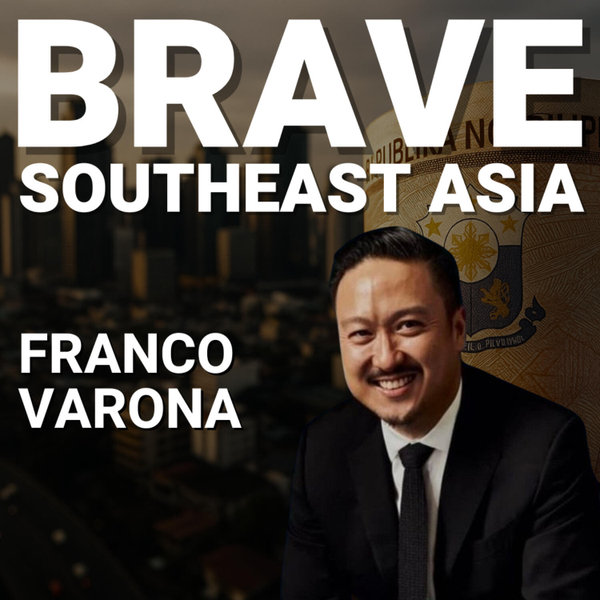
Franco Varona: Philippines’ Startup Boom, Global Diaspora Power & Why First Movers Win – E641

Franco Varona: Philippines’ Startup Boom, Global Diaspora Power & Why First Movers Win – E641

"At an event for the Management Association of the Philippines, the Singaporean ambassador gave a 15-minute speech about the strong relationship between Singapore and the Philippines. Her final paragraph encouraged everyone to do more business in Singapore, and she ended by saying, 'In the time it took me to give this speech, you could have registered a business in Singapore.' It was mind-blowing because, in the Philippines, our study with portfolio companies showed that simply registering a business can take up to 45 days—45 days where businesses can go to die." - Franco Varona, Managing Partner of Foxmont Capital Partners


"Everybody keeps asking, 'When is AI going to kill this?' but it hasn’t happened yet. What we’re seeing instead are many efforts to upskill workers using AI within the BPO sector. Nothing has fully replaced voice, and I think that’s because of empathy. Filipinos make phone calls to credit card holders in the US and to people whose flights are canceled in places like the US and Australia. How many times do people press one just to reach a human voice? It happens all the time, especially when your flight is canceled at an airport."  - Franco Varona, Managing Partner of Foxmont Capital Partners


"Foxmont likes to invest in Filipino solutions to Filipino problems, which is a simple way of saying this country has many challenges. We complain about it every day, and anyone arriving at the airport and taking a Grab ride will have their share of complaints. But that also means there’s plenty of opportunity—many services and products still need to be built. If you’re a regional startup that hits the right price point and solves a problem no one has tackled before, there’s huge potential to be the winner in this country." - Franco Varona, Managing Partner of Foxmont Capital Partners

Franco Varona, Managing Partner of Foxmont Capital Partners and returning guest from episodes 357 and 516, joins Jeremy Au to unpack why the Philippines is fast becoming Southeast Asia’s next big investment and startup hub. They explore the country’s rapid digitization, growing middle class, and unique strengths like its global diaspora and English fluency. The conversation covers how Foxmont’s latest fund is backing local solutions to Filipino problems, the rise of accessible health and wellness ventures, and the government’s evolving role in supporting innovation. Franco also shares why first movers can dominate the Philippine market and how solving for price and accessibility unlocks massive opportunity.

01:34 Foxmont Capital’s journey and fund milestones: Franco shares how the firm built three funds since 2019, making 45 investments focused on the Philippines’ growth story.
04:53 Philippines’ digital leap fuels investment: From 30% digital wallet penetration pre-pandemic to 99% today, the country’s digitization and rising middle class are reshaping its economy.
08:00 Private capital surge matches Indonesia: Annual startup investments now top $1 billion, signaling growing global confidence in the Philippines.
16:46 Diaspora drives growth and return talent: Millions of overseas Filipinos send money home while second-generation entrepreneurs return to launch startups.
19:27 Language and cultural edge: The Philippines’ English fluency and global mindset make it an ideal second expansion market for regional startups.
22:58 First movers win big: Filipinos’ strong brand loyalty and investor collaboration help early entrants dominate categories like coffee chains and gyms.
25:23 Investing in accessible health and fitness: Foxmont backs BeFit, an affordable gym chain, and women’s clinics offering localized, comfortable care solutions.

Franco Varona (00:00) The Philippines oftentimes wasn't even in the top three investment destinations of Southeast Asia, despite having the second largest population.

Franco Varona (00:15) We started the pandemic with, you know, less than 30% of our population having a digital wallet. Whereas today, it's almost like 99% of the adult population has a digital wallet, right? So, we had this whole digitization of this country that happened in a very short period of time.

Franco Varona (00:54) Now, you mix that with actually the youngest population in Southeast Asia, having a quickly rising middle class, right? By World Bank standards, the upper middle class is defined as somebody that's the GDP per capita at about $4,300 per year. And the Philippines is at something like $4,295. I mean, it's like super close, right? Which means, by World Bank standards, we are actually entering the upper middle class globally.

Jeremy Au (01:34) Hey, Franco, really excited to have you on the show to be our regular co-host.

Franco Varona (01:39) Hey Jeremy, thanks for having me—having me back, actually. Really excited to be here and be a co-host with you.

Jeremy Au (01:45) Well, I mean, first of all, our interviews have always been so incredible. And, two, of course, the Philippines is a rising hot market in Southeast Asia. I think we just keep getting questions over and over again, which is like, we need more in-depth coverage of the Philippines as a market—both the good and the bad and the opportunities. I was like, I think there's no better person than Franco to speak about this for everybody.

Franco Varona (02:07) Yeah, I mean, honestly, I'm very excited to talk to you about the Philippines. I do think it is yet to be fully discovered. And I think there's so much that we can uncover together about the country. Of course, I have a team here of 14 people. We're very focused on the Philippines. So, there's a lot of really cool things that we can do and we can talk about moving forward.

Jeremy Au (02:30) Yeah. And Franco, I'd love to just share, could you just introduce yourself?

Franco Varona (02:34) Yeah, of course. My name is Franco Varona. I am the Managing Partner of Foxmont Capital Partners, which is a fund focused on the Philippines. Today, we have three funds and we have invested 45 different times in this country.

Franco Varona (02:49) Fund one was Vintage 2019, Fund two was Vintage 2021. Between both of those funds we made 43 investments. And for Fund three, we just actually announced our first close just about a month and a half ago, of about $30 million. And we've already made two investments there as well. So, I'm excited to share some announcements with you today about those.

Jeremy Au (03:12) Yeah. And Franco, I just want to say, you are also well-positioned because you've recently announced your first close for your newest fund. So, congratulations on really hitting that milestone in a very tough fundraising market for the region and globally. I just want to say that is truly a feather in your hat for at least getting to that big milestone.

Franco Varona (03:32) Thank you. I mean, it wasn't easy. I think everybody in Southeast Asia has really had a tough time recently. We were very lucky, I think I told you this offline, but we were very lucky to have our anchor investor come in quite early, the Dutch Good Growth Fund. And from there, it snowballed quite well. I think it's good timing in general. The Philippines itself is ascendant, very interesting for any type of private capital to look at. The Dutch Good Growth Fund just so happened to have the Philippines as one of its priority countries, was very supportive in our mission. And then, yeah, like I said, we had a bunch of our old LPs from Fund One and from Two come back in, mostly locals. And of course, we had a, let me put it this way, a full-circle moment with Grab Corporate Ventures coming in , which, of course, as most people know, I did spend a little bit of time at Grab about 10 years ago. So, it was nice to have them come in and show some support back into the Philippines as well.

Jeremy Au (04:31) Yeah, fantastic. And I think, you know, for folks, we just got to start from the beginning, right? Which is, what is the Philippines as a market, right? How do folks think about the Philippines as a technology and startup market? I'm sure you've been answering that question for so many LPs, but I'm just kind of curious, like, how would you describe the Philippines as that market that's in the rising?

Franco Varona (04:53) Yeah, you know, I think there's a lot of reasons why today the Philippines is ascendant. But if we just look back a few years, what you'll see is actually that the Philippines has really been kind of overlooked. Right. If we look back even five, six years ago, the Philippines oftentimes wasn't even in the top three investment destinations of Southeast Asia, despite having the second largest population.

Franco Varona (05:18) You know, the thesis for Fund Two, our prior fund, was really about the digitization of the country. That played out, I think, exactly the way that we thought it was going to play out. Whereas, you know, I would say, you know, we started the pandemic—and I might have shared this in a previous podcast—but we started the pandemic with, you know, less than 30% of our population having a digital wallet. Whereas today, it's almost like 99% of the adult population has a digital wallet, right? So, we had this whole digitization of this country that happened in a very short period of time, like four or five years, right?

Franco Varona (05:59) Now, you mix that with things like having one of the youngest, actually the youngest population in Southeast Asia , having a quickly rising middle class, right? I mean, by World Bank standards, just to give you an idea of this, the upper middle class is defined as somebody that's the GDP per capita at about $4,300 per year. And the Philippines is at something like $4,295. I mean, it's like super close, right? Which means by World Bank standards, we are actually entering the upper middle class globally.

Franco Varona (06:37) Right, so you have this growing middle class, you have this young population, you have a digitized population. And of course, 70-80% of our GDP is domestic consumption, so you have a lot of spending power in this country. All of a sudden, it starts making a lot of sense as to why it would be a very interesting place to look at.

Franco Varona (07:01) We've seen this. And Jeremy, I think you and your audience might be familiar: Foxmont does come out with a Philippine venture capital report. This happens every year, it comes out every March. We do it in conjunction with the Boston Consulting Group. And one of the big numbers that we look at is actually incoming private capital. How much private capital is actually invested into the Philippine economy—startups, growth-stage businesses, right? And by and large, over the last four or five years, I think it's like mostly broken $1 billion. That's pretty good. We had never seen that before pre-pandemic.

Franco Varona (07:38) Then you look at some other third-party studies. Global Private Capital Association, for example, the GPCA, a very reputable organization. They do have an office in Singapore. They do come out with their own study based on their members. And the GPCA itself, just like two months ago, said, "Okay, listen, when we break it down, the Philippines currently is actually bringing in as much private capital into its country as Indonesia". Right. I think it's 11% is what they said in 2025. That is more than double of what Vietnam has brought in this year , and puts us actually in competition for, like, third place, I think. Surprisingly, from my perspective, because I'm in the Philippines—maybe not surprisingly for Malaysia—but Malaysia actually comes in at number one based on GPCA, and Singapore comes in at number two. But you look at all these different things and it's super interesting, right? Like all of a sudden, the Philippines—you're taking a bet on domestic consumption. And this makes a lot of sense, right, in the Philippines.

Franco Varona (08:33) Remember that we have a very robust, and it continues to be very robust, BPO (Business Process Outsourcing) call center business and industry in this country. I say it continues to be robust because there's so many questions, right?  Everybody's always saying, like, "Okay, when is AI going to kill this?" Hasn't happened yet, right? At this point, what we're seeing on the ground is a lot of attempts to upskill actually using AI —retention, upskilling, education within the BPO sector. Nothing yet that fully replaces like voice, right? I have a theory about that, by the way. My theory goes that if you're trying to replace voice with AI, it's going to take a little bit longer than we think because of simple things like empathy. I mean, Filipinos are making phone calls to credit card holders in the US and people that are getting their flights canceled in the US and Australia and all these different places. How many times do people try to dial one to get to an actual human voice? And I think that happens all the time, especially when your flights are canceled in an airport. So, we have that very robust BPO economy.

Franco Varona (09:40) We have a huge, huge part of our population that's actually abroad and sends something like 90% of their savings back to the Philippines. I will argue that that's actually part of our middle class, which we call our OFWs, our Overseas Filipino Workers. And those folks are sending 90% of the money home. And of course, what's happening when it gets here, right? It's being spent, right? 10% of the savings is being saved, yes, but it's being saved in the home—excuse me—in the countries that these people are working in, in Singapore, in Canada, in the US, Australia, Saudi Arabia, largely the Middle East. That's where much of the savings is happening. But a lot of the spending on the diapers, on the food, on everything else that's higher in the Maslow's hierarchy is actually happening on the ground here in the Philippines. And that's kind of exciting and that actually forms part of the thesis of our Fund 3 as well.

Jeremy Au (10:39) Wow, that's a lot of information, but also a lot of exciting news as well. I think what stuck out for me was the statement that the Philippines has been undiscovered, right? And I think I can't agree more with you. I think if you go back five years ago, the story was of three countries, right? Singapore, Indonesia, and Vietnam. So I'm just kind of curious from your perspective, why do you think that the Philippines has been overlooked?

Franco Varona (11:04) Yeah, that's a great question. I had the same question myself pre-2018. 2018 was actually when we founded Foxmont. Every time I'd go out there and I'd try to raise money as an operator, to Singapore, to outside of Singapore as well —I mean, always the answer we get is, like, "Okay, it's too early in the Philippines. We don't understand the Philippines. It's a little bit far out". I mean, these were actual answers that I would get from other GPs, other fund managers back then.

Franco Varona (11:24) I think what I quickly realized was that in many cases, especially in emerging markets, there really needs to be somebody on the ground to help bring out the stories , to help bring out and find the deals, basically. And prior to us, of course, there were some other funds here, and great respect to Kickstart Ventures, who has been here since 2014. And there were some PE firms out here as well. But the fact of the matter was, there was no institutional independent venture capital out here. And that's a big difference.

Franco Varona (11:47) If you look at other parts of this region and you ask around, for example, "Why is nobody talking about Thailand?" "Why does nobody ever bring up Thailand? Why is it a super-developed economy at this point in the context of Southeast Asia, but nobody can find any deals out there?" To me, that's actually the same reason. It's because there's actually no independent venture capital out there that's helping to uncover these great deals.

Franco Varona (12:08) Today in the Philippines, there's more than Foxmont, there's a bunch of other funds as well. I think the ability to have—like I said earlier in this podcast, we do have 14 people here —the ability to uncover the deals, to bring out the stories, to show investors what we have available here. And by the way, have the ability to do the due diligence here, to bring the understanding, right? To answer all those questions. People used to tell me, "I don't understand the Philippines." Well, we provide that understanding. We are the ones who do the due diligence. We are the ones who share what we've discovered and basically help to answer whatever questions they may have, right?

Franco Varona (12:47) So, that's one. The other one is, "the Philippines is too early". But the Philippines being too early is just a matter of completing an ecosystem, right?  What are the core points and parts of an ecosystem? One is the entrepreneur, obviously. And so, now that's starting to come in droves. Two is investors, right? I would say that the Philippines was a little shallow on that pre-2018, but showing some depth. And now we're actually showing even more depth because even the regional investors are starting to really focus on this country and actually publicly announcing that they're going to make investments in the Philippines, which is very different from before.

Franco Varona (13:21) So, we're answering that "too early" question because we're filling up the ecosystem kind of loop, right? So, entrepreneurs, investors, corporates, strategics. And those guys are actually now starting to play an important role in the Philippine startup ecosystem. They're providing exits, right? So, for example, GoTyme acquired an earned wage access company in the Philippines just last year. So, they're starting to do that. They're starting to invest themselves.

Franco Varona (13:42) I mean, I think the last piece that we're missing—I will argue everybody in Southeast Asia is missing—is the exits. And that's the key piece that I think we're all waiting for. In the Philippines, of course, some of it will rely on what the Philippine Stock Exchange can do, and kudos to them. They are doing as much as they can to make it easier, I guess, for foreign investors to start coming into this country. They're making it cheaper, right? So, they're easing some of the friction in participating in the Philippine Stock Exchange. And I hate to put the pressure on it, but there are a lot of eyes on Gcash as well for these exits.

Franco Varona (14:13) Anyway, so this question of the Philippines being too early, I think, is being answered by way of the existence of a lot of our funds because we're filling in that gap —entrepreneurs, investors, corporates, exits. This is actually the reason why Foxmont comes out with these Philippine venture capital reports every year. It's because we need more attention on the Philippines, right? So, what we really try to do, besides make great investments—which we are very confident in all of our 45 —is bring more attention into this country. Talk to all of our fellow GPs, right? We don't think of other GPs as competition, never have. We think of them as collaborators. We think of them as people that will just help us kind of build out this ecosystem better. And thankfully we found a lot of champions in Singapore as well in that regard that are starting to come into the Philippines a lot more often.

Franco Varona (15:06) So, I would say that the Philippines is no longer overlooked, Jeremy, thankfully. And thankfully, by the way, with podcasts like yours that help us to bring more attention to this country.

Jeremy Au (16:05) Yeah, very kind of you. I think a big part of it has to go out to you, right? Because you've definitely been doing the research with Boston Consulting Group on the Foxmont Philippines startup reports. I've seen you pitch twice over two years with high energy , pushing for new insights, but also making sure to recap it for the people who are clueless and new to the room. And so I've seen that kind of like educational burst and energy that you bring to it. I think it's in no small part to you being willing to be an evangelist and champion of the Philippines market.

Jeremy Au (16:34) I think one thing that was interesting to me, actually, is the statement about the Philippines middle class, right? And I think there's something that people have kind of like not really weighted well, and even myself. I think people look at Indonesia and the Philippines kind of like, in terms of, let's say population size, I think at a high level there's some similarities. But I think that, like you said, I think the Philippines middle class is actually more robust than the Indonesian middle class , especially once you include the overseas foreign workers who are also supporting those families back in the Philippines. I think that's something that is underweighted, I think, in understanding.

Franco Varona (17:19) I mean, I totally agree. I think that's, you know, this is again, you know, I try to repeat this and bang the drums on this. We do have a middle class that actually exists outside of this country, right? I mean, they are robust. They're all over the place. I just came from a trip to Abu Dhabi and Madrid, actually, for a little bit more fundraising for Fund 3. And what I can say there is that it was like, I might as well have been in Manila. Do you know what I mean? Like everybody from the person that I bought my duty-free stuff for my daughters , to the person that checked me into the hotels in Abu Dhabi , to the people in the restaurants in Madrid. These were all Filipinos. Even the people that checked me into the hotel in Madrid. And that's very surprising, right? Like I get Abu Dhabi, I understand it. I know a huge amount of our remittances come from that part of the world. But Madrid? All of a sudden we have a population in Madrid as well. I guarantee you any sort of income that's being made by any of those individuals, most of that is coming back to the Philippines, right? And it does serve a very interesting dimension that I don't think many other countries have, quite frankly, and definitely not in Southeast Asia.

Jeremy Au (18:24) And I think that's something that lets the Philippines punch above its weight. Because I think this concept of a diaspora, and I think the fact that the Philippines is obviously fluent in both English and in Spanish, allows it to be, I think, very interoperable on the internet, I guess, in terms of language, knowledge flows to the rest of the world. Whereas, I think Vietnam and Indonesia kind of suffer from what I call being language locked —something like being landlocked as a country where you don't have access to the ocean. I think because Vietnamese and the Indonesians speak the local languages, but not so fluent in English, they're kind of language locked. So, they can't access the broader internet or the flows of knowledge as easily. I think that the Philippines has been—that knowledge piece is really, I would say, underweighted as well. I think it's pretty rare, actually, if you think about it. I think there aren't that many countries that have a diaspora that's kind of like both doing remittances, but also doing that knowledge transfer as well.

Franco Varona (19:29) I agree. And by the way, they make a great resource for entrepreneurs as well, right? If you think about it, not only do we get people that have worked abroad and are looking to come back to the Philippines and start businesses, right? But also their children, right? Sometimes they decide, some of these people decide to live abroad permanently, and that's perfectly acceptable and perfectly fine. But what we've seen at Foxmont is that actually some of their children, the second generation—Filipino Americans, Filipino Canadians—they will actually decide to come back to the Philippines and try to make a difference. You know, there's this concept, right, if you look at India, if you look at China, if you look at Vietnam, that the first generation of entrepreneurs are really these sea turtles—people that were educated abroad , got their engineering degrees, got whatever degrees they did from the US typically, and then they come back to their home countries to start businesses. And that's actually happening as well with the Philippines. It's just that we have a larger pool to pull from, right? Because we're not just sending our elites out there. We also have children of OFWs that have decided to come back to the Philippines and start businesses. So, we have a larger pool of people that were actually educated abroad and have decided to come back to the Philippines, which I think is super interesting.

Franco Varona (20:49) A second point about your point about language in this country. You know, that actually fits into one of our theses for Foxmont Fund 3 pretty well as well. And that is that the Philippines is an interesting place for any regional startup to scale to as their second destination. Everybody always talks about regional plays, like, "We want to invest in a startup that's going to go regional". We actually believe at Foxmont that the Philippines is the best place to start going regional because of language , because actually also of a little bit of a more cultural cross-section here, right? You know, many people—I'm actually not sure if people know this—but of course there is a very robust Chinese Filipino population here. There's a very robust, I mean, we are Indos and Malays as well. And we do have that Western tilt, I guess, because of the Americans. So, we have English speakers and it makes a lot of sense to try any sort of app out here or business out here.

Franco Varona (21:51) I always say it doesn't make sense sometimes if you think about a business that was built in Vietnam, and they're all speaking Vietnamese, to try to grow from Vietnam to, I don't know, let's call it Indonesia, which is totally different, right? Totally different language, totally different culture. But the Philippines actually fills that gap pretty well and helps people figure out their businesses in a country that has a very good cross-section of cultures.

Jeremy Au (22:30) I think the question of the Philippines as a market is something that people ask themselves over and over again. Obviously, we're talking about population size, we're talking about GDP per capita. Now, I think we've talked about what's really important is the shape of that income distribution, whether they call it inequality or equality, but I think there's a strong middle class to take advantage of the internet. What are some factors that people should also be thinking about the Philippines as an expansion market? Should they be thinking about it in terms of cultural or other factors that are important to be aware of?

Franco Varona (22:58) You know what we've seen as very interesting here in the Philippines is that first mover advantage is really a thing. It's really a thing. If you are a first mover in this country, you typically can win a market, can win this market, right? I saw it myself with Grab, right? Today, Grab continues to dominate the market. We'll see it with some of our own investments, Pick Up Coffee, for example. I mean, you look at Indonesia, look at Malaysia, and you see this kind of quick coffee business taking off, and very quickly you'll see competitors come out. But in this country, Pick Up Coffee continues to dominate, and we don't see too much competition on the horizon either.

Franco Varona (23:46) Where do we get this sense that the first mover wins? I think it's two places.

One is that Filipinos really kind of pile into a brand as consumers. When it works, it works, and they love it, and they'll just stick to it. They don't necessarily move away from that too often as a consumer.

But second is that investors will also pile into the same business. Pick Up Coffee, for example, has most of the Philippine CVCs in there and in families and us. So, everybody kind of collaborates in that way as well.

Franco Varona (24:14) A lot of people will hear me say that Foxmont likes to invest in Filipino solutions to Filipino problems. That's just a very oversimplified way of saying, "Listen, this country has tons of problems". We complain about it. I complain on a daily basis, and anybody that arrives at the airport and takes a Grab to any place in this country will have multiple complaints. But that also means there's a lot of opportunity , a lot of services that need to be brought to this country , a lot of products that need to be brought. And if you can be the first one—any regional startup—if you can be the first one that hits that right price point, that finds that right problem that just nobody has ever tried to attack before, there's a huge, huge potential to be the winner in this country.

Jeremy Au (25:08) And so Franco, I would love to hear what would you complain about for the Philippines as a market economy, maybe things that are fixable in terms of problems that you still complain about versus maybe problems that are a bit more structural or macro.

Franco Varona (25:23) Yeah, I mean, okay, of course everybody's kind of plagued by the traffic in this country. I don't know how to fix that unless we start being an infrastructure fund, right? But there are simple things too, right? I had a conversation with one of our LPs who was a German guy. And I was telling him, hey, listen, like there are very simple things in this country where people just don't even think about, but are necessary, right? For example, health. Very specifically, accessible exercise and gyms.

Franco Varona (26:02) The fact of the matter is in the Philippines, there's very little options, right? There's what they call bakal gyms, which is basically outdoor gyms with concrete weights, let's put it that way, right? Like what you see in the movies. Or there's these chain gyms, right? These franchises that cost anywhere from, let's call it, $45 to $50 US dollars per month to join , with a lot of different bells and whistles that you need to kind of sign up to as well and agree to. But there's nothing in between. The average Filipino makes, what, like $500, $600 US dollars per month? How many of them are actually going to join a $50 gym? Spend 10% of their income on their monthly income in a gym when they're just learning, right? Remember, rising middle class. What does a rising middle class actually mean? It means that they're still learning that they can start spending on themselves , that they've just stopped focusing on buying the core essentials. And now they're like, "Wait a minute, maybe I can dabble a little bit. Maybe I can, I don't know, look better, feel better". But they're not going to spend 10% of their income on it.

Franco Varona (27:26) So, one solution: affordable gyms. Simple. That actually goes into the thesis of Foxmont Fund 3 as well: let's make things accessible to Filipinos, right? Very simply. So, our first investment was, in fact, affordable gyms. It's called B-Fit. These are large-format, like, 2,000, 3,000 square meter gyms that are going to charge less than $20 US dollars per month —half the price of some of these franchise slash chain gyms. And they're going to be situated in the CBDs, near BPOs. There's going to be no break fee. You want to try it? Try it. If you don't like it, then you're not going to be penalized for it.

Franco Varona (28:13) What we've actually realized as well is that corporate wellness programs—these large corporations in the Philippines—they are actually starting to think about creating some sort of budget for this type of stuff because it creates more stickiness with their employees. So, very simply, even when we announced this investment, which we only did about two weeks ago, I started getting phone calls from our LPs, my personal network, like, "Hey, Franco, I'm the CEO of X company where we have 800 employees, we have a budget of less than a thousand pesos, $20. And this sounds perfect". All of a sudden, corporates need it. All of a sudden individuals are willing to do it.

Franco Varona (28:47) Second investment also in health. We're investing in a group of female-focused clinics. And those clinics will have two sides to it. One side will be core OBGYN services, and the other one will have fertility services. Now, just thinking about, again, Filipino solutions to Filipino problems. On the ground in the Philippines, females, when you have to go to get your services done, typically it's with these large centralized, privatized hospitals —Makati Medical and Asian Medical and Medical City. Literally it's called Medical City, right?

Franco Varona (29:33) The typical Filipino also has to travel, you know, take three to four different rides to get to any one of these hospitals because they're large, large, centralized services, right? You have to take a jeepney, you have to take a tricycle, you have to take a bus. And it takes a long time and you sit in a place where potentially a lot of people could be sick, right? Why not make that type of service more accessible, right? Take some parts of the hospital and make it easily accessible to a certain type of clientele. In this case, we decided to focus on female clients, right? A little bit more upscale, a little bit more comfortable. So, this business is intending to build hub-and-spoke models throughout the city, throughout kind of denser parts of the metro, the metropolitan area—start in the Philippines, Manila, and eventually the secondary cities—where you can get your core services. I mean, the only thing, by the way, I should clarify, the only thing you can't do is obviously give birth. I think legally you have to give birth in a hospital in this country. But all the other things you could do in these clinics that are going to be much easier to get to than one of these large centralized hospitals.

Franco Varona (30:45) Again, broadly health, Filipino solutions to Filipino problems. And this is, again, you know, if you look at our last Philippine venture capital report, this is the thing about our reports. We don't gatekeep our investments. We actually show people, this is what we're going to invest in because this is where the needs are. And we show that with the Maslow's hierarchy of needs in our last Philippine venture capital report. We believe that everybody deserves and needs and therefore will also pay for these higher-level services as it affects the Maslow's hierarchy of needs.

Jeremy Au (31:54) What's interesting is obviously there are so many challenges for all these startups to address. I'm curious that one question that people ask about is the importance of governmental policy or administration in supporting the startup sector, right? I think you see Malaysia is investing a lot more into the startup sector. The Singapore government obviously continues to invest into the tech sector and making the environment friendly for business. I think in Indonesia there's still a lot of frustration around red tape to get businesses off the ground, which is a handicap for entrepreneurs who want to build businesses. How would you assess or think about the Philippines government's role versus the entrepreneurship space?

Franco Varona (32:38) Well, I'll start with this. Obviously, there's also some shared frustration with our Indonesian peers in this. I think the government always struggles between how to regulate and how to promote innovation and business and entrepreneurship. There's always going to be two sides to that. And some governments will choose to be like, "Okay, whatever, laissez faire, let's do whatever it takes and then we'll try to regulate later on". That's pretty rare. But then you'll also have kind of these large, extremely large governments that are still developing, that are still trying to find themselves and are also trying to flex their own muscles and say, "Okay, listen, we need to protect the consumer and all this stuff" , and "We need to put in hard regulations before anything happens". That's probably where Indonesian and the Philippines falls a little bit.

Franco Varona (33:30) There are parts of our government that I would say are quite known to be very forward thinking, right? So, for example, our central bank (BSP) has been very good about creating a lot of sandboxes. They're like, "Okay, cool. This sounds different. This sounds new. I've never heard of it before. I'll sandbox it, right?" And this is probably why we get a lot of great and a lot of different types of crypto businesses starting in the Philippines because everything's sandboxed by the BSP.

Franco Varona (34:03) But there are other parts that just take forever, right? You know, the SEC, for example, where you register a business. The most interesting thing I ever saw was the Singaporean ambassador to the Philippines. She spoke at one of these events for the management association of the Philippines. She had something like a 15-minute speech and she was, of course, talking about the great relationship between Singapore and the Philippines. And then at the end of it, I think her last paragraph was about, "Come do more business in Singapore". And then her last line was like, "And in the time that it took me to tell you the speech, you could have registered a business in Singapore". And it was like, my God, that's mind-blowing. Because in the Philippines, we ran a study with our portfolio companies, and we were like, "Okay, what's the biggest blocker?" And they're like, "Well, just even simply registering a business, which takes up to 45 days in the Philippines". 45 days, imagine that, right? I mean, those 45 days is where businesses go to die, right? So, there's a lot of blockers in that way, and a lot of things that kind of slow down. And a lot of frustration within our own portfolio as well.

Franco Varona (35:05) That said, there has been a lot of movement recently to help with all of these initiatives. One is that the government itself is starting to participate directly into startups —that's a first, right? And that's only happened over the last couple of years. There is a law passed called the Innovative Startup Act , which allowed for the government to put aside money from the national budget per year to actually directly invest into startups. That has turned into what is now called the Startup Venture Fund, which is managed by a government agency. And I've seen them actually deployed directly into some of these startups.

Franco Varona (35:55) That's great, right? To have at least the government do that, support our startups in that way, but also understand the challenges that these startups have to go through and kind of internalize that and bring that through the bureaucracy, I think is a very interesting thing, right? We should start seeing itself play itself out over the next couple of years. Separate to the Startup Venture Fund, which is an equities investment vehicle, there's the Startup Grant Fund, which is an equity-free grant to, I think, up to 20 or 30 startups per year. So, now we're starting to see the government at least directly participate, be a little bit more mindful, I guess, in the way that it talks to and approaches entrepreneurs in this country. And the country has a better now understanding of what entrepreneurship is.

Franco Varona (36:47) Prior to this, I'll say that most people will think of MSMEs in the Philippines as like sari-sari stores, our version of warungs, right? That was what people thought of as MSMEs. But today, MSMEs are thought of as more than that. Now they're starting to think about it as startups, as these fast-growing businesses that can help kind of answer core concerns of the Filipino population.

Jeremy Au (37:20) On that note, thank you so much for sharing. I think there's a wonderful way to wrap things up. I think the three big takeaways for me from this conversation were:

A masterclass summary of the Philippines market —a one-on-one in terms of the population size, the middle class, the remittances and diaspora, the languages, the expansion as a market. So, fantastic there.

I really enjoyed the contrast, similarities, and the differences between Singapore, Indonesia, Vietnam, and the Philippines. I think I am aligned with you: the Philippines has been overlooked. Cento Ventures just released a report talking about how the Philippines ecosystem has been a bright spot in the Southeast Asia winter in the current year.

Thanks so much for sharing about some of the exciting, emerging verticals within the Philippines. I thought it was just really interesting to hear about, like you said, accessible gyms and healthcare for women. What was interesting for me to learn as well was not just to focus on the big problems, but also talking about how price point is a really important component of it. I think price is such a huge part for the Southeast Asian market. And I think it's such a valuable attribute to design around and be focused on for the emerging middle class in the Philippines.

Jeremy Au (39:10) On that note, thank you so much, Franco, for sharing your experience.

Franco Varona (39:11) Very true. You crack that one piece, the price point, and you're good. I mean, you're good in the Philippines, honestly.

Jeremy Au (39:17) Well, good to know and something for us to explore in our next podcast for sure.

Hosted by

Related episodes