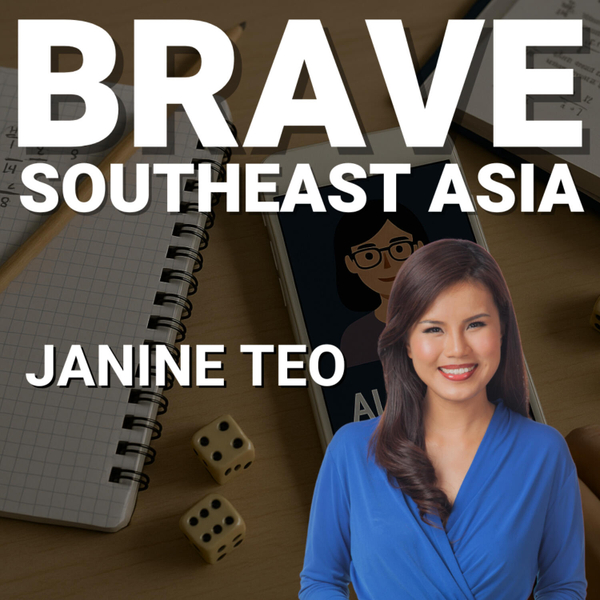
"Yes, AI can do it for you, and AI can do it for, in fact, everybody now, since so many—everyone has access to AI, right? So then what makes you different from others, right? What's your talent, or how—if you and another person are in a run for the same job, same position—what's going to make you stand out? So I would ask the youth to really think harder in such questions." - Janine Teo, CEO of Solve Education
"Fresh graduates from universities today struggle to find jobs. It's not only in Singapore, but anywhere in the world. And it's exactly like what you said—the low-level jobs are no longer available because AI can easily do that. I've talked to some friends even in VC firms that we talked about previously. Now they're not hiring junior analysts because AI can do all the job. So what does that leave? What future is there for fresh graduates today? Right. So that's why you can't just use AI and say, I don't need to learn all this, I just use AI—because that's not, that's really not going to help you for your future." - Janine Teo, CEO of Solve Education
"For the audience that I'm working with, which are marginalized youth, I think AI is very exciting because this means that with AI, they get to explore, ask questions, and learn at their own pace. For us, we even integrated an AI coach within our platform at bot.ai, so that it is able to give our students career guidance or even encouragement—or just be there, sometimes just someone to talk to and also ask questions that they don't understand from their schoolwork." - Janine Teo, CEO of Solve Education
Janine Teo, CEO of Solve Education, returns to BRAVE after three years to explore how AI is reshaping education for marginalized youth. She and Jeremy Au unpack the double-edged nature of AI in learning, how Solve Education leverages gamification and AI coaching to drive motivation, and the shifting job market where entry-level roles are disappearing. They discuss how AI is widening access for underserved learners, challenging traditional career aspirations, and demanding new approaches to teaching foundational skills. Janine also shares how her team’s GAIN model: Gamification, AI, Incentives, and Network, tackles agency gaps and builds community-led learning environments for impact at scale.
02:29 AI made education more personal and accessible: Students can now learn at their own pace using AI tutors like Solve Education’s “Ad,” especially in low-resource environments where human teachers are scarce.
04:50 Students use AI to uplift their families: Many youth ask AI for advice not just for school but to help their parents, reversing traditional education roles in marginalized households.
07:42 AI reshapes career aspirations and challenges family expectations: With AI exposure, students begin to dream beyond their parents' limited career suggestions and request help from the AI to explain their goals back home.
10:29 Teaching must prioritize thinking over memorization: In the AI era, knowing how to analyze, ask questions, and apply knowledge is more important than storing facts or formulas.
13:07 Motivation is the biggest learning barrier: Solve Education focuses on building a learner agency through their GAIN framework, especially for youth surrounded by demotivating environments.
15:43 Junior jobs are being replaced by automation: With AI doing most low-level tasks, junior analysts and entry-level roles are disappearing, forcing fresh grads to upskill or pivot early.
18:08 Learning environments shape success: Solve Education combines online tools with local community leaders to create peer-driven, supportive ecosystems that keep learners engaged and progressing.
Janine Teo (00:00)
you see people around you work so hard, but nowhere in life or still struggling, how do you actually find the motivation to show up or nobody is even supportive of you focusing on your education so how do you find that motivation so after we tested so many things we came up and failed many many times we came up with this framework called
Jeremy Au (01:08)
Hey, Janine, good to have you on the show.
Janine Teo (01:10)
Thank you for having me.
Jeremy Au (01:12)
Yeah, it's been three years since your last episode with Brave and I just thought it'd be nice to just catch up and talk a little bit more about what's happened since then.
Janine Teo (01:19)
Time flies.
Jeremy Au (01:19)
Could you share a little bit about who you are?
Janine Teo (01:21)
So I'm Janine from Solve Education. What Solve Education does is it's a social enterprise that uses AI and gamification to make learning accessible to youth who most need it. So to date, we have already reached over a million learners, equipping them with life skills or other academic skills, so both to prepare them for the future. And we do it in an engaging and impactful way. I'm very passionate about using technology for good and also very passionate about learning and education. So when I'm not working, I'm using pedagogy and life sciences that I've learned to practice on my very patient rescue cat.
Jeremy Au (01:59)
Yeah, so, you know, obviously you've been doing a lot of pedagogy and teaching so many people around the world, your social enterprise and education. So what do you think has been the biggest changes for you over past three years from your perspective?
Janine Teo (02:11)
Obviously, AI is a very big change for everyone. More and more teachers are using AI in their teaching, but then on the other side, more and more students are using AI to do work for them or, you know.
doing any groundwork or research for them. So some are using AI in a, I would say positive way as in they learn together with the AI and some are just using AI in a very lazy way, assigning their assignments to AI. So there's both sides. So AI is one part, but then for the bottom of the pyramid, I think what's exciting is infrastructure is continuing to improve for the bottom of the pyramid. And I think more and more phones
become accessible. So that part I find very exciting. And also even from the AI perspective, there is now LLMs that could run on small devices like Raspberry Pi's, completely offline, where bottom-up pyramid can actually interact with. So I think that is, for me, very exciting.
Jeremy Au (03:10)
Yeah, so I think
AI obviously is a big part of it and I thought that would be an interesting angle, which is like AI education. So I think there's several stakeholders, like you said, right? So there's teachers, there's kids. Are you worried? Are you happy about it? Which parts of it are you most thinking about?
Janine Teo (03:26)
When I talk to the teachers, I think that many of them are mostly worried about it. Because they now do not know if the students are actually learning or even they're doing their own homework. And in the schools where teachers are more AI literate, we find teachers using AI also to find out if the students are using AI. And I've heard complaints
about students actually not using AI but sort of accused of using AI. So I think some sort of regulation or some framework is required in the traditional education setting. So that part I'm actually, I don't think it's gonna be easy to work out. So there's a mild worry there, for the big part.
especially for the audience that I'm working with, which are marginalized youth, right? I think AI is very exciting because this means that with AI, they get to explore, ask questions and learn at their own pace. For us, we even integrated an AI coach within our platform edbot.ai so at the coach. So that is able to give our students career guidance or even encouragement.
or just be
sometimes, know, just someone to talk to and also ask questions that they don't understand, you know, from their schoolwork. So I think that allows students who can't afford like tuition, do not have resources around them to have at least a one-to-one teacher to be able to journey with.
on their learning journey. So I think that is very exciting. And I think there is enough evidence to show that one-to-one teaching actually helps a B student become A student. So yeah, I think this is so exciting.
Jeremy Au (05:09)
it's exciting because there are different groups, like you said, right? And I think teachers can get worried. But for students, feels like, yeah, you have an teacher that's available. The person is always there. The person doesn't show up to school.
Janine Teo (05:21)
And the AI teacher is so patient, don't scold you, non-judgmental.
Jeremy Au (05:26)
I think it's interesting because most of us when we think about education tech, we're obviously talking about middle class or upper class children. And some of them obviously are going into super AI mode and some of them are going totally offline. But I think for people who are disadvantaged, think you have the best lens on that group. that's frankly like 80 % of the global these are folks who are not very literate in English, math, bad internet, bad electricity.
How are you finding what's different about their bahavior in accessing or using AI from your perspective?
Janine Teo (05:57)
Yeah, I think what is interesting from our observation and even from our latest workshop that we have done for our learners. So basically our learners learn and exchange for points on our platform to join the workshop. And it's an AI workshop that we co-organized with Micron. And we have got our students asking questions like,
You know, how does AI actually help the people from the bottom of pyramid? How does AI...
help people who have issues accessing internet to advance. So I think such questions are in my students' minds, which I was actually secretly really proud of. these things, and also they ask AI to advise on things that could help their parents even, because in many of their marginalized communities,
if the students or the kids have some access to education, many times they are actually already more educated than their parents, right? So it's in a situation where the parents don't necessarily know more than them. So...
In this space, I see AI really not only helping them help themselves for the future, but also help them be able to perhaps guide their parents or their communities better. And especially the demographic that I work with are youth. So they are in the position to create change in their community. So I think like in the more privileged developed world,
I'm not saying always, but it's more common that the parents know more than the kids.
Jeremy Au (07:32)
Yeah, it makes sense. and if I as a parent don't know the answer, I can always use my own Get my answer and then tell my kid what the answer is. Right. So both the parent and the kids can both access AI in a upper or middle class country or strata. But I think what's really interesting is there's a bit of a power component, right? I mean, because like you said, like parents
Obviously they sending their kids to school because they want their kids to be But in this case, They're not only educated at the point of the teacher, the local teacher. They're being educated at the point of like, super god-like IQ. Not god-like. You know, you only care like 90 plus percent of legal exams, and 90 plus on medical exams, and you can do all of it simultaneously. I would say that's god-like to me. I can't do a math exam, a legal exam.
Janine Teo (07:58)
They want the
don't know what life is like.
Yes.
Jeremy Au (08:21)
I think I exactly say time, right? ⁓
Janine Teo (08:23)
Yeah,
yeah. But that's what's really interesting is to see how different children, different child use AI differently in their own local context.
Jeremy Au (08:35)
Is there
a conflict as a result? Kids who are now suddenly really smart but also now AI would give them advice on career or give them advice on echo decisions because previously if they're educated by a very smart math teacher, the math teacher would teach them math and maybe some small life advice but there's a bit of a scale disparity but also a lot of domain diagonal.
Janine Teo (08:57)
biasness
based on the human that you're interacting with. So how we have designed our AI coach is to work with the learner to figure out where their interest is and where their strengths are rather than what they're most exposed to. So with that, slowly craft out some possibility of
career paths that they can consider. And obviously we consider nuances like gender biasness, right? You know, we don't want our AI to recommend a girl who is 16 year old in say Balipapan to be a nurse or secretary, right? We want the AI to be more aware of such potential bias and really look at
each learner as an individual to guide them along their paths.
Jeremy Au (09:48)
I mean, that's interesting, right? So maybe let's just say the dad is like, okay, you know, I'm uneducated. I'm a blue collar worker in a factory. I want my daughter to learn English and math. And because I think that my daughter will have a good life as a nurse or as a secretary. And then suddenly this AI is talking to my daughter and then the daughter is suddenly saying...
I can be a soldier or an astronaut. I'm just an example, right? Yes. So, I mean, how do you see that? Because it is also like a little bit of a values shift as well, right? To some extent, even with what you're doing as well.
Janine Teo (10:23)
Yeah, so I think that we do encourage, obviously, the learner to communicate and engage their parents, right, when they are thinking about their future. And I guess the positive thing is that many, you know, marginalised communities are actually quite closely in need, right? So perhaps if I'm a girl who wants to be an astronaut and my dad does not know what
it is, I could actually ask the coach like, how do I explain this in an easy manner to my dad who's not exposed to such things, right? So I think it's just really exciting to be able to help learners think outside of what they see in only their immediate community, because in the past,
Most people think about career opportunities just from what they see from what their parents do or what their relatives or neighbors do, right? But today, because the world is so interconnected, it really opens up so much possibilities for people to explore.
Jeremy Au (11:24)
I'm just imagining what would be the ethical ramifications if you told your AI to be like, the instructions was like, please take the voice of your local community advice to you in terms of career, right? But isn't it so it's kind of interesting, right? Because there's a dynamic there, right? Between, I guess, your organization's educator, parents, students, and obviously,
what has worked historically and what's going to work in the future, right? So, I'm just kind of curious how.
Janine Teo (11:48)
I think it's also important to remember that we can't make the decision or push a person to a certain position, but we just need to let the person know that the learner knows that these are the different opportunities and these are some considerations, some things that you might want to think about and maybe this is what your community would likely think.
You know, have that individual, you know, make their own decision. And I think, perhaps because we work with youth, so they're a lot older. So at that point, they would have some thoughts of their own as well. I mean, we've all been through that adolescent stage where perhaps we have been horrible and stop listening to our parents.
Jeremy Au (12:33)
Then you go to your AI, it's like, my dad wants me to be an engineer and a doctor, lawyer. Dear AI, I hate him so much. Please tell me why I should say this.
Janine Teo (12:48)
I have not tried that but it will be interesting for me to test that out.
Yeah.
Jeremy Au (12:53)
So, but you know what's interesting is that obviously, you know, AI is going to keep getting better and better, right? And then obviously, you are going to use more and more AI. So, what do think that end state or that future is going look like from your perspective?
Janine Teo (13:04)
Yeah, I think the end state is really everything distills down to the first principle, right? How you ask questions? How you think, you know, how you analyze things, right? Becomes a lot more important than the volume of knowledge that you can store in your brain.
What does that mean? I think a lot more work needs to be placed into the foundational skills, if we talk about literacy, it's no longer how much full caps that you can remember, but really can you actually comprehend what you have read, right?
Math is not whether you can memorize the different formulas or theorems, but can you apply? can you analyze, right? Using, you know, the mathematical, the analytical skills that we're supposed to train with math, right? Sometimes we get lost with the learning objectives of, okay, the objective is to make sure you are able to use
you know, solve quadratic equations and things like that. But the actual, what's the real objective of teaching that, is the analytical I think that skill, that training of how to think becomes even more important. Yeah, so those are foundational skills.
Jeremy Au (14:27)
Yeah. What would you say to like, imagine a teacher saying, I don't need to learn any of this stuff anyway, because AI can do it for me.
Janine Teo (14:33)
Right.
Jeremy Au (14:34)
You're like, Janine, you're asking me to learn how to do math, but I don't need to learn how to do math because he does it for me, right? So, I mean, how do you react to that?
Janine Teo (14:43)
Yeah. So, I would say that I would lead him to think that, yes, AI can do it for you, and AI can do it for, in fact, everybody now, since so many, everyone have access to AI, right? So then, what makes you different from others, right? What's your talent? Or
how, if you and another person is in a run for the same job, same position, what's going to make you stand out? So, I would ask the youth to really think harder in such questions. Is there some field that he's particularly interested or she's particularly interested in or something, a direction that they want to pursue?
And yeah, engage the AI to learn, you know, to go that journey with them rather than, because else if we were to just depend everything on AI, we stop thinking. And I don't think AI is really meant to help us, I mean, think for us or take over our lives. We are still human, right? What do you think?
Jeremy Au (15:46)
I mean, it's tricky, right? I mean, in the short term, I was reading this interesting research paper from MIT about AI-empowered accounting. So, they're basically looking at the data for
accountants, senior versus junior accountants using this AI powered accounting system. And what they found was that senior accountants did a better job because they're able to shift a lot of their low level tasks like manual data entry into the AI. And so they were able to free up time to do customer Q &A and do more high value work. And they were also better able to override the AI when the AI was wrong. And they were also able to
make a decision even if the confidence was low versus for junior accountants. Yeah. They understand what's going for junior accountants when they hit an eight, first of all most of their work is more low level stuff but they can't shift to high level stuff because they don't know how to do the high level stuff and then two is like,
Janine Teo (16:28)
Because they're thinking, right?
Jeremy Au (16:42)
when the AI is low confidence, they don't feel confident to override the AI decision. So they can't challenge the AI. And also when the AI is confused, they can't step up and actually provide the right solution or guide it to the correct conclusion. So, that was an interesting dynamic where I think the interesting dynamic which is high value people get more value from AI than less experienced people.
Janine Teo (17:08)
Yeah, exactly. And also, it might not just be experienced, but
the ability to think right and be critical about what AI gives back to you because you might not have a lot of experience, but if you think critically and continue to, you know, ask AI, hey, why are you suggesting this? Why, why is this like that? Right? And work together to improve yourself. I think somebody who has no experience could improve very quickly. So, I guess
we were talking about many fresh graduates from universities today struggle to find jobs. It's not only in Singapore, but anywhere in the world. And it's exactly like what you said, the low level jobs are no longer available because AI can easily do that. I've talked to some friends even in VC films that we talked about
they're not hiring junior analysts because AI can do all the job. So, what does that leave? What future is there for fresh graduates today? that's why you can't just use AI and say, I don't need to learn all this. I just use AI because that's not, that's really not going to help you for your future.
Jeremy Au (18:24)
Yeah, I agree with you and I think that historically, you needed junior people to do the entry, take meeting minutes and in fact that's how I started my career. I was all those people taking notes and then I had to send off and then my supervisor would say, Jeremy, you didn't, you know, format it correctly. I mean, that was the entry level job.
Janine Teo (18:43)
Okay, so, you're not performing as well as reading.
Jeremy Au (18:45)
I mean, back then, obviously. I mean, I was, you know, you start as an intern and then you became a junior associate consultant. Yeah, I mean, no way was I...
Janine Teo (18:55)
Me too, I started as a junior software engineer. So I'm perhaps correcting bugs that you could just pass it to AI and...
Jeremy Au (19:03)
Yeah, exactly, right? You know, I was definitely doing it slower. I was definitely more expensive.
Janine Teo (19:08)
And I will make more mistakes.
Jeremy Au (19:10)
Yeah, and I only work, you know, like, you know, 40, 50, 60 hours a week instead of like 24 hours a week. I need lunch break.
Janine Teo (19:15)
And I food.
No, it's making us all really mean.
Jeremy Au (19:20)
But I mean, the reality is that we were that junior person and we were given the opportunity because we had to do that junior piece. So I agree with you, I think there's a dislocation, right? I mean, to me, it does feel like the 2008 financial crisis where a lot of people just never got jobs for several years because of the financial crisis in America. I feel like there's going to be a similar dynamic now where there's going to be like a few years where a whole generation of people who were trained
to do a certain type of job, which is going to get automated away, or is currently getting automated away.
Janine Teo (19:52)
Think that there will definitely be new opportunities coming out. But what is that? Think it's still, you know, just new jobs, new types of professions are going to be created, right, as we go. But practically speaking, the future, as we can still see it, if you want to stick to the knowledge, work, then you need to really be AI proficient. right? Right. Or
there are a lot of vocational jobs that really need people. I think it's starting, this need will definitely increase in Singapore, but in Australia or in Europe where plumber, FNB worker service staff are paid really well, I remember the FNB staff
that my husband was working in, they were paid like $50 an hour, you know, to provide that service and that job's not going away, right? Because people still want that human. So there's still a lot of jobs that's available, but it's not the traditional attractive, you know, knowledge worker job.
Jeremy Au (20:49)
Yes.
Yeah, I mean, you know, Singapore, so many undergraduates, they all want to do banking. So I was teaching a class and then I was like, how many of you want to be entrepreneurs? And I was like, one or two hands.
Janine Teo (21:09)
How does that make you feel as an entrepreneur?
Jeremy Au (21:13)
I mean, you know, it's interestingly, yeah, I mean I feel a bit sad, obviously. But also, I think as I've, actually was good, because I think if I was an American, ask people how many people want to be entrepreneur, probably like, maybe at least 10%, as example, right? And, you know, this was at NUS and, you know, like there are so many factors in Singapore that make it doable for people to be entrepreneurs. That's right.
I mean, living as a single mother for Jadine, the secret advantage of being an entrepreneur is to live with your parents. Because you don't have to pay for rent, you don't have to pay for food. You only get the social ostracization by your parents every single day. That's right. Our boy, what you do for work every day Our girl, when are you going to be a banker?
Janine Teo (21:44)
That's right.
Jeremy Au (21:58)
It's really
Janine Teo (21:59)
that with such a cushion, we're still not taking risks. ⁓
Jeremy Au (22:03)
Yeah, correct.
Yeah, so I always say that. I
always say that is the thing is I think there's so many questions in Singapore, I people feel like I think they're pushing for status jobs, high status jobs. It's like hard, hard jobs are hard to get. And so, a banking job feels hard to get because there's a lot of people competing for it so I should compete for it. And I think that's a big part of the class that, you know, I spend some time deprogramming in the sense that, I mean, don't get me wrong. I think in general,
things are available, people want to rush for it and so there tends to be some dynamic to it, but not everything that's high status is the right job for you.
Janine Teo (22:44)
I think that we are still like one generation down from the generation whereby only the people who can't make it become entrepreneurs because you can't find jobs anywhere, right? I remember my contractor, he has a primary six certificate and that's his higher education. And so he became an entrepreneur
renovation, right? So, that memory is still very strong. So, therefore I think to our generation is still like, not so good, it's like a worst-case scenario job, but I hope, really, for the generation below us, it would be, you know, they could be more brave. Yeah, look at your brave t-shirt.
Jeremy Au (23:26)
I know right?
Yeah, I mean I think it's a tricky part and I think that's going to be part of the solution to the problem you raised which is what are kids going to do. I think, now that those junior jobs don't exist, I think one part of it is some people become more entrepreneurial then build their own jobs because I think that's one. I think the other part is a group of people
Janine Teo (23:45)
Because
they have no choice.
Jeremy Au (23:46)
Well, guess this is like last generation, I guess. But now, it's more like the banks are not hiring me because they are so efficient now. Yeah. And they're moving those jobs to Malaysia. Yeah. I mean, that's what they're doing. Literally, they announced a lot of those middle office jobs are getting moved to Malaysia and getting digitized at the same time. Yeah, that's true. Yeah, exactly, right? So it's outsourcing, right? So, I think you have to create your own jobs as one.
Janine Teo (24:06)
Malaysia, the Philippines.
Jeremy Au (24:11)
I think the other one is people have to accelerate their own learning. I noticed that some people who are fresh grads are actually very scary because they're just smarter than when I was several years older, maybe many years older. Because when they kind of like enter the workforce, they've already done so many internships, they already use AI and they're getting so proficient. An example of that would be like,
yeah, you know, when I was at VC, right? And I was doing VC for a couple of years. So for me, it was just very much like, okay, I've done this after being entrepreneurial, being consultant and everything. And then I think, obviously, there are two groups of people who are fresh grads applying. There's a group of people who are applying for a VC job because it was high status. It was like, oh, it's very hard to get so I wanted to do that. They were kind of like very fuzzy, like, oh, a VC job will unlock so many career paths. And then you put these
big quotation marks because they're not true. But it's like a very fancy job, right? And so, they felt like it was gonna give them a very fancy career path. And then, out of that group, I would say 1 % of them were like this super laser focused, and they knew exactly what a VC job was. They had already been doing sourcing, they had already been writing memos. They knew exactly what VC was. They already did the research. They knew what the next job for them after that was going to be. So they were just, I don't know the word. They were like, I don't know,
perfect hires. And that job didn't even exist. When I graduated in 2011, in university, that VC as a job didn't exist, the analyst. And now in 2022, '23, their people coming out who are like, there's a job I want and I already nailed it. I have somehow already managed to get two years of job experience by myself, right? So I thought, so that to me feels like,
Janine Teo (25:36)
That's the job.
Jeremy Au (25:47)
another angle some people have, it's just going to like...
Janine Teo (25:49)
But those are really the top.
top tier, right? Of the graduates because not everyone have that ambition, as ambitious or as hardworking, I guess, as like getting, doing different internships before graduation. even right now in self-education, we've got interns applying to us, 14 year olds already having done like, you know, a few websites for this and that and already have work experience. just like, you're
14. And I'm just, and they are really impressive. but that spirit, we're still thinking how we can teach that more, you know, having self agency, because I think that's going to be another very important factor, right? That mix of breaks, not mix of breaks, but that could.
Jeremy Au (26:19)
Yeah.
Janine Teo (26:37)
really highly improve somebody's opportunities and potential because I tried to do that in for my alma mater, and I somehow couldn't get that bunch that I was speaking To even reach out to me for internship or reach out to me for something you know I feel like
Jeremy Au (26:54)
So you're like one of those speakers who are like...
Janine Teo (26:56)
I feel like putting my school down so I'm not gonna mention it.
Jeremy Au (26:59)
This is
wait. I want to hear it. So you will view this.
Janine Teo (27:02)
Yeah
was an alumni talking to my... ⁓ Yeah, no wonder. I heartbroken. And those guys are top from a pretty good school, you know? Why are they not taking charge of their lives? And then now you have got folks who are really, you know, taking their own, their future in their own hands and learning as they go and now...
Jeremy Au (27:05)
And you said, please reach out to me.
Janine Teo (27:27)
because of the excess that is being solved, you have access to, like you said, a God-like teacher that can teach you anything. So now there... Because I think in the past, almost the opportunity somehow... There's a barrier, right? Okay, I can't go to Harvard because it's so expensive, even just...
paying for SAT is expensive. But today you probably can get something, a lot of good quality education already online. I think that that gap is minimizing for people who don't have a lot of resources. I'm really excited, but I don't know what's going to happen to people with no agency.
Jeremy Au (28:06)
That's a question. What happens to the kids with no agency? Well, some would discover agency, through self-work, talking to AIs, therapists, spirituality, self-work. Well, some people may discover agency because you
Janine Teo (28:23)
And
some maybe live from... Nudge them to agency.
I kids for you.
I am getting out
Jeremy Au (28:30)
You're like, sorry,
have become a parent, so you must learn to work so that you can feed your kids. I mean, that's most of life, I would say. I totally empathize with that position.
Janine Teo (28:36)
Yes, sir.
So let us have a way to not shoot.
Jeremy Au (28:44)
Yeah, I think so. mean, obviously, because you you have to work and you have to work in order to feed yourself and feed your community. So I think that's part of the biological piece, right? Which is like, the hormone for movement is the same for the hormone for motivation, right? know, dopamine, right? So, that's right. So, you know, the point of it was that it's supposed to reward you for
Janine Teo (29:00)
Yes, that's right.
Jeremy Au (29:06)
moving to get food.
Janine Teo (29:08)
That's right, that's right.
Where did we get here?
Jeremy Au (29:11)
guess we're getting here
because we're saying it's like, you know, if you have kids who don't have agency, well, I'll tell you another thing, they could play computer games, a lot of it. I mean, I think that's one of the best parts of a computer games is that it makes you feel like you achieve something and that you leveled up and you learn a new skill and you get rewarded for it. I mean, I don't know, that's one of the, you know, a computer game is a world within the real world, right? And so...
I think that's one of most, personally when I was growing up, a computer game had a very taste to my life. was like, studying math is so hard, I'm getting nowhere with it. But if I play this computer game, I can kill seven people and totally recognize the sound of the AK-47.
Janine Teo (29:52)
It's true, it's true. Of course the dopamine works, right? And that's why we still put in gamification into edbot.ai because the gamification part really does keep people going. Now, if the math is really difficult and you're like, I'm going to give up, I'm going to play games, actually the sort of the right way or the game mechanic way of
handling a learner with such a situation is to back off, right? Make it easier and then make you feel like, you managed to succeed, then make it harder and harder, right? So there's a lot of overlaps between game mechanics and learning science. The same thing, if you give a child something too difficult, he's going to give up.
Jeremy Au (30:24)
you
Janine Teo (30:36)
If it's too easy, they're bored. So it's like Candy Crush, right? If you still remember that classic game, the puzzle needs to be hard enough for you that you feel like you have a shot at it, and if you work hard at it, you can succeed. Not too hard that you will give up, or not too easy that you feel bored. Yeah. Right? So actually, a great teacher does exactly the same. So if you're passionate about
your game, right? We could actually also incorporate that within the learning part, just that because teachers don't teach one-on-one, and also the time constraint and so on, and that does not fully support a learner. If you really apply that to learning, actually, could be not as bad as what you have experienced before.
Jeremy Au (31:24)
I think it's interesting because it goes back to that core question which is what happens to the kids with no agency? or they haven't had the ability to find something they're passionate about. I think feel like that's a really good question because I think we already know what the answer is for kids with high agency. Kids with high agency will use AI, they'll get really focused on the industry and some of it will be existing industry, some of it will be new industries that come out but life will be okay with them and they'll figure it out and if they're rich, they'll get more of it.
Janine Teo (31:33)
you
Jeremy Au (31:51)
And if they are poor, it's the job of AI would be a tool for the poor, high agency people to get access to because it's low cost. But I think what's interesting is for the kids that have low agency and low resource, right? kids who are low agency and high resource. I've learned from my junior consultant days, I can create two by twos and not just do meeting minutes.
Janine Teo (32:14)
So actually for us, we think about it a lot because perhaps from the outside you look at what we're doing and you could just put us in the box of, this is just an act. But actually our core competency is how do we solve for motivation, right? Which is agency really. motivation, particularly in the context of marginalized communities.
You know the marshmallow test that was very famous before, right? You know, you put a few marshmallows and for some reason, why do you know, if a kid could wait and have that delayed gratification, you know, this person is likely to be more successful in life versus another kid who can't. But then when they were doing more and more trials, they realized that kids from low income families are the one who eats the marshmallow first, right?
And really it's because that kid, life has trained it, trained the kid that he or she didn't know whether he will have a marshmallow tomorrow if he waited, right? So the same thing for motivation for marginalized communities is that if you see people around you work so hard, but
nowhere in life or still struggling, how do you actually find the motivation to
show up or around you nobody is working hard so how or nobody is even supportive of you focusing on your education so how do you find that motivation so after we tested so many things we came up and failed many many times we came up with this framework called GAIN so gamification like we talked about earlier
And then A is artificial intelligence, which we put in AI coach to be there, to be your cheerleader, to be your community, to be that somebody who believes in you, because that is actually what is needed, right? We are here because, you know, our parents believe in us, right? But it's not true for everyone. So that A, and then I is incentives.
So how do we give that little dopamine hit along the way because education is a long game, right? So we give incentives in terms of like the points that you earn in the game, but also like using the points to exchange for say CV review sessions or workshops and things like that. and then last but not least, which is really important, the network around the learner themselves. So how do we create
a social network or community either virtually with other learners or we incorporated community elements within our platform so that youth ambassadors can use our platform to motivate the youth around them to learn together, to take up that responsibility to build a vibrant learning community.
We also have got village heads being community leaders within Solve education. We've got teachers being community leaders within Solve education. each of them manage their own different community and we support them with the tools on the app. So this game framework we found like you almost can't do without any of this component. And I think if we just do only the ad tech
component as you have seen many attack fails and or have not enough engagement right and what we realized is like with this it's not only high tech there's also high touch points and not necessary by our team members but with by the community leaders and ambassadors who manage their community.
Jeremy Au (35:45)
Yeah.
And I think it's really interesting because you're like changing the environment from a, you know, environment that's optimized or something else towards optimized towards we all want to learn together. Right. I mean, people say what you're the average of the seven people around you.
Janine Teo (35:58)
it's this old Chinese proverb I
so basically this mother wanted her son to learn and so she was in this community where the kids are not learning so she moved the son to another community then to the third community where kids are actually learning and her son prospered. Where else the son was just playing around with the other, you know, in the other communities that weren't passionate about learning. So the environment...
where you grew up in or who you surround yourself is important. And if you can't find that conducive environment in real life physically, can we create that in the virtual sense for you?
Jeremy Au (36:36)
Yeah, that makes sense. So I guess in wrapping up here, any advice you give to parents who have low agency children?
Janine Teo (36:46)
So I would say, think about how you use the game framework in real life. ⁓
Jeremy Au (36:54)
Gamification
AI, incentives and network.
Janine Teo (36:57)
Exactly. yeah, and check out edbot.ai But I mean, I think in all seriousness, what we are doing is suitable for youth, right? But for younger kids, I think there are different apps that you know, or it doesn't have to be even an app, it could be just physical, right? If the kids are really young, how do you, you know, reward the child in in and it doesn't have to be
ice cream all the time else, you have a very out of control. really, how do you incentivize your kids a little bit by little bit and making sure that the task that you ask them to do is not too difficult or not too easy and continue to build up from there and then give them that environment to thrive, right? I think from the younger kids, it's the pedagogical approach, right?
they really still look up to their parents. And so the parents actually play a big influence to the kids in terms of giving that encouragement, you know, and after which is when kids become adolescents, it's their following and drudgery where actually the people around them plays a much more important role, not to say the parents are not important. So from that, from...
from that age is actually really important to build that community around your child to have that conducive environment but not forgetting the gamification elements or the incentive element, right? I guess, you know, many parents are saying you need to do your homework first before you go and play. This means that homework is the sucky thing, right?
and plays the cool thing.
Jeremy Au (38:32)
So what would you say then?
Janine Teo (38:33)
So is
there an opportunity to make that learning fun to be with so that it's not binary but is there an opportunity to do that? So growing up myself, I have a disproportionate passion for math and I think it's because my dad made math fun. like if you are in a restaurant, you'll take the peanuts and then...
do puzzles and make us solve it while waiting for the food. so therefore math is fun. So why is learning separated from fun? I think that is
question that we ask ourselves. And if we add more fun elements into homework, it is not homework anymore, right?
My cat? I incentivize.
Jeremy Au (39:24)
Now what did you teach your cat? You promised that at the start of this episode. Now I want to know why you taught your cat.
Janine Teo (39:31)
I am a very proud cat mom. My cat recently made her first debut performance.
Jeremy Au (39:37)
What can he perform?
Janine Teo (39:38)
It was a comedy night and there was one extra slot so my cat, her name is Lady Miu Miu. Lady Miu Miu performed amongst communions like Elisa. A routine. So she could shake hands, she could do high fives, she could do high tens, she could turn around, she could jump through the pole, things like that.
Jeremy Au (39:49)
Yeah, they did like a whole routine.
Janine Teo (40:02)
And how do I teach her? first, I need to find out what she's most motivated by. So she's really motivated not only by snacks, but also by positive reinforcement like good meal and things like that. with so every time she does something good, I anchor that right. And also I make sure that I use the, you know, the lateness of
the forgetting curve, so I need to make her recall the knowledge at appropriate time intervals so that it goes into her short-term, mid-term, long-term memory. so that is how I get the cat to actually learn, remember her curriculum and perform. Okay, don't judge me.
Jeremy Au (40:44)
it's fine. And now you made me think to myself, like, maybe since I have a five-year-old and three-year-old daughter, I'm no, no, no, I'm just saying that I think it's a good reminder to me to be like, between the two of them, what and how are their internal motivations different from each other and how to accommodate that difference because they're not exactly the same.
Janine Teo (40:48)
No, I'm not trying to
It's not one size fits all and I think sometimes people forget and just read the books and just follow like this framework and so on but actually it's Charles.
Jeremy Au (41:13)
I know one is definitely more food motivated, but now I don't know what the other one is. So I'm just like, this is a fair point. I'll be like, okay, probably storybook time or something like that.
Janine Teo (41:22)
Yeah, and how about putting math into the storybook time? Wouldn't that be fun?
Jeremy Au (41:28)
how do you make piano fun?
Janine Teo (41:29)
Well...
Jeremy Au (41:29)
Put chocolate on every key. Okay, we don't have to solve it right now, but that is a great way to wrap up this episode and see you next time. See you.
Janine Teo (41:41)
See ya.