"my mindset towards all of this is that the internet is a huge place. If you are vulnerable, if you can be yourself, and if you have your own voice, the right communities will end up finding you. As long as you're consistent and willing to stand out in formats, the word that comes to mind most is putting yourself out there, not caring what people think, understanding that it will hurt and that you will be judged, but also understanding that you'll be judged regardless of whether you succeed on social media or not. So you might as well be judged for actually making it on social media." - Javier Lorenzana, former EdTech founder
"People will judge you whether or not you do social media, whether you are yourself, or whether you do the craziest things. So you might as well make it work out. At the moment I saw it working out, I thought I had to do the most crazy thing I could think of that was still me. I'm not a psychopath, I still care about what people think, but it's more about being comfortable with that feeling. They're going to talk regardless, so you might as well do something cool." - Javier Lorenzana, former EdTech founder
"There were days when I wasn’t sleeping or eating. I was losing weight, and when you start laying off some of the core employees who’ve been with you from day one, me and my co-founder at the time started fighting a lot about the direction and what to do next. It was a very unpleasant memory and feeling. It feels like you’re dragging it out longer than it needs to because you have this responsibility. But once you come to terms with it, that’s when it starts to get a bit better and you can sit with yourself more. That’s when we ended up sunsetting, and after everything, I still took it hard on myself. I guess that was the start of everything that happened next." - Javier Lorenzana, former EdTech founder
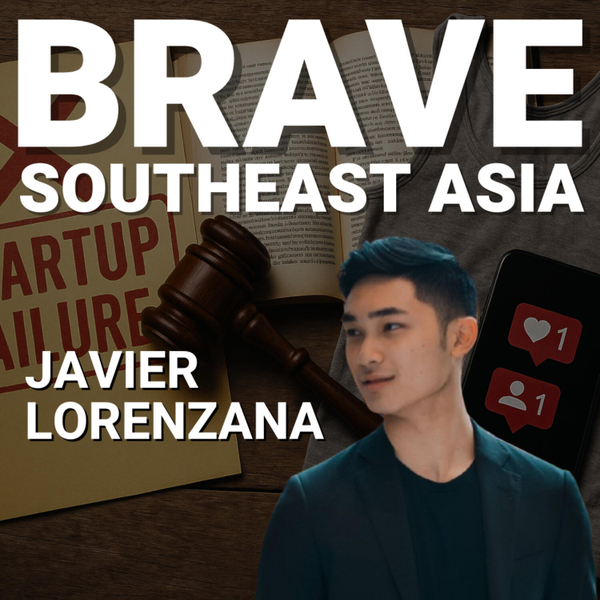
Javier Lorenzana, former EdTech founder turned content creator, joins Jeremy Au to revisit their first meeting during an On Deck podcasting course and trace his journey from startup building to social media success. They discuss the creation and shutdown of his pandemic-born company Upnext, the personal and professional fallout that followed, and how he rebuilt confidence through fitness, self-work, and creative risk-taking. Javi shares how his founder mindset shapes his content strategy, why authenticity is his biggest growth lever, and how he measures long-term success through influence and connection rather than vanity metrics. Their conversation covers building product market fit for a personal brand, handling public scrutiny, and creating viral formats that blend entertainment with personal values.
00:06 Meeting in an On Deck podcasting course during the pandemic led to early discussions about creator ambitions. Javi shares how he was building his EdTech startup Upnext while Jeremy was launching the BRAVE podcast.
02:36 Upnext began as a Southeast Asia version of On Deck for live online learning during lockdown. It grew to hundreds of students with seed funding before demand collapsed post-pandemic, prompting layoffs and eventual closure.
05:09 Shutting down caused sleepless nights, weight loss, co-founder disagreements, and deep self-blame. Javi describes dragging out the process before finally accepting the need for a reset.
07:45 Returning to the University of Toronto, he skipped classes and used ChatGPT while focusing on personal growth through reading, fitness, and diet—his “villain arc” to rebuild confidence.
10:17 Choose content creation over a traditional career after months of journaling and admitting it was a long-held personal goal. The first six months brought low views until the viral “shirtless book review” series.
15:40 The series gained millions of views by combining fitness and literature, sparking reposts and online jokes about ignoring the reviews for his physique. Javi refined his approach with a mix of original ideas and adapted formats.
24:13 Measures success through influence and real-world connection rather than follower counts, believing this has the highest leverage for future opportunities. His bravest moment was posting that first shirtless review despite fear of judgment.
Jeremy Au (00:17)
Hey Javi, good to see you on the show, I'm excited!
Javi Lorenzana (01:07)
Hey man, it's a full circle moment. We met in a podcasting course and now we're doing this. So, let's go.
Jeremy Au (01:11)
I know, look at us. It's been 600 episodes since I took that course on podcasting. And now you have 300,000 followers on TikTok, millions of likes. I mean, I'm at a different order of magnitude. I'm at 80,000 followers, but you know, it's like long form, boring business.
Javi Lorenzana (01:16)
Wow!
Jeremy Au (01:29)
And there you are, good looking, ripped, doing book talk video. So, but yeah, Javi, please introduce yourself.
Javi Lorenzana (01:35)
Yeah, hey guys! So, my name is Javi. I'm a former startup EdTech founder turned content creator. I've been doing the content game for around one and a half years now. And I think it's just been a crazy journey. So, I've amassed over 3 million followers across all platforms, obviously, across different accounts. And yeah, I'm excited.
Jeremy Au (01:54)
Yeah, amazing. So, very different audiences, very different groups, but as I thought, it's nice just to catch up and reconnect. So, I think what is really interesting, obviously, is that we met at that On Deck course, which is the online academy, it was the pandemic. ⁓ And then you went to build a startup, that startup failed, then you had to go through a personal crisis, and then you went to become a
Javi Lorenzana (02:09)
Yeah.
Jeremy Au (02:17)
creator, rising star. Okay, so, that's the journey a bit. But why did you join the On Deck podcasting course? I'm curious. You share your reason, I'll share my reason.
Javi Lorenzana (02:26)
Yeah, actually, I think that's a great question because I think I've always wanted to do creatorship or content media in some way ever since I was a kid. And I think at the time podcasting seemed like the most feasible or the most trending opportunity at the time. It was something I wanted to test out and do stuff with. That's why I joined. I did not know it would take us like on the journey that it did. But yeah, at least that's where we met, right?
Jeremy Au (02:51)
So, yeah, it'd be funny if, imagine like you and I were doing our Zoom call back then, and then, your future version of yourself will turn up now, and then you're like looking ripped, like you are with your shirtless sleeves, and your sexy
Javi Lorenzana (02:57)
Oh man.
⁓ Yeah.
I would not believe it. I think,
me in 2022, when that happened would not believe that this is happening right now. But yeah.
Jeremy Au (03:12)
Yeah,
that'd be so funny, right? I think for me, when I joined that course, first of all, it was the pandemic, right? So, I was bored out of my mind. So I just wanted to learn. And obviously, on that was a bit of a community to hang out with people that have that social tribe, which I actually enjoyed. And obviously, I think podcasting was something that I listened a lot to. I listened to lot of podcasts and I was like, Okay, you know, it'd be nice to maybe try exploring a podcast. So if you ask me, yeah, would I believe that
Javi Lorenzana (03:14)
Yeah.
For sure.
Jeremy Au (03:38)
now 600 podcast episodes all about Southeast Asia tech and the number of followers, et cetera. Obviously, I wouldn't believe that either. But I don't know. think it would just be like a surprise that the podcast went off. But I don't think it was a personal transformation the same way it was for you. So, because I think the context here is that when we did that podcast fellowship, you were very set on building this company called Upnext, which was, I guess, an On Deck for Southeast Asia or like a personal skills upskilling
Javi Lorenzana (03:41)
Wow!
Yeah.
Jeremy Au (04:04)
for Southeast Asia tech folks, right? So, that's what you were thinking back then. So, tell us through that original, kind of like product market fit and what happened.
Javi Lorenzana (04:07)
Yeah.
Yeah, so pretty much joined the On Deck fellowship when that happened.
I got the light bulb moment, I guess, to just like port it over to Southeast Asia and do it myself. It was very online. It was very, during the pandemic, online courses, especially live ones were just a great way to meet new people. Again, many people bored out of their minds. So that was kind of the need, I guess, we were feeling. At least like somewhat being productive while that was happening. And then, yeah.
Jeremy Au (04:39)
Yeah. And when you did that, what was the experience building Upnext and what happened to Upnext?
Javi Lorenzana (04:46)
Yeah, so, we started Upnext around like a couple months, I think, after the fellowship. It's actually funny because I showed my little pitch deck to actually one of the founders of On Deck.
I showed the pitch
deck. I made this like website on Webflow that was pretty much like, oh, On Deck, but it's like Southeast Asia focus. And it's like for young people who are like bored. I showed that to the founder of On Deck. I think it's Julian and he basically told me to fuck off. He was like, bro, this is plagiarism. What are you doing? And he was like grilling me on the call. And then after that call, I was like, you know what? Fuck this guy. I'm going to do it anyway. So, a couple of months later, we ran a few cohorts, had a couple of hundred students at the time.
And then that was when we raised like our initial seed venture round and then from there we just like worked on it for a few years. I gradually like kept increasing the number of students. The revenue was decent but then after the pandemic started to when the pandemic was starting to wind down that's when we saw like a sharp decrease in demand for online courses since people want to do things in real life. Even like On Deck shut down a lot of its fellowship programs. And so, my co-founder and I talked and we're like yeah it's probably the
time to I guess like explore other pivots which we did a lot of but after seeing like none of those really panned out it was just a time for a fresh reset and so pretty much like sunset of the company.
Jeremy Au (06:05)
Yeah. And so what was that like? Because, obviously it's a tough time. Nobody, wants to be like, 'Oh I'm super bullish in this company', I'm going to raise money, I'm going to teach people and then I'm going to slip to wrap it down' like, such a terrible experience', right? So, what was that experience like?
Javi Lorenzana (06:14)
Yeah.
We were talking about this not too long ago, but I took it really hard. Like, there were days where I wasn't sleeping and eating. I was like losing weight and you know, when you start like to lay off like some of the core employees who've been with you from day one, then obviously me and my co-founder at the time started fighting a lot about the direction and what to do next. It was just a very
unpleasant memory and feelings. It just feels like you're dragging it out for longer than it needs to because you have this responsibility. But once you kind of come to terms with it, then I think that's when it starts to get a bit better and you can like sit with yourself a bit more. And then that's when we ended up sunsetting and after everything, you know.
Regardless of what happened, I still took it hard on myself. And I guess that was the start of everything that happened next.
Jeremy Au (07:02)
So, how did you take it hard on yourself? You said in a while like, you just got depressed, stopped talking to people, or you went drinking. What does it mean to take it hard on yourself in the founder context, I guess? Or you like work even harder and go on Reddit. I don't know. What does
Javi Lorenzana (07:12)
Yeah. Yeah.
I think it was definitely two things. I started one, just blaming myself a lot for it shutting down.
I read it as me not working hard enough, me not executing on the right things. And so I think the principle I had at the time was I just defaulted to volume, like try as many experiments as I can try as many ways to pivot or like save the company, get revenue at all costs, you know, talk to more went on for a few and then there was a moment where I just got really burnt out. And that's when I had to talk with my co-founder and I was like, I can't, this isn't working.
I think we need a fresh restart. And then that's when I just started bed-rotting honestly for maybe a couple of weeks. And then, had all those existential discussions.
It just felt like I failed myself and that, you know at the time I was trying to prove to myself, when I was doing the startup, I was this young, like 20-year-old kid. By the time we were sunsetting, I was 22 and it really felt like, this is the first major thing that like I fucked up on and I think that's my definition of taking it hard on myself. Lots of self-blame and insecurity honestly about it, right? Because
I really thought it was my fault. And you know, to some extent, founders can do whatever, maybe I still have some of those thoughts, but at least we've moved on from that.
Jeremy Au (08:26)
And one interesting context is that you're Filipino, you studied in Canada, you know, all of us were remote and distributed. And, there's a part where you try and figure out what's next. And today, obviously, in the Philippines, you're a content creator, but I'm just kind of curious, how did you even go through that crisis moment? Like, what were you thinking?
How are you doing your choices? What were you exploring? What were you testing? How did you get out of bed?
Javi Lorenzana (08:48)
Yeah.
So,
after we closed down the startup and stuff. I actually went back to school in Canada. So I studied in the University of Toronto, but I basically did not attend any classes. I was ChatGPT-ing everything back when it was still in the version three, like GPT3. So it was really crappy, but I used to be like on the honor roll Dean's list in my first two years. And then I went from a 3.9 GPA to like a 2.6 GPA ever since I came back because I was just focused
of working on other different things. I think the self blame and the insecurity really just translated to me working on myself. So, that's when I really started reading a lot of books. I went to the gym a lot. I got my diet right, just because I was trying to, I guess, regain some of the confidence that I had maybe prior to the start of failing. And that was kind of like the villain arc, so to speak, in a lot of ways, you know, trying to come back to myself, build my
self up again and I think it really laid the foundation for what I did next for the creator stuff, right?
Jeremy Au (09:49)
I love the phrase "villain arc" like Jeff Bezos went out as a villain arc I mean normally it's not used as a positive way.
Javi Lorenzana (09:55)
I am really proud of myself for that moment of time because for context, imagine I went back to school after taking a couple years off. So all my friends had graduated and it was the middle of winter and I had zero friends. I had nothing to do because the startup was down. I was ChatGPT-ing everything. And I think in that time I definitely could have just like folded and just been like, it's okay, let's wait it out, let's calm down. But instead,
Jeremy Au (09:58)
Yeah, yeah, yeah, yeah.
Javi Lorenzana (10:19)
I started working on the myself side of the equation. I say villain arc because it's mostly used when two people break up and the one who was hurt worse all of a sudden has this crazy transformation. I felt that way with my startup. So that is why I refer to it as a villain arc. But it was tough. Lots of lonely nights. I generally look back at some of the journal entries that I have.
It's funny to see, like, I still had this crazy optimism that I could still do something even if my confidence was, an all-time low at the point. So, It was tough.
Jeremy Au (10:49)
Yeah. So, you know, I think it's one thing, obviously, to be a founder and, 95% of startups fail, right? So I think every founder kind of goes through this super down component, I don't think anybody fails and is like, 'Hell yeah! I'm crushing it, I'm getting out of bed ASAP'. But I'm kind of curious because, like you said, you went back and you were a student and you could have
Javi Lorenzana (11:04)
Yeah, exactly, exactly. Yeah.
Jeremy Au (11:15)
gone and you know, graduated and joined a startup. You could have been a founder again, but you end up being a creator. So, what was that exploration phase for you in terms of that re-birth?
Javi Lorenzana (11:20)
Yeah.
Hmm, that's a great question. So as I mentioned, I think doing content creation online was this thing that I always wanted to do as a kid. And up next, the first EdTech startup was kind of like my first crack at it because it was a media company, right? We'd record, we'd have like these live sessions, we'd make the edits. And I think after that time of really trying to understand myself and what I wanted to do,
there was a moment where I was just like, why don't we go for this content creation, influencer route? I mean, at the time it was like a super long shot, had zero experience with social media, did not know the technique at all. But yeah, it was honestly just that period of coming back to myself and just reflecting on what I wanted to do for the next three years.
And I remember I wrote on my journal before all this happened, I was like, in one year, they're going to ask me how I did it. And I would not believe the results that happened after that one year. So that was the crux of me deciding to finally admit to myself that it was what I wanted to do for the longest time, right? Because I think there's a lot of maybe...
mental blocks when it comes to admitting to yourself that you want something especially if it's the thing that you've always wanted to do. So just being honest with myself being vulnerable writing and reflecting a lot was really how I explored it if that makes any sense
Jeremy Au (12:45)
Yeah, so I guess the tricky part is obviously, everybody wants to be significant, right? Nobody wants to be a nobody, right? In that sense, why be a creator out of all things in order for you to achieve that thing, which is to be somebody?
Javi Lorenzana (13:00)
I think being a creator, what it meant for me is that I get to do the things
I am passionate about and I genuinely just like doing instead of maybe having like say as a startup founder where the model is you have to pick a select niche of customer and all of your attention is focused on them. I felt like being a creator to me at the time was I get to focus on myself and I get to just try and understand myself enough and the best parts of myself that I can share with people.
So I think that's a different perspective because you'd usually think about it the other way. Here it's more internal facing and it really resonated with me at the time because I was really working on myself. And I think it reflects now because, you know, literally my hobbies are I go to the gym, I read books, I play music, I go to concerts and festivals and whatever. And all of that is just my content. Like if I have a relationship, it becomes my content.
If I get close with my sister or I have a great day with my mom, that's content. And I think that's what makes me really happy about is that you just kind of be yourself. But I think we can talk about this later, but being yourself also has like a lot of hurdles on its own. But that's how I would describe what I love so much about being a creator, right?
Jeremy Au (14:12)
And so there you are, you decide to be a creator, right? Like you start TikTok or Instagram? Like how did you get that? Because also, I think from my own personal experience going on any of these channels and starting a first few shorts or TikToks or whatever it is, it's really lonely and honestly, nobody watches anything. So I'm just kind of curious. What was it like for you?
Javi Lorenzana (14:36)
Yeah, So this is the part of the journey that a lot of people don't know about, which is it actually took me roughly six months before I found any meaningful traction. And during those six months, I was just posting like every other day, getting less than 500 to 1000 views on these like all sorts of random cringe gym videos or voiceover type of random TikToks.
But honestly, it was the only thing I could do at the time. Because it's like, what else am I going to do? I have no friends. I have no projects to work on besides reading and going to the gym. What else am I going to do? And so it was really like putting those reps in, gradually just becoming comfortable with the idea of people judging you. That, I guess, is how it started. And I guess I can expound on that because I think there was this point in time
when there was like a shifting moment and the click
where I just stop caring what other people think. Because I was in Toronto, and as you can imagine, from an Asian society where circles are small, people will talk. There's a lot of judgment when it comes to doing social media. But once I had that mindset within me, I was just like, fuck it. Why don't we go for it, do the most random, big balls move I can think of, which was the first series, which is the shirtless book reviews. So it's exactly what it sounds like,
I am reviewing a book and I'm shirtless. Two things I love, going to the gym and reading books. So that was the moment and it was just so freeing and like I think at that point was the first time I really felt alive and free in another country supporting myself. So yeah that's that's how it started.
Jeremy Au (16:16)
So let's talk about that because I saw that and I thought it was quite interesting because you were doing a review of The Great Gatsby without your shirt on and I was thinking to myself like those are some great pecs, great muscles there. I mean I know the story of Great Gatsby and honestly I don't remember what your review was but you know so
Javi Lorenzana (16:26)
Ha ha!
Thank you.
Yeah.
Jeremy Au (16:39)
I don't know. So that's me as a consumer. Again, maybe I'm different. I'm a guy. I'm a dad with a dad bod who respects the workouts that you're doing. And I've already read The Great Gatsby, so maybe I'm not the target audience. Maybe I am the target audience. I don't even know what the audience is. But I'm just kind of curious, why do you think that popped off from your perspective and what did you learn from it?
Javi Lorenzana (16:43)
Yeah.
Gotcha.
I think it popped off because, I mean, there's two ways I can look at it, right? I think if you look at it from the pure content entertainment perspective, it's literally a proven method. Like, let's be real, it's a thirst trap.
I worked on myself a lot, so I've gotten myself in shape. And it's talking about something that's so contrary or something that you would not expect a thirst trap to be. And so I think it was that juxtaposition between those two so farly different things that captivated people. And you're not alone in thinking that.
Jeremy Au (17:14)
Yeah.
Javi Lorenzana (17:32)
If you read the comments on that video, everyone will say like, 'Dude, no one is listening to the book review.' I'm like, shit. Okay. I'm trying my best here.
And what's funny is people were taking like the clips that I was posting on TikTok and reposting them on Twitter. And that got like so much more views than my TikToks ever did. Like I think around the magnitude of like 3 million to like 5 million views, people would just like repost it. The internet is so interesting, man. I don't know how else to say it.
Jeremy Au (17:58)
Yeah. What do you think are the parts that is your platform? One, obviously is, I guess, your muscles, but I'm just kind of curious how you think about it now, because I'm sure you have that founder product market fit mindset or exploration as well.
Javi Lorenzana (18:10)
So I think my mindset towards finding product market fit as a creator is, again, I was mentioning the internal facing, right? It's really about, my mindset towards all of this is that the internet is a huge place. And if you are vulnerable and you can be yourself and you have your own voice, the right communities will end up finding you.
As long as you're consistent, as long as you are willing to stand out in formats and just be vulnerable. I think the word that comes to mind most is just putting yourself out there, not caring what people think, understanding that it will hurt that you will get judged, but also understanding that you'll be judged regardless of whether you actually succeed on social media or not.
So you might as well be judged for actually making it on social media. I think that was one of the core tenets I had to get over this mental block of everyone judging me. was like, people are going to judge me anyway. They might as well judge me for the thing I want to do.
Jeremy Au (18:49)
Hmm.
Mm.
Ooh, interesting. So I think obviously vulnerability, authenticity, obviously those are big words. Why do you think people want it?
Javi Lorenzana (19:09)
I think I see social media as just...
fundamentally like the next level of human interaction. I'm probably making this sound way too deep essentially, it's just people connecting, right? and I think you can sense offline or online if someone is being genuine and you kind of crave that real friends with someone it's like going to your friend's house, just like hanging out having a good time and just like getting on with your day and I think
especially with Instagram culture, which is very like polished, very curated, so to speak. I think the authenticity really shines through because it's like, there are problems, you know, there are things that I'm going through. And just like sharing that part of the process
builds the connection that you have with the audience and it's why they follow you, why they're invested in your journey, right? So that's how I see the authenticity component to it.
Jeremy Au (19:59)
Is this scary because you have so much of your personal life is online? When I was going through your stuff, you know, people were talking about your relationship, then they're talking about the breakup, then they're talking about is the breakout false or fake, and you're going to get back together. And I was like, Whoa, a lot of people talking about your relationship status. What's that like for you?
Javi Lorenzana (20:13)
Yeah. Yeah.
Yeah.
I actually really enjoy it as messed up as that is to say. And it's because I think emotionally I've learned how to distance myself from, I guess like the character or the role that I'm playing online. I think the thing that actually what you're saying reminds me of was when I started doing all this content, when I started the couples channel, when I started my book reviews.
My parents and I did not talk for like months. It was very rocky. Every time I'd like call them, I would cry and they would tell me, 'What are you doing?' We've built a reputation and you're just messing it all up. And that was probably the hardest point of everything. So
once I was able to heal that relationship with my parents and once they got comfortable with me just like keeping on posting content, I found a lot of self-assurance and security because my family is important to me right and once I had that support from them it's like okay I can do this type of thing. So I think just like having that base level layer of support and
internal self of being secure is what allows me to distance myself and be like, okay, people will talk regardless. And it's great for engagement. So please keep hating on my stuff because it has great views now because of that. Yeah.
Jeremy Au (21:32)
I think that's interesting, right? Because, I think obviously you have one angle, which I know you're from, which is the founder angle. Then two, obviously, there's the TikTok one where you look like a pretty face, with good muscles. And that's the third part where you're talking about, which is being a human at scale but being vulnerable and transparent about life.
Javi Lorenzana (21:39)
Yeah.
Mm.
Jeremy Au (21:52)
Oh, you're open about your relationships online, and people shit on you for being a pretty boy. And then your other mindset is like, oh, this hurts because people are shitting on me, but I'm also a founder and it's good for my engagement.
Javi Lorenzana (22:04)
I think how I think about it is that...
there's obviously a very startup, business minded approach to how I see content, but at the same time, I know the product is myself. And so it's understanding that, people talk about productizing yourself all the time. I think if you want to do that, then this is the best way to do that. I love what you said, it's promoting yourself at scale and
Jeremy Au (22:16)
Yeah.
Javi Lorenzana (22:27)
I don't really find any particular cognitive dissonance when I approach things. I'm just like, hey, the product is a job is a job. The audience is the audience and build that community, build that real relationship with them. And everything just kind of works out. I'm definitely not really thinking about that, if that makes sense.
Jeremy Au (22:43)
How do you brainstorm new ideas of formats? Because I find some of these things like TikToks or formats that you said, like book talk, the dissonance felt like a format that works and now you have a series for that. But is it just like iterate on it and try it out? I think people are always trying to land on some format.
Javi Lorenzana (23:00)
Yeah, so I have done two approaches, right? The first one is the original style content, and then the second one is basically the steal mindset of taking formats. The original ones are things like the book reviews or like the storytelling stuff that I do now. And that's more just like original ideas that come into me like, okay, let's say I have an idea and it's about
like my breakup, right? What I would think is what is the best way I can package this right now? And when I say packaging, it's essentially like, we've all heard of the first three seconds, like the hook, right? But I think it's actually split into two parts where there's a visual hook and there is like an audio or no speaking part to it. What does the first shot actually look like? And why would that make people stop? And on the other hand,
Jeremy Au (23:33)
Mm.
Javi Lorenzana (23:44)
What are they listening to that will make them pay attention? So it's two different opportunities to get people to stop scrolling. That's how I break it down,
Jeremy Au (23:50)
Hmm.
Javi Lorenzana (23:51)
I think all ideas that I have are essentially just, I just think of the first three seconds, and I'm like, okay, I know what the rest of the video looks like, because it doesn't matter as much as those first three seconds, right? So that's the first approach. The second approach is essentially the route where you steal like an artist, which for me, I have two burner accounts whose algorithms I have specifically tailored to feed me a certain type of content.
Jeremy Au (23:59)
Mmm.
Mm.
Javi Lorenzana (24:15)
And
when I scroll those accounts and I save and I like the types of content I want to replicate. I essentially just copy the first hook or format. And then I just kind of put a spin to whatever relates best with my brand. So I did a lot with the couple of shout out before where I tailor the algorithm to show me a couple of stuff. We would essentially replicate it, but Oh,
Jeremy Au (24:28)
Mm.
Javi Lorenzana (24:37)
I'm ripped and my girlfriend has this like reputation. So you just replicate it and you do it on your own. I think that's like generally how I would bridge the two approaches. Yeah.
Jeremy Au (24:43)
Mmm.
It makes sense, right? I think in art, everybody is all kind of like looking at each other's work, being inspired by each other's work, and then doing their own spin or iteration of it. I think that's the joy of creativity and it's not stealing. It's just literally like being inspired by each other.
Javi Lorenzana (24:54)
Yeah, exactly.
Jeremy Au (25:00)
I'm just kind of curious that when you look at yourself, how do you think about the future and how do you measure it? Is it like more followers, more views, more likes? Or is it like more muscles, better glasses?
I know you to be somebody who's a little bit more metrics driven. So I'm just kind of curious how that works out for you?
Javi Lorenzana (25:15)
Yeah. Yeah.
I think the metric I'm optimizing for right now...
honestly, it's influence. And I think that's measured via connection, which I know does not sound like a hard metric at all. It's probably the worst lagging indicator to track.
I think how it manifests is if people would like stop me on the street and like take a picture or like I was on a flight and like all the flight attendants came up to me and are like going to the back of the plane and like, let's take a picture there. And then those moments really made me realize that, huh, I am not isolated at all. Like this is a living thing that's going on. And
I think that real connection is the thing that I'm optimizing for because I think if I'm looking at this from a startup business lens, it really has the highest leverage. I think influence and connection is the highest leverage in this game because let's say, I wanted to launch a product in the future. And I already have people who actually trust me who actually have a relationship and connection with that. And maybe we can work together on some things.
I think that is much better than optimizing for hard metrics like views, follower counts. You know, it's the thing that cannot be measured, which is the most important. And sure, it can manifest, like that sense of influence and connection can manifest in the form of hard social metrics, or even like brand deal cash or things like that. But at the end of the day, I think
that is not the thing that I want to optimize for because it is not the highest leverage opportunity in the long run. So that's how I think about this business. How can I leverage my product for future gain? Because it's a long game. I don't want to stop content creation in three years. I want to keep it going for as long as I can. So having that connection is the biggest lever.
Jeremy Au (26:54)
Mmm, yeah.
My last question for you is could you share a time that you personally have been brave?
Javi Lorenzana (27:03)
Yeah.
I think this is the night when I decided I had the vision to do this shirtless book review. And that was the point where, again, I was so concerned of like what everyone was thinking about me. I was so focused on how my parents react, how my relatives react.
And again, I was reading this book at the time, I think it was called like The Greatness Mindset by Lewis Howes, which is where I found the quote that people will judge you regardless of whether you're successful or a failure. So you might as well be a success and have them judge you for that. And I took that and I guess rewriting it in my own words.
People will judge you whether or not you do social media and you be yourself and you do the craziest things. So you might as well make it work out. And at the moment, the time that I saw it working out was, I have to do the most crazy thing I can think of that is still me. And I think that was the turning point.
I'm not a psychopath. I still care about what people think. You can't not think that. But it's more so being comfortable with that feeling and be like, you know what, fuck it. They're gonna talk regardless. You might as well do something cool, you know? Yeah, that was where everything started for me, yeah.
Jeremy Au (28:09)
Hmm.
Yeah.
And I'm actually quite curious because you said the night before filming the book talk idea was really scary and you went to do it. Like, did you feel self-conscious? I mean, taking off your shirt and, and holding the book and, you know, I'm just kind of curious how that came up because, that was the moment that kind of clicked for you, right? But, but I'm sure recording it, editing it, then publishing it, then having it click. Like that's not like a...
instantaneous component, right? So I'm just kind of curious.
Javi Lorenzana (28:43)
It's interesting that he said that because it was pretty instantaneous. I know I keep saying it's a mindset shift just like that. It's obviously not just like that. It took like weeks or months to build up. As I mentioned, I was doing other content. But once I got the idea, it was just go, go, go.
I think that's the same way I approach my startup too. I got the idea and I was like, all right, fuck it, what can we do? And it was the same mindset of like, once I got that, the publishing and the posting and the editing, which were things I had already been working on regardless, was just like a second nature kind of thing. So I was like very prepared for when that moment struck.
And I think 30 minutes after I got the idea, the first video was out. And immediately it blew everything out of the water that I had previously done with that. So I think that's kind of just how I operate in some extent. If I'm convinced and I believe in the idea, everything is just the natural byproduct of your preparation. Then, yeah, that's how I would describe
the day I posted it, right? Yeah.
Jeremy Au (29:43)
On that note, thank you so much for sharing. I love to summarize the three big takeaways. First of all, thanks so much for sharing about your dream of being an On Deck podcast fellow to building On Deck for Southeast Asia, to building a startup and what you learned from there. I thought it was really fascinating here about that founder mindset you had, but also I think the tough decisions around having to wind down the business because of the post pandemic
kind of pull back away from online courses. Secondly, thanks so much for sharing really about the grief they had from closing the company, but also the exploration process to figure out whether you're going to like stay in Canada or move back to the Philippines and be a content creator versus maybe a founder again or employee. So I thought it was just fascinating for you to acknowledge the self work that you had about you wanting to do it for yourself and with yourself.
So I thought that was super fascinating. Lastly, thanks so much for sharing about that interesting Venn diagram between, I think first of course is, you still have a founder mindset that is metrics driven, improvement oriented. Secondly, a content creator perspective, which is really about authenticity, transparency, being inspired
by art and iterating on other people's art as well. And lastly, of course, the personal self-improvement part where you're eating lots of protein and getting very ripped and taking your shirt off. And I just find it super interesting because I know a lot of people who are very ripped and they're doing one side of the Venn diagram. A lot of founders who are doing one side of the Venn diagram. And I know content creators who are also doing one side of the diagram. And they have all three of them where you're in the middle of the overlap is.
Javi Lorenzana (31:16)
Yeah.
Jeremy Au (31:19)
Still very fascinating and like I said it's funny because how many people actually get to live all three of those lives together right so I think fantastic journey that you had so far and I can't wait to see what's next for you in the next chapter.
Javi Lorenzana (31:31)
Awesome, let me know if you want some gym tips soon. Maybe that's another episode.
thanks so much for having me, man. This was really fun and great to connect also after all these years.
Jeremy Au (31:39)
Okay, alright, see you then.