Skip to content
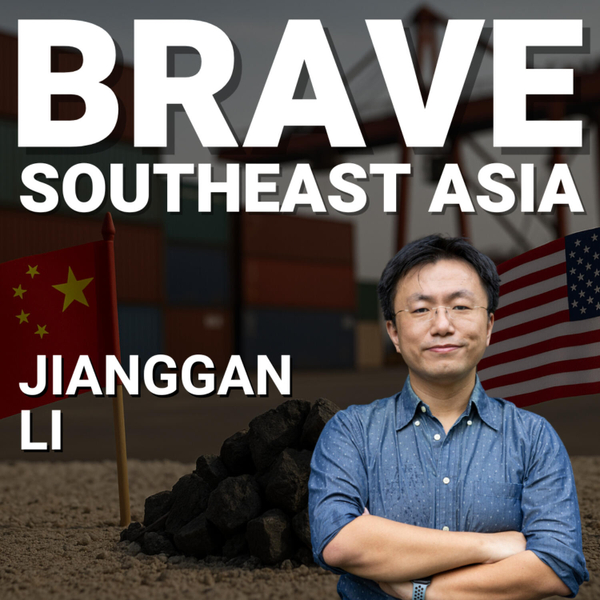
Jianggan Li: China vs. USA Tactical Pause, Moves vs. Countermoves & Rare Earths Leverage – E647

Jianggan Li: China vs. USA Tactical Pause, Moves vs. Countermoves & Rare Earths Leverage – E647

"America looked at China as Russia with communist leadership and a weak, fragile economic engine, assuming China was politically communist and economically the same. The Chinese economy is actually a hybrid system with a communist structure on top and a strong capitalist engine underneath that drives production, innovation, and competition. That bottom engine responds quickly to tariffs, policy changes, and the closing of the de minimis loophole, revealing far more flexibility than many expected." - Jeremy Au, Host of BRAVE Southeast Asia Podcast


"Media outlets naturally focus on stories that attract attention and clicks, making nuanced views hard to deliver, and if I'm running a media outlet and driven by KPIs, I will write something sensational that gets more clicks, forwards, likes, and comments compared to a balanced analysis." - Jianggan Li, Founder of Momentum Works


"NVIDIA said that if the US prevents them from selling top-end chips to China, China will develop its own, and that narrative resonated with some people in the administration, leading to late-year moves to relax certain rules. From both a narrative and prediction perspective, it is worth thinking beyond headlines by mapping the players, the scenario, and how each actor’s moves could shift the landscape, and if you do not want to run that analysis in your own mind, you can run it with ChatGPT, which handles this kind of strategic game modeling well." - Jianggan Li, Founder of Momentum Works

China analyst and Momentum Works founder Jianggan joins Jeremy Au to break down how US–China tensions evolved through a year of tariffs, rare earth leverage, supply chain shocks, and fast-moving geopolitical swings. They examine why both sides misread each other, how Chinese companies adapted faster than expected, and why the global system settled into a tactical pause instead of a decisive split. Their discussion shows how on-the-ground China differs from Western narratives, how product iteration and factory conditions changed under competitive pressure, and why neither side can force a quick victory. Jianggan also shares insights from thirteen trips across China as he tracks e-commerce exporters, shifting macro sentiment, and the emerging negotiation patterns that shape 2026.

02:28 US tariffs aimed to hurt China but failed to break its exporters: Chinese firms diversified markets, adjusted production, and kept shipping strong volumes even as analysts expected collapse.

03:08 China deployed rare earths and soybeans as leverage: Beijing used export controls, licensing rules, and supply pivots to respond in structured tit for tat moves that surprised US policymakers.

07:04 A tactical pause replaced escalation: Both sides realized they could not win quickly, creating a fragile equilibrium shaped by low trust but stable expectations.

10:06 Factory floors tell a different story: Air-conditioned warehouses, livestreamed food production, one dollar meals, and rising worker savings show a more complex China than what headlines describe.

21:12 Chinese product cycles sped up dramatically: Exporters improved quality within a year, added more features, and stayed cheaper, putting global incumbents under real pressure.

26:26 Narratives on both sides miss the nuance: Sensational media framing and echo chambers make Americans underestimate China and make Chinese underestimate America.

29:06 TikTok deal shows coexistence is possible: Restructuring turned adversaries into stakeholders and created a template for how cross-border platforms can operate under political pressure.

Jeremy Au (01:07) Good morning, how are you?

Jianggan (01:09) Good morning. It's like just a few weeks to the end of the year.

Jeremy Au (01:10) Yeah, I know, crazy, right? Well, it would be better not to count our chickens before they hatch. You never know what else might happen in this year. Especially because you and I tend to cover the China dynamic between Southeast Asia and US. And it feels like the news keeps shifting every week, right? By the time we record something, it's either just in time or it's a bit too late based on whatever new shenanigans or negotiation or pause or escalation happens.

Jianggan (01:42) I have some friends who are analysts, and their frustration is that quite often something happens, they wake up overnight to write a piece of analysis, and before they could publish the next morning, things have shifted.

Jeremy Au (01:53) Hahaha

Jianggan (01:53) So there's lots of effort, like writing things which never get published.

Jeremy Au (01:56) Yeah, and you just had to sign up on Truth Social because that's where all the breaking news is happening. And then it takes time for it to be screen-shotted, inserted into CNN. And then CNN also takes time for them to write the analysis. And then the market's already moved because everybody else is either on Truth Social or using bots to react to the market news.

Jianggan (01:59) Mm. Yeah. Yeah. So yeah, what a year.

Jeremy Au (02:21) What a year. And I think that's what we wanted to do was kind of reflect about maybe some of the reflections and learnings we've had over the past year. Because I think when we started the year and the podcast, we were talking very much about the Biden administration. We knew that Trump was coming in. What we thought at that time, of course, was that Biden was known as predictable.

Jianggan (02:28) Mm.

Jeremy Au (02:43) Anti-China in the sense of pro-America, but I think the policies were clearly signaled, progressed, and executed. The big ones were like reverse CFIUS, the ban on investing in Chinese entities and stock markets, your technology licensing, et cetera. So quite a lot of big stuff by the administration, but the Trump administration has really been a lot of roller coaster, right? I think global liberation day for tariffs, the anti-China tariffs.

Jianggan (02:55) Mm. Yeah.

Jeremy Au (03:08) Especially I think a lot of the negotiations, ups and downs around soybeans, semiconductors, yeah, rare earths. This is the year that rare earths became known as a word, I think, for most people.

Jianggan (03:14) Earth. Yeah, most people actually started digging on what exactly is that? Why is that so important for our lives and stuff? If you look at the industrial policy of China, I mean, they identified these as strategic decades ago. So now when you talk about, I think, the US, other places trying to sort of build their rare earth capabilities, that also probably takes years. The problem is that whoever is proposing it, whoever is working on it, do they have the commitment to follow that through? So that's why you see this like sometimes, I think the guys controlling this, like the Chinese or whoever, right? So they made it easier for you to buy, then your incentive to build the hard route to get something on your own becomes softer. And then it's hidden. So then you said, "Okay, shit, we should do something." And I think it also lets around around this cycle, and you need a very, very strong commitment and the ability to mobilize resources over decades to actually make this happen.

Jeremy Au (04:17) Yeah. And I think that's something that, it's a playbook, right? I mean, if you actually look at the complaints that a lot of companies have against America, I think between the 1950s to 1990s, I would say there's very much the same complaint that American companies made it super easy to buy American stuff. So there was no need for you to buy or build your own high-end processing capability.

Jianggan (04:36) Mm.

Jeremy Au (04:42) High-end stuff, right, in terms of manufacturing.

Jianggan (04:44) That was back at the time when US manufacturing was still the thing, right? Now, I mean, it's not so much about building things there. I mean, bring manufacturing back has been not easy, I would say.

Jeremy Au (04:54) Looking at the learnings of this past year as a result is I think rare earths has become a point of strong negotiation leverage for the Chinese, right? I mean, I think the first half of the year was very much the Chinese, I would say, getting hammered, I think, by the US tariffs. And I think US positioning itself as the ultimate, you know, consumer for the Chinese export industry.

Jianggan (05:01) Mm. Mm. Mm. Mm. Mm.

Jeremy Au (05:19) What's interesting is that the first half of the year was also, I think, China eventually deciding to do a tit for tat strategy, whereas most of the countries around the world decided to effectively fold, I would say, to the current administration's tariff strategy. But I think the second half actually has been interesting because I think China has been...

Jianggan (05:41) Mm-hmm.

Jeremy Au (06:00) Showed their teeth a little bit with the Americans.

Jianggan (06:03) I think I'm sure they have other cards which they have not used. And I think Rare Earth is one which they have used. Soybeans is another one, right? They diverted all the soybeans to Brazil and basically to South America. And that left US farmers sort of wanting something else from the administration. If someone goes and digs out the whole supply chain of different strategic industries, I think they will find much more choking points that the Chinese government over the past decade has probably built capabilities that control the global supply. And somebody has been talking about pharmaceuticals, I mean, that's pharmaceutical materials. And that's something that I'm not really familiar with, but it seems that there are lots of leverage points that people can use.

Jeremy Au (06:44) What's interesting now, of course, is that the Singapore foreign minister has described what he calls a tactical pause between the conflict between China and USA, which I thought was such a nice way saying it because at the highest levels, strategic trust is so low between both sides. I think both see this multi-year, multi supply chain move versus counter move, very low trust, I say, at a strategic level, at least between the current administration of China and the current administration of the US. And that being said, there seems to be a little bit of a ceasefire right now, where both sides doesn't seem to be doing anything super aggressive, right?

Jianggan (07:04) Mm. A lot of things have shifted this year, right? And a lot of assumptions that people have been making at the beginning of the year turned out to be, I wouldn't say drastically different, but somehow the whole economy, the market found equilibrium around this sort of tactical course. And when you are in, I mean, we have been sort of competitive environments for tech companies, right? So when you reach a situation that nobody can kill each other, so you kind of have a situation that people become less aggressive. Of course, people say that, "Okay, yeah, a lot of things happened. And at the end of the day, we are back to square one." But a lot of things indeed happened and a lot of things indeed changed. So if you look at, I mean, this year, a lot of a lot of headlines are about Chinese cross-border e-commerce companies like Shein and Temu, because if you read the US news, European news and stuff, they talk about these companies a lot because this company initially shipped lots of goods into the foreign markets using the so-called tax loophole. Basically parcels valued below certain thresholds that you don't have to pay tax. But I think that has been closed for the US. Europe is imposing a fee on each parcel. But somehow at the end of the year, we look at it, and these companies have been able to navigate through this.

Jeremy Au (08:46) Two things. First of all, I read up what you said is that I think they realized they can't kill each other. Or more importantly, I think if I look at the media, I think the first half of the year, obviously a lot of people were against the tariffs in a sense that they felt like it was bad for business overall and consumers. But I think there was actually a very strong piece that felt like the Chinese economy was very fragile and the tariffs would work.

Jianggan (08:47) Mm. Yeah. Yeah.

Jeremy Au (09:09) I think there's a very strong sentiment the first half of the year because it was like, "China is like overproduction, is too export reliant. They can't diversify." So China has to fold because America is the primary number one and cannot be shifted away kind of consumer of Chinese exports. And I think that sentiment has definitely changed in the second of the year, right? I think Chinese companies have figured out how to diversify the exports, and the economy is still going, and China's...

Jianggan (09:35) Mm. Mm.

Jeremy Au (09:37) Political leadership, you know, is not panicking about this, right? So I think there's a little bit of like, I feel like the West was looking at China through the Western lens, which is that, "Oh, a Western democracy seeing lots of lost jobs and everything would have to react." But China obviously as a communist system doesn't and did not react the way the Western perspective thought they would, right? Which goes back to the thing about making sure you understand how the other side thinks.

Jianggan (09:49) And if...

Jeremy Au (10:06) If that makes sense. It's so important.

Jianggan (10:06) Yeah, yeah. I know, I mean, the problem I see with lots of people, whether it's Western lens or Chinese lens or whatever, is you form a narrative before you go to the ground to have a feeling for yourself, right? And lots of people actually find data to justify that narrative. So, but quite often, so this year we have, I mean, me and my colleagues, we have been on 13 trips to China, business trips, and to different provinces. We've been to the factory floors, we've been to the warehouses. A lot of the macro data that you read from outside become sort of more meaningful when you start talking to people. Not the big executives, right? I mean, not only the big executives, but you go to the factory floor, you talk to the packers there, and they tell you how they feel about life, and how much they earn, and what's the aspirations and stuff. Then a lot of the things you realize how different it is, right?

I recently went to a few warehouses in Guangdong province and operated by some of the large e-commerce players. And one thing which surprised me and which I said you guys should tell the world more about this is that their warehouses are air conditioned. And they were saying that, "I mean, you obviously pay millions in electricity bill every month. And what's the point of this?" And they said, "Initially, because we're selling to the West. So we want to show the world that we were not sweatshops. We treat our workers nicely." But somehow people still don't believe it because they don't come here and see. And I think many sort of analysts have probably never been to a workshop or or warehouse in summer to see what a sweatshop actually looks like and what a difference that the air conditioning workshop actually makes. And they start talking to the workers. Then they tell you that, "We earn about 1,200 a month." And, "I'm saving this much," as "how much I spend." And they realize that, "Not bad," as life for someone who comes from the countryside, had not had much education, and this managed to some savings. And now the food delivery platforms in China are able to offer meals at like 1 each and enough for you to to feel very full for lunch and and decent meals, because these are organized by large platforms, so they make sure that there's live streaming on the kitchen and stuff to make sure that, okay, it's clean. So, so a lot of things are organized very differently. I mean, if you just look at the data from outside, you will not get this.

Jeremy Au (12:27) Yeah, it sounds like the Chinese companies are learning about, you know, what I think the Americans learned, you know, in the 1950s, right, which is about, you know, manufacturing can be a good place to build jobs, but it's also good to treat the workers well, right, in order to keep them, retain them, talent war. So it feels like, you know, China's going through that same evolutionary history that American, you know, manufacturing firms kind of did, right, which is a function of cause of tightening labor supply.

Jianggan (12:41) Yeah. Mm-hmm. Yeah. Yeah. Yeah.

Jeremy Au (12:52) More competition, war for talent. So it's going to be nice to your workers. "I don't want to go to your competitor," right?

Jianggan (12:58) No, otherwise they go to deliver food. Now, I mean, if you work as a food delivery rider in China, you earn close to, I mean, in big cities, right? You earn close to 2,000 a month. And all these manufacturing bosses are saying that, "Okay, if I don't create a good working environment, many of my workers would prefer to like ride a bike outside and deliver food."

Jeremy Au (13:18) You know, there's actually quite some interesting nuance because from my perspective, I look at it more as corporate history. Because Henry Ford was famous because when he was making the car production, he was famous for introducing corporate benefits to his workers, like more pay and better working conditions. That was considered quite revolutionary, obviously, at that time. But what's interesting is, like you said, in China, it's not against other manufacturing, but it's against the technology platforms, which makes a lot of sense.

Jianggan (13:20) Mm. Mm. Mm. Mm-hmm. Mm-hmm. And you see lots of these decisions being made by individual businesses, and they collectively become what you see as the competitiveness. And many of the decisions are made not because they I mean, they want to be more corporate or socially responsible or they want to be more benevolent. Many of them are pure business decisions, right? "I want to be competitive. I want to attract workers. I want to be competitive. I want to sort of make my products more trustworthy by the consumers." They, a lot of decisions. And now you go to, I mean, many of the factories floors I've been to, they're live streaming now. So, and especially food factories, because they said, "Oh, in China, there's so much scare about food safety. And some of the factories, whenever they have the abilities and they have imperative actually because they said this is the only way for people to trust us. When I buy our food products, they can turn on their app and look at live streaming of the production process." So so a lot of things are organized very differently. I mean, if you just look at the data from outside, you will not get this.

Jeremy Au (14:41) I think this actually goes back to the miscalculation or misunderstanding, right? Which is that I think America looked at China as Russia, which was a communist leadership with a very weak economic engine for Russia, and sort of a fragile one, actually. And so they look at China as like, "Okay, this is a communist politically, but also the economy is communist." But actually the Chinese economy is a hybrid economy or structure, right? There's obviously a communist structure on top.

Jianggan (14:59) Yeah.

Jeremy Au (15:08) And then there's very strong capitalist production, innovation, competition, free competition engine. And that bottom part is very responsive to all the various tariffs, policy changes, closing of the de minimis loophole. That engine is actually much more flexible. And I think that's something that we've come to understand recently.

Jianggan (15:28) Yeah, I think it is essentially a paradox. So people try to form sort of simplified narratives saying that, because simplified narratives are easier to propagate and easier to digest. But quite often when you look at how it actually functions, you realize there are lots of nuances. And it's hard to classify this as one side of the spectrum or the other side of the spectrum. It's somewhere in between, and it's often moving.

I talk to China's businesses, and let me give you an example. I have been to China 13 times this year, right? So obviously each time is, most of the times we are taking sort of leadership of outside companies to meet sort of their counterparts in China. And quite often, so we try to book meetings with China's executives. What they will tell you is that, "Okay, I'm agreeable to meet, but I can only confirm my time two to three days before the actual meeting." And for outsiders, it's like, "What the heck, right? Are you not committed?" But from the Chinese side is that, "Okay, I mean, there's so many changes in the market. So God knows what will happen when it approaches our sort of desired meeting date, like six weeks or eight weeks after. So a lot of things could have changed, and I could be pulled by the government, could be pulled by my customers, I could be in another province. So it's really hard for me to give a fixed commitment." But if you try to understand this mindset is, they are in a business environment where lots of things are constantly shifting, and you have to make lots of changes, you have to make lots of snap decisions. And sometimes you have to bring your whole organization towards a different path based on a very snappy decision. So that's something which is...

I have friends who come from Western companies to work in Chinese companies. That's something that it takes them a while to get used to, constant change of directions. And the boss usually doesn't really bother explaining to people and trying to convince people. They just say that, "Okay, let's now go towards north instead of east," and everyone follows. And I have a few friends who have been telling me that, "I don't understand this dynamic." But after like two or three years working in a Chinese company, they get used to it.

Jeremy Au (17:35) This description of the intra company dynamic actually reminds me of the whole Chinese system anyway, right? It reminds me of like the Song and the Tang and the Ming dynasties, right? Which is similarly, they had very strong political control as Kings, right? And then there's a huge merchant class that was out doing business, running around, exports and everything. And it reminds me of the fact that...

Jianggan (17:40) Mm-mm. Yeah, yeah, yeah.

Jeremy Au (17:57) I think the Americans and the Westerners kind of assume that you need, and classic one, right, which is democracy in order to have capitalism, right? And obviously we saw that in Soviet Union, you know, that, you know, they had communism with a communist market economy. So, I mean, obviously it's very A versus B, right? But the tricky part is that China, putting away the communism piece, let's look at it as another period of life, which is like,

Jianggan (18:04) Mm. Mm.

Jeremy Au (18:21) The Tang, the Ming, and now the current administration or regime. Is this another chapter of strong Chinese political control at the top and freewheeling small medium commercial enterprises trying to do business everywhere? And those two lanes are kept together using Chinese culture around authority and deference.

Jianggan (18:26) Mm-hmm. Mm. Yes. So that is why it's a block towards the existing sort of world economic order, right? So you have one party which is now really big enough, it's influential, its decisions sort of have reports across the global market, but yet for the incumbent sort of the leading economists, when you look at this new player, they're different from you. And many of the ways these guys behave are different from what you think they should behave at this size, at this level of economic sophistication. So that creates headaches in lots of people's minds.

We have taken a lot of board members and CEOs, CXOs to China this year. Sometimes it takes a few days of full context explaining for them to truly appreciate, "Okay, how things are organized this way." But one thing is that for many of them, once they start to appreciate, they start to panic. They say, "Okay, when these Chinese companies are coming out, how should I prepare my organization to be more competitive? Or how should I really work with them?" So this is an interesting question. I think lots of people are starting to feel, right? I mean, if you look at sector by sector, you have lots of Chinese companies coming out, and quite often initially you would say that, "Oh, they are basically offering cheap products subsidized by the state." Then you see very quickly their products evolve, right? And if you look at consumer products from say Xiaomi or whoever, right? So if you give them one year of timeline, I mean, the new products that are coming are very different from the products that you see a year ago. And that cycle becomes a threat to lots of incumbents. They said, "Okay, obviously we have optimized our process, our supply chain to the extreme. And when these guys are coming in with a different way of organizing their supply chain, with a different way of organizing the internal organization so that they could iterate their products more quickly, and how should we respond to that?" I think this year we had a lot of people approaching us with these faces, right? "Okay. I have Chinese companies in my sector coming out. Two years ago, were shit. And a year ago, they started to become better. And then we still said, 'Okay, it's less sustainable.' But this year, they're becoming as good as our products have become as good as our products. And even sometimes they have more features, and they are 20% cheaper, and consumers start to shift. So what should we do?"

Jeremy Au (21:06) Yeah. And it's a tricky thing because, you know, historically, you know, MNCs from America were the ones benefiting from this, right? Because, you know, Apple's product iteration, so much of it was being driven by this Chinese innovation, but being fed through the Apple layer. And I think some of this, you know, where I think the sad part about this entire tariff war is that he has forced all these Chinese companies to basically...

Jianggan (21:12) Mm. Mm. Mm. Mm.

Jeremy Au (21:29) disconnect from the American layer that was doing the branding, the marketing, and extracted a good chunk of the markup between Chinese production and global consumers is that that disconnection forced all these Chinese companies to basically build out that front end and diversify. And now I think the entrepreneurial spirit is going to let them figure it out very quickly. And I think that's quite an interesting piece because one thing you've made me realize as well is that...

Jianggan (21:36) Yeah.

Jeremy Au (21:55) I think from the West perspective, it reminds me of, remember those books in the 1980s and 90s where there were like these books on, "How should a Westerner learn how to do business in Japan? What are the Japanese? Why are they doing so well?" et cetera. And to some extent, obviously Japan obviously has a democracy and also, but of course the system is much more conglomerate driven, right? Similar to Korea. What's interesting is that if you write the same book about China now, you'd explain to them, it's like, "Okay, you know, the political leadership is much more top down, command and control than the Japanese system." But the market system is very much, I would even hate to say this, quite American, right? I mean, the whole spirit of like, you know, the China dream, "Let's innovate, let's run a small medium enterprise, there's a big dream." It feels quite American and quite similar to the spirit of many Americans...

Jianggan (22:25) Hmm. Hmm. Hmm.

Jeremy Au (22:45) small medium enterprise owners that I know as well. So it's actually quite, there's more similarity in the business, DNA competition angle.

Jianggan (22:50) Yeah. Absolutely. So this year I was in Shenzhen a few times, right? And at a headline level, people look at Shenzhen, they will say that, "Okay, the the housing price bubble is bursting, and the apartments are empty," and and sort of "it's it's doomed," right? But but a few times I got involved in those like discussions amongst entrepreneurs, and sometimes you see how crazy it is. You go and meet someone for dinner, and after dinner, I said, "Okay, let's go and talk about business." So we have a bunch of people going to a teahouse, then without alcohol, without smoke. They started talking about all the business challenges and all the sort of different areas of operations. They try to figure out, giving each other advice and stuff. And sometimes these discussions last until like 1 or 2 AM. And you can see that people spend so much time and so much effort trying to grow their business. And at least to me 20 years ago, when you come to Shenzhen and you have lots of dynamism and you can make money, you can build businesses. And fast forward to 2025, if you want to build a business, and Shenzhen is still the place to go, you should still be there. So you see that dynamism, that dream amongst entrepreneurs are still there. So obviously, I mean, the whole macro narrative, we see lots of young people getting dissolution, lying flat, or not willing to sort of go on this like rat race. But that's also true. In any society, entrepreneurs is always a small percentage of the society. So when you have that group of, I don't know, a few hundred thousand or even a few million people still on the drive, and they can still mobilize, I don't know, 10 times the people following them, and that's still formidable force, and now with much better infrastructure, much better supply chain, much better way for them to test and market a product. I would say that it's a very, very interesting time for new things to come out.

Jeremy Au (24:41) You know, now as we discuss this, it makes me feel bad because I feel like I should also talk about the Chinese side of America and the West as well. And I think one thing I noticed when I talked to Chinese people is I feel like they feel like the West is doomed. They feel like America is downhill from here. They feel like America has too much debt and they can't get their stuff together. If there's an error that the Chinese make of the Americans, to make it more fair, is I think they tend to, from my perspective, underestimate the American system. It reminds me of what Lee Kuan Yew said, which is, "You should never count the Americans out, basically. Never underestimate Americans. They'll figure out a way to bounce back and make things happen."

Jianggan (25:08) Mm-hmm. Yeah, that would it. Yeah. Yeah.

Jeremy Au (25:26) That's something that I feel I get a sense from the orbit chamber or echo chamber, whatever you want to call it. It feels like there's a little bit too much premature about the American system.

Jianggan (25:35) Yeah. I mean it's the same for the flip side, right? It comes as you don't understand the other side well enough for lots of people. So that's why you form this simplistic narratives, and we don't have the actual feeling, we don't have enough touch points with people actually sort of working or the other side, and you tend to get information from random chats, you tend to get information from media. And that's quite often not the full picture. Of course, media, I mean, by nature would have to portray things which get them more attention and more clicks. And an actual nuanced view is actually quite hard to get through to people. And obviously, if I'm a media outlet, I'm KPI driven, and I write something sensational that will get me more clicks and more forwards and more likes, more comments compared to something which is a balanced analysis, right?

Jeremy Au (26:26) Yeah, that's why that makes this podcast more fun, but also irritating, right? Because we would be so much more popular if we just said like one thing, right? It's like, "America is the best, China is doomed," or the opposite. You know, "China is the best, America is doomed." Then all the bots from both sides will happily feed our podcast. But now it's saying like, "This podcast is like, can't kill each other." They've realized they can't kill each other.

Jianggan (26:43) Yeah. Mm-hmm.

Jeremy Au (26:51) Back to square one in terms of negotiation, but obviously the world has changed. The economies of both sides have changed quite a bit. And I think, you know, I'm kind of curious how you think about a year looking ahead, you know, what are the thoughts that make you hesitate versus things that you are optimistic about?

Jianggan (27:05) I do think that after a year of turbulence, people's stomach towards turbulence is, I mean, people can sort of withstand turbulence much better, at least the people around me. So I remember in the beginning, I was telling you that I was speaking with the businesses, and they were looking at sort of impending tariff fall. They said, "Okay, we really don't know how to respond to it. Therefore we choose not to respond. We just see how it goes." But towards the end of the year, you get a sense of how these sort of power dynamics play out. So you know that, "Okay, so there'll be a stalemate," and of course, occasionally you will see like some tactics going here and there, but it's in a situation that nobody can kill each other. So that allows you to better adjust your strategy to actually honest and to actually do things the way you want to do it.

I mean, if you look at companies like TikTok and Shein, I mean, so up until last year, they were still trying to say that, "We are a Singapore based company." I mean, they still have the headquarters registered in Singapore, but now they don't have to do so much sort of telling the world that, "We're based in Singapore," because it doesn't matter anymore. And I think the TikTok deal is structured in a way that you turned a few potential adversaries in the US into allies. I mean, pretty much the same as many other historical market access deals have become. So in that situation, you have people benefiting together with you. That makes the system a little bit more stable. And I think the whole tariff war makes it probably a bit harder to decouple because of, I mean, you see narrative about TikTok, but you also see the narrative from Nvidia, right? Nvidia was saying that, "If you prevent us from sending our top-end chips to China, they will develop their own." So I think that narrative resonated with some people in the administration. That's why I mean, towards the end of the year, they're trying to relax the rules and stuff.

So from a narrative point of view, from an actual prediction point of view, I think it's worth for everyone to think a little bit deeper about, I beyond headlines, and also play a little game in your mind, right? So these are the different players. This is the scenario, and this is how the actions of different players would potentially change and move the landscape. Or if you don't want to play that in your mind, you can play that with ChatGPT. I think it does a pretty good job doing this kind of game analysis.

Jeremy Au (29:26) Yeah, I think, you know, things that were not unclear, like the fate of TikTok has, I think the shape of it has become much more clear, and it's not a perfect deal. I think no deal is ever perfect, but I think they've got the shape of something that both sides are unhappy about. And no matter what the media says about how good or bad a deal is, the truth of the matter is the deal got made.

Jianggan (29:30) Yeah.

Jeremy Au (29:33) People inside, they know how to carry on doing business moving forward. So that gives a bit of uncertainty, and that also gives the certainty to the whole ecosystem, right? Because remember at the beginning of the year, influencers, sellers and staff, they are saying that, "Okay, I don't know how much effort I should commit to TikTok because I don't know where they would be banned."

Jeremy Au (30:06) Yeah, and that's actually a really good example of actually the whole broader theme. And I really like what you said about it is it's stalemate in a sense that neither side is going to have a quick victory that was predicted in the first half of 2025. No one's going have a quick victory, and nobody's going to quickly fold. But I also think that it feels like both administrations are...

Jianggan (30:13) Mm.

Jeremy Au (30:29) willing to be transactional and negotiators. I think both sides are willing to prepare very hard for negotiation. And I think it's almost like business, right? It's like when you're negotiating with each other, at first you think you're going to win. And after that, you kind of realize that each person is like stronger than you initially thought. Then you...

Jianggan (30:42) Yeah.

Jeremy Au (30:45) kind of hit some sort of stalemate, right? And then you do these smaller side deals to say, "Okay, you know what? We can't agree on this big stuff, but let's just do all these small things and get it done."

Jianggan (30:50) Yeah.

Jeremy Au (30:52) I think there's more respect of each other, I would say, in 2026 as negotiating counterparties. Even though it's a stalemate, I think there's still a negotiation piece. And I think a lot of negotiations will keep happening next year as they try to figure out what deals can be made. I'm kind of curious in my head because, you you never know, maybe 2027 or 2028 might be the year that deals are made, right? You know, I think you just look at that four year cycle of the American administration.

Jianggan (31:19) Mm. Mm.

Jeremy Au (31:20) It's natural for the first year for the changes to be made. Second year, you you learn, but I wouldn't be surprised if some deals are made in year three, year four.

Jianggan (31:26) So actually I think entering 2026, I'm probably a little bit more optimistic compared to the beginning of 2025. Or in a way, it's less fearful, right? So we have been to China so many times this year, and we got a much better understanding about what's happening there. And I also noticed that towards the end of the year, the people I talked to, the sentiment have become, I mean, the macro economy is still, I mean, if you look at numbers, it's not great, but the confidence of businesses and investors are becoming much better compared to the beginning of the year.

And there's also a selection bias because you talk to the Chinese investors who have taken refuge in Singapore since 2022. I think many of the viewpoints stuck in 2022, right? They were telling you everything's bad. But the people who think that things are good have already moved back to Shanghai. So we talked to these two different groups of people, and their pathways sort of bifurcated in 2022, and I think it remained so until 2025. So to get real understanding, probably you need to talk to both sides. I mean, you need to understand from the people who are pessimistic, why they are pessimistic, but there are also people who are optimistic, why they're optimistic. They inform your own judgment, and and then you figure out how you should deal with all these Chinese companies which are coming out.

Jeremy Au (32:41) You know, that reminds me as well about, I think the classic negotiation technique of escalating, you know, the escalate a bit, right? Cause you want to go and come in strong, and very much Trump's Art of the Deal, perhaps, you know, it was that all the time, right? Very strong, you know, anchoring offer and then go there. And I think next year, I think what's the market's baked in is like, you know, the headline tariff, maybe, you know, 20 plus percent, maybe even a hundred percent on some sectors. But if it was like the effective rate...

Jianggan (32:49) Yeah. Yeah, yeah. Someone does that all the time. Yeah.

Jeremy Au (33:08) Blended across all the products and services is maybe closer to like 10 to 15%. So I think, you know, the bark is worse than a bite, which makes sense. I think they always say like in democracies, you know, I think there's a very strong posturing that this is very headline numbers, very strong for the domestic, uh, Western publications. Uh, but the actual effective that's taxing the Chinese system and the American consumer is actually lower. And I think...

Jianggan (33:39) Please. Mm.

Jeremy Au (34:01) The entire system is going to, has learned that I think in 2026, the headlines, there's a discount that you can have it where you have more time to adjust and maybe it's not as bad as the headline says, yeah.

Jianggan (34:16) And it's not as beyond the headlines when things actually happen, when things actually evolve towards a certain extreme and English we have a term called reversion to the mean, right? In Chinese you have the Wu Ji Bi Fan, right? When things go to extreme, it will bounce back towards the towards the other side. So so otherwise because otherwise it will break. And and I think we hope that the globalization that we're used to. I people say that it's gone. I'm still thinking that is the most efficient way of organizing the global economy. So I think at the end of the day, unless things break, I think, think correction, letting off some steam, letting off some energy would probably be good and we'll not expect things to be in a stable state, but that kind of oscillation, that kind of sort of tactical pause and equilibrium and with little bit of attack and defense here and there. It's probably the normal that we need to get used to, and it's not bad as a new normal because of the pressure that has been built around this power dynamics, and I think it's good for things to evolve. I mean, it's just like stock market, right? I sometimes you do need a correction for the market to grow more healthily in the long term. I think the same for all the businesses and all the things that we'll be talking about.

Jeremy Au (35:33) Yeah, well, on that note, it reminds me that maybe next time we need to do an episode of, I guess, China's Art of War versus Trump's Art of the Deal, right?

Jianggan (35:42) That would be fun. I think we should mark that for the beginning episode of 2026.

Jeremy Au (35:47) A deep dive, what's the difference in what was similar, what's different, you know.

Jianggan (35:51) Yeah, that would be a fun. Cool. Yeah, enjoy. Bye.

Jeremy Au (35:53) Okay. All right. I'll see you next time.

Hosted by

Related episodes