Skip to content
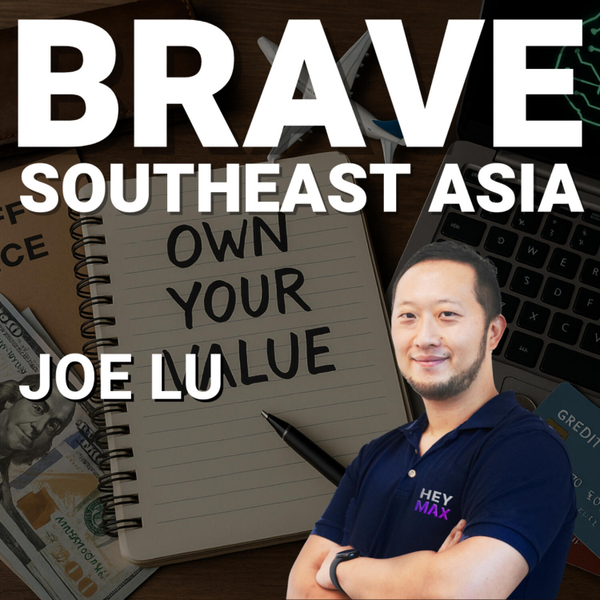
Joe Lu: From Meta Layoff to HeyMax, Rebuilding Value, Miles & the Future of Consumer AI – E644

Joe Lu: From Meta Layoff to HeyMax, Rebuilding Value, Miles & the Future of Consumer AI – E644

"we initially had these insights of what people want but then we dig deeper into the fundamental drive of customers' behavior it took me almost three years to actually articulate it at this level here’s what it is and put it into a framework there is a price tag that any business is willing to pay to get you to engage with them they pay different things for different actions they pay you to look at their TikTok that’s one price if you try their product there’s another price if you buy their product there’s another price if you become a long-term customer or partner that’s another price everything has a price tag and companies like Facebook or Google built strong engines to figure out what that price tag is and effectively monetize it for themselves" - Joe Lu, Co-Founder of HeyMax


"what I am predicting and this is my very convicted view of the future is that consumers will increasingly be universally smart and savvy because it will cost almost nothing to be smart and savvy miles and rewards will be done automatically and the trade-off disappears so more people become universally savvy which means consumers will win and feel entitled to get all their own value into their own wallet in the cheapest and easiest format possible and that is what HeyMax is" - Joe Lu, Co-Founder of HeyMax


"why does the consumer have to start with a loss that is the fundamental question what if I figure out a way to let you tell me what you care about and what segment matters to you then I upsize the rewards for you this becomes a redesigned consumer rewards model truly a consumer first product instead of rewards being business products disguised as consumer offerings created to retain customers or increase loyalty or AOV the real consumer rewards ecosystem should start by asking what do you want as a reward" - Joe Lu, Co-Founder of HeyMax

Joe Lu, Co-Founder of HeyMax, joins Jeremy Au to unpack how layoffs, timing, and conviction turned a setback into a startup opportunity. They trace Joe’s journey from Shanghai to Michigan to Facebook Singapore, and how getting laid off in 2022 pushed him to co-found HeyMax. The conversation explores his reflections on building a consumer-first fintech, understanding mindshare arbitrage, and predicting how AI will reshape loyalty and value distribution between businesses and consumers. Joe also shares how fatherhood, risk-taking, and curiosity shaped his path as a founder.

00:45 From Shanghai to Silicon Valley engineer: Joe recounts growing up in China, studying in the U.S., and joining Expedia and Facebook during the golden age of software engineering.

06:27 Building Facebook Singapore’s tech office: He helped establish one of Facebook’s first Asia engineering hubs, seeing firsthand how global tech scales into the region.

12:17 Meta layoffs spark a new beginning: Losing his job in 2022 became the catalyst to start HeyMax with three co-founders instead of returning to corporate life.

19:15 Pivoting from AI-for-money to credit card tools: The team experimented with finance bots before hitting traction with a merchant category search tool that drew thousands of users.

23:50 Discovering the miles community: Joe realized that while few people care about miles, those who do care deeply, creating a niche with high engagement and clear demand.

30:37 Building a consumer-first value model: Joe envisions a future where AI helps people capture their own value directly from brands instead of intermediaries taking the largest cut.

46:42 Being brave as a founder and father: Joe shares how starting a company during a funding drought with two young kids taught him resilience, balance, and optimism.

Jeremy Au (01:30) Okay. Alright, so could you introduce yourself?

Joe Lu (01:35) Yeah, sure. My name's Joe. I co-founded a company with three other co-founders called Haymax. Our company is based in Singapore. Right now, it's approaching a Series A stage. We started just about almost three years ago. I personally was born and raised in China for 20 years and grew up in Shanghai. At year 20, I went for a college program that gave me a dual degree, went to the US—University of Michigan, to be specific—to experience winter for the first time for real. After that, I stayed in Seattle for about eight years, working for pretty cookie-cutter jobs, working for big tech companies as a software engineer. To get our histories right, this is probably one of the best times in history to be a software engineer. You get a company throwing perks, ESOPs; you can graduate university, get six-figure cash jobs right off the bat. All the FANG companies are hiring like crazy, before AI is taking all the software engineering jobs. So life was pretty good, but it became somewhat boring.

So I thought, "Hey, Asia is where everything's happening." We decided to look into moving to Asia. Actually, specifically, we didn't really want to... I think first of all, it was already 2015 or 2016. So we already missed the initial China wave. Before that, if you have a US-educated Chinese background, going back to China, it's a pretty good advantage that you can really build something really interesting that you saw in the US. Using your technical background, you can do something really interesting. After that, I think the path diverged so much; the progress happening in the China tech scene also so different. So it became more of a disadvantage, increasingly more of a disadvantage that you've been comfortably living in US big tech. You know nothing about the Chinese tech. This is how I feel. So we never really had the urge to say like, "Move to China, catch up the wave in China."

We were thinking about some pretty unique opportunities. In 2016, I looked into starting a company in Japan. I went to a TechCrunch event in Tokyo, met a bunch of founders, and I realized that it's probably way too big of a jump. Japan's tech scene at the time was also really not very friendly to foreigners.

In 2018 or '19, I was lobbying really hard within Facebook, emailing our CTOs and a bunch of people who were making location decisions. Just about that time, the context was within Facebook, then called Meta. There wasn't really an engineering presence, a product engineering presence in Asia, but Asia is actually the fastest growing sector. Essentially, you had a bunch of people in Menlo Park making decisions about how people in Thailand experience commerce on Messenger. So we were lobbying internally for creating a tech office. I think EDB also did an amazing job, making sure big tech companies don't just hire operations, sales, or marketing people in the Asia Pacific region. But if you want to call Singapore your Asia Pacific headquarters, you got to put in real R&D departments in there.

I was one of the first few engineer managers and experienced people from Facebook to come here and set up our engineering office back in late 2018, early 2019. That's where I landed myself in Singapore. After that, before even starting this company, I already made my personal goal to grow Singapore and this part of the region into a global tech hub. I'm a bit of a tech historian, looking into Silicon Valley history, realizing that Silicon Valley didn't really just start out with Google. It didn't start out with Apple. It was really started out even before Hewlett Packard, where all the World War II engineering, NASA, all these things happened on the West Coast. And Stanford, all these universities came along. It's a long history of almost 100 years that made Silicon Valley what it is now. So for me, I feel like to make Singapore into a really world-class tech hub, it'd probably take a few decades more, even if we started already maybe 10 or 20 years ago to try to make it. So I thought, "Hey, that could be my vision and mission," a personal mission myself, to make Singapore into a world-class tech ecosystem. Previously, when I was at Meta, I was mainly doing it by bringing in globally really awesome, very senior talents here, together with the locally hired university grads. You create a pretty solid pipeline. But since the big company is not hiring much anymore, now the path to do that for me is to build a startup around here, really make it into a world-class engineering tech company in this region that can, in the future, hopefully rival the giants in the world.

Jeremy Au (06:33) What would be interesting is that you decided to stay and work in America as an engineer, and you worked at some of these name-brand companies as well. What was that decision? You could have gone back to China, you said, where there was still growth at that point in time. Walk me through that decision-making process.

Joe Lu (06:50) I think the way I was growing up, part of Shanghai, people are fairly pragmatic, not very politically minded. People don't have really large ambitions either. Everyone around us would strictly think the U.S. is strictly better. At the time, U.S.-China relations were really good. Especially even from the school I went to, it's a joint degree program between Shanghai Jiao Tong University and University of Michigan, which at the time was state-level sponsorship to create that connection, a proper joint Institute that acknowledges both sides and has professors from both sides, all that good stuff. So our parents, myself, all other people around us, would strictly think the US is better. It's not a debate to say should you go; it's more about, "Do you have enough money to go?". If you don't have enough money, maybe you just go for a Master's instead of going for the four-year undergrad. My parents being in China, everyone is a single child, so you can gather all the support from your family, just dedicated in supporting you, which for me is also an extremely lucky upbringing in that way. China at the time is already somewhat rich enough for these kinds of parental situations. My parents are just very regular workers in the economy and have enough to afford at least two years of university college. So you go there, and then the decision to work in the US is also pretty organic, and there's no debate about it. I don't think there was a debate. I think right now the situation is of course very different. At the time, it was just, "Yeah, of course, we'll go back." You look at the entire spectrum of people, there have always been these top people who have a huge amount of great ambitions. They really think they have a plan for their country. Not a lot of people around me are like that at all.

Jeremy Au (08:34) How did you choose your first company and what was the experience there?

Joe Lu (08:38) At the time, I ran down to two companies for my first choice: it was between Amazon and Expedia. I didn't know—I think now looking back, my life does have a theme—but I like travel. I wasn't a huge traveler. My family, actually before I was 18, I never traveled a few hundred kilometers outside Shanghai at all. The only flight I'd taken was a flight between a school program to Germany, just once. I've never taken a flight in China. Family just doesn't travel. There are no habits of traveling. So a very bad financial decision to join Expedia instead of Amazon, because Amazon would have given me stock. Expedia didn't even give me any real stock options back then, and this is I'm talking about 2012 Amazon. But I think I was following my heart to say the manager is really good. The person actually is on my cap table right now for my current company. We still keep in touch and he's a really good tech guy.

Jeremy Au (09:22) I'll talk to him when this is up.

Joe Lu (09:33) That kind of elevated my initial part of my career. I chose Expedia because I think I can travel a bit more. I thought I could travel. I think software engineering, I can do anywhere else myself. But the funny thing is, the only chance I could travel with my two years of service in Expedia was a train ride from Seattle to Portland for an open-source conference, none of the business travel I was imagining I could do. So I thought, "Okay, this is enough." Let's go to the hotshot. I went to Facebook after that, stayed for almost a decade, then done tons of travel ever since I joined Facebook.

Jeremy Au (10:10) And what was interesting is that you have Facebook and you obviously got to see two different eras at Facebook, right? The first era, like you said, was Facebook's global expansion, entering new markets. And the second phase was you going through that transfer process. So could you walk me through those learnings from there?

Joe Lu (10:27) The first few years at Facebook, I think was truly transformative in my career. The great people—not 10x the other engineer, they're like 100x the other person's entire department's entire outputs combined. It was also a time where Facebook could do nothing wrong. I know it's very hard to imagine right now, but pre-2016, pre-Cambridge Analytica and all that, they were generally the darling of the world, like on magazine covers and all that, right? Everything like this great story around it. Then to me, two distinct things. I joined the Seattle office, not the headquarter. At the time was less than 200 people, knew everyone by name, a really huge amount of freedom as an engineer. But also it's the nature of the business. Everything you do, millions of people impact, potential of earning a few million dollars more revenue. I was on a team that internationalized. A big part of my career there is spending time in Growth, working on internationalization, helping translating Facebook from the timeline, maybe lower 10 or 20 languages all the way to expanding that to over 100 languages. So a lot of work into Growth. I personally like languages that facilitate my yearning for that.

Then I think the post-2016 election era, you see the company really transformed. I think 2016 is interesting—a year of almost, I think within the tech company, West Coast. It's like a year of reconciliation, right? Everyone's getting shocked. It's almost like the entire company—I remember Facebook had to go through almost like group therapy. Everyone's mourning about something. And then a few months later, all the fingers starting pointing to this company that almost did that. You had to transform your own thinking. It went from, "It's just a pretty harmless platform that let people have their own voice. What's wrong with free speech?" all the way to, "Maybe you still need to do content censorship, you still need to do this and that." It becomes much more real as a societal impact. It can be validated in the real world.

Jeremy Au (12:32) And what's interesting is that since then you've also left to build your own company, Haymax. Could you share a little bit more about why you decided to build this company?

Joe Lu (12:41) We didn't decide it. Facebook helped us decide it by giving us a ticket out on the foot. We were fairly lucky because we were the very first wave. You remember 2022, I think the year started out still very aggressive. Everyone's still using Zoom. The stock price is really high. And then the year just went to crap. I think in October, Facebook was really the first big tech company to publicly announce that it's laying off a significant part of people. I was pretty much anticipating that something will happen. I remember I was actually on a month-long sabbatical that you get to do every five years at Facebook, where I was in Japan. I think before I went, I handed off a bunch of responsibility to my team. And I said, "Just call me when that thing happens." The way that I think you can tell is that I just spent the last year basically debating with people on who's doing what rather than anyone's doing anything. There was a lot of motion. You reorg teams every three to six months, and the company keeps on doubling its size even at the scale of six digits employees every 12 months or so—that's not going to be very sustainable. So that was a very huge amount of clarity on, "This is not going to last that long." I think our entire organization globally got laid off, especially because we are a small part in Singapore that hasn't been well established as an organization by itself yet. Because for a large company establishing a satellite office, it's hard to stand up its own—Google of Japan, Google of Singapore—it's really hard. It requires so many stars to align.

But we were fairly lucky that we got laid off on the first wave. So we didn't have to go through all the mourning, internally questioning and worrying about who's next. We just got off it. "Okay. That was easy." But the fun thing really happened after that is really what you do. I'm not sure if really it's the brave thing to do. But for me, it was a fairly clear strategic decision. If you follow game theory, this is the best move, actually, when everyone's super fearful. This is the time we got laid off. Everyone's laying off after that. And so no one's hiring, no one's really hiring. Whoever is hiring, is getting tons of resumes. If you're trying to be an employee at the time, it's a really bad move. You don't have any leverage. And also, you're very much risking lasting first out. So we thought, "Why bother?". But if you flipped around to be an employer at the time, then the game changed. So that was one of the simple views. The other simple view is, I think I just boiled it down into simple checks. Another simple check is I've never done fundraising. Everyone said fundraising is really hard right now. I thought, "How much money does it really take to start a software company?". I said, "Not so much, maybe like less than a hundred K." So if I walk down, well, they're fairly near Orchard Road. I literally asked myself, I walked down Orchard Road, "How many people on the street I can tap onto and say, 'You have a hundred K that you can use to invest?'". At the time, yeah, tons of people in Singapore have more than a hundred K that they can invest. So the funding difficulty doesn't apply right now.

The other thing is that, we suddenly have so many people, especially, I think, talking about my co-founder, why we have four co-founding team. It's because we suddenly have a situation where these people who I would have tapped onto their shoulder and begged them to quit their job if I'm starting a company in a different time, now suddenly they're all out of job, and I can quickly get the right people to start a company without needing to go through that lengthy process of convincing, right? Trying to do something on the side, then start the company really together, involving their family to make these hard decisions. None of my first two side hustles went into a full-time job, mostly because I couldn't find the right timing and the right people to commit at the same time. Yeah, I'm not that strong of a solo founder. I think I need co-founders to keep me alive.

Jeremy Au (16:45) And so how did it align? So one, of course, was you got fired together. So there's one part of it. But obviously, it's how you were like, "Hey, I have a band of brothers, let's hang out and bring some together." How did you get that product market fit?

Joe Lu (16:59) Founder, one is founder team fit. I think in the initial stage, one part that was really hard to do is to play in real time. The scenario back then is like everyone's interviewing, right? Everyone around us—we had a hundred people in our organization in Singapore that got laid off or something. Everyone's interviewing. You can't tell people to say no. So what I realized that because I've done two startups on the side in the past, I really, I'm really into it. I also know that although doing a B2C startup is such a terrible idea, from everyone you talk to, mostly they'll tell you that it's a terrible idea, because it's really hard to do. But because I've had a past experience that convinced me, at least I will enjoy the process. I like talking to customers. I like to see things that you can move the needle almost immediately if you do something, especially as an engineer, longing for the very fast feedback cycles that I really like.

So I thought the easiest thing to do to align a team is for me to actually get it started, with or without anyone else's commitment, right? There is a saying in Chinese called jiang, which means roughly that you go fishing, the fish that's wanting to be caught will come, right? So you don't force it. But I think looking back, this was a really good decision I made. "I'm just going to position it, I'm going to do this no matter what. I'm going to tell a lot of people." I'm going to, of course, try to convince some people that I think is really good already. But the rest, I will open up my funnels to say like, "Most of you have never done a startup before. I cannot be a great judge at this moment to say, are you okay? Are you good? Are you not as good as a founder?". But there are a lot of people I already have past working relationship with. I think some of them could be really good founders, but I also could just give everyone a chance, including myself, to work together, set a timeline to say, like, I think because I also know it's going to be really hot. So I thought like, that's why we initially have four people, because I thought by month six, one will quit, by month 12, two will quit, then we have two founders. And then we talk about it openly, "You don't know what you don't know, I don't know what I don't know." And we don't make long-term commitments in the beginning. We just say we commit to do the best right now. But as we do it right now, let's keep on checking to see is this really the right fit or not.

Jeremy Au (19:17) Yeah, so nobody quit. So you knew that you wanted to do business consumer. You knew you had a founder team because you all were laid off together instead of working together. But business consumers are so big, right? You could have done coffee. You could have done clothing. So why did you decide on airline miles? How did that come about? What was the product market situation that happened?

Joe Lu (19:39) Initially, we were sitting around a few potential co-founders coming together on what do we do? The very first idea that got clarified was actually around parenting. Jokingly, we call it Tinder for parents. But in reality, it's a product that we imagine that could help parents to match each other with similar child age, but similar parenting philosophy and similar parenting goals. For example, for some, you want them to speak French. In Singapore, it's pretty hard to find someone to really speak French. And then even speak Mandarin—that some kids speak exclusively, some people don't. You have these different philosophies, how you expect the kids to be studying or let loose for themselves, the different interests, et cetera. So we thought that was an interesting idea. Then the later two co-founders came in, they don't have kids, so we thought, "Okay, something else."

There's something else that vaguely captured everyone's imagination, especially because 2022 at the end was also when ChatGPT just got fairly popular in mainstream. So we thought that the rough idea is centered around the idea of AI for money. That was really the starting point. And also just very naive first principle thinking is that the way that we deal with our money decisions, big or small—big is my retirement plan, right? Small is like my, "Which credit card do I use in my next transaction?"—they're all financial decisions. The way you make decisions hasn't really changed much. You need to study, you need to have a desire to do good, then you need to proactively study it. Maybe the only thing changed in the last 20 years is instead of reading magazines, you read blogs, to YouTube, to TikTok; maybe the medium changed. But the rough process of you need to have the desire and you need to put in the work. And there's never two outcomes, right? When your patience gives up, and you settle with this bank account, it asks you, "Why don't you move to that better bank account?". You know, it's a lot of work, right? It generally just depends on how much you invest in this first part of the process of learning, researching, and setting things up. It might lead to a different outcome, but generally that process didn't change.

"AI for money" sounds to us engineers as technically feasible to do, right? But also, building trust is really high. Initially, we just tried out a bunch of AI bots, built a bunch of AI solutions to help people make a lot of small financial decisions in the first one or two months, because we're just engineers tinkering around stuff. I realized that how are you going to get people to trust you, building a random AI bot that does finance? I think one thing that was really good about our team is that we are fundamentally still to this day, extremely insecure about our position. After a month of trying, it was like, "We can't buy it." Because the thing that flows in my head, maybe even till this day, is that if we don't get traction, I think these co-founders will leave.

So we were thinking about the US market, Singapore market, did a bunch of research, flew to the US, talked to 200 people, recorded interviews. And you just get really good at talking to people at Starbucks. We realized that if we don't have anything that can give us some immediate traction, we're going to run out of steam. I think we're just fundamentally very uncomfortable with the idea that they have a vision strategy, and somehow you build like in one year you get some sort of outcome. To us, it's fundamentally very hard to believe. Maybe because we share a common Facebook culture of move really fast and do things super iteratively. So that helped us at least shape up the initial culture to find something really useful that we can launch and get people on very quickly.

So the first product that came in was MCC search. So merchant category code. It comes from an angle that's close enough to personal finance. We said, "We want to do AI for personal finance. Now, but how do we even get started?". This happened to be an interest area that I have as a consumer that I play around with credit cards quite a lot in my past life in the US and also current life in Singapore. I still hold probably about 50 credit cards. So at the time we were just like, "At least this is a problem." The community is there. There's some problem that we saw that was there. I have no idea how these tie to our future vision. And this is just that we built this, we get like a hundred thousand users. These co-founders might stay. That's really the thinking at some point. So we built a simple MCC search tool for people who really maximize their credit cards. Turns out that if you build these kind of useful tools, people will come. People come organically because the community, the few hundred thousand people, communities already there. You just tell them that, "Here's a thing," and they will use it. So that was awesome.

Then we started out thinking, "Wow, these people, why did they come to maximize their credit card?". Generally, two camps: you have a cashback camp, you have air miles camp. Actually at that time, we were still not that convinced about air miles, even though I'm a miles person. I thought it was just a time-wasting hobby. One of these hobbies, you're not that excited to talk to other people about it. I just thought it just like my closed-door hobby. We started looking into it and realized, "Wow, this is actually a lot bigger than we initially expected." How much people care about this? How much of mind-share this has in people's time? And it brings organic traction, all that. I think this is great. Then we realized people want more miles. Okay, how do we... So we then look at the data to see that most people come in, the most frequent users, the users who want this product the most, are the miles-pursuing people compared to the cash-back-pursuing people. So then that's what we thought, "Can we get people more miles?". At that time, we still had none of any grand idea vision and stuff which we have now associated with it. We just simply following this trajectory along. Because we thought initially you have no money, no nothing. You're not going to get anywhere until, unless we get something. So people want more miles. So we thought we can build our own miles ecosystem to get people miles. We figure out some now looking like pretty interesting strategies, but at the time just a desperate move to first claim that we can give you miles and get people to start earning that first. But we, of course, we promised to fulfill the promise, but in a very expensive way. For example, at the beginning, you just buy it for the user. But later on that you establish these kind of partnership with airline partners to directly get partnered with them to give it to the user. So it's an iterative approach, but it went along the line that what we were thinking and pushed us through. Really nothing grandiose in the beginning. It's very much just hunches, but we pair it with pretty solid executions in the first year or so.

Jeremy Au (26:24) Yeah, and I really love that story for me. I'm much more of a cashback person. I used to trade miles when I was a consultant, and then after I realized that I didn't have the time to manage the miles, maximize the miles, or to even redeem them properly, and so I found the cash back player was like, "Better get something automatically," than not. Of course, my wife is the person, so she's the Yin and Yang, right? She's the miles person. So very much I understand that, but that being two camps. What I find interesting, of course, is that you started talking about the fact that there's a mindshare community, and I thought that's such an interesting insight, right? Because you're totally right, which is I think most people in the world, if you go down Orchard Road, most people don't really think about miles very much. But for the people who do care about miles, they really care about miles, which is such an interesting insight, right? Because normally like soccer, most people don't care about soccer. And some people care a bit about soccer. And then a few people care a lot about soccer. But the interesting thing about miles is that everybody who cares really cares about miles.

Joe Lu (27:24) I think these are the arbitrage that is actually being a normie, right? So I think I'm very much a normie, which means I don't think I can do something truly groundbreaking that isn't really anything tied to what a normie thing is, but actually trying to make my norminess into a generator to my own superpower, that I can figure out what has this. Now I can quantify this a little bit and say there's an arbitrage between mindshare and the actual impact. For example, Miles is something that has a high mind share, low actual impact kind of game. But also because it's associated with something so aspirational, right? Because when you think about miles, I mean, you ask your wife, you're probably thinking about some business class redemption that costs $5,000 that they would not have paid for anyway. So it has this aspirational value to it. Of course, travel brings joys, empathy and pictures, and giving my parents a really nice vacation, traveling with family, et cetera. So that increases the mind share, compared to say, deal with some insurance stuff, right? Maybe the market's bigger, but people don't want to think about it as much.

Jeremy Au (28:37) You're right. I think insurance is probably the opposite, which is a very high-impact decision, because if you have a financial crisis from health, you better have health insurance. But then the mind-share is like negative. People don't want to think about it.

Joe Lu (28:50) So that to us is what got us pretty comfortable then saying it's just miles and travel as a key concept. Then we look into the world population of bank products and realize around the world, no matter it's Japan or even Indonesia, Singapore, US, or even some of the new uprising African countries, you always have this cashback and travel rewards camp for any of the bank cards, right? It's usually boiling down to these two camps, and the higher value camp is always travel rewards related. So it's pretty stable as a general equilibrium state for high mindshare, high-value customers. And then because we also don't want to pretend that we know, even though we're based in Southeast Asia, the rest of Southeast Asia, especially for us not growing up in the rest of Asia, it's pretty hard to say we're very easy to have any insights of building for the masses, but we have unique insights for is that we're all very much multinational, move around the world quite a lot. Travel population, mass affluent, this kind of segment is easier for us to build as a starting point. I think we also happen to be at the tail end of all the investment into really big growth companies around this region that try to monetize the mass and realize that you can't do that. Also, we thought like, do we, don't want to go down that path. Why don't we just not pretending to say that there are 300 million users somewhere. We just say, "Well, we can get two million users, but they're super high value." That's all we need to be a 100 million revenue company. That's the essence of that thought, is just be a normie, just be yourself, figure out what these arbitrages are.

Jeremy Au (30:29) The question is more like your user is the airline miles people, but the customer or the buyer is actually either the airlines or the businesses. Currently you call them partners, right? So I think it's interesting because it's like Facebook—the user is people, but the business is advertisers, right? Same thing for TikTok, actually, right? TikTok—the users are people, but the real customers are the shops, the livestreamers, and everything, right? So I think it's interesting that you built the economic model after figuring out the user community.

Joe Lu (31:01) Yeah, so I think we initially had these insights of what people want, but then we dig into deeper on what is the fundamental drive of these customers' behavior. It took me almost three years now to actually be able to articulate it at this level. But here's what it is, and put it into a framework. Jeremy has a price tag that any business is willing to pay to get you to engage with them. They pay different things for different things. They pay you to look at their TikTok, there's one price. If you go down there, try their product, there's another price. Go down there, buy their product, there's another price. Go down there, buy their business, there's a different price. So everything has a... it's a magical price tag. The companies that we work for, Facebook or Google, have to really build a really good engine to figure out what that price tag is and be able to effectively monetize that for themselves.

I think what we then fundamentally now see is that, well, imagine Jeremy can pool all these various price tags—that is actually Jeremy's value—around all the brands that he interacted with that are willing to pay. What if we put that into Jeremy's wallet? Jeremy will want that, right? It's the pool of money that you currently don't see. But actually, I feel like customers feel pretty entitled. And the way that people actually figuring that out is doing something currently called deal hunting. It's a really rudimentary thing. Credit card optimization is one form of that. What you effectively are doing is, in a very laborious way, trying to do these kind of proxy negotiations with the bank to see like, "How much are you willing to pay in order to retain me as a customer? To make some money off of my future potential." This is essentially what it is. It's just in an extremely ridiculous format, almost like Python level ridiculousness, for you to figure that price tag out. And to do that, you need to go through all these processes of maximizing your credit card, figure out what credit card to use, figure out there is a sign-up bonus, remember to cancel the card. But the same thing is that if we want to figure out what is Nike's willingness to pay to acquire you as a customer, you need to do some deal hunting. Otherwise you pay full price, things like that.

But what we see now is that as we progress along in this technology wave, what AI is doing... AI won't change business needs to acquire customers. So let's just assume the business willingness to pay to acquire a customer, et cetera, they will just pick the most efficient channel. Now, what is the consumer side? What do they want? I think what I'm predicting, and this is my very convicted future that I see, is that consumers of the future will increasingly both be more universally smart and savvy because it will cost almost nothing to be smart and savvy. Everything that you're doing with your cash back, miles, can be just done automatically. And why wouldn't anyone do it? The trade-off will be completely shattered such that more people will be universally more savvy. What does that mean? That means that the percentage, let's assume there's a sum, S, of all the business willingness to spend to engage with a customer. Right now, this S is represented as online advertising dollars, as some sort of sign-up bonuses, some sort of loyalty programs. Right now, I think the efficiency for that 100% to move that... I think generally the platforms take maybe $70, 80%, or 20% that actually goes into the consumer as your loyalty rewards, points, miles, cashback, all these things are only 20%. But when the customer had a choice, you would like, "You're getting 200 worth of value." Now I tell you like, "Hey, use me as your agent. I'll get you 1,000 instead of 200." Everyone will say yes. Assuming all the other use cases are solved.

This will create a massive amount of pressure in any high-loss, middle, intermediate relayer, which consumers are not getting the value at the end. This consumer is going to get really good at directly negotiate with the airlines, with the businesses that are willing to spend with them to figure out that, your agent in the future, not only can compare prices of all the... let's say you buy insurance. Your agent, what would your ideal agent be like? It will be super—your agent will be extremely powerful, extremely capable—which means it will be able to compare all the options, give you the best price also, right? The other side of capability is it will figure out what is the business willingness to spend on you? Sharing some information that you're willing to share. Basically, price yourself out with the merchant and say, "Hey, you're paying 10 on Google. I'm offering you 8 that you can get directly." The business will say, "Yes." So I'm not paying 10. I'm saving 20%. But the thing is, compared to the current business model where you are unknowingly letting the middleman earn that 10 from you, the 8 is going to be very hard to be made by the agent because that creates an agency problem. If the agent says, "Hey, I'll give you 4, I take 4." One, you're going to forever question in the future, "Why do you pick this insurance company again?". You question that, so it cannot happen automatically. So it is a purpose of being an agent. Secondly, then it's also the next agent that will come in and say, "Hey, I can do exactly the same thing, but you're getting 6 and then 2." Then the race continues to something like, basically it all points to the future.

Jeremy Au (36:26) It's like basically we're all bribing GPT, the agents, to do that work for us.

Joe Lu (36:31) Exactly. So I think this creates a fundamental difference in how the future of business-consumer interaction, how the value will be moved and distributed into the future. I'm betting on the fact that consumers will win and the consumers will feel entitled to get all their own values into their own wallet in the cheapest and the easiest format possible. And that's what Haymax is. The miles is the current representation, the most aspirational representation of that pool of money that we are starting to accumulate for users on their behalf based on their own value. What I liked about this representation, it fits the story. Why in the initial phase you think why people get to Haymax? Now I can explain this. It's because they're already doing the job of figuring out my own value to the bank, maximizing my value, testing bank's limits on how much are you willing to spend on me. Our tool is just making that easier, right? Ideally, you want their agent to do this for them. And then this—I think this wave cannot be reversed. Once you get it right, once you have that pool of money, every year, every month deliver it to you. You will never make the conscious choice to say, "It's great. Let's TikTok have some of that." So that's my very unique view into the future.

Jeremy Au (37:50) I think what's interesting as you discuss this from my perspective is there's always this tension, right? Because if you look at, for example, your financial information reviews like I was talking about, I think there's always this component of like financial information, power to consumer angle. And the mission to have is just that you look at the economic model, obviously they end up getting paid by the advertisers, or you could say the businesses for sign-up bonuses, et cetera, because consumers don't really feel like they end up really paying for that advice. And we see this also for a lot of your financial agents, right? If you look at the banking, your personal wealth advisor, et cetera. You ask a person like, "Hey, would you pay for a finance advisor?". Most people are like, "No, I wouldn't pay money for it." And then you're like, "So then all these banks are providing finance advisors who are paid by commission for the products they sell anyway." So how do you think about that?

Joe Lu (38:42) I think for financial advisors, a really good, really interesting point that you brought up, right? Because right now it's really hard to visualize and rationalize about the different outcomes that you can get. So for these kind of very abstract financial decisions, they're just not very incentivized to do it. So for these, I think it's actually a much better job for agents to directly take over, but the agents have your back. The agent should be able to articulate these kind of incentives in a much more clear format, because right now it's still pretty opaque. I talk to a financial advisor, I can't figure out what is your commission structure. It's not that easily clear to me. But let's say you can easily visualize a few different paths, how they impact yourself. You can see how the money incentive flow through. I think ultimately then people will have to find the agent that can automate this for them. This is still not the most interesting topic that people care about to know. So it might skip the path where... I don't think these tools, agents, will motivate people to try to learn about this. I don't think that's what's in people's nature to wanting to know about this. They just want to get done. If this can be guaranteed to be done better, then they will just pick a path that's guaranteed to be done better.

Jeremy Au (39:54) Congratulations on your recent fundraise. What's interesting is that obviously, what's your vision for Haymax? Is it just miles? Is it beyond? How do you see that vision continue to expand?

Joe Lu (40:05) Yeah, we are very lucky to be able to get investors who really believe in the team, the people, and without having an idea, very concrete things to talk about, believe in our ability to execute and think. And then later stage, I think right now it gets to more of like people who can see the actual potential large impact in the world and in the regions that we want to launch. What I think the vision has three folds.

One, along the line of what we've been talking about, this continuous desire for consumers to accrue their own values back to themselves. And then for business, wanting to reach them in the most cost-efficient and effective format. So one of the visions is to, instead of just doing some affiliate or voucher-based kind of business models or earning miles from car ownership or car usage, we see that there is a bigger play here to allow consumers in every interaction that they have with business, whether they're saying, "You come in, say, you tell me these are the brands and domains." I like watches, computer stuff, electronics, or travel. Actually, we can create a platform that allows business to positively advertise or engage with you. So imagine every single interaction they have with the business, whether you're looking at their ads or reading their EDM, everything has a value to the business. It is something big and small. So I would just find that Miles is a really good medium to take the nickel and diming out of it. I don't mind looking at McDonald's ads. They buy ads on the bus station that I pass by. But I lose when I see the ads. Why does the consumer have to start with the loss? That's really the fundamental thinking. What if I figure out a way to let Jeremy tell me what he cares about, what segment he cares about, I upsize the rewards for you. So what we call this new program is a redesigned consumer rewards, truly a consumer-first product. Instead of you thinking about all the rewards in the world, essentially a business product disguised as a consumer offering, right? The rewards always started out as, "I have a business need to retain a customer, I have a business need to increase customer loyalty, increase customer AOV," such that I designed a consumer rewards program for it, right? The real consumer rewards ecosystem actually should be done first by asking, "Jeremy, what do you want as a reward? As a person, what do you want?". Then you realize that you really need to separate out the business willingness to pay and what customers expect for themselves. For example, customers expect to earn from every interaction with business, every spend, not only from the merchant that's willing to pay. For example, some merchants that you really like might not choose to give rewards at the time, but it shouldn't be arbitrary. But we think consumers should get rewards from every transaction, every interaction that they have with the merchant. And then it's our job to create the ecosystem and the right mechanics for merchants to come in to positively engage with a customer by directly transfer as much of the value of this interaction back to consumers. To me, this is the clear end. This might translate into a consumer product, which is you can design your own rewards. You can earn from everything on top of whatever credit card earnings that you have, because these are funded by a bank. The outside is all funded by the global list of merchants. Then you can design your own rewards program. If you like F&B, great, you can upsize your own F&B offerings. These kind of positive interactions that you're more incentivized to tell us what you care about and that we can use these signals to get the right advertisers that you want and care about to advertise to you by funneling more value back to the consumer. So that's one.

The second full direction is on our global expansion. Think about all these different countries, especially you traveling around for family in all these countries: Japan, Korea, Vietnam. The more you travel, the more fragmentation as a consumer. You think that business kind of all stuck in the local optimum, which is, "Hey, to engage with a customer, I have to create my rewards program," which further fragments the customer. Which means you actually decrease overall consumers' happiness by creating this loyalty program of this reward ecosystem. Like how many apps is Jeremy going to download? How many airports does Jeremy go to, and how many airport apps is Jeremy going to download and actually use? The more he goes to, the less he's going to care about any single one of them. Anyway, that's such a dilemma. As a traveler, you're worth even more compared to the non-traveling population. But as a traveler, because of fragmentation so much, you're not going to Japan, care about Japanese reward apps. But they have real needs and real money to spend to talk to you. So that's why our travel proposition has this layer of extra network effect, which is by now we are building. We're just launching in Hong Kong; we're launching an inbound experience in Japan. The ultimate experience is Jeremy goes to any of these countries, you can pull up a Haymax app, you don't need to interact with the local reward system. We build a pipe to connect with them. We'll tell you like, go to Japan family, Haymax app. You're not going to need to worry about a different loyalty currency. You're in the same format. That's our unique offering that is the most connected loyalty currency. If you remember MaxMiles value proposition, it's already connecting one-to-one transfer to 30 airlines and a hotel. The idea is that you're going to already have one of those. So at least we're not fragmenting you further. It can help you combine into one. So we are building this frequent... And this is another kind of practical thinking that reflects our culture where Asia is very fragmented. How do you take fragmentation into a feature, not a product? So this is what we found is that by going to these countries, targeting first-rate traveler population, we realized that business is very receptive of travelers' proposition because they can't, as a Japanese merchant, figure out the ways to talk to these five different countries' customers. "I can't ask them to download my app, it won't work," right? So then they're more than willing to work with us. But our customers, when travel there, we defragment your experiences there.

The third thought is to really institutionalize the MaxMiles experience where as a platform, we run a truly consumer-centric loyalty currency connected to, I think right now 30—we aim to be at 50 by end of the next year—airlines and hotels directly connected through our loyalty currency platform. So this currency that can be used like, for example, it's adopted by Chocolate Finance and it will be in different countries adopted by different partners. Then not only they enjoy the cost efficiencies of a dedicated consumer loyalty currency, they don't have to build their own. Actually, it also helps consumers not having just another fragmentation in the market. So these are the three different things that we see.

Jeremy Au (46:58) Well, fantastic. Thank you so much for sharing. And my last question for you is could you share a personal story about a time that you've been brave?

Joe Lu (47:05) I think for me, we shared the two stories in the talk just now, where I go to the US by myself and never been living outside of the country, never even fly outside of the country for much. And the second is starting a company with now two young kids and in a pretty bad startup funding environment. I'll look back and say, I think in the moment I tend to forget about it. I think the first year, maybe thinking back, it was actually quite brave. But I think I'm just a pretty positive person. I just forget about pain.

Jeremy Au (47:39) "I'm a positive person, I forget about pain." That's a good t-shirt, actually. I'm not a positive... I'm just forgetful about the pain. Actually, why don't you share a little bit more, because when you said that, I think it was the worst time, was the funding drought, it's tough, you got laid off. You could have just taken an engineering job somewhere, you could move countries, you could have, like you said, it was the first wave and it got tough eventually, but you could have taken another job. So why decide to be a founder?

Joe Lu (48:05) This is very controversial to talk out loud about this, but to me, the biggest driver is not trying to have a huge financial outcome. To me, the biggest driver is the amount of new learnings and experience. I'm a very experiential person. I'm like the person that you throw me into a city that I'm interested in. I will walk every single street to see what's on the next corner. I will complete the map light by light and be very serendipitous at the same time. To be a founder, I think it completes the longing for new experiences in the most condensed format. Every year, every situation, every new partnership, the very well-drawn-out boxes. There are maybe 10,000 things I can do in a year. The choices of things I could do in a year within a big company also more or less bounded, the personal growth as well as what I get in that particular role. But being a founder, suddenly there are 10 billion things I can do tomorrow. There are all these choices suddenly we throw into the open. It's not great for everyone, but I think with the right support structure, like I have a good, amazing wife, family supporting me to do this, and with our co-founders, founding team working together, that pushes me through the toughest part.

Jeremy Au (49:22) Did your wife approve? Like you said, you had a young kid. So how was that conversation with your wife? Did she was like, "Yes, I support you. You got to become a great founder. I believe in you"?

Joe Lu (49:33) Our oral version of the story has already diverged. After two years, exactly what happened, I'll just give her the credit for saying that whatever I say is just one side of the story. I actually know what her side of the story is. She told me that I was very gung-ho and this is the time for me to do something truly great. I thought it was just like, maybe it's... I look into the past in a much light-hearted way. I didn't remember I was that gung-ho and being that ambitious about it, but she thought I was. So she was very supportive. "Oh, it's quite interesting. Let's start a company." But she's actually been not only just green-lighted it, but she was actually our first designer with moonlighting, helping us get the design out because she is a product designer herself. She not only did this one, but she actually did help me on the last two things that I did on the side at the part-time jobs, too. So yeah, she's incredibly supportive of this.

And I think, yeah, it is a big financial burden with two young kids. But I think, compared to this is also a part that I personally feel very compelled to also tell other people. For example, I look at other extremely successful people, career-wise. A big part of usually what didn't get covered is if I didn't spend as much time in their family life. So there's some trade-off that I think you're very clear about that trade-off, too, right? To say, I think for me, having the long-term success means that I cannot just sit out for this kid's life and say, "I'm going to pay you back later." It never works out. With kids, like the first few months, if you're not holding them enough, in the future, they just don't want to hug you at all. You can't change that. Money, success, whatever, cannot replace the time missed at all. So I think I was also very deliberate on making sure not really sacrificing fully on the family stuff, right? A trade-off balance.

Jeremy Au (51:32) Yeah. On that note, thank you so much. I'd love to summarize the three big takeaways. First of all, thanks so much for sharing about your early childhood in terms of, like you said, being naive in the move from China to America. But I think it was interesting to hear you think about the learnings you had from moving to America and what was it like choosing your first job between Amazon and Expedia. So I thought it was just so interesting to hear that mindset. Secondly, thanks so much for sharing about your layoff at Facebook. I just think that it's something that resonates because so many people are getting laid off. And I think there are so many people in the world who maybe they're not laid off, but they had to resign, or they got terminated, whatever it was. It's just really amazing to hear about how you really knew that being entrepreneurial is something you wanted to do, and how you iterated on product market fit, different ideas, different co-founders to make it happen. So I thought it was a wonderfully great tactical playbook for people who are in a similar situation, wondering about whether they should be a founder for their next step. And lastly, thanks so much for sharing about Haymax in terms of the company, the growth, and how you plan to scale and expand. It's really interesting because I think at one level, we're obviously talking about the product market fit iteration of looking at users, the arbitrage between your mindshare versus the impact. But I thought what was interesting actually was your broader vision about how you think the future is moving away from the classic advertiser, middleman, user process to do something that's a little bit more direct and how you're playing a role in that. So thank you so much for sharing.

Joe Lu (53:02) Thank you.

Hosted by

Related episodes