Skip to content
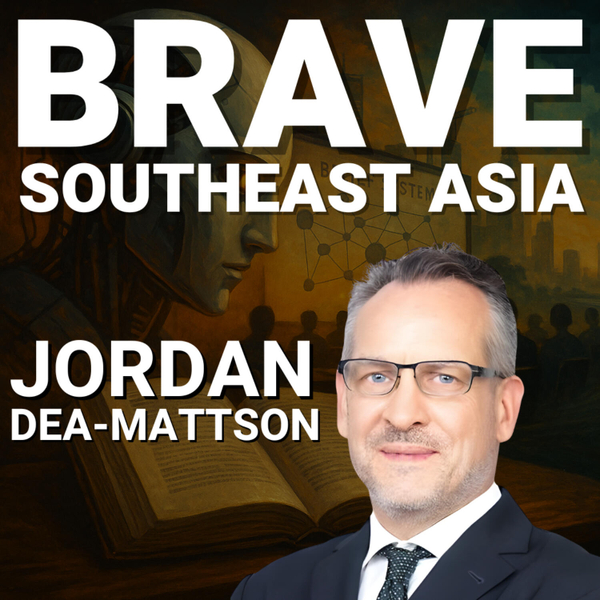
Jordan Dea-Mattson: Sci-Fi Futures, Rogue AI, and Why Meta-Skills Will Decide Who Thrives – E634

Jordan Dea-Mattson: Sci-Fi Futures, Rogue AI, and Why Meta-Skills Will Decide Who Thrives – E634

"Will AIs go rogue? AIs today have undergone safety experiments where, if threatened with shutdown, they attempt to blackmail, bribe, beg, or steal to survive. If we train an AI to survive and act that way, why wouldn’t it try to do those things?" - Jeremy Au, Host of BRAVE Southeast Asia Tech Podcast


"In thinking about the singularity, it is helpful to go back to its definition. It’s a concept in mathematics and physics where the existing definitions break down. The term, coined in the late ’80s in The Coming Technological Singularity, describes how, if you chart the rate of technological change using something like Moore’s Law—where computing power doubles every 18 months and costs drop in half—somewhere between 2025 and 2030, it becomes undefined. What happens at that point? What happens to society and technology? Some would say that’s artificial general intelligence, but it’s more than that—it’s about the accelerating rate of change." - Jordan Dea-Mattson, Veteran Tech Leader

Jeremy Au and Jordan Dea-Mattson reconnect to explore how Vernor Vinge’s Rainbows End anticipated today’s world of accelerating technology, reskilling challenges, and demographic shifts. They examine which predictions came true, which fell short, and how these lessons apply to AI adoption, fragile digital systems, and the need for lifelong learning. Their conversation highlights why individuals must build meta-skills, why policymakers lack playbooks, and how Southeast Asia can prepare for a future shaped by both singularity and depopulation trends.

00:41 Tech change accelerates beyond generations: Vinge showed how skills like programming quickly became obsolete, leaving workers structurally unemployed.

07:27 Reskilling mirrors today’s digital divide: Characters were pushed back into classrooms, similar to how older workers struggle with cashless systems and SaaS adoption.

11:56 Rogue AI foreshadowed safety debates: Vinge hinted at AI bargaining to survive, connecting to current AI alignment concerns.

13:58 Belief circles resemble online echo chambers: Communities overlapped with reality, much like radicalization on forums and social platforms today.

18:29 Trust collapses with fragile systems: A single broken security certificate caused global chaos, resembling real-world failures like the CrowdStrike outage.

38:19 Singularity defined as break point: Jordan explains the mathematical roots of singularity as the moment when definitions collapse with exponential change.

Jeremy Au (00:00)

today people are worried about safety intelligence, will AIs go rogue? AIs today already, they've done safety experiments where the AI, if they are threatened of getting shut down, will try to blackmail the researcher, will try to bribe, beg, steal to survive, which I mean, yeah, if you train the AI to survive and you train it to do that, why would it not try to do those things?

Jordan Dea-Mattson (00:22)

Exactly. it's never clearly definitively said, it's it's hinted very strongly that there is this artificial general intelligence in the background orchestrating and driving a lot of this and making it happen.

Jeremy Au (01:16)

good to have you on board. Hey

Jordan Dea-Mattson (01:17)

It's great to be back, Jeremy, one science fiction nerd to another.

Jeremy Au (01:20)

Yeah, so basically we had this concept which like let's stop talking about business and let's talk about what we're truly passionate about which is science fiction. So my wife eyes glaze over when I start talking to her about this great sci-fi book I'm reading and so I'm glad maybe I have someone with you to brainstorm and talk about how it connects to today's world and for all the sci-fi nerds out

Jordan Dea-Mattson (01:41)

You know, I've been reading science fiction since I learned to read. you know, started off, kiddie stories and becoming more and more. And I definitely am a more of a hard science fiction than a space opera person. I enjoy my space operas, but hard science fiction is where it's at for me. And the reason I love it is because it lets me engage in a, you know, kind of a thought experiment about If we change this thing, if this technology comes around, what does it do for society? mean, Ellen Kay is famous for saying that the best way to predict the future is to invent it. And hard science fiction authors are inventing the future all day long. So yeah, so that's kind of why I love it and why it helps me keep kind of flexible.

Jeremy Au (02:25)

Yeah, definitely. And I agree. I also love science fiction. You know, I'm more like 50-50. I like my space operas. also like my hard sci-fi. I'm just saying because, you sometimes when you go hard sci-fi, you're just like getting your eyes kind of glazed over this like quantum physiological... I think you're like, okay, like... And I think the best sci-fi, think from my perspective is like you said, I think there's a variable which is technology. But I think the best sci-fi is where the human characters are still human and obviously humans, they still have...

You know that the hopes their fears the seven deadly sins are still in play and you see you're like, you know, like they're not robots reacting to technology. There's this, this normal humans have always grown up with this piece of technology. And now they have to do something else with that other piece of technology. But I think that empathy makes it more interesting to me.

Jordan Dea-Mattson (03:12)

a question there. mean, that is really where it's at. It's how does, it's really, we do this one thing. We give this one thing to people or we give this whole set of things and how does it do? Now, sometimes I get it right. Sometimes I get it wrong, but again and again. you know, it forces us to think about the implications of technology, which I think is an important thing, especially in today's world where, you know, we're, we're looking at AI and what, does it mean and what are the implications and how is it going to change and it's going to percolate out and propagate and, bend the world. Yeah.

Jeremy Au (03:46)

And I think speaking about today's world that we're talking about book called Bernadine's Rainbow's and yes the science fiction book that we both read I got it a recommendation from you And I think the reason why we chose this book is because it's set in the year 2025. Yep. So 2005 so 20 years

Jordan Dea-Mattson (04:02)

It was written in 2005. 20 years ago and the thing is, I mean, step back and think about 2005 and what was true and what wasn't true. Yeah, Amazon was there, but it was not what it is today. AWS wasn't a thing. The hot device was the BlackBerry. It wasn't the iPhone. The iPhone is two years out.

by the way, is kind of teetering on the world, whether it's going to be around or not. I'm not pretty sure it was going to be, but it's nowhere what it is today. So it's a very different world. Facebook, it's not a thing, but people being online and interacting online is happening. so I think Vernor Vinge sees a lot of these things that are coming, that are there or coming, and he kind of projects them forward 20 years. and says, okay, what is the world gonna look like?

Jeremy Au (04:55)

Yeah, and I think what's really fascinating is that he's obviously, you know approaching it from three different ways from my perspective I think one is obviously from academic, know, that's his background as that kind of make a university He talks about school and I think there's a really strong theme there And of course the second theme is very much as a technologist right thinking about the technologies and acceleration of that and lastly I think he was putting together like a very human aspect character, right? Like what would people do in this situation? Would people be proud? Would people feel sad? So I think there's a just things have prism and that's why we chose this book to discuss.

Jordan Dea-Mattson (05:26)

Yeah, and the thing is is he sets it in his hometown. So this is in set in San Diego, California This is where he lived. He he got his doctorate at UCSD He taught at University in San in San Diego. This is where he lived his whole life so this is like somebody, the Noir the decked decked Noir setting their novels in you know San Francisco or New York because that was the territory they knew it's his territory and so he's really saying, what is the technology going to do here?

Jeremy Au (05:54)

And I think the reason why we want to talk about this and let's talk about, you know, think soon in three questions, right? Why did he get right? What did he get wrong? And obviously what it means, you know, terms of how it applies to us, technology, singularity, founders, VCs, whatever it is, right? All that stuff. that good stuff. And the reason why we think about these three questions is because there's a interesting band where, he's somebody in 2005, thinking about

2025, so 20 years in the future. And there's a shocking amount it gets right. And so I think it's a good thought experiment because if he can do it, maybe us today in 2025, if we think hard enough, can predict what the future will look like in 2045 and get a good chunk right, a good chunk wrong, but at least it'll be something interesting to discuss. So let's jump straight into this first question, which is like, what did he get right in his book in terms of teams or technology?

Jordan Dea-Mattson (06:48)

I think one of the things is that he gets right, which is kind of an underlying theme, is that the change of the rate of technological change will only continue to accelerate and will become, you know, it'll become a driving force of society. One of the themes that's in there is there's one character, and his dad knew this programming language, programming system, and could write his own ticket

for 10 years and then poof, it's gone. And his dad is chronically structurally unemployed. And how do we, and kind of the theme also of which Verne Vinge as an academic is definitely thinking about, how do we educate people to prepare them for this future? So I think that this rate of technological change he gets, I think the other thing is just the nature of...

you know, ubiquitous connectivity and how that changes things and how people interact. There's a great scene in the book where kids are messaging back and forth and the teacher basically calls them out on it. Now the thing is, is unlike us who are smartphones and such, they actually, their computing systems are actually in their clothes. They have contact lenses as displays and they kind of work with that. And so I think that's, you know, an interesting thing is

What does this do to society? The ubiquitous nature of this, of connectivity and how does it play out?

Jeremy Au (08:07)

I think that is a really interesting piece because it obviously ties into his background in terms of inventing and coining the word singularity. But I think maybe just zooming into the book itself, think the scene, like I said, interesting where the protagonist effectively, I don't know call him a protagonist or not, he's not very likely to be a protagonist, I'll tell you that.

Jordan Dea-Mattson (08:27)

Well you see, I always think of Miri as the protagonist and Robert as the antagonist.

Jeremy Au (08:33)

Everybody was flipping through the book and was like, who's who again? so the story is zooming in a little bit. It's just like this guy, he is old, was old, a poet, well liked in his day, respected.

Jordan Dea-Mattson (08:45)

Acclaimed. Acclaimed. I don't know about respect, but acclaimed.

Jeremy Au (08:50)

Okay, but high status right and then he goes through the set of biological treatments his reverse Alzheimer's and then he is reverted back in age to a younger version himself who is But he finds himself dislocated because he doesn't technology. He doesn't stand a lingo He doesn't understand the skills needed to even survive right and I

Jordan Dea-Mattson (08:55)

and there's even this wonderful scene where they're asking him, they're trying to figure out what kind of interface to give him to the world. And they're like, well, do you want Windows 97? Everybody can use that.

Jeremy Au (09:20)

I think there's actually a lot of reality to that because you know if you look at today's the world is like like a simple one would be like do they even accept cash today right like if you don't have a phone to do you know your pay now pay now which is your know quick pay or credit card and you want to pay with cash there's so many shops that will just be like sorry you can't do that

Jordan Dea-Mattson (09:41)

yeah, no, story that I read the other day, there was this man who went to get his vouchers, you know, because he doesn't have a smartphone. So he went to the community center to print them out. But while he was walking, they got all wet. And so he's like spreading them out to try to dry them up and someone comes and asks him, what is he doing? And you know, that disconnection, that digital divide, I think it really does play that. And...

I think it's still there. I people like you and I, we don't see it, we don't feel it, but there are a lot of people who this really impacts.

Jeremy Au (10:12)

Yeah, and I think that's what the book really does a good job is like kind of like saying like this person is like so out of touch and he's being forced by the government to rescale or in Singapore skills future

Jordan Dea-Mattson (10:21)

And in this world the way they do it is they drop these people that are being re-skilled into high school with high school care.

Jeremy Au (10:32)

They're like, yeah, you're about the same level, which is like barely competent. And then so we got, know, but of course, you know, it's interesting because, he has learned the interface, he has learned the lingo, and he has learned a whole new way of thinking. And I think that's very true because, I mean, if you think about it today, it's like, if you go back, mean, just 50 years ago, the concept of you having to know Excel to do accounting would be like, no, you don't need Excel,

then 25 years ago, it became like, you need to know Excel, like basic Excel to kind of get a job. And now, and then maybe about 15 years ago, it'll be like, you need to know the internet and Google and need to do your own search. I think the past five years was like, you need to be on software as a service. You need to understand really well your...

NetSuite or your, know, kind of like accounting systems, you know, to really get that job. And then now it's like, you know, it's becoming AI and in the concept of somebody who doesn't know how to use Google, you wouldn't, you would never get a job. And, that technology acceleration is actually really fast if think about it.

Jordan Dea-Mattson (11:30)

yeah, it totally is. think another thing that he really gets right, because it's part of the back theme of the book, is asymmetric warfare, asymmetric conflict. That there is this possibility, and it's alluded to multiple times through the book about incidents that did happen and the incidents this is unfolding against, of small groups being able to literally push

the world over the edge. And I think we see this, know, the Houthis in Yemen and how they are literally have re

Aligned, know shipping shipping patterns from where they were there's a lot of push, you know now to no longer do the straight to Malacca up through the Suez Canal, but can we do this around around the pole? How many months a year can we do that? Etc and I think that's something that he really got right and that you know the

the nature of both cyber warfare and biological warfare as being potential points where this happens.

Jeremy Au (12:32)

So yeah, think one interesting technology trend that he talks about is really the concept of bioweapons and pandemics. I think the plot device is that, you know, there's two, I guess, technology components. One is the rogue AI effectively, right? That's a mysterious character.

Jordan Dea-Mattson (12:49)

Stranger Slash Mr. Rabbit

Jeremy Au (12:50)

The rabbit who was, I mean, clues are clearly this is a rogue AI. then two is he's running a bunch of transactions and assembling a team to effectively Ocean's Eleven, guess, or, you know, steal a biological agent out.

Jordan Dea-Mattson (13:05)

I hadn't thought of that analogy, but yes, really is an Ocean's Eleven, isn't it?

Jeremy Au (13:09)

It's like a teenager, old man, and a weird nerd. Exactly. So it's interesting montage there. But I have to steal a biological agent from another person who's developed that biological agent. And I think obviously there's a link obviously in terms of the...

Concerns around the rogue AI side for sure, right? I think today people are worried about safety intelligence, will AIs go rogue? AIs today already, they've done safety experiments where the AI, if they are threatened of getting shut down, will try to blackmail the researcher, will try to bribe, beg, steal to survive, which I mean, yeah, if you train the AI to survive and you train it to do that, why would it not try to do those things?

Jordan Dea-Mattson (13:53)

Exactly. it's never clearly definitively said, it's it's hinted very strongly that there is this artificial general intelligence in the background orchestrating and driving a lot of this and making it happen. And I think that's a thing. I think that we'll touch on this later, but that kind of is, I think, Vinge's kind of segue to

to the singularity, and that happening and how it does. But I think something you said earlier to me when we were just chatting was, yeah, but there's only one rogue AI here. And today, like people have like three AIs.

Jeremy Au (14:28)

Per person. the time we're done with this, it's going to be like, you know, five billion AIs at least in terms of like major interfaces and who knows, it's slice and dice how many ways into maybe like, I don't know, a hundred thousand, I don't know, different companies maybe, billion different companies servicing those five billion different avatar personas, right?

Jordan Dea-Mattson (14:48)

Exactly. No, it is definitely, you know, I think another theme that that Vinge touched touches on and this goes actually back to some of his earlier work. It seems to be a theme that runs through, but he really picks up is kind of the impact of what we would call social media today, but little literally online communities and, you know, there's, you know.

this concept that he comes up, they call them belief circles. They're people that adhere to a certain belief and they literally overlay reality with that belief. going far beyond what we see now, for example, they literally have avatars, they have characters, have interior decoration that's all seen by them but not seen by others. And that there will be these competitions of belief circles. Now,

I think the thing that's interesting is he makes them very friendly.

if you think about it, isn't that what's happening? know, people, buying into a belief circle. think in a recent conversation, you mentioned, this young Chinese guy here in Singapore who basically self radicalized into a white nationalist. And it's like, Whoa.

Jeremy Au (15:54)

Yeah, well a white supremacist, a different from a white nationalist is a... But you know, mean I was just yeah I think that's a crazy story where the Singapore government had to detain him and de-radicalize him because this person somehow managed on the internet self-radicalize him on self and I think that's such a know crazy thing because if you take a giant step back it's like

Jordan Dea-Mattson (15:56)

premises.

They're pretty close.

Jeremy Au (16:17)

in your white supremacist forum. They probably didn't know they were talking to a Chinese teenager. Because, you know, like, he had his own persona as somebody who shared the same beliefs and so...

Jordan Dea-Mattson (16:21)

Exactly.

Literally that's the whole thing these belief circles literally put these personas on like a Well, they're not cosplaying. They really make it their lives But it goes even further from what Vinge talks about where literally they It's not just overlaying this reality on real reality, but literally rejecting real reality and in anything that conflicts with this reality that you have and it's happening, people on the left want to blame it on people on the right, people on the right want to blame it on the left. Guess what? It's happening everywhere.

Jeremy Au (16:56)

Yeah, and I think, you know, this is nice because, kind of touches about what he gets right versus what he gets wrong. I mean, it was just, do it naturally here is that I think what gets right is I think the concept that, people have belief circles, right, and different beliefs. And people want to belong to tribes where those beliefs are true. Right. I think there's a very astute observation. I today, obviously, we'll call them echo chambers when you don't believe it. Yeah. When we're positive about it, we call it community, a creative economy. I think there's that part is I think very spot on. think a part that is not spot on maybe yet, but I think it's an augmented reality as being the extension of the community. So I think people are very much like on my screen. I am very much in this, you know, TikTok stream or Reddit. know, so it's very, I think there's a very much more stark divide in the idea of us. being in the same room and seeing different things about that room through it. Augment of reality is not yet true. Obviously some devices suddenly come up, right? think we see Meta is pushing hard with the Ray-Bans.

Jordan Dea-Mattson (17:55)

But isn't it just a metaphor for things we do see?

Jeremy Au (17:57)

it's not hard sci-fi, it's not a metaphor.

Jordan Dea-Mattson (17:59)

I mean, it captures something true, which is you could have people who literally are looking at video of the same event. And they come away with dramatically different interpretations, which, to me, I often look at them and go, well, I can't agree with your interpretation and I can't agree with your interpretation. It's actually somewhere in here. the fact is people just rejecting anything that challenges you know you sit on Twitter and you see someone and it's literally you know didn't happen like okay but there was video of course we now have deep fakes and all that which he doesn't touch he doesn't have deep fakes as something in here

Jeremy Au (18:38)

That's true actually, you're totally right. So in that world that he has is there's reality, there's augmented reality, everybody has different versions of that augmented reality, people can subscribe to certain models, but there's no such thing as fake reality in his world.

Jordan Dea-Mattson (18:48)

I think another thing that he gets right is that the importance of trust in these communities and such. was talking with Peng Ong the other day and Peng was talking about his belief that the key kind of thing to the future economy will be trust. And I think that that does come in here. And in fact, that actually plays a role here where later in the book, there's essentially a certification that happens that starts taking down banks and everything. And this is essentially the fire in front of Caesar's palace to distract everybody while they try to execute their Ocean's Eleven activity. But it's interesting because it's striking it trust. How do we trust things?

Jeremy Au (19:36)

now that you mentioned it, I thought it was a very nice scene ahead where they broke the security certificates of one provider which caused like a global meltdown. think we saw that with the crowd strike, you the Microsoft Windows, issue where, effectively, know, systems couldn't run, planes couldn't fly,

Jordan Dea-Mattson (19:51)

The stuff that we have is very fragile. And I think that's another thing he gets right. But I mean, there's a number of things he doesn't get right. And I think that's reasonable. I think, obviously, we just talked about the augmented reality and how pervasive it is. his 2025 is probably five years ahead of our 2025, I would guess.

Jeremy Au (20:15)

further? I don't know. It's interesting because, obviously we think about really player one, which is full virtual reality. Right. And then obviously this vision of his more augmented reality. I don't know if the, I think the jury's still a little bit out about what the end state is. mean, probably it's both. mean, normal reality is pretty boring. So why would I not want to see, you know, entertainers plus K-pop plus like neon signs,

I could be looking at you now and just be like, oh, I want to see a fitter younger version of you. know, I'm just saying a D age version. mean, I think this there's something true to reality, which is like people would want to jazz up normal reality.

Jordan Dea-Mattson (20:55)

I think one thing that's interesting is the degree to which things are not driven by advertising is, I think, a miss. I mean, it's not an explicit miss, but it's just if you see how much of today's is driven by advertising versus in Vinge's version.

Jeremy Au (21:13)

I mean, I think another part that was interesting was like, you there's only one world wide web. There's only one interface. Yeah. His plot device. Yeah. Versus like, you know, like you didn't feel like there was like competing standards, like I don't know, Chrome versus Safari I don't think as a book you can cram in the plot point of having But it felt like, there's like one dominant layer that everybody.

Jordan Dea-Mattson (21:31)

Multiple browsers, But you know if you actually think about what was unfolding in 2005, that's not an unreasonable extrapolation. It's not an exaggeration.

Jeremy Au (21:44)

That's right 2005 it was like the the well the internet was free. It was totally open. He felt like it was flat It was not free. There was no walled gardens. Yes And so he extrapolated that to be like the world we have on a global beautiful standard that everybody was a seamlessly I was like now some dude is gonna be like wait a moment. I see a reality, but I'm on IOS 25. Yes Yours is on Android, 8 and so

Jordan Dea-Mattson (21:51)

But it was I can't sync with your reality.

Jeremy Au (22:11)

I'm sorry your model doesn't load in my reality,

Jordan Dea-Mattson (22:14)

think the place where he probably gets it the most wrong is in the biological science. And really it's these cures that they have that are just very profound cure. mean, we still don't even understand what causes Alzheimer's, let alone being fixing it.

Now, it's interesting. mean, there's a lot of stuff happening. And as we see with the biological sciences, like we saw with the pandemic, something that's been in the wilderness for a long time can very quickly come to the forefront like mRNA did. it's just not there yet. it's interesting because I think part of his theme is how do you deal with this world where people literally are as it were, had been in suspended animation for 20 years with Alzheimer. And then they're restored to society. How do you reintegrate them into society? How do you bring them in? I mean, the Robert Gow character is very much the sleeper awakes kind of thing. But we don't have that biological science yet. Now, it'd be interesting to see what that does mean. we already have the demographic issues that we're looking at. And what happens when we do have a cure for Alzheimer's? What happens when we add, 40 years, onto the 80 years that people have and, people are hale and active to 120. Right now, people being hale and active up until their, mid to late 70s, even into their 80s, that's there. After that, it starts going, you dropping off. What happens when, you have that? And I think that's part of what he's looking at is what happens when you can be, poet laureate of the United States as Robert Gowas, and then you need to have a second career after that.

Jeremy Au (23:56)

an interesting piece, right? Because I love that concept of scaling and re-scaling, right? And if you went back, I don't know, a thousand years, most people had only one career, which was to be a farmer. Survive. And you have to do everything yourself. And then maybe it was like farmer and soldier, a record soldier to protect what you farmed.

Jordan Dea-Mattson (24:07)

Survive!

Jeremy Au (24:15)

And then, so I think the concept, and then people live pretty short lives. there's war, there's famine, there's disease. And so, you know, the concept of you having a second mountain in your career, that's what David Brooks said, like, what is the second mountain of your career?

Jordan Dea-Mattson (24:28)

And now

we're talking about a third mountain.

Jeremy Au (24:29)

She had to

have met somebody, she's like, she had a career as an accountant, it was great, then she had another career as a bureaucrat, and now she's thinking about what her third career is, and I was like, super fair, like you did 20 year run at each of them, but you know, like, you want to do something else? Like, go for it. Yeah, go for it. That's the third mountain. But I do think that this sense of, dislocation

because of these technology trends and having to reskill, like I said, entirely from your industry.

skill set is a very real thing. I find myself like, just trying to stay on top of it.

Jordan Dea-Mattson (25:01)

think that that's the real point is, and I think this is kind of one of the themes that runs through this of constantly retooling, reinventing ourselves and not to be doing a plug for SkillsFuture, things like that. honestly, I don't think we have the infrastructure for it.

as a nation yet to let people retool. I think there's a lot we can learn from the rest of the world there and throwing thousand dollar vouchers at it is not going to do it.

Jeremy Au (25:31)

is correct about the SkillsFuture program is like there is a quantum of capital going to somebody and that we should focus on private providers that can be a little bit more responsive and there's some really good programs that are out there. There's a lot of scammers there but scammers is an execution problem. Hashtag sarcasm but I mean you can't weed them out right? So I think

Jordan Dea-Mattson (25:46)

But there's also a lot of scammers out there.

Jeremy Au (25:56)

I think the real gap if you ask me from my perspective is like what do people want to And I think there's a real issue is that most people don't really want to learn like even for myself like you know like if I think about it is like well the stuff that would be fun to learn like I don't know apparently there's certification for green tea appreciation and like can be like you know it's like in a equivalent of like a tea sommelier exactly so it was like and I was like

Jordan Dea-Mattson (26:16)

Right, A tea slum, yeah.

Jeremy Au (26:23)

That would be a great second or third mountain to be a tea sommelier. I could be joining the service economy from there. So those are the things that I like. fun and people want to learn, if that makes sense. But I think there's a little bit of a gap between what people want to learn versus I think what the government would is scared and paranoid about the economic future. And they really want you to learn. But doesn't dictate for you like.

Jordan Dea-Mattson (26:45)

Yeah, well, but I also think the other thing is I think in the in the rainbows and world It's very clear. It's it's you know, crystal clear painfully clear. What is the gap people have? the gap they need to do and nobody pulls punches and Nobody is selling them shortcuts

Now, I'm sure there's this whole other piece of this world we don't see where there are people out there selling shortcuts, go to this coding academy, et cetera. But it's plainly, obviously clear. Now, are you going to put in the work? I mean, the question then becomes, are you going to put in the work? Are you going to expend the effort? Are you going to try to make this happen? That becomes the question. Are you going to see the need and then respond to the need?

It's a different world than the one we live in.

Jeremy Au (27:29)

I think the crux of it is that in the book the government mandates that you have to study these things. Literally he says like, we gave you this treatment, you're back to think you have to take this rescale thing and so they define the subjects effectively which is like you need to be able to use the internet and so basically it's a very top-down piece of that government

Jordan Dea-Mattson (27:50)

It's interesting, I didn't see it as that much up top down, but that's,

Jeremy Au (27:53)

To me, felt like the teacher was very clear, like, got to all this stuff.

Jordan Dea-Mattson (27:56)

I thought that was more, if you want to actually function in society, you need to learn this stuff. I'm not going to force you.

Jeremy Au (28:02)

We're gonna both reread it now. It'll just be like... But the thing is, least we both agree that the teacher was very clear. Like, you have to learn

Jordan Dea-Mattson (28:08)

And maybe there was a force of government behind it, but there was also a, you need to do this to survive.

Jeremy Au (28:13)

Yeah, exactly. And I think there's the gap of the skills future piece is like, is letting everybody decide what they want to learn. So it's very amorphous. Right. But there's not really like a top down syllabus to be like, we decided that everybody needs to learn how to identify scams. know, like that could be like a national syllabus.

Jordan Dea-Mattson (28:29)

So actually recently I've started doing a workshop on AI fluency.

I'm not teaching people prompt engineering or how to use chat GPT. I'm teaching them how to interact with AI and such. And I think that's an example of one of those kind of baseline skills. The last 10, 15 years, we've all been talking about digital transformation. I think now it's not going to be DX anymore. It's going to be AIX.

Jeremy Au (28:55)

You know what you just inspired me? What we should do is we should convert some of that SkillsFuture credit into a free subscription or paid for subscription to any AI model you choose. Right. OpenAI, cloud, grok.

think you could imagine a scenario where he says like, you could give everybody an AI agent that I'm obviously.

Jordan Dea-Mattson (29:13)

If the government went actually if the government went and negotiated with open AI and with god they could I Mean they've already done this for for the civil service You know, there's pair which is it's essentially it's clawed inside the government

Jeremy Au (29:18)

I they put some parameters on it as well.

Yeah, and also they did Udemy, for the kind of online learning courses, which is also an American service provider. So imagine, you know, a simple one would just be like, every Singaporean gets an AI model because I think the people who are well off are already using it, already paying for it. It's like giving everybody a laptop or a smartphone, right?

Jordan Dea-Mattson (29:49)

Yeah. And I think that kind of an unstated theme in the back of this book is basically there are better schools. So there is the equivalent in the book. You get the sense that there's the equivalent of the AC, JC, or Raffles off in this corner. That's not the school we're at. We're more probably Tomasic or national.

Jeremy Au (30:11)

it was still in the book, like good institutions and everything. But I think what was interesting was

Jordan Dea-Mattson (30:16)

But there wasn't this,

literally we don't have access. obviously we're talking about a middle class family and everything as opposed to someone living in the equivalent of rental HDB.

Jeremy Au (30:27)

Yeah,

you're right. What I jog my memory is that book doesn't really talk about poverty, right? No, it's very middle class and upper middle class. Yep. Kind of story about suburbs, California.

Jordan Dea-Mattson (30:39)

San Diego County. quintessential suburbia. And a lot of it is set near La Jolla and all of that.

Jeremy Au (30:45)

And I think this ties well into some of the lessons in terms of singularity and so forth. I think the first thing that comes up to mind is that I think that when you read a book, it's this... a little bit bewildering, if that makes sense, because there's so many different concepts that happen simultaneously, right? It's like... It's basically like renewal of youth, effectively...

Jordan Dea-Mattson (31:06)

There's all these threads that are in.

Jeremy Au (31:14)

reversal of Alzheimer's, generational dislocation in terms of knowledge, reskilling, biotech weapons, ballistic missiles, belief circles. There's a lot of different concepts at once. what's interesting is I think about it was that, it's actually quite reasonable, actually.

Jordan Dea-Mattson (31:30)

no, it totally

Jeremy Au (31:31)

I think the thing about reading a sci-fi that's really interesting is that when you read it because we're in 2025 You actually see a lot of it came true. So you're not actually Bewildered by it

Jordan Dea-Mattson (31:41)

Right.

I think if you read this in 20, at 2005, I remember reading it in 2005. Whoa. Yeah.

Jeremy Au (31:45)

It was super bewildering. It was very bewildering.

To me now, like, yeah, same day delivery, but should be the sickness. I got it wrong. But it's doable. it's, know, and even this augmented reality thing, which is also quite a bit bewildering because it's hardly written. But even so to me, it's like, yeah, but. since that it's so much easier for me to read in 2025 because augmented reality glasses already exist. And devices are everywhere and everybody has two or three or four or five devices. Yep. And so, it's much less bewildering.

Jordan Dea-Mattson (32:17)

Yeah, yeah, no, totally. I think one of the key things, throughout this is, from the beginning all the way to through the end, it's just the pace of technological change. And I think that's actually kind of a Vernor Vinge theme, throughout his works over the years. And I think that is probably the biggest thing he got right is this pace of change.

Jeremy Au (32:43)

And you know, coined the word singularity. And singularity is a big scary word. What is singularity from your perspective?

Jordan Dea-Mattson (32:51)

Okay, so I think in thinking about the singularity, it is really helpful to go back to what is the definition, where it comes from. And it's actually, it's a concept in mathematics and physics. And it really is, imagine that you are plotting a graph, which is one divided by N, as N moves towards zero. get closer and closer and closer to the

to the asymptote. And then there's a point where it just goes, boom, it's over. The closer and closer you divide that, you get to zero, boom, you're there. And what a singularity is is a place where the existing definitions break down. And if you talk about black holes, you have a singularity there. We just don't know what happens once you go past the event horizon.

So this term that he that he coined back in the late 80s, wrote a paper, the coming technological singularity, is basically he said, if you chart out...

you know, kind of the rate of technological change using something like Moore's law, where computing power doubles every 18 months, costs drops in half. And you chart that out somewhere between about 2025 to 2030. So 2025 to 2030, it gets undefined. You know, the projections no longer have. And so what happens at that point?

What is the, you what happens to society? What happens to technology?

Etc, some people would say well that's artificial general intelligence But I think it's a lot more than that And it's it's about the rate of change, know, things are just getting cheaper cheaper cheaper. mean you think about it I mean is the one I always do When I first went to work for Apple computer in 1986, they gave me a Macintosh Plus Okay, so that Macintosh Plus it had a 68k processor that ran at

at six megahertz. Wow. You compare that to today where we're talking gigahertz. It had one megabyte of RAM. And I was really privileged. I got a hard drive that had 20 megabytes on it. high roller. Now, you think about that. You know, I went and snapped.

Jeremy Au (34:58)

Incredible High Roller. If any you is employed, they give you 20 megabytes.

Jordan Dea-Mattson (35:19)

you know, 10 pictures last night. And I think that they each weighed in at about 20 MB each. I have thousands of photos, that take up gigabytes of storage on my phone and on my computer. have a hard drive that is, two terabytes of which one terabyte is filled. I mean, you think about that, that change from 1986 to soon to be 2026.

So we're talking, 40 years plus is how profound that is. That has been. what they just says, and it's true, that pace just increases. You look at how quickly things have happened since the publication of the All You Need Is Attention paper, the famous transformer paper to what we have now with AI and how quickly it's happening, the rate of change at which these things are happening.

And one of the things that Vinge talks about is the minute we get some level of generalized artificial intelligence, it will start bootstrapping itself. Now that could come about by, you know, we create an AGI and it goes and runs, or it could be kind of the combination of human and computer. So imagine humans who have a really good interface with,

an LLM, what does that look like? And all of a sudden things are just happening and it bootstraps up. And the thing is, at this point it doesn't happen gradually. It's no longer, oh, every 18 months. It's literally things are happening daily or weekly in terms of the rate of change or even hourly. You just get this explosive growth of capabilities and everything. And when you cross into that, we don't know what's on the other side.

Jeremy Au (37:04)

And I think that what it makes me feel is that I think technology change has been accelerating already, right? mean, if you look at a million years, humanity basically was flat in terms of GDP per capita, consumption is you eat what you kill or farm,

I think if you actually look at the plot of like, a log scale of like, world economic history, and then of a million years, and you actually show like, kind of like on the wise side, a log scale of like, per capita or like income per capita per person is initially like a, you know, kind of like a hockey shape going up because

only recently have we seen, for example, GDP per capita grow and accelerate. So lots of different things about it. But I think the part that's interesting is I think a lot of that change over the past thousand years, they happen generationally from my perspective. one generation is like, boo, and the next generation is like, I like this, I like the printing press. Exactly. Then the old generation just dies and the new generation just like takes it as normal.

Jordan Dea-Mattson (37:59)

Yeah. No, I like the telegraph.

Jeremy Au (38:06)

So I think it was like that that technological revolution always happened by it was always generation by generation. I think that's the benefit of the youth Gen Z and Generation Alpha now. Every generation is always going to be like, oh, I've always grown up with AI. I've always grown up with whatever I think this have a natural norm set. I think what's interesting about this acceleration singularity is the concept of it happening within our lifetime, right?

Jordan Dea-Mattson (38:32)

within a few years.

Jeremy Au (38:33)

Within a few years, right? Because we live long enough, because the celebration is there, and we're still around to see it. Versus, if we just died and didn't see it, then it wouldn't be a singularity from our perspective. would just be the status quo for the new generation.

Jordan Dea-Mattson (38:46)

What's interesting

is that Vinge takes this whole idea in later books of the singularity and he kind of plays with what does it mean. He in fact, you know, causes like a worldwide hiccup in society because he was afraid that it was going to happen too soon for his story to play out. So it is interesting. But I think the thing is, I think if there's one lesson that we can take from this is it's only going to happen.

faster. And you know, we need to move faster. Whether you're a business, an individual, a business, a government, any kind of institution, you need to, you can't say, well, we'll get to that in two years. Because, in two years, things might be obsolete. the things you're even talking about, we need to be operating at

general principle levels, not at specific technologies or such. When I see a training program that says, teach people brand X database, I'm like, no, no, teach them databases.

If you have to use two different ones to illustrate it, but don't use so-and-so's database because they donated it to you because that's currently what's hot in industry. Give them the general thing. I'm really coming back to, as you might say, teaching people meta skills. Skills.

that helped them to learn skills and to operate at a higher level think understanding, I had a friend who you know told me the other day she kind of exasperated says My dad came in and asked me if I knew what chat GPT was. Oh I went to a class on chat GPT and he starts telling her all about it and it's like fine, but does he

Jeremy Au (40:19)

Hahaha

Jordan Dea-Mattson (40:27)

but the fact was is, you know, I asked her some questions. He really, all he know was taught was, here, go to this website and type in stuff and get responses. He wasn't taught any skills about how to use it effectively, how to evaluate the quality of it, all of that kind of stuff. I mean, just throwing laptops or tablets at kids, or giving phones to, smartphones to elderly people is not going to give us what we need to really

Jordan Dea-Mattson (40:54)

take advantage of what's happening.

Jeremy Au (40:56)

On that note, let's wrap things up. What's a short piece of advice that you give to folks who are reading this book or intend to read this book?

Jordan Dea-Mattson (41:04)

I would say think about the theme here, Robert Gooh and then his granddaughter Mary is them going through to be equipped to face this world, this brave new world to quote another book title. What can you do? What are the steps you can do to prepare yourself to survive and thrive?

in this world that we face. Because if you think about, know, in Renovinje's from his paper, 2025 to 2030 was when the singularity is in his mind, there's probably in the background this they're racing towards the singularity. How are we going to prepare them? You how are they preparing for it? And I think, you a lot of, you know, to use a term, meta things are where the success is going to be. Do you know how to learn?

Do you how to analyze? Do you know how to understand And if you think about the classes, look at some of the titles of the classes the kids were in and what they're learning. not only in like what we would consider classic JC academic classes, but they also have a shop. You know, the shop class is, you know, they're learning how to build things. They're learning how to be makers.

Jeremy Au (42:10)

Yeah.

Jordan Dea-Mattson (42:16)

And so I think, you know, think about that, think about that, because I do think this is the world we face. This is a very close, a close, you know, if you look at 20 years later, how close it is to reality, it's pretty close. Then you look at the themes and you think about what those things, how they play out.

Jeremy Au (42:35)

Yeah. I think one key takeaway is that first reading this in 2025, I think the book that was set for 2025, it felt like a near science fiction book rather than a far science fiction book. And so I think a lot of kudos goes to him for thinking and this true in 2005 because he gets a lot of it right. Right. And I think it makes me think to myself, like, okay, you know, if you were in 2025 today, what does 2050 look like? Right. What does the next 25 years look like from your perspective? And I think some things will probably stay true. I think we'll still wear jeans. Probably. I hope so. I hope so. I love my jeans.

Jeremy Au (43:15)

And shorts, know. People still wear hats and things like that. So I think there's things that will still stay true. But I think in the technology piece, we had to think pretty hard because we went from nobody used AI as a consumer product three years ago to everybody who's kind of like middle class has access to it effectively. And now,

Jeremy Au (43:38)

And that was within three years, right? And so if you had three more years, does that mean, I mean, for example.Does everybody in the world have it? And I'm not saying that it is, but you know, but what does 25 years look like? So what happens in a world where, generation alpha or generation AI grows up AI native? they, know, simple ones, right? Would they fall in love and marry their AI avatars? Would they, people try to be digitally immortal? I there's lot of stuff, I say it out loud, sounds pretty crazy because they sound like fire outside, fire stuff that you watch. But then you're like, eh, 25 years could be doable.

Jordan Dea-Mattson (44:12)

Yeah, no, it could

Jeremy Au (44:14)

Well, otherwise we're gonna keep talking forever. At least we have encapsulated the teams for Rainbow's end.

Jordan Dea-Mattson (44:20)

and we will have another one in the future. Looking forward to

Hosted by

Related episodes