Skip to content
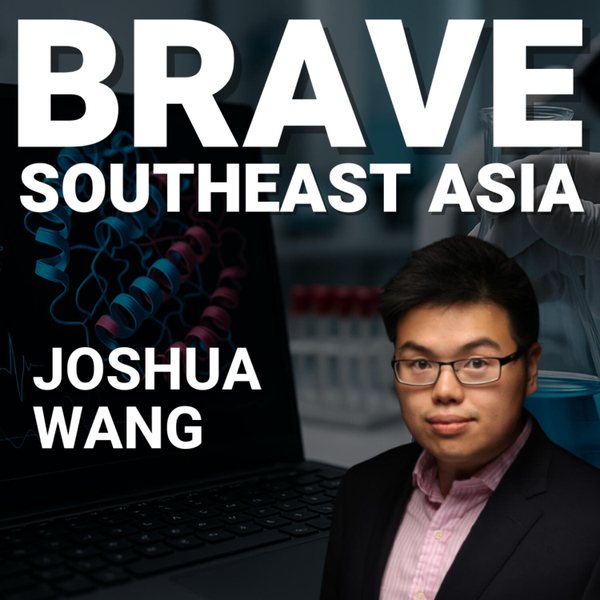
Joshua Wang: Reprogramming Cancer, Biotech’s Funding Shift & Why AI Will Rewrite Biology – E628

Joshua Wang: Reprogramming Cancer, Biotech’s Funding Shift & Why AI Will Rewrite Biology – E628

"I actually think that cancer tries to evolve, it tries to trick the body. Going about it one way is not the best way, we should have a tool of arsenals. That’s why we are really excited about this approach, because the mechanism and the way we are doing it is so different. It is meant to be useful on its own but also potentially complementary to whatever is out there. Our goal is not to make another approach redundant. What we are trying to do is create this extra vertical option that could be complementary with other treatments in the future against cancer." - Joshua Wang, Founder and CEO of VerImmune


" Cancer doesn't happen overnight, it develops over time. Sometimes a cell changes so much that the body sees it as foreign, and that is when the immune system responds. It is like the police of your body. But cancer is also a disease of the self, when your own cells go bad, and from day one your immune system has been trained not to attack you but to protect you from yourself." - Joshua Wang, Founder and CEO of VerImmune


" Let’s say you are a VC funder. You have a risk profile and need to deliver returns to LPs. Do you take a risk on a founder-led company, or on a VC-backed venture-created company with capital support if things go wrong and a three-time exit CEO leading it? Those are the stakes early-stage companies now face, and that is the new competition and normal we have to fight with." - Joshua Wang, Founder and CEO of VerImmune

Jeremy Au and Joshua Wang reunite after three years to explore how biotech startups navigate scientific breakthroughs, funding challenges, and leadership growth. They discuss Joshua’s work at VerImmune on repurposing the immune system to treat cancer, the shift in early-stage global biotech financing from founder-led ventures to the “professionalization of entrepreneurship” via venture studio models, and the lessons learned about resilience, communication, and leadership under pressure. Their exchange also touches on early detection, cultural attitudes toward disease, and how AI is reshaping biology into an engineering-driven field.

02:21 Tricking the immune system: Joshua explains how VerImmune’s therapy makes the body treat cancer like a past infection, using existing immune memory against viruses to stop recurrence.

05:56 Why cancer hides: Cancer disguises itself as “self” and builds immune-suppressive environments, preventing the body’s natural defenses from recognizing and eliminating tumors.

09:08 Marking tumors as threats: VerImmune adds viral-like markers to cancer cells, making them visible to the immune system as dangerous outsiders that must be attacked.

11:38 Toward earlier treatment: Although clinical trials begin with late-stage patients, the long-term vision is to bring the therapy earlier to prevent recurrence and keep cancer under control.

16:08 Cancer versus diabetes: Jeremy and Joshua compare today’s fear of cancer to how diabetes was once seen as fatal, arguing that science can shift cancer into a chronic, manageable disease.

20:38 Hard conversations matter: Joshua reflects on his growth as a founder, learning to confront underperformance directly and foster a culture of honesty and accountability.

30:20 Biotech funding shifts: Joshua describes how venture studios are reshaping early-stage biotech, with VCs creating companies in-house and founder-led startups facing tougher competition.

Jeremy Au (01:25)

Hey Joshua, so excited to have you. Your first episode with us was in episode 202 and you're off to change the world So so glad to see you after three years

Joshua Wang (01:34)

Yeah, thanks for having me back on the show. I'm glad I'm still around fighting the good fight. have you been? Yeah, know you're celebrating your birthday today.

Joshua Wang (01:43)

Big milestone. Thanks again for doing this while I'm hustling all the time. ⁓

Jeremy Au (01:49)

I mean, I think a podcast is a hobby for me, right? So I think it's nice and relaxing. Joshua, could you introduce yourself for those who don't know you?

Joshua Wang (01:55)

Yeah, sure. So just to recap, I'm Josh Wang. I'm the founder and CEO of VerImmune Inc. We're a biotech startup focusing on creating this novel delivery system that can target many different kinds of diseases such as cancer, which is our lead program. But we're also looking at other inflammatory diseases. I'm a vaccine scientist by training. That's my background. That's why I my scientific PhD in.

And I'm Singaporean. I was born and raised here, but I was trained overseas. the last time I was on this podcast, I talked about my son and he's a lot older now. I think he calls himself a boy, not even a toddler. yeah, things are good.

Jeremy Au (02:32)

No, I think, you you shared such a fascinating story back in episode 202. You shared about obviously, your journey as, somebody who's studying business, and then you went on to eventually transition and transfer into science at Imperial College. And they talked about how you became a PhD and how you eventually became a founder across two different startups. And we also talked about how we met, my God, almost over 10 years ago. Yeah. my God. Time flies.

Joshua Wang (02:56)

Thank

you guys, man.

Jeremy Au (02:57)

So to recap, we first met each other at Harvard Innovation Lab. And we were the only two Singaporeans at that point of time. then actually, I guess the third was Desmond, right?

Joshua Wang (03:08)

A couple of us, yeah. was another, I had a co-founder also, and yeah, so it a couple of us around there fighting the good fight.

Jeremy Au (03:15)

And we were always like, you in Boston, it's always like, you know, you're like, I don't want to presume that you're Singaporean, but based on your accent, yeah. So you always sidle up. You're like, well, are you Singaporean? that the case? That's how we got to know each other. So time flies. And obviously it was interesting for you to obviously continue building out this vaccine approach of tricking cancer and your immune system into kind of like nuking each other. So could you explain what

Joshua Wang (03:22)

That's pretty clear.

Jeremy Au (03:41)

the full vision of what your current startup will do if it succeeds.

Joshua Wang (03:44)

Yeah, so the whole premise is that we are fooling the body to think that cancer is a past infection. So the problem with cancer, if we could distill it in one simple sentence, is that it always comes back. We've got all these great treatments out there right now, and they do a really good job of killing the cancer at the first go, whether it's chemotherapy, through poisoning.

radiation, burning it, surgery, or now immunotherapy, you know, using the immune system. The problem is the cancer always finds a way to come back. It's called recurrence. So that's really the unmet need in our space for cancer. And so that's what a lot of people are focused on. And at VerImmune for this cancer program, we're taking this a little bit different. We took somewhat of a first principles approach where it's like, okay,

What else comes back in your body? But somehow it's your body's efficient at getting rid of it again. What else chronically comes back by your body can actually truly cure it. And that's your infectious disease response against flu, measles, chickenpox. You get vaccinated as a kid, you have this memory immunity. If you get exposed to measles virus again, these days, you get COVID again, after two weeks, your immune system clears it.

That's kind of the way we were thinking about it. So how could we do that to cancer? How could we make the body go, this guy's back. Let's get rid of it. And so we realized that the best way to do this is to fool the body to think that the cancer is not cancer, but actually a past infection.

By fooling the body, mean tricking the body to see the cancer as a past infection. So using your pre-existing immunity to kill it. So what this means is, from a broad approach, what we were thinking was, what is in your body that's lifelong, that's protective, and who has this immunity? So for all practical purposes, the long-term vision of varimunism, a physician, knock on wood, somebody has cancer.

physician can look at the patient, this cancer patient and say, I've seen your health records, I've seen your vaccine records, or go take an immunology test. And this person has a pre-existing immune response to this infectious virus, virus X. And at VerImmune we would provide this

treatment that would basically repurpose that natural immunity against virus X to now actually go target a cancer, trick the boy to think that that cancer is this virus and clear it basically. if the cancer comes back, the body will now recognize it and get rid of it. So that's really what we're trying to do. We're trying to treat cancer, but fundamentally cause it, you know, treat it in such a way that it won't come back. That's really the main goal here. And that's the real unmet need.

Jeremy Au (06:22)

Yeah. And I think what's interesting is that, you know, it turns out that, you know, although we building very different companies, both of us were doing very different companies. Yeah. So now we're both in the cancer space actually. I think one thing that was interesting for me was that obviously I'm coming in from the business side and coming into the cancer diagnostic space. like you said, I think one thing that's underappreciated is that the immune system is the number one guardian fighting cancer every day, already. Right. I mean, know, every day cells are going rogue.

Joshua Wang (06:29)

Welcome to biotech by the way, I've got to bring

Jeremy Au (06:49)

and becoming cancer because I don't know, you decided to vape last night or you had a bad night's sleep or you got exposed to air pollution. your immune system is already killing these cancer cells every day. So I'm just kind of curious, why is it that the immune system doesn't like manage to kill these things and how does your reprogramming help them kill it to a greater degree?

Joshua Wang (07:12)

That's a very good question. get that quite a lot. So you're absolutely right. Cancer doesn't happen like just yesterday. It's something that happens over time. And this is all my personal opinion, by the way. So sometimes something already happens to yourself and it's artificial.

It changes so much that the body is actually able to look at it and say it's foreign. And that's when your immune system comes. Okay. You guys are not supposed to be here. it's like the police basically on your immune system, but fundamentally cancer also is a cancer of yourself. That's when your own cells go bad and your body, your immune system actually from day one, since you were born.

has been trained to not target yourself. It's trained to protect you from yourself. Just to geek out a little bit, in immunology, there's something called self and then there's non-self. Non-self is basically where things are not recognized, but in very general terms, it's not recognized by the immune system and that's what immune system is supposed to get rid of. That's why

When you talk about viruses or bacteria or parasites, those are definitely foreign, those are definitely non-self. That's why the body, the immune system is so good at eventually recognizing them, remembering them through memory and getting rid of them. So going back to the problem of how cancer comes to be in very generic terms.

Over time, it might figure out how to trick the body itself, you the little buggers, you know, they also trick the body to say, I'm not a bad guy, I'm actually part of your team. Yeah, know, it's like a... Exactly. Yeah, they've gone rogue, basically, and, you know, the police doesn't know, right? The thinks, this is just one of my guys. And then, you know, it goes on and on and on and until it's too late.

Jeremy Au (08:36)

It's like a terrorist hiding amongst the publisher or guerrilla fighters.

Joshua Wang (08:51)

they've sort of overwhelmed, I wouldn't say they overwhelmed, but they've they've teached the body to think that this isn't actually foreign. And so the immune system kind of accepts it. And then, you know, going one step further, you know, that there are other

factors that can cause the immune system to not kill the cancer. I don't know why right now, but I'm just thinking of the body as like some very disorganized country where there's some sort of like, like there'll be like fribiotic cells and you know, that's beside the cancer that's blocking the immune system from being able to actually pass through and kill the tumor. There's these, in my field,

Jeremy Au (09:16)

Hahaha

Joshua Wang (09:29)

they call it immune suppressive environments. Immune suppressive environment, it's immune suppressive factors. These are factors that for some reason allow the cancer to continue to go rogue and there's nothing the immune system, the police to try to do it. So anyway, that's what's going on. Things are getting worse. And so what we're doing at Viramune is, all right, the real issue right now is no one recognizes that these tumors are bad.

the immune system just like the police I hope I'm not trying to generalize here but there are certain crimes that is very clear-cut. They're gonna go to jail, right? So think of viruses and parasites in that lingo murder. Well, these days you never know but... This is a sad thing, right?

Jeremy Au (10:09)

We are a PURL, Law and Order podcast. We believe that if you murder somebody, you should go to jail at minimum.

Joshua Wang (10:16)

Yes,

definitely. So that's the whole point here. What our technology aims to do is to slap on something on these cancers to make them look very clear to the immune system that this is something bad and that you're going to need to get rid of it. And that's your antiviral immune memory.

has been trained to recognize these viruses as bad things. So we're slapping on a little like sticker that says this guy is a criminal, you should arrest him. That's really what we're trying to do and that's why we think our therapy is effective because a lot of times, know, in a lot of treatments, people are creating, trying to create new immune systems, new subsets of the immune system to kill the cancer. And again,

not trying to go political or anything, but it's just like, you there are situations where people try to create new policies and whatever, but it's not really treating the real cause. So, very well, we went, we go by first principles. Your viral immune response is known to be bad and your body has an efficient way of killing it. How about we try to take those lessons and learnings from that mechanism and just apply it to cancer. So that's really what we're trying to do at the end of the day.

Jeremy Au (11:21)

Yeah, fantastic. I think there's such a tremendous insight, right? Because I think all of us obviously are trying to do surgery or chemotherapy or radiation therapy, which are always attack the tumor without activating your immune system, which is kind of like sitting by the sidelines, not doing anything or at least being very confused. So there's a way to get them into the fight, right? To help alongside everything else that you do.

Joshua Wang (11:42)

Yeah, yeah, that's exactly right. So I'm glad you brought it up because I actually think that cancer is such a, know, cancer tries to evolve, it tries to trick the body. You know, going about it one way not the best way that we should have a tool of arsenals. so this whole, and that's why we're really excited about this approach, because the mechanism and the way we're doing it is so different. It's meant to be

useful on its own but also potentially complementary to whatever is out there. Our goal is not to make another approach redundant. What we're trying to do is create this extra vertical option that could be complementary with other treatments in the future against cancer. That's really the goal here.

Jeremy Au (12:20)

Yeah, I mean, crazy question here. I'm sure you get it. It's like if you're helping activate the immune system to understand what cancer is, isn't it also like mildly preventative, you know, in the sense that you could imagine doing this very early. I don't know at what stage, because I mean, your body, you know, the moment you see some chicken pox on measles, your body already attacks it because of that vaccine. It never even emerges. Right. So is that a case for your product being used? I mean, saying

Joshua Wang (12:46)

You know, actually, that's actually the dream. Because the way clinical trials are designed, and it has to be this way, is you can't go in early when you have an investigational drug. It's not medically right. So what we get is, unfortunately, the patients that have failed a lot of options. But we're confident because our mechanism is so novel, it's going to

It's meant to be an alternative option for them anyway. And the idea is, as we continue to show success there and demonstrate safety as well as human proof of concept that you can redirect your past memory against viruses to cancer, people will come to that logical conclusion that, yeah, maybe we should move this treatment up the earlier line of treatment as opposed to waiting until all the way to the end.

That's exactly what the long term evolution of this product would be if it got through to the final stages of approval. That's how most drugs are anyway. They start at the worst case scenarios and then once you've proved the efficacy, it moves up the ladder.

Jeremy Au (13:49)

think it's so cool, right? Because obviously we use vaccines for HPV, the human papillovirus, that drives cancer. And so people take it as a preventative thing so that you don't get affected by HPV, so that you don't increase your odds of cancer. And obviously it's only one driver of cancer mutations as well. So I think it's quite interesting to see the immune system kind of like in play here as well.

Joshua Wang (14:11)

Yeah, yeah. One thing to just clarify though that our product will not be able to truly, our product is a therapeutic, so it's not a preventative vaccine. But, and this is why I think what your company and other companies more in the medtech diagnostic space are doing is a lot of these cancers also unfortunately are detected way too late, like ovarian cancer, pancreatic cancer, glioblastoma. late stage lung cancer. It's all late by the time you know something because of what we have and so you know by being able to you know we're both trying to tackle cancer the different way we're trying to activate a new you know we're trying to develop this new arm of how to target cancer you guys are trying to figure out whether the cancer is still there or you know can you detect it earlier on and actually

earlier you detect it, the earlier it is easier to treat it, right? Because the cancer might be smaller, it hasn't gotten so aggressive. So I actually think that in the long term, if we could also improve diagnostics to detect more early disease, that would actually help the therapeutic space also because you can go in earlier and you can treat problems earlier, just like anything in life. The earlier you figure out the problem, the better.

Jeremy Au (15:24)

solve it yeah. Yeah I mean I think it's interesting because you know like you said you know the issue with cancers that is detected pretty late right yeah you know I think effectively about 75 % of cancer deaths are caught not late you know effectively they're caught not by screening but through some other dimension where it's pretty late as well so I think that's the crux of the issue of why such a scary disease for so many people and they tend to think about it as a death sentence right you know.

My mom, I always remember, we got her cancer testing, et cetera, and she was just scared to open the report because she just thought that if there was cancer, there was nothing to do about it. And again, it's this weird, popular misconception that cancer is an unbeatable, very difficult disease. And so, have a choice between knowing and not knowing. Some people actually believe in not knowing till pretty late because...

Joshua Wang (16:16)

Yeah, my mom's one of them too. and you know this goes into the realm of how medicine is provided. I could go on and on about this but there's a guy on X, this guy's name is John I believe and if I'm wrong, sorry.

Jeremy Au (16:18)

Exactly right.

Joshua Wang (16:33)

He's the editor of this biotech newsletter called Endpoints. unfortunately, he's found himself with a certain kind of cancer and he's been tweeting about it. He's going through the American healthcare system and I'll leave it at that so you can go and follow his journey. But it shows you somebody who's at the forefront and innovation of biotech, who knows all the latest stuff that's coming out. He knows what he wants, what he needs to get, but...

Even then, there are some struggles in getting that care that obviously all of us on this side have been working so hard to make sure the patients can get. So that's a whole different spectrum. And maybe part of the fear is that it's not so much the treatments anymore, but it's the system on how we provide it.

Jeremy Au (17:12)

It's a nightmarish experience. It's kind of like if you only detected diabetes at the latest of stages, then you look at diabetes as a disease that you just like accept it, that it comes, right? Otherwise, you're in a nightmare where you get your leg amputated. then, and I mean, frankly, that's how my grandmother and my uncle died from diabetes late stage because effectively they didn't understand disease, they didn't manage it well.

You can say the system failed them, but they also kind of like weren't able to work with the system anyway, right? Whereas today in our generation, I think all of us look at diabetes as a, you know, very controllable disease. We understand how it works. We understand there's a good prognosis for it. We understand don't eat carbs and not cake or sugar, you know? You know, and we understand now that exercise helps. I mean, it was just like the night and day difference between my grandparents' generation who didn't understand the disease and saw it as something that you're cursed with.

Joshua Wang (18:03)

Yeah.

Yeah. And you have the internet, exactly. And it sometimes gives you more information than you want to. That's part of the issue too. yeah, no, diabetes is generally considered a chronic disease now. It's definitely not a death sentence. There's insulin and all those things. And people are getting killed by diabetes right now with CRISPR and then sudden stem cell changes. There's a biotech company that's figured a way to

fix what's wrong in your pancreas. So, I think in the next 10 years, we're gonna see chaos. I don't know how much it's gonna cost, but you can imagine that that's something that one wouldn't have been able to say 20 years ago.

Jeremy Au (18:39)

Exactly. mean, the difference between our grandparents' generation and today is that, you know, between across two generations is diabetes is chronic, curable and not feared. I think that's the big difference, right? And I think today, cancer is at that stage today where it's seen as incurable, death sentence, a lot of fear associated around it. So, yeah, I think it's interesting to see all of us kind of you know, dogpile, like try to attack this problem either through early detection.

Joshua Wang (18:49)

Yes.

Jeremy Au (19:05)

or through new therapeutics as well. So I'm just kind of curious that, what's interesting is that you also contribute to this company over time. And I'm just kind of curious how you personally have changed as a founder and leader over the past three years since episode 202.

Joshua Wang (19:21)

Wow, where do I begin? I think one of the things that definitely has changed for me, I went and checked when we talked and you're right three years ago, that was in 2022 and we were right at the, I guess the beginning or it has happened already, the economic

somewhat of a meltdown. It hasn't really done that. Prior to 2022, we had COVID, we had the Operation Warp Speed in US, the whole world came together, we had vaccines, people looked at biotech and they realized, wow, this is something that could be game changing. So a lot of money piled in there. started to realize that biotech is a long game. a lot of things that didn't work out also, right? Like everything else that's...

competition and only some players made it, we started to enter that thrall of disillusionment if that's the right word to use. And so we're still here and, you know, I'm proud to say that we're still fighting and we're still moving our milestones forward, you know, towards our clinical trial, but fundraising got really hard and we have, you know, like any other startup, we've also faced different problems, you know, in terms of how to

our research or how to move things forward. I would say as a founder and as the leader of the team,

I actually learned a saying which I really like recently. At first it was called choose your difficulty, like own the difficulty, which is here's a problem. You know, how do you, how do you, you can either look at it as a problem or you can look at it as an opportunity. But recently I have a new team member on the team who coined it even more well better. They call it a feature or bug. Is this truly a feature? Is this truly a bug or is this actually a feature?

And think that mindset actually has helped us overcome a lot of, you we're a small team. It actually helped us overcome a lot of things that we thought were problems. It wasn't really a problem. It was just the way our mindset was. So I would say from a mindset perspective as a founder, you know, I've changed in that way where I wouldn't say things don't rattle me anymore, but I would say that when there are problems,

you know, I don't react so quickly as I used to. Not everything deserves my attention. And so I would say that was one of the biggest things that has changed for me in my perspective. Just because something doesn't seem to go according to plan, I'm not as rattled as I used to be. I think the other thing

Jeremy Au (21:19)

also, would say.

Joshua Wang (21:36)

that. I would say changed for me is

I've learned not to avoid the difficult conversations. I'm still working on it, but I've learned that sometimes, my job as a founder and trying to do something of this magnitude with limited resources is

being more brave in having difficult conversations when things are not going well. You know we hung out the other day and you talked about how startups are basically an Olympic sport and that's really so true because you you get past one hurdle, you you're now in the next round with everyone who's

even better. And you got to beat them before you get to the next round. So it's like, I tell my team, we raised our pre-Series A, I told my team, all right, we're moving forward to our regulatory refiling. Welcome to the quarterfinals.

And they're like, so like three more times and then it's the finals? I'm like, no, that's not what I meant. But I'm like, we just passed the heat. So, you know, there's going to be more. And I think in that sense, performance becomes very critical. The whole team has to perform at the highest level, like an Olympic sport. And when someone is not pulling their weight, you have to be able to tell them early on, like, look, you're not pulling your weight.

And I'm generally a person that, I grew up as a person that likes to be friends with everyone. That's just in me. don't like conflict actually. So this is something that I've had to try to learn and also give it to people. And when people are being told that they kind of suck, they also appreciate it when you give it to them straight.

Sometimes I do a lot of that. I try to tell them, but I'm afraid of hurting them also. And so it comes off a little mangled. so one of the things, but this is one of the things I've learned since we've met that you're not doing anyone any favors by not telling them that they're not living up to their standards. And that's what I tell my team and my board and anybody else that's with me in this journey.

even my advisors, consultants, if I'm not performing you gotta, you should have the psychological safety to tell me and give it to me straight. I won't like it but that's the kind of culture I'm trying to build here. So yeah and I'm sure there are other things but you know at a high level just being able to look at things from both sides of the coin more so that you can you know you can become an effective when problems come and you know just

being more of a communicator to the team and to the overall mission, just to make sure that we are performing at the highest level.

Jeremy Au (24:05)

Yeah, you know, think there's a lot to unpack there. Obviously, I think there's two parts. Obviously, one is the macro changes, which I think we'll get to later in the conversation. But I think let's stick with what you said is the personal changes. So I think difficult conversations and Olympic sport. think first of all, I resonate with you about the fact that startups is an Olympic sport, right? I mean, I think a lot of people used a lot of like different analogies, whether it's warfare or school or whatever it is.

But think Olympics was a good one because there are certain stages like, know, you can call it pre-series, A-series, A-series, B-series. Those are like certain gates, if that makes sense. And like said, everybody is a good, fair competitor. know, so it's a very difficult sport to play.

Joshua Wang (24:44)

Yeah, I mean the basketball team is a good example although the NBA has evolved right? There used to be the shooting guard, the guy that shoots the three-pointers right? And you got to rely on him to shoot the three, that's why he's on the team, he's the best shooter and if they're not shooting the threes, got to, as the coach on the sideline, got to tell him, look, shoot your threes.

Jeremy Au (25:05)

Yeah, right?

Joshua Wang (25:06)

I know, I've started reading a lot more around like, because you know, startups is like an Olympic sport, I've been reading a lot more, documentaries around some of these high sports athletes, right? How do they keep their mind at it? You know, like Kobe Bryant, someone that, you know, he has a reputation for just being obsessed and really just focusing on the game. I'm not saying that I try to emulate Kobe Bryant, but I'm just saying that he has that philosophy that I think actually is...

very critical in making sure the team performs at their highest level.

Jeremy Au (25:35)

Yeah, and I like what you said about difficult conversations because you know, frankly, I myself struggle with them as well, right? I mean, I don't think it's easy to have those conversations because, you you work with them, you hide them, you train them, your buddies with them, and then you got to tell them, hey, you're measuring up. Not easy.

Joshua Wang (25:52)

It's not easy also and if you look at it from their perspective, you are their boss at the end of the day. There is that fundamental fear that they can't tell you everything also. so how do you, that's something that I'm still trying to figure out, which is how do you create that culture where there is a clear role in the hierarchies, but how do you create a culture such that,

they can call you out too and everybody knows it's in the best interest of the team. There'll be days where probably Kobe doesn't play well. I'm not saying I'm just talking about the Kobe-Shang-Aaron relationship. One of them's not performing, so somebody's gotta call them out.

Jeremy Au (26:28)

Yeah, and I think that's the difficult part, which is that, you know, keeping that two-way culture is actually really, really difficult because it's really not easy. I think there's a lot of visionary founders out there who are obviously pushing really hard. They have a little bit of a reality distortion field. And I think it does get results in terms of pushing the team. But I think the shadow of that, like you said, is that the team can be quite afraid to tell them the truth or, you know, push back.

Joshua Wang (26:55)

Yeah, yeah I mean that's the question right like how can one actually be an effective founder and leader basically because there are many stories out there right of successful founders like Steve Jobs and whatever and you know there are stories about how they behaved and all that right and

you know there's multiple ways to skin a cat let's just put it this way but I think it all boils down to having effective communication and fostering that sort of fostering a sense of psychological safety which yeah it could be good spend hours talking about

Jeremy Au (27:22)

Yeah.

No,

I think there's a sheer perfect dimension to tease apart, right? Which is that founders have different spikes from leaders in terms of what needs to be done, right? I mean, I'm just saying like they're not mutually exclusive. Neither are they totally the same either. And as a founder, you'd be unconventional, obviously, because you're building something on scratch. You have to gather resources, whether it's radical troops, and then you've got to execute on that.

not only by yourself or the very small team, versus I think a leader, the transition in context of startup is like, it's getting bigger than yourself, right? You know, you might have managers, you have managers and managers. How do you inspire? How do you prioritize? And how do you delegate in a way that lets you focus on what needs to be done? There is a transition between the founder to the world stage founder and leader.

Joshua Wang (28:17)

Yeah, no and that's true and I think you know there was this thing going on, I don't know, was it a year or no? Or you know there was this conversation, I think it was, it the Airbnb CEO who coined the founder mode? Yeah, yeah, he was going on about how at end of the day, founder mode is very very important and that's how your entire leadership team should be

Jeremy Au (28:30)

No, yeah, brain chest.

Joshua Wang (28:40)

founders shouldn't delegate, founders still be on it. And I have my own personal opinions around that. keep it, because you gotta trust your team, right? You brought them in for a certain reason, to shoot the threes, handle this and that. And you don't wanna be a micromanager, but you do need to know what's going on. And so, it's a whole area of complexity, I would say.

Jeremy Au (29:02)

Yeah. So, you know, I you started talking a little bit about the macros as well. And I think it's interesting because there's a big difference, obviously, between 2020, 2022, 2025, and probably the future, which is 2030 to 2035, right? To me, obviously, 2020 was a scary part, right? We just pandemic, nobody knew what's going on. I think for the first time, I think many people felt fear from the...

environment. know, before that nobody's afraid of tsunamis or avalanches because most of people live in a nice city, maybe it's earthquake equivalent. But I think that the fear of a global pandemic really felt like I was going back to like man versus nature. know what mean? A little bit primal nature, dynamic, where people felt helpless and powerless. And I think 2022 obviously was when the vaccines were getting rolled out and then Operation Wapsi and...

those things eventually saved the world, right? Because now it's 2025 and all of us are hanging out. The restaurants are just as busy as ever, if not even more crowded. People are using the subway again. So I think, if you look at 2020-2025, I feel like a big part of it was like vaccines saved the world, Moderna saved the world. And the US government with Operation Watt Speed and obviously the Chinese government with Sinovac.

obviously save the world in a sense that, you know, it made COVID from a highly, deadly roulette wheel of death or long COVID, you know, handicap in kind of like chronic disease to something that's, people are not even thinking about it. they're like, I either the flu or COVID and then they just move on with life, right?

It's almost kind of weird because it's like, from my perspective, it's like, it's such a wonderful success story of the biotech and the vaccine space. And also we've kind of forgot about it. It's like, thank you very much. We shook your hand. We give you the medal. Bye bye. We're back to it. We're back to something else. We got other stuff to deal with, know, hardware, AI. Don't get me wrong, those things are great, but it's kind of funny to see

Joshua Wang (30:51)

New problem.

Yeah, mean, I think the macro changes, yeah, so I think what happened is the world came to a stop suddenly, right? And so there was a lot of incentive. I mean, that's what the news previous report, right? There was a lot of incentive being rolled out. And so there were certain changes in certain economic indicators like inflation, things got more expensive, and the market.

sort of recovered but never really did. The cost of capital started to go up and investments, you it's got more expensive to do investments. And so it just, you know, I think it changed a couple of things basically.

Jeremy Au (31:31)

so I'm just kind of curious when you look towards the future, like how do you see biotech, what do you see are the changes that you think from the industrial or know VC perspective?

Joshua Wang (31:41)

Yeah, early stage biotech, in my personal opinion, and this is my personal opinion, has changed fundamentally, I would say, in the long term. And I personally am not 100 % sure how this is going to evolve. the old days were not so well-being. Prior to what's happening now is you have

scientists in the lab or, know, scientists plus a good business partner. They have an interesting technology. They think it's commercialized into a drug candidate. They found a company, they work together, they raise investment, know, C series, whatever. They find a VC, they raise more money and then, you know, they bring the drug to clinical trials and, you exit. And then, you know, maybe the drug either fails or gets acquired by a pharma. You know, it's standard biotech.

fundraising life and that's a pretty typical life cycle also for tech, The issue is biotech is much more capital intensive and the time taken to actually bring a drug to market is actually pretty long. Warp speed showed you it could be faster, but in general, most situations show that it's actually super fast. Sorry, super slow.

So there's actually a much more longer waiting game for the biotech scene or just the therapeutic or drug medtech industry compared to just regular AI tech or whatever. So in the last three years, we've seen the cost of borrowing capital go up. So that means it's harder to get money. because the cost of money is high, it's hard to...

invest. And given the long time frame and the risk, I think what has changed more for us is also the way early stage biotech is being managed. This was already happening actually three years ago, it just hasn't really been brought to the mainstream. this is, and actually this is how Moderna was founded. There is this other realm

called venture creation or venture studios. Those are two of the ways people point it. The main difference of that versus what I just mentioned is that the way it works is that the investment firm, typically a VC fund, rather than investing into a founder, that company, or like a company already with their own management team and whatever.

they start the company themselves. So they go to the university and, you know, or they even think of the whole idea themselves and then they license the technology in-house. They then start a company around this, you know, like stealth mode or something. And then they drop in, you know, some money to sort of do some R &D. Maybe they hire one or two scientists to do some R &D, to do some pivotal killer experiment.

Killer experiment basically means it's like a very high risk, go no go decision experiment. But if it works, it means it's worth actually moving forward. And usually it's trying to address a very fundamental proof of concept, a proof of principle thing. I totally get why people are moving towards this. It's a lot more cost efficient. I would say that obviously since the firm spins out of the company,

they get more equity also. So if it works out, there's a potential more return and they obviously have more control.

You take that, right? And so if Flagship obviously did that successfully with Moderna, and Moderna was the success story, right? Like we talked about several minutes ago. And so other funds might be looking at Flagship and go,

Hey, know, why can't we do this? We have experience. We have successfully invested in people. have, you know, we know successful entrepreneurs who exited their companies in bio-tech. We could do this too. So everyone's doing it now to a certain degree. There are still some VC funds, I believe, that are investing purely into companies, but there are, I guess, more and more funds now doing this, including new funds that are being created just to focus solely

on venture creation, venture studio. And so what that also means is that for companies that are founder led, like a scientist from a university or professor or undergrad, decides to start a company, they manage to maybe do a friends and family round. then now they're supposed to go to these same VCs.

get their Series A or get their pre-Series A or seed round but they can't anymore because you know this whole initial stage is now done by the venture creation model and there's nothing wrong with the venture creation model I want to be very very clear I want to you know it's it's totally makes sense and it's a way you know they're not just going to take some random useless technology as well and start a company right they're going to look at things that are truly they think it's transformative game-changing

It's just that they're doing it within their own studio, I guess, as opposed to funding an outside company, which is what it used to be. And so there's actually more competition for early stage And then you have

these economic macro factors which cause people to be worried about who to invest in. So, again, let's say you're a VC funder, yeah, you do invest in companies, but...

just being very a little bit, just being very direct here, they have a risk profile, right? They need to have a return to the ILPs. Are they going to invest and take a risk in the founder company? Are they going to take a risk on this VC, already VC backed venture created company that has a source of capital if things go wrong, and they maybe dropped in their

the three time exit CEO to lead this. So that's the stakes that us early stage companies are facing to, know, that's a new competition and a new normal that we have to fight with. And very interestingly, also around the time we talked, you know, there have been new initiatives by certain funds that are like, look, we only invest in founder led companies.

there were initiatives which I know you've been part of, you've heard of Nucleate, started in the US, it's even a chapter in Singapore, and they're doing, they try to, it's actually supported by certain new VC funds also that actually really want to focus on the founder because they know that you you have to, there's always going to be some people with that founder DNA who want to start companies and move things and it's not

pity money but it's just recognizing that

brave individuals deserve to be backed if they truly do have a compelling story. But the reality is that's what the competitive landscape is. If you actually looked at Biotech last year, VC funding, there was actually more capital invested. the thing to note though is even though there was more capital invest...

it was really concentrated in a few mega rounds. And when you looked at the mega rounds, we're talking like 500 million Series A, there was even a $1 billion Series A. These were from very legitimate, know, famous funds that have brought very exciting technologies. Some of them might have even invested in Modena or, some other companies took to the market. So, you know, it's just...

fighting for attention and also fighting for credibility. That's what's going on right now in the But it's a big world. I would say it's a big world. There's a lot of people that do want to invest in innovative technologies. And so at the end of the day, this is the competition. But again, remember, starting a company has always been an Olympic sport.

I love Ro- I'm not trying to digress here but I'll tell you something just bear with me for a second. I love... you know, did you ever watch Rocky IV?

Jeremy Au (38:48)

I've watched Rocky 1 for sure, and I've watched a few of the Rocky 4. Oh yeah, that one I watched because that was like, America versus Soviet Union.

Joshua Wang (38:53)

Yeah, Robbie's for the one where he fought the Russian guy

Yeah,

it was filmed during the Cold War, right? Before Rocky fights, there's always this training scene and Rocky trained in the woods and in the bushes and in the mountains, showing the natural boxer and then they had the Russian guy, the Soviet guy training in the lab with all the resources of the Soviet government. I'm not trying to say that Adventure Studio is that but it's kind of like in some ways you're kind of like going against

Jeremy Au (39:21)

I

you

Joshua Wang (39:30)

full

power of already a well experienced institutionalized team.

at the end of the day, that's the competition we're facing. But I think there's reasons to be optimistic because at end of the day, when you're starting a company, you do, the founder or the entrepreneur has to ask themselves very important questions.

What is the problem I'm trying to deal with? What is the solution I'm offering? What is my differentiation? Why am I so special and why can I go the distance? And if you have that, if you truly have that, it might still be difficult, but you still have a fighting chance. And with the right team advisors and mentors and with the right set of moves and training, you might still be able to move forward.

persist in the Olympic sport, in this Olympic game. I truly believe that at VerImmune, we are doing something fundamentally different, differentiated and difficult. It is risky, and that's why I believe some people have not joined us. But the whole point is that if successful, this will really help a lot of patients and change the game. And I think that's a part of the reason why we're still around, because there are folks out there that believe in what we're doing and what...

we're trying to change and you know doesn't matter how many venture studios there are there's still that fighting chance and you've got to spend a lot of time finding the right people that believe in your mission so yeah that's a very long answer to your question but I was trying to explain this the macro situation right now the competition and then but also I didn't want to end on the negative

Jeremy Au (41:02)

Yeah, I think that makes a lot of sense. And I think it brings to mind two analogies, the parallels, right? I think one is obviously the all in yes error, right?

back in the days, be like cowboy equivalents or wildcatters who built, you they're just digging everywhere to look for oil. And at some level, you know, the ones that were a little bit more successful started having multiple oil wells, then they obviously became large corporations. And today, most oil and gas exploration is being done by, you know, Aramco in Saudi Arabia or like these very large like Shell or Enron or Chevron. I mean, these are large players that...

Yeah, so the era of the cowboy who goes and drills his own oil well in a movie. We talk about movies like There Will Be Blood, for example. That era is gone, right? And I think the other way, the analogy I think about is actually maybe kind of pop and K-pop, right? Obviously there's a story of every like, know, Justin Bieber is on YouTube, he plays music, everybody likes him because he's so cute.

and then he gets discovered and then he becomes Justin Bieber today, right? But then there's also the K-pop version where these studios are like mechanically sourcing for the right people, auditions, because they feel like they know what the formula is and they just got to example the right thing and then they launch 20 different boy bands and girl bands simultaneously and then they see which one makes it or which one they kill, right?

Joshua Wang (42:30)

That's actually a really good analogy. To a certain level, starting a company and starting a biotech, there are certain key things that can be just reiterated. yeah, that's a great analogy. But there's always going to be outliers. And I think that in some way is the spirit of

Jeremy Au (42:46)

you

Joshua Wang (42:50)

entrepreneurship and founders, right? They come out of nowhere. I've shared with you previously how I ended up stumbling into this. I never thought I would do this. And I'm sure there are other people similarly that never wanted to work in a venture studio, but really became passionate about solving a problem. And that actually, I think, is going to still be around. It's just a question of

Jeremy Au (43:04)

Yeah.

Joshua Wang (43:14)

how well can, it's basically, it might look like a David and Goliath thing, but there are ways to combat that and also still fight for resource.

Jeremy Au (43:23)

Yeah, and I think that's the crux of it is that I K-pop can really make good girl bands, but they can't really identify Justin Bieber's or Taylor Swift's. It's just like, Ed Sheeran, know, like these are very different approaches to how they get there. To create their own panel of music, to create their own channels, to create their own fan base that doesn't exist yet.

Joshua Wang (43:31)

is

thought that kpop demon hunters would be such a hit and they're not even they didn't even go through the the thing right it was

Jeremy Au (43:51)

Yeah,

so on that note, know, a lot of things up is when you look at the future, what's, think, you know, the most exciting technology or innovation or approach you think you like.

I mean, of all the, I don't know, science papers or innovation, what fields are most exciting for you?

Joshua Wang (44:08)

I'm really excited about AI. I think we are moving towards, there's a little bit of a hype right now, but.

So for the longest time right now, I think in biology, we are going through an engineering revolution. Biology now, we're starting to realize like, what I'm saying, you've definitely heard before. I'm not the first one to say, DNA protein sequences, we're starting to realize that life itself has some sort of And because there's some sort of code and we've been able to sort of, with lots of.

on the backbones of lot of scientists who work very hard. This code has taught us how to understand certain properties and things. And I think I'm really excited about AI because in the last two years, there's been more and more efforts to apply that into the world of protein engineering. And as you know, our whole body is just made up of proteins and proteins do a lot of things for our bodies. And so I'm really excited because it's no longer, we can really take a truly

first principle approach. And I think that's going to change a lot of way how therapeutics are made, how disease are treated, how targets are validated. And yeah, no, it's gonna be a whole new ballgame because we're gonna be able to do so many different things. I don't even know where to start, but I'm excited to see how this all changes. And that's all because of the LLMs, right?

I'm seeing now also these agents, they actually help save time in terms of certain tasks of thinking. like, like there was a paper a few weeks ago, like they created a whole scientific lab just based off agents. They had a professor, you had the postdoc, you had the technician, and they actually could communicate in real time and plan out experiments to make you, you know, a better enzyme for now.

Jeremy Au (45:42)

Yeah.

Joshua Wang (45:48)

Maybe in the future an actual drug. But I'm excited about that. I think there's a lot there that can be applied in the field of biology and biotech. Especially because there are no rules in biology. So there's a lot of things you can do.

Jeremy Au (46:00)

Hahaha

And I love what you said about that. mean, I one of the fun facts that I've gotten to learn in the business is like, know, you know, a sperm is about 0.8 gigabytes of DNA data, right? And then the egg is about 0.8 gigabytes. So together your first embryo is 1.6 gigabytes. And then your entire body or the, you know, DNA cores like 48 trillion gigabytes of data. Just on the DNA level, that's including your RNA, your proteins and everything else that's floating around you.

And like you said, the only thing that can attack that problem is AI, because no human is ever going to be able to sequence, analyze, or even try to figure out how to have an approach for all of that data in your body.

Joshua Wang (46:36)

Yeah.

Yeah, there's just so many much things we don't even understand about ourselves. And so having a way to sort of compartmentalize that and sort of sift through that, these new models is something I'm truly excited about. There's a lot of crazy things that people are doing, showing like you can take proteins and make them like Legos now. It just blows my mind. I'm very optimistic about the future of

of where we are in this industry that we're in. Sure, there's a couple of hiccups with the macro factors, but I think in general, we're moving in the right direction. that will not only hopefully can be applied in multiple diseases.

Jeremy Au (47:22)

Yeah, on that note, good to wrap up and see you next time. Hopefully shorter than three years.

Hosted by

Related episodes