Skip to content
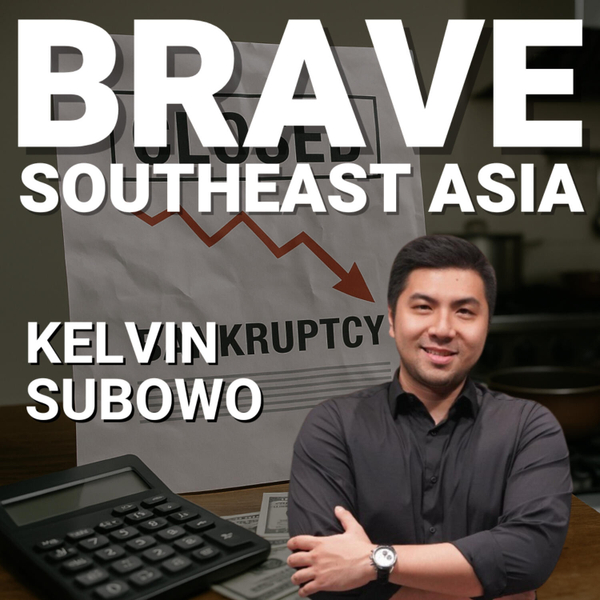
Kelvin Subowo: 7 Failures, Cloud Kitchen Collapse & Building Indonesia’s F&B Avengers – E601

Kelvin Subowo: 7 Failures, Cloud Kitchen Collapse & Building Indonesia’s F&B Avengers – E601

"Number one is the founder. We focus on the people and the founder because we operate the business ourselves, so we know what kind of people drive success. Number two is the synergy we bring to the table—whether through better COGS, operational costs using our central kitchen, improved unit economics, or logistics that squeeze more margin. When we integrate them into our infrastructure, they benefit from it. We calculate the integration impact and how quickly it can happen, depending on how open-minded the founders and team are. Number three is we avoid trendy businesses. At Daily Box, now Daily Co., we focus on comfort food and staple foods—things people consistently want." - Kelvin Subowo, CEO of Daily Co.


"What's helped me a lot during tough times is having great teams that always support me. I've had to make difficult decisions that impact people's lives and futures, but they always aim for a bigger purpose—we want to create disruption for this country. We truly believe in the Indonesian market and its people. That belief keeps us motivated. Many founders who joined or were acquired by our company see how we treat talent, and that makes a difference during challenging periods. As founders, we sometimes feel faint-hearted, unsure if we can deliver or navigate the storm, but it helps that the team has seen our progress and how we've weathered past storms." - Kelvin Subowo, CEO of Daily Co.


"Manage our expectations. We always prepare for the worst and hope for the best. We thought 2023 would be tough because it was a political year in Indonesia. After the general elections, we expected things to improve, but 2024 elections made things worse. Then came trade wars, and we hoped 2025 would bring stability—but now it's even more uncertain. Investors are increasingly pessimistic about the Indonesian market, and we, as local entrepreneurs, have been hit hard. Whatever you plan for tomorrow often ends up not even 20 percent accurate." - Kelvin Subowo, CEO of Daily Co.

Kelvin Subowo, CEO of Daily Co., joins Jeremy Au to share how he built one of Indonesia’s fastest growing F&B groups after seven failed ventures. They talk through how Kelvin’s early failures taught him the realities of Indonesia’s price sensitive market, how cloud kitchens initially succeeded but quickly collapsed post-Covid, and how Daily Co. pivoted by acquiring and scaling offline food brands. They explore how founder retention, backend integration, and M&A discipline enabled sustainable growth. Kelvin also explains how Chinese brands are entering Indonesia with capital and speed, and why his team is doubling down on scale, team culture, and long-term local partnerships.

05:22 He failed seven times: His early startups included a potato chip brand, a HappyFresh-style grocery delivery, a classified forum, and an Instagram-era Etsy clone, all of which failed due to underfunding, misaligned business models, and reliance on customer subsidies

11:39 The cloud kitchen model collapsed post pandemic: Customer subsidies ended, delivery and platform fees remained high, and fuel prices surged, making unit economics unsustainable and causing Daily Co. to shut down over 200 outlets by mid-2022

16:09 Kelvin acquired Bread Life and shifted to central production: The team repurposed its delivery network to support offline brands, bought the mall-based bakery chain, centralized baking to lower costs, and reopened with a profitable retail model

21:58 Daily Co. now acquires profitable founder led brands: It targets three to five times EBITDA valuations, only acquires IP and assets to avoid legacy liabilities, retains founders to run operations, and integrates backend services like HR, finance, and supply chain

29:47 Kelvin believes team loyalty helped Daily Co. survive downturns: Many team members have been with him since 2011, and instead of layoffs, they pivoted together to scale new categories like bakery, aiming to build an ecosystem focused on staple food and "share of belly" consumption across meals and snacks

(01:12) Jeremy Au: Hey, Kelvin, excited to have you on the show! You are doing great stuff for the Indonesia F&B industry. Could you introduce yourself?

(01:19) Kelvin Subowo: Hi, my name is Kelvin Subowo. I'm the CEO and founder of Daily Co. So, actually our journey started back in 2018, when we started Rice Box brand name Daily Box.

(01:32) Jeremy Au: Great! Let's talk about your industry. Let's go all the way to the beginning. I understand you built your first company and it took you about six years. Could you share a bit more about the first company you built and why you decided to do the company back then?

(01:44) Kelvin Subowo: Okay, so, it's Daily Box or now become Daily Co. Daily Company is my eight ventures, Jeremy. So, it's been like seven failures prior to this company that finally taking my dreams off and makes me closer to the vision we have. Back in 2011, when I started my first entrepreneurial journey in Indonesia, the idea or the vision is always about how we can build a business that making disruptions. And at that time, as you know, 2011 as an Indonesian has a 250 million populations. The idea is true consumer goods. That's why if you still Google my name Kelvin Subowo, chips, still pop up the first brand we built, is Kresley.

(02:30) So, the idea is about how we can make branded products, local branded products in Indonesia? So, the passion is always about startup. Then going 2012, I'm started looking into tech, because I'm meeting with a lot of early tech investors like Patrick Walujo from Northstar. I heard about Gojek and how at the time, Grab still the name is Grab Taxi.

(02:53) So, still in Malaysia and Singapore. So I think that, oh, maybe not consumer goods. Maybe I should come into some tech business. But at the time, we don't have money. Maybe in 2012, not many people known about VC. Even they barely heard about PE or family office. I grew up with my mom feeding the family by cooking. So, she has a catering business, selling foods. By doing it, she can provide quite a decent lifestyle for the family, because it's a cash business. I know most Indonesians taste palate. Funding my startup, I always open a restaurant.

(03:30) At the beginning, I opened restaurants, got a cash flow business, you know, and doing it by spending some of the cash to support the team or the developer building the apps. But we always failed because we're always losing in terms of funding. We cannot get the fund. So, I opened second one, things like Wikipedia, then other things like Happy Fresh.

(03:54) So, yeah, things didn't go well. Suddenly, my team, they said to me, (04:00) right, but you always doing this by making a restaurant. So, during the seven failures I'm making around three restaurants, they said, "I think we should consider doing something about food in 2017." They said that to me and I said, to be honest, I don't like restaurant business because it's a property game business, it's, you must focus to having a really good locations, locations, and locations. So, they came up with an idea called Ghost Kitchens back then by Uber in the US. So I think, oh yeah, this might can work because 2017 is the rise of good food at that time. So, we're building our first ghost kitchen in 2018. At that time, no one said Cloud Kitchen yet. We built our first cloud kitchen because cloud kitchen, we need to expand very fast. We invest at the beginning through the central kitchen first. 2020, basically, it accelerates everything because Covid happened. Everybody must, you know, purchase (05:00) things online and we already set up the infrastructure. So, we just need open throughout to all of the cloud kitchens. So, within two years after that daily box, we call the name Daily Box, operating around 300 locations in 15, 17 different cities in Indonesia. So that's, yeah, that's the beginning why I come into this food business.

(05:22) Jeremy Au: So, you mentioned that It failed seven times before. This is your adventure really taking. Can you tell me what were the seven ventures like? Run us through and what you learned from each.

(05:31) Kelvin Subowo: Okay. So, I think number one is about the potato chips business. We called it the brand name Kresley. At that time, very young, thinking that you have to control of supply chains and everything from downstream to upstreams. So, we're making our own chips, we're distributing our own chips. Marketing and everything, too heavy on the operations. We couldn't focus while learning. You need to be focused because you have finite resources and limited time. You just need (06:00) to focus and expand your core strength. The second thing what we built is some kind of business models like Happy Fresh. At that time, we couldn't have the right funding to offer free delivery. But we learned then, at the end of the day, business is business, right? Whether you offer free delivery or not, you must focus on what service you're really good at. You cannot go into the playbook. Same playbook with other players that has tons of capital. And next we set up another, startup, we call it Gail Go. At that time, if you want to find something, people always say you Google it, but what if you don't know how to type or what kind of products you need to find? So, we said you just post it online. It's just like classified marketplace. You can get from the forum about other people saying, 'oh, you can get these things over here and pay commissions to the community.' At the time, there's also a classified marketplace like this named Couscous in Indonesia. So, we're seeing how to combine (07:00) between Couscous encyclopedia, but again, failed miserably. After those three failures, we learned that number one, we must focus and what really good at, focus on who are our customers. So, I'm shifting into what the market hasn't offered yet. At the time, EDIA really focused on electronic stuff. Shopee really focused on really cheap household and we're seeing there's still a lot of merchants that trading through Instagrams for art stuff. This is like Etsy platform like Etsy in Indonesia. So we made one. Focus on iOS, focus on users that really into that, this experience, premium market. Then we got the first directions of hundred millions of revenue. We're really happy. We thought that, 'oh, this will work.' Then suddenly, Shopee offered free delivery across all of nation. They do transactions or communicate through our platform, but they do (08:00) transactions in Shopee because of the free delivery. And that's where we learned that in a middle class economy, there's no brand loyalty yet because it's a very price sensitive market. So Indonesian, number one is all about price driven. Then, after that, trying another here and there, those kind of models of tech, I realized if we want to build a sustained startup, we must have solid unit economies, otherwise, this is going to be a price war especially doing software as a service. I think it will be tough in Indonesia because people doesn't want to subscribe and spending money on that yet. So, when my team coming back to me about food, I think it makes sense because at least with food you already have about the market price, people already knew about how the food price scheme works, right?

(08:50) Jeremy Au: Thanks for sharing all those learnings. We're talking about Indonesia as a market, right? You have to be thoughtful about price. There's no brand loyalty. I think you have to let go about the (09:00) managing entire supply chain, but also making sure that you are being thoughtful about unit economics and selling something people want, which is, food. You took these learnings and set up the Daily Box. It's a unique time, right? There's Covid. So, people had to order online.

(09:14) I think I understand the success of that. The cloud kitchen process has become a lot less popular. Could you share a little bit more about what happened there? Because I know it was of course during Covid, everybody had order online, but I know you grew a lot. I'm curious what you are thinking about that business model.

(09:30) Kelvin Subowo: Okay. So, I think number one is because it just grow too fast and by growing too fast, that means a lot of players focus on the growth phase where they sacrifice a lot of capital to subsidy the consumer, right? Then it just driven by the Covid situations and it makes a lot of market thinking that, 'oh, everything should go online.' Not only about cloud kitchen, right? Educations, groceries, even like (10:00) offices, meetings. This is going to be the new era. People talk about it, the market hype about it. So, a lot of these companies using this momentum also to hypergrowth their business by at the end of the day, Indonesian price sensitive market. You drive them by giving them subsidy. But at the end of the day, the pressure of getting the right unit economics or business models, crumble everything about the market share that they've built. Plus it's also push from post pandemic that at the end of the day, we are humans. Not only Indonesians, we are a very socialized person.

(10:40) So, everything goes back to offline in a very fast pace. If you remember, 2022, post Omicron, people thinking that, 'okay, we had enough.' We don't want anymore lockdown. So you just go with your mask and people still doing it. Suddenly, the attack landscape crumbled very, very fast. (11:00) And the fact that got hit is definitely cloud kitchen because of two things, right? You have to pay the platform fee and you also, the customer also need to pay the delivery fee. And at the time, the logistic cost also kind of crazy with the spike of oil price even the gasoline price by 2021 and 2022, in Indonesia, almost doubled.

(11:22) All the unit economies is not checked for this platform to sustain the burn. At the end of the day, they need to maintain the customers. The burn passed through the merchants, and I think that's what started the domino effect of the failure of cloud kitchens in Indonesia.

(11:39) Jeremy Au: How did you find out it was not working?

(11:41) Kelvin Subowo: I think by the end of 2021, we started to see, 'oh man, I don't think this food delivery will sustain, because I learned the hard way.' But at the time, there's already indicators, a lot of those players coming into Indonesia and offered a huge cash back to (12:00) the customers. But again, subsidy provide market to try to use, which is not wrong, but suddenly, the government implement the QRIS. So, one QR for all. And the banks, like the big banks, implemented it and the user of this eWallet just dropped, significantly. They cannot subsidized the consumer anymore. So I said, if this happened to us, by the end of 2021, I already asked the team that I think we should combine our business models with offline business. We already have the online infrastructure distributed across 300 locations, national. So, we already have the fleet to distribute from Central Kitchen and so on. So I said, let's find offline business that can utilize our infrastructures that we already built. And they come up with coffee business, ice cream business, and bakery business. At that time, I heard about Bread Life because I know the owner of Bread Life. So, I approached them and asked whether we can (13:00) acquire them. At that time, I think a hundred percent of Bread Life or locations is in malls. So, it's tough times for them but I believe that. Usually, Bread Life business model, they bake on the spot. So if it's in malls, the cost productions for square meter is really high because they're using the mall rentals, right? So, we are shifting that business model after we acquired, we set up a central productions and using the network of distributions to distribute the bread across all locations. We improved the unit economy significantly and we are just blessed, you know, because 2022 we thought there's going to be another lockdown, but suddenly, it opens and we got the benefit of malls starting to open again. Every month I have to close around 30 to 50 outlets, so after three months, we are from 300, we got 150. Then after six months, we'll become less than 100. We're just lucky enough to have Bread Life that sustain our business.

(13:59) Jeremy Au: I (14:00) think, that's really interesting because now, you're making a set of decisions about this layoff and you're pushing into kind of like in person. How did you figure out that new business model? I met many Indonesian founders during that time, and a lot of the companies went bust, right? And they closed down. So, I'm just kind of curious, how did you react differently, I guess?

(14:20) Kelvin Subowo: I think because of the team, right? Because of the people. I shared with you that I started this journey since 2011. So, even though Daily Box only established in 2018, the team's been with me since 2011. Now, it's been 14 years, some of them 10 years, 11 years, eight years. So prior to Daily Box, they already been with me. When the business goes down, many companies need to cut their operation costs, They need to cut some people. But these people's been with me since my day one. We were facing two things, scaling down, cutting these people, or we are just hitting the paddle and find another things to scale up the (15:00) business.

(15:00) So, I sat with my people. I said, this is do or die. If we want to survive, we need to cut costs, we need to cut people, which is very hard for me to do. But we need to go back to our original scale when we operated 300 locations not with Cloud Kitchen, maybe at that time we haven't figured it out about life yet, but the bakery business, so we're just thinking that let's just do it. And I'm glad that most of these people have one voice and say, " let's scale it up faster." That helps a lot in terms of surviving, because I'm not surviving all by myself for my company, we have a great solid team that still be with us until today, that has the same mindset in order to cover this cost, we need to reach this scale. And when we find a winning formula with Bread Life using this bakery, we just hitting the paddle and focusing on expanding the offline business very fast.

(15:58) Jeremy Au: When (16:00) you pivoted this, you had to look for the new business model and part of it was offline. You went on to become more of a venture builder or acquirer of brands. I'm curious how that transition happened?

(16:11) Kelvin Subowo: Okay, so after we succeeded with Bread Life, we realize it's easier for us to get the benefit from this infrastructure or ecosystem that we built, because we already have the economies of skill. It doesn't make sense for us if we have to start it, build some brands from zero, because it won't get the benefit of the skill that we have built. That's when we started to see. Because it's also post pandemic, a lot of business also in trouble because they have to close down and lay off a lot of staffs, and a lot of brands need to inject more capital or team to scale up again. We see the potential where we can get this business with a good price. When we infuse it inside our ecosystem, we can scale it up faster from the founders. We learned, It's (17:00) not easy to develop a brand we have around 12 brands and if we operate as one single group, even though the brand purpose is different, we will operate it because it's the same person running it. When we acquire the brand, we offer that the founder still inside the brand still running the operations, but we will help them scale up using our backend. They don't need to worry about HR, finance, supply chain, procurement, and so on, logistics. They can just use hours that we've already built and scale up faster while we're not losing the soul of the brands where the early founders set up.

(17:37) Jeremy Au: And when you talk about buying these companies, how does it work? Because buying a business is very different. How do you go about buying a brand?

(17:45) Kelvin Subowo: I think because our organization is quite people focused, I'm talking about my team. Some of these founders also heard about how we try to survive without doing a massive layoff, which about our people. So, their mindset is (18:00) they want to grow the business. So, if the founder's looking for just a pure exit, they definitely won't be looking for us. We already stated when we're coming into the business. We must go with the majority because we have our investors and shareholders that we're accountable for, so we need to really make sure that we have a strong hold on every process they do.

(18:21) The idea is always about the founders that running the company, get supported, and scale up the business faster. So, when we're into a business, usually we only acquired the assets, the IP. We don't want to deal with the complications of the previous entity about tax exposures, other shareholders conflict, and so on.

(18:43) So, we're just clean slate up a new entity, transfer the IP and assets, and fuse our team and management to help the company grow.

(18:53) Jeremy Au: How is that price calculated? Because I think theoretically, the business makes sense. There's a lot synergies. But how (19:00) does that negotiation happen?

(19:01) Kelvin Subowo: Because conventional founders, most of their business is never, invested by VC. They're never exposed to the capital market or startup business. This is just a pure founder that wants to have more outlets and make sure that more people know about their brands.

(19:18) Typically, we're doing a deal around three to five times their earnings. It must be a profitable business because we don't want problems with profitable business means the business models already works at least three to five years on the market. That markets already accepted.

(19:33) We don't want to touch only trendy business. And after one year, then the business goes bust. We really avoid that. But the founder realized that the big chunk of the reward is not coming from the early payments. Whether it's three times, four times, five times, it doesn't matter because the size of the business is still very small. Maybe they only have three to five outlets. But when they're joining with us, they can instantly go to 15, 20 outlets. (20:00) So, the payout from the dividend itself is already bigger than the first amount that we offer for them to take the majority of the business.

(20:08) Jeremy Au: When we talk about this, let's just say you buy a company, what are the top three things that you need to do in order to make it actually worth it? There's some sort of payment that happens later, so that helps aligning performance incentives. But what are the three things that you need to do and wanna make sure that this brand succeeds rather than fails?

(20:26) Kelvin Subowo: I think, number one is the founder. So, we really focus into the people and the founder, because we are operator by ourself, right? So we know what kind of people that the business anyway. So, that's number one. And number two is the synergy we can bring on the table. Whether we can help them to better COGS, better operational costs by using our Central Kitchen better unit economics or using our logistics that can squeeze more margins. So, when fuse them inside our infrastructure, they get the (21:00) benefit of it. So we really calculated about the integrations that can happen in places and how fast we can do it depends on how open-minded the founders and the existing team trust us. Number three is we don't want to go into trendy business. When we name Daily Box, now Daily Company, we focus on comfort food, staple foods, comfort things. If it's going towards lifestyle, I don't think we want to do it yet because we just really want to focus on typical foods or business that complimentary, and support our users or our customers right now. So we call it the share of belly. Usually people having breakfast, lunch, dinner. Within this pool of customers, we want to grab as much, share of belly as we can. We have bakery for breakfast. Breads for lunch, for dinners, for supper, we have snack kings, we have dessert. So, those kind of ecosystem that we're trying to build and make sure that the brand we acquire is not cannibalizing each other.

(21:58) Jeremy Au: Let's talk about your (22:00) share of daily breakfast, lunch, dinner, snacks, dessert, comfort foods. What do you think are the fastest growing segments versus the slower growing segments from your perspective?

(22:08) Kelvin Subowo: I think bakery business, definitely, having a great growth. It's a flour based food because rice and chicken definitely is become the main consumption for Indonesian for so long. But the competitions is tougher and now, people started to think about what's the substitute of rice and basically definitely noodles. Noodles also quite popular in especially in Asia, right? But now we are started to see the consumptions per capita for bread is increasing. The Kigar is quite amazing, so, I think, we're glad that we're into the business early, so we can tap into the growth of the bread business.

(22:52) Jeremy Au: And you think about the relationship with platforms, right? You mentioned previously that delivery is a big part of the cost. (23:00) Obviously, you went to create these collection points for people to pick it up. What is your relationship with these online platforms from your perspective?

(23:06) Kelvin Subowo: So, I think, we are making a good partnership and I'm still a huge believer of the food delivery. So, don't get twisted between cloud kitchen and food delivery concept. So, right now, the food delivery concept is still delivered from our offline locations, right? Where the cloud kitchens model is usually when you just, you know, rent it out the locations. You don't need a facade. You don't need a front shops, just chevrons just running it. It's a cloud kitchen models. But right now, even we are still having maybe around 100 locations of food delivery points and still generated like a decent amount of revenue from the food delivery. Even right now, from the total group, we still have maybe 15 to 20%. It's still significant numbers for food delivery. I think the platform also have a mutual (24:00) respect towards us because not many brands that still survive. When we started it's 2018. That means it's already seven years. I think there's also a lot of brand that's already comes and go, but we we're still here. We're still expanding even adding more brands. The platform must do what's right for the business. They must become profitable. Otherwise, it won't sustain. But at the same time, we also, you know, hold ourself a little bit from expanding online because the unit economics is not favorable for us right now.

(24:32) Jeremy Au: There's a lot of buzz and competition in quick serve beverages. And then the other side is the entrance of Chinese comfort food franchises as well. Could you comment about those two trends?

(24:51) Kelvin Subowo: ​Since I think, last year, I said to my team is at the end of the day, there's a lot of great Chinese (25:00) brands will coming into Indonesia, and when it happen, it will be tough for us if we don't have the competitive advantage towards them because they have more capital. Even I joke to the team, they work harder and they work faster than us.

(25:16) But the fundamental of our business is driven by people and the team. So, I still have strong belief that what's going to make us accelerate is because of, one of the thing is because we won't grow organically, it's always about inorganic expansion through a lot of M and A.

(25:35) But if you notice, Jeremy, you've met with a lot of companies as well, not many companies doing acquisition, even merger and looking good. Usually, after they merged problems started to pops out and usually this founder exit and the other founders also out. Right? But in our case, I think for the past three to four years, most of the founders that joined us still in the (26:00) daily organizations. So, I call this like, you know, this is just like Avengers mission. I always said to the team, right, we have a different expertise and back in the days we are competing against each other. But now, you know, just join forces. All of these great founders has been doing something amazing. They must be doing something right, they can sustain for this long period. So, we just combine all of this knowledge to help us doing better in terms of operations. So, just put it simply, usually, if we want to get things done, it takes five meetings.

(26:34) Now, the mindset is how you get things done in two meetings. Now, you're talking about the coffee business as well, right? I think that's one of the reason why we haven't tapped into beverage market yet. We really focus on the food side. Even though all the business and food and beverage, it's just like if you are just in the operation, it's two different things between food and beverage. We don't want to touch beverage yet (27:00) because it's a very competitive market because the unique selling propositions in terms of beverage, it's nonstop innovations about the brandings as you know. But when we're talking about brandings, this is a market where you facing with a very price sensitive market.

(27:17) So, the idea is how you deliver a better product with a cheaper price, even though it's already cheap. So, with food, we are lucky that consumers already have certain expectations about the price of food and the budget they will spend. I think, we are going to focus on that area. We are already seeing some, but next year, it's going to be more. A lot of great Chinese players will in, grabbing the market, which is very price sensitive, it will be tough. That's why I encourage a lot of founders out there rather than compete, we should collaborate and find the best synergy between two entities, two companies, or two leaders.

(27:56) Jeremy Au: I love the Avengers analogy, so I guess, the Chinese fast (28:00) food would be like snapping their fingers. A big part of what's happening is that they're escaping the competition that's very cannibalistic in their own market, and they're looking to diversify their revenue sources so they're willing to take a lot of losses as part of the expansion. They're fundamentally cheaper or fundamentally working harder, but they're, the market entry, Indonesia with, you know, lower than market pricing in order to get market share, you know, get some customers build a beach hit. So, do you think the strategy from your perspective would be obviously continue getting cheaper, but, you know, focus on break even or profitability and outlast them? Or do you think it's more fundamental where you're actually gonna have to push even cheaper and fight them there?

(28:38) Kelvin Subowo: I think, from my perspective, since day one, right? Competitors are really important because they are the one that push us to do better, but our organization never really put a lot of attention to that. At least , that's not our main priority, we're looking more towards what our consumers really need, right? Definitely, they need a cheaper (29:00) price. With the decline of consumer spending, we can see how it's getting tougher for a lot of consumers. So, offering more valuable products, definitely, one of the strategies that we're going to do in terms of getting that competitive advantage in terms of price, definitely we need scale. That's why M and A will always be on the horizon for us. I think, right now, we're trying to build a whole upstream, downstream system food business in the country, hopefully, whether it's the Chinese, the Indians, or whoever wants to come to Indonesia rather than see that they compete with us, we can offer them, collaborate using the infrastructures we already built.

(29:47) Jeremy Au: Could you share a story about a time that he had been brave?

(29:51) Kelvin Subowo: Yeah, I think as founder that started the business seven or eight years ago, we have experienced tough times during (30:00) the COVID tech winter. Now about the global landscape, right? So we have get through all of those heavy winds. Just like every two years. There's always something new. Even a lot of my colleagues or my friends that saying they're making five years projections, you don't know what will happen next year, and those projections is not valid anymore, right? I think what's really helped me a lot is during those tough times I'm having, these great teams that always supporting me and together, you know, there's a lot of difficult decisions I have to make which will impact most of these people's life and future. They're always aiming for a bigger purpose. We want to make disruptions for this country. We really believe on the Indonesian market and Indonesian people itself. So that kind of things that really motivates us and a lot of founders that merge are acquired by our companies, realize how we treat talent in our (31:00) organizations that help us, you know, sometimes this kind of tough times coming.

(31:04) We, as a founder, you know, sometimes we're faint hearted because shit, whether we can deliver this or navigate through the storm. But it helps because they've seen progress. They've seen how we navigate through a huge storm now there's a bigger storm coming and I think because we've been through a lot, this is just like battles like I shared with you the analogy of the Avengers at the beginning. Everybody just focus on their strength. When problems comes, when adversities comes, it's just a matter of time whether you consolidate your power and focus on each other's strength and supporting each other, or, you know, worrying about the problems. So I think, my team is definitely the one that really helps us to thrive.

(31:49) Jeremy Au: Could you share what made some of the tough times tough over the past few years?

(31:55) Kelvin Subowo: Because it's unexpected. So that's what I learned is about manage our expectations. We always prepare for the worst and hope for the best. We're thinking that 2023 is going to be tough because political year for Indonesia after the general elections we're thinking that, okay, things will get better.

(32:13) Then 20, 24 general elections happened and then things get worse. Then there's a problem with the trade wars as well. Then we're thinking that, okay, hopefully after 2025 things got more stable. But suddenly, now, it's more uncertain. And even we can see how the investors seeing Indonesian market also quite pessimistic about what has happened for the past few months. And we, as Indonesian entrepreneurs, got hit really hard. It makes it really tough because you, or it's just like, whatever you plan or thinking tomorrow will become not even like the slightest, like 20% will happen. It's just like sometimes it happened.

(32:55) Jeremy Au: I'd like to summarize the three big takeaways. Thanks so much for sharing about your early entrepreneurial (33:00) journey about how there were seven startups before the eighth startup worked out. Some of the learnings that you had and why you were inspired to always be focusing on food as the core mission and vertical based on your childhood experience with your mother. I thought it was fascinating to hear about the dynamics around the F and B industry in the early days from the cloud kitchen to online delivery and how your company had to get through pandemic and was, you know, pivoted, got succeeded because of it it was interesting to hear those lessons thanks for sharing about the future, how you see rollups and acquisitions of other brands as part of your strategy and how you see the Chinese food brands coming in as a strong competitors and how you're planning to example an Avengers team to compete against them. that note, thank you so much Kelvin for sharing experience.

(33:50) Kelvin Subowo: Thank you so much, Jeremy. !Thank you for having me! Hope we can build, as you also watching how we grow our company. Talk to you soon!

(33:58) Jeremy Au: Okay.

Hosted by

Related episodes