Skip to content
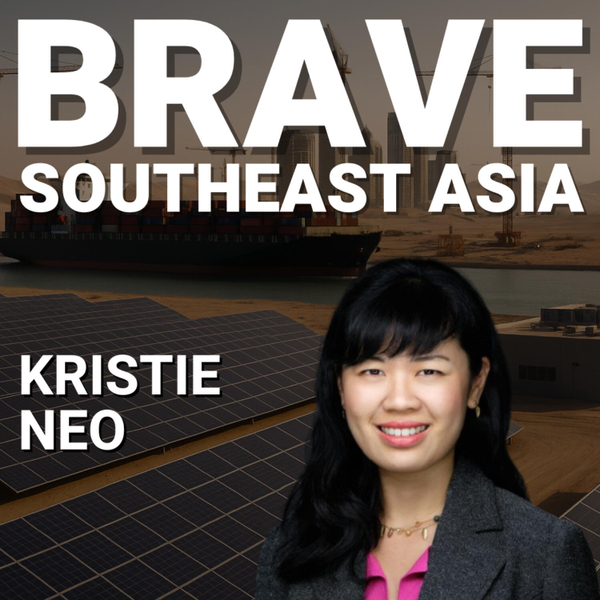
Kristie Neo: Middle East & China Partnership Acceleration, Secret Power Corridors Reshaping Global Markets & AI Megaprojects – E646

Kristie Neo: Middle East & China Partnership Acceleration, Secret Power Corridors Reshaping Global Markets & AI Megaprojects – E646

"the crux of the issue is that there's a fundamental underreporting of this shift I have traveled the Middle East over the past five years and the magnitude is not obvious western media focuses on the West Middle East dynamic and on China West tensions but there is systematic underreporting about the relationship between the Middle East and China which remains a neglected topic" - Kristie Neo, VC & Startup Journalist


"Saudi Arabia was historically the most isolationist and insular of the Arabic states but that shifted when MBS entered the picture in 2018 and pushed to open the kingdom by inviting foreign investors to help develop the economy build and invest and within just five to seven years he rolled out large economic reforms under the Saudi 2040 vision and as Chinese companies look for growth beyond the US they turn to other markets after Southeast Asia and India pushed them out which makes the Gulf one of the last frontiers for expansion." - Kristie Neo, VC & Startup Journalist


"the China Gulf corridor is the one everyone talks about because it involves China and Saudi Arabia but there are many more corridors emerging and 2026 will bring even more attention to the Gulf Africa corridor and it is surprising to now discuss Southeast Asia and Latin America which barely had any ties until comparisons like the fintech ecosystems began these cross border exchanges and talent flows are only in their early stages and much more is coming in the years ahead" - Kristie Neo, VC & Startup Journalist

Jeremy Au and Kristie Neo break down how China, the Middle East, and Southeast Asia are forming new economic corridors that reshape trade, capital movement, and technology strategy. They describe how China and the Gulf now work together at a scale that surpasses Gulf–West flows, how the UAE and Saudi Arabia use bold planning to diversify their economies, and why Western reporting still misses the magnitude of this shift. They examine how Chinese overcapacity fuels Middle Eastern mega projects, how sovereign funds on both sides deepen cross investment, and how AI, data centers, and energy abundance position the Gulf as a future compute hub. Kristie also outlines the gap between vision and execution in projects like NEOM, while Jeremy reflects on how these moves echo earlier global cycles.

00:55 Trade flows flipped direction. China Gulf commerce surpassed Gulf West trade in 2024 because Chinese overcapacity met Gulf demand for infrastructure, construction, and technology.

02:18 Media exposure hides the scale of change. Western and Chinese outlets lack global reach in covering Middle East China ties, which keeps the shift underreported.

08:56 UAE applied the Singapore playbook. Pro business policies, low tax systems, and investor friendly rules drew global hedge funds, family offices, and operators to Dubai and Abu Dhabi.

14:51 Qatar’s World Cup showed the model. Gulf capital combined with Chinese labor and construction speed to complete major stadium projects on compressed timelines.

25:32 Sovereign funds deepened two way flows. Middle Eastern allocators increased exposure to Chinese assets as both sides diversified away from US denominated risk.

40:12 AI infrastructure became a national priority. Gulf governments invested heavily in data centers and chip capacity by pairing cheap energy with large land availability.

54:23 NEOM revealed ambition and friction. The 120 kilometer enclosed city concept captured Saudi Arabia’s vision but faced delays that showed how difficult execution can be.

Jeremy Au (00:18) Hey, Kristie, excited to have you for another show.

Kristie (01:15) Hello, hello! This time we're doing this online. Very different.

Jeremy Au (01:19) I know. And where are you now?

Kristie (01:23) I'm back in Dubai. I just came back about two weeks ago. And yeah, it's been a while since I was back. I think it's been about six months. So I'm quite happy to be back. Yeah, now doing it from here.

Jeremy Au (01:34) Yeah. And I'm in Singapore, sunny tropical Singapore. And I think today's topic that we want to talk about actually was very much about the Middle East and China. Because I think we are both places where we are seeing quite a lot of corridors actually happening, obviously between the Middle East and China, China and Southeast Asia, and of course, between Southeast Asia and the Middle East. So a little bit of a three-body problem.

Kristie (01:38) You...

Jeremy Au (02:00) But I think it'll be just fun to discuss that. So, Kristie, maybe you want to share your quick level thoughts about this topic?

Kristie (02:07) Yeah, so actually, interestingly, I just wrote a newsletter about China and the Gulf. There were just some stats that were just released over the past week by this independent think tank called Asia House. What they basically found is that the trade flows between China and the Gulf have actually surpassed that between the Gulf and the West for the first time. And that was for the year 2024. Obviously, the relationship between China and the Gulf is still relatively new, at least when you compare it to the West. Historically, the Gulf-West relationship has been a very long-standing one, especially in the area of oil and gas. But in the last few years, you can see pretty evidently from the headlines, from what MBS has been doing, China is really sending a lot of their overcapacity, whether in areas like construction, real estate, helping Saudi Arabia, UAE, be able to fulfill some of these like giga-projects that they want to do, export a lot of their technology, whether in AI or EVs, into Saudi Arabia in order to help them fulfill their economic reforms and diversification away from the standard oil and gas thesis that they've been trying to do for a really long time. So yeah, so obviously, this is something that's going to grow. And I think it's a very exciting development. I'm sure we can spend more time talking about that today.

Jeremy Au (03:30) That's such a great opening because the crux of the issue is that I think there's a fundamental underreporting of this. I mean, I've had the opportunity to travel to the Middle East quite a few times over the past five years. And I think the magnitude of that shift is really not obvious. The Western media obviously talks about the relationship between the West and the Middle East. And obviously, they also talk about the relationship between China and the West. But there is a systematic underreporting. I'm not sure why. Maybe you can explain more about the relationship between the Middle East and China. And I think that's kind of like a neglected topic that I just felt like this would be a good one to discuss.

Kristie (04:08) Yeah, I mean, I think it's actually because the relationship itself is so new, right? I think the West has definitely had a lot more exposure to the Gulf compared to China.

Jeremy Au (04:12) Hmm.

Kristie (04:17) I mean, if you just go back in history, the Americans and the Brits have been in the Gulf for a really, really long time, like we're talking decades, even before the founding of modern-day UAE and Saudi Arabia. They were already there. They were the first ones to basically, quote unquote, help them develop oil and gas when they discovered oil and gas reserves. This was probably back in the 1950s. So obviously, it's been a long-standing relationship. And there's a lot of geopolitics that goes on with that as well. So it's very hard to kind of untangle as well the geopolitical aspects, Middle East conflict from some of these relationships. I think the exposure to China has been relatively new.

I think when you think about especially what's been capturing most of the headlines recently is this relationship between specifically Saudi Arabia and China. Saudi Arabia is probably the most, historically also the most isolationist, the most insular of the Arabic states. But I think all that kind of took a 180 turn when MBS kind of came into the picture. That was just recently—you're talking like 2018—where this guy comes in and he's like, he wants to open up the kingdom. He wants all these foreign investors to come in, come in and help develop our economy, come and build, come and invest. So we're talking just 2018 to now, it's just barely just five, seven years where he draws up these big economic reforms. I think Saudi Vision 2040 is his vision that he has. And now more recently, you start to see some of these giga-projects starting to come into a little bit of hiccups. A lot of this relatively new development is why I think it's still a topic that's still very, very much under-covered.

Even if you see things from the Chinese point of view as well, I think definitely there's been a bit of a rush in terms of trade flows. You see a lot of G2G collaborations, whether between the sovereign wealth funds—so you're talking like PIF, Mubadala, G42—and some of these investment banks, corporate banks, infrastructure banks in China. All of these has also been developments and collaborations and more MOUs between the two of them over the last few years. But a lot of that's still kind of unfolding as you speak, right? But I think it's very much a symbiotic relationship as a win-win for both because China also has a huge overcapacity problem, which the likes of Saudi Arabia and UAE, they need also a lot of this capabilities and expertise that they have, whether in terms of building, particularly also in the area of tech, which is something that you and I talk a lot about and are most excited about, right? And to a certain extent, I think it's also fair to say the US-China relationship has not done well in the last three years. And now with Trump in the picture, the big Chinese big tech, whether it's your Alibaba's, whether it's your Tencent, they need to find ways to continue to grow, right? And if they're not able to grow in the US, where are they going to grow? They need to find other markets to grow. They came to Southeast Asia, they tried India, and India pushed them out. So in a lot of ways, I do think the Gulf is kind of like the last frontier for them. If you talk to the Chinese, they always say, "Saudi Arabia is like China 30 years ago," where everything was just like virgin barren land, and "we can build everything from the ground up." I think that really goes to show the kind of growth opportunities and capacity that the Gulf really has, and how China seeks to kind of play those markets. So yeah, I think it's gonna be really interesting in a couple of years to see where this leads to. Yeah, the Gulf first, and I also think Africa is eventually going to be a region to watch where China will also be doing a lot more in those areas too.

Jeremy Au (07:55) Yeah, I like the key chapter point, which is actually, I think, the new crown prince for Saudi Arabia, right? I mean, I had the opportunity to speak as a keynote speaker at a Rise Up conference, speaking on tech in Saudi Arabia. I've done a few other trips, both for leisure and for work in the region. I think what's understated is the dynamic that you just mentioned, which is that I think there was a diplomatic isolation for some period of time, especially during the Biden administration. And so I think the Middle East started turning towards China to get these things done and continue to do that. And I think the Chinese were happy to be amicable and focus on the transactions that needed to be done, whoever they are, without thinking too much about, you call it human rights or these principles that was there. But then I think under the Trump administration, now China is the other one, which is like now they're really focusing on this relationship. So it's an interesting dynamic where it's kind of like, I don't know, the three-body problem between America, Middle East, and China. This has really become turbocharged actually, I think over the past one year, especially. And I think this is something that was very non-obvious.

And I think maybe this is double-click on that point ahead is obviously the people who are observing this are people who are either on the ground in the Middle East, and as if Middle East has very global publications. It's not like the Wall Street Journal or the New York Times. I mean, my wife has the New York Times on her phone, right? So we're just kind of crazy if you think about it. You're like literally 12 time zones away, and you have the New York Times app pushing notifications to you about something happening in New York. But there's no comparable equivalent, I think, except for maybe Al Jazeera. But obviously, I think nobody would say it's the same global reach or influence.

Kristie (09:29) Yeah.

Jeremy Au (09:39) as the American publications, obviously. And then two, of course, is I would say the Chinese newspapers as well are not covering this very systematically from my perspective. I said maybe Caixin, I would say, but even so, they're focused on the business side. And again, the reach is nowhere near, right? So I think there isn't that level of reporting or in-depth reporting, or the reach of that reporting, that makes this relationship that's especially, over the past five years really be clear.

Kristie (10:08) Yeah, but I think in a lot of ways, I mean, to give, I think the Gulf its credit. We talked about the Gulf, there are a lot of Middle Eastern markets, but I think the ones that tend to kind of... people pay a lot more attention to, you know, still the UAE and Saudi Arabia. These two are still the two kind of like kingpins, right? That you want to talk about. Particularly, in the UAE, if you've been following a lot of the policy developments that have been in the last couple of years, and you just juxtapose 10 years ago to now, right? The massive changes that they have undergone, a lot of them were very much led by government, trying to position themselves as pro-business, open to foreign investors, trying to encourage more foreigners to come in. And all these headlines about now family offices, hedge funds. And these are no longer small regional funds. You're talking like really large USPEs all looking to open an office, set up a sub-entity there, both for fundraising, of course. As you know, in the last few years, fundraising has been a huge challenge for a lot of private investors. And this whole low tax policy has made it position themselves as a way for the rich and the wealthy and the influential and decision-makers to make Dubai or the UAE the place to come, invest, stay, build your family here, make your life here.

I think a lot of these thoughts are very similar to what Singapore had tried to do. I think they are replicating a lot of the Singapore playbook over in the UAE. And I would say they've done it very successfully. Even if you look at the maritime airports, for instance, Emirates, a lot of Etihad, Qatar, right? This idea of interconnectivity, building positioning themselves, because they have a really good location as well, right? A lot of the playbooks are borrowed from Singapore, too. And I think you're beginning to see the fruits of a lot of the policies that they have implemented for the last few decades now. And I think that's also part of the reason why you're beginning to see a lot more coverage beyond the traditional, sadly, things like oil and gas. Unfortunately, only oil and gas and wars is what the Middle East has always been known for. But today, they are also perceived as the place where a lot of the money makers, the people who are making decisions, because there's so much wealth, particularly sovereign wealth, that's flowing out of this region. And increasingly, I do think you're going to see a lot more to come, especially in areas of deal making, where they'll be the ones who'll be making a lot of really key decisions in terms of where markets are going to be moving.

Jeremy Au (12:50) I like what you said about the Singapore playbook is being executed in Dubai. And I think you definitely see a lot of talent flows where expatriates are explicitly comparing Singapore versus Dubai in terms of where to work and how to work. I mean, you're probably a good example, Kristie, of somebody who's in Singapore who moved to Dubai as well. Right. And I actually know a lot of professionals who have moved from Dubai to Singapore, but also from Singapore to Dubai.

Kristie (13:03) Yeah. Yeah.

Jeremy Au (13:10) But let me just list out, I think, the similarities and maybe to some extent differences, right? I think similarities, like you said, is the interconnectivity and hard playbook in terms of airlines, ports, making it easy to commute and transfer and transship or whatever it is. So I think that's one. Two, obviously, is the diversification, I would say, away from, obviously, natural resources towards more of, like you said, finance, I would say, especially. But also all of the various middlemen activities they have, brokerages and dynamics there. And then third, of course, I think actually is the regulation piece, right? Trying to be much more regulation-light in terms of capital gains tax, income tax, but trying to make it a good place to be in terms of business, but also a place to park assets and to manage money as well. And I think those are obvious similarities.

To me, obviously, some key differences from my experience when I was in Dubai. Singapore is much smaller and actually is much smaller.

Kristie (14:05) Yeah, yeah, yeah. I think Singapore is small like compared to most places around the world. Yeah, yeah. Yeah.

Jeremy Au (14:10) It's like Vatican City is probably the only place that's smaller than Singapore, maybe in some. UAE is United Arab Emirates, so I think they're different political kind of like Emirates that they came together as a federation. So I think it's not necessarily the most similar. I think that's one. Two, of course, is they still have oil and gas, which is I think a huge advantage because it's I think in my head it's a fountain of cash just coming out of the ground. And so I always tell people it's like the difference between the Middle Eastern sovereign wealth fund is that it came from oil. And the difference about Singapore sovereign wealth fund is they came from the savings of the chicken rice store owner. I mean, it's a huge difference, right? Because we were like, "Oh, Temasek is the same as that sovereign wealth fund." I'm like, "Yes, there's a strategy, but..."

Kristie (14:39) Yeah, exactly. Yeah. That is true actually. It is true. It is true. Yep. Yep.

Jeremy Au (15:01) I mean, if you're Norway and you're pumping oil and gas, the sovereign wealth fund context is so different, which is the stewardship. Is it somebody's taxpayer money, or are you trying to steward your natural resources in a way to help you diversify your economy, right? It's just a totally different mindset, which I think, and I think the last thing I think that's obviously quite different is where they belong to, right? I mean, like obviously Dubai belongs to the Middle East, and Singapore is in the context of Southeast Asia, right? And so to some extent,

Kristie (15:07) Yeah. Yeah. Yeah. Yeah, 100%.

Jeremy Au (15:29) The Middle East story as a region is the Dubai story in many ways, and the Southeast Asia story is very much the Singapore story as well, and I think...

Kristie (15:38) Or rather they're interconnected in a similar way. Yeah, that one I agree. Yeah, true.

Jeremy Au (15:41) Exactly, yeah. So it's going to be interesting to see how that plays out.

Kristie (15:46) I totally agree.

Jeremy Au (15:47) I think one thing that is on my mind, of course, is going back to the China component, which is, I think, not visible. I remember kind of like going to Qatar and they're very proud of their stadium. And the stadium, the FIFA World Cup was a big part for that in 2022. And what I remember was that my tour guide who...

Kristie (16:03) Yeah, many stadiums actually they have quite a lot.

Jeremy Au (16:14) actually also happens to be a Chinese person who moved there, got married. She was just sharing about how the stadium had been built in three and a half years, right? Which was much faster than average, using Chinese labor, but also Qatari money. And I just thought it was this interesting fusion and also a good example of what that Middle Eastern partnership really is, right? Which is, I think capital from the Middle East that wants results, get things done, transformational projects that you talked about, using Chinese technology, manufacturing, raw materials to make it happen.

Kristie (16:45) Well, yeah, I mean, like that's something that's been, yeah, it's a similar playbook that you've seen. It's not just Qatar, right? I think you see it in Saudi Arabia, you still see here. Yeah, I think like similar to what I mentioned, I think like the Chinese have definitely been pouring a lot of investments into areas like construction. But I think, you know, a lot of the, there's a lot of growth opportunity. In fact, I think there were some articles just came out the last week on Caixin about some of the contracts that are going on between the construction giants that these, Chinese construction giants have been bidding for in Saudi Arabia, have been so competitive because again, there's a need for them to continue growing. And everybody now has discovered, Saudi Arabia is like this, you know, again, this virgin land that we can come in and, you know, be able to build. So there's been a lot of competition even among the contractors there.

But even they are also beginning to realize that being able to operate and deliver, you know, in Saudi Arabia may not necessarily be the same as what they had in their minds in terms of, again, the returns on some of these projects. Saudi Arabia also has their own protectionist laws. Those will eventually lead to certain levels of restrictions in terms of how they can deliver on some timelines of some of these projects. And then on top of that, having to bid against and win against some of these other Chinese construction companies is going to be a bit more challenging for them to operate in. So I mean, that was an interesting kind of bit more of an investigative piece about it. Yeah, it's one of those regions that, I mean, forget about China, even Saudi Arabia is a market that a lot of people don't really understand a lot about. I mean, yeah, it's the Middle East is still a very, very much under-covered market. And yeah, I expect in the next 10 years or so, we're going to see a lot more, that's going to slowly, you're going to see a lot more coverage, a lot of more interesting things also coming out of this region over the next 10 years for sure.

Jeremy Au (18:45) Yeah, you know, I think what's interesting is, you know, any new opportunity is a great opportunity unless you're bidding against other Chinese companies. So I was just like, I mean, you know, I think that's the crux of it, right? Is that, I think the Chinese overcompetition, right? As they call it within China, is spilling out. And, you know, it's interesting because I think a lot of folks obviously are worried about competition versus Chinese companies if you're like a foreign company. But I think what's really interesting is that the best enemy against the Chinese enterprise is another Chinese company. And so there's an interesting dynamic, is I think foreign buyers underappreciate the tactic that they can fight the Chinese company using another Chinese company to make it work. And I think that's something that there's more sophistication about.

Kristie (19:20) Yeah.

Jeremy Au (19:35) I think because that way you get, like I said, better competitive bids. I think having more competition for bids is good if you're a Saudi Arabia as a buyer, right? Because now you get multiple bids, multiple options, more optionality, better ROI as well.

Actually, one thing that is interesting in my head, and you're talking about, you know, kind of like the laws and everything is, I get a sensation that I think the Middle East is quite accepting of migrant labor from China, which is actually a bit different from other regions, right? I mean, I think, you know, for example, building the stadiums, there's a lot of Chinese labor who came in and then went back to China afterwards. I mean, some of them stayed, but I just think that the political optics or social optics of doing that in anywhere else in the world of having like, I don't know, a hundred thousand Chinese laborers come in to build something and then, you know, go back. I don't think that really exists anywhere except Middle East in my head.

Kristie (20:23) I think it really depends. I can't say I'm an expert on this. I mean, you mentioned Qatar. Qatar is actually quite different from Saudi Arabia. And I do need to check exactly what kind of hiring laws there are in Saudi Arabia. But if I'm not wrong, Saudi Arabia, some of the other Middle Eastern markets, they actually have a pretty sizable population. If you go to Saudi Arabia and you actually go to, say you want to hire like a Uber taxi, a good chunk of the taxi drivers are actually locals, which is not the experience when you go to Qatar or if you come to UAE, you go to some of these other markets, right, where you actually have a lot more Indians or Pakistanis or Nepalis who are drivers, right? So which means that a lot of these of like blue collar workers or lower skilled workers tends to be outsourced migrant workers that come from some of the neighboring states, most of them from South Asia actually or Central Asia to a certain extent. But in Saudi Arabia it tends to be the other way around. And actually from what I understand, I may be wrong, but I don't have exact numbers. I think they tend to be quite protectionist in terms of their labor laws.

So I would be interested to see whether some of these large projects are actually built. I mean, I guess they would bring in, maybe for some of the giga-projects, because you do need a lot of manpower to be able to build some of these things, they would probably hire cheap labor. So yeah, it is definitely possible. But I think in terms of protectionist labor practices, yeah, I'm pretty sure they would try to ensure that, you know, a certain number of locals will have to be hired. And in fact, not just hired, I do think that they will probably want to introduce a certain level of training, even for their own local workers, right? I can't speak for again, construction, but I know for say, the finance industry, or like the private equity industry, there's always this element of hiring, you know, somebody for training purposes so that they can train their own local talent whether to set up their own funds or, you know, climb up the ladder. Yeah, I mean, of course, I mean, there are different frictions and tensions that come about with that. There's definitely an element of training that they try to, you know, upskilling that I think is also emphasized for some of these markets.

Jeremy Au (22:45) Now you have to make me ask what are those frictions that could potentially happen?

Kristie (22:50) Well, I mean, if you talk to a couple of the funds that have been here, especially this is, you know, happens in some of the bigger funds, you do have what they call like Nepo hires, right? These are like the sons of ministers or the sons of family officers who have been parachuted into some of these companies because his father was like the chairman of, I don't know, some family office or something. You know, it's not like the sense of merit may not necessarily be as well practiced here compared to, you know, maybe a more equitable society like Singapore where everybody goes through the same system. Yeah, certain hiring practices can be a little bit different in the Middle East. And that's sometimes is what kind of leads to some of these types of frictions in a workplace.

Jeremy Au (23:42) Yeah, that sounds. Yeah, that happens. Yeah. Sounds unavoidable.

Kristie (23:44) Yeah, that happens here.

Jeremy Au (23:50) I think what's interesting about that, of course, is also talking a little bit more about, I think it's interesting to see the Chinese learn how to become multinational corporations, actually. I mean, historically, when you think of multinational corporations, you always talk of, I guess, the European multinational corporation. But I mean, I think the concept of like, you know, kind of like a corporation that was like global and had different business units, I think, started off the Europeans. And then obviously, I think the Americans will be a very good example, right? And I think to some extent, I think you see that with the Japanese companies. I would say, multinational in terms of like, but I think it's been interesting to watch the Chinese build up multinational corporations, which is actually quite interesting dynamic, because I think if you asked me like 10 years ago, the idea of a Singaporean working for a Chinese company was really considered pretty out there. Like it was not considered to be professional, it wasn't considered to good HR, it's considered to be very difficult. But now 10 years on, I think there are many Singaporeans now who see it as a stepping stone. Still a tough culture to be part of, but very much making an effort to internationalize and make it more systemized and have the cafeteria serve different foods that are either halal or diet specific as well. So I think it's interesting to see those learning milestones be achieved. What do you see on your end?

Kristie (25:16) Yeah, I mean, I guess what you're saying also does, I guess a greater diversity of multinationals in today's workplace compared to before, where maybe only the so-called institutionalized MNCs would be Western, whether they're European or they're American, or maybe even Japanese. Although Japanese have tended to, you know, not have such hired sizably, you know, overseas as much. But yeah, there's probably a greater diversity now in terms of MNCs. I would consider Dutch East Indies or British East Indies to be MNCs, maybe not in a modern sense, but in a colonial sense, they were very much regional. They were handling transactions that were cross border. They had multiple offices globally. And they were very powerful companies too back in the day. So yeah, I think they are definitely a precursor to kind of modern-day American institutionalized type MNCs that we know about today. So for people who are looking for jobs here, there's a lot more variety of companies to work for these days.

Jeremy Au (26:21)

I think what's also interesting is also talking about the labor and capital flows that we're hearing, at least from my perspective, either you call it rumors or qualitative insights or comments. And I think what's interesting is I think the sensation that there's a lot of Middle Eastern capital flowing into China for Chinese assets, but also a lot of Chinese capital flowing into the Middle East as well. So what are your thoughts about that?

Kristie (26:45)

Well, I mean, it's definitely a win-win relationship for both. And there's something that has been going on for the last three years. I don't think it's a really new phenomenon. I mean, I think some of the more prominent ones that you may have seen in recent times would be the likes of, what is it? Abu Dhabi has like a Blue Five Capital. InvestCorp has also done something with the Chinese. Yeah, a lot of the sovereigns between from PIF to Mubadala G42 has had relationships with the Chinese as well. And I mean, it's a win-win for quite a number of reasons, right? I think the Middle East needs to diversify away from, you know, oil and gas. So they need to import, you know, the likes of, you know, Chinese tech, the infrastructure that we mentioned, you know, some of the expertise that China is leverage some of their overcapacity over into their home countries.

And then at the same time, even if it's not just China, but even if you look at India, you look at Asia as a whole, these are among the most populous regions globally. Demand for oil and gas will only grow. So that's something that the Gulf is able to supply to a lot of these markets. Even if you take a step back away from China, you look at the Indonesian sovereign wealth fund. They probably made a trip to the Gulf recently. India as well, Modi has also made trips to the Gulf recently. So, you know, and then if you kind of go back to what happened earlier this year, the Trump tariffs, you know, has definitely accelerated this move to kind of for investors to diversify their assets, right? So it's really pushing a lot of these nations to kind of explore more bilateral and multilateral kind of relationships away from, you know, kind of the volatility and uncertainty that you're seeing in the US. So a lot of these countries are trying to explore some of these newer regions, you know, that they may have less exposure to, Singapore included, too. That's why if you notice like this year has been really interesting just watching kind of suddenly Singapore's talking about like, we should send our Singaporeans to Latin America, and go to Africa, like who would have thought, right? But you know, it is definitely indicative of kind of where the global sentiment is now. And I think it's not just a Singapore story, it's not just a Chinese story, it's very much a global story. And that's why I think also this idea of kind of the global South, which is what I'm doing also with my Substack and the podcast is really to capture some of these really interesting trade flows and corridors that we're beginning to see take place between these regions, right? So the China Gulf one, I think is probably the one that everyone wants to talk about, I think because it involves China and involves Saudi Arabia, but there are many corridors, right? Whether it's like Gulf Asia, Gulf India, Gulf Africa, I think is another corridor that's so underreported. I think there's going to be a lot that's going to be happening, especially in 2026. I expect a lot of conversation about the Gulf Africa corridor. I mean, like, who would have known, like, we would be talking about Southeast Asia and Latin America. Like, we never had any relationship or barely any relationship with Latin America. And then all of a sudden, I did this podcast about, comparing the fintech ecosystem between Southeast Asia and LatAm, right? So I think it's going to be really interesting what's going to happen, you know, in the coming years, how some of this, like, cross-border exchanges, talent, is going to happen. We're definitely in the early stages of that unfolding. And yeah, there's going to be a lot more to come.

Jeremy Au (30:06)

Yeah, you know, I think maybe I'll just list a few of the comments I've heard, to give a pinch of salt, right? Because, you know, how that means quantitatively, et cetera. But I think a couple of statements I've heard is, you know, one is that I think Middle Eastern funds are increasingly looking at Chinese assets and deals. And because, you know, historically, US dollar denominated funds and US LPs, they could invest in Chinese assets. But now, obviously, based on the Biden reverse CFIUS, Cyphers rules that they can't invest in Chinese funds or companies effectively moving forward. So I think Middle Eastern funds are basically seeing a lot less competition for Chinese assets. And so I think they see an opportunity to invest in China. Two of course is I think people feel that the US dollar,

Kristie (30:37)

US.

Jeremy Au (30:54)

is going to continue to weaken, right, which makes the demand for US denominator assets lower for both China and for Middle Eastern buyers. Thirdly, I think obviously right now, I think the sensation that the US stock market is at all-time high. So buying US equities is not such a good idea, I think. And so lastly, of course, is people want to diversify out. And I think the net effect of that is an interesting piece of like Middle Eastern capital looking at, you know, kind of like Chinese deals into the business deals, ownership, stakes, going to the Hong Kong stock exchange. And also, I think being open to do transactions in RMB. So historically, they've always done transactions in US dollar, right? If you think about it, the history lesson of it was, you know, the big marriage was between the US, you know, greenback on the dollar and Saudi Arabian oil barrels. Like that was the big deal that made the US dollar the reserve currency, the global reserve currency, and what's it, overthrew, I guess, the British pound as the reserve currency after World War II. So that's actually quite a big shift towards RMB transactions happening as well.

Kristie (32:04)

Yeah, I was actually just reading about this before before we started the podcast as well, because I mean, this, I think this RMB internationalization kind of agenda is definitely something that, I think from the American point of view, there's always this sense of threat, right? Like, "China is going to come and take over us," you know, "already we're lagging behind AI and deep tech and all these things." And then we look at trade flows and what, you know, China has been doing in the Gulf, right? A lot of these really large, again, these giga-projects, these construction projects, the building of ports and railways, a lot of them are also transacted through trade finance in RMB, right? And I was just checking the stats, actually. It still comprises, I mean, these RMB trade finance transactions, still, if you take it as a proportion of what's happening globally, it's still really small, something like $7.5\%$. Whereas USD is like overwhelmingly more, it's like $81\%$, right? So obviously there's still a long way more to go. But if this continues in this particular trajectory, the concern among Americans is that, you know, that the RMB will eventually gain in prominence, which is not something that the Americans want. So I mean, I think you're absolutely right. You know, where the Chinese is kind of taking with this and, you know, the geopolitical concerns that come with it is something that I guess everybody will be watching very keenly in the coming months and years ahead.

Jeremy Au (33:29)

Yeah, I mean, I think if you think that the US dollars overvalued, I mean, or will drop in value over time, and if you also conversely believe that the Chinese dollar is undervalued because of its export-oriented policy and the government central bank decision, then obviously if you have the long time horizon, then I think there's a fundamental incentive to try to do more on RMB and hold more RMB assets if you can.

Kristie (33:50)

Mm-hmm. Mm-hmm. Mm-hmm. Exactly.

Jeremy Au (33:58)

You know, beyond the daily or the monthly, you know, headlines, I think you just have to take that decade-long perspective, which is, and I think that's a quite interesting, tricky dynamic. I think another thing that's also there is I think what I've read is also, I think the concern by both the Middle East and I think especially the Chinese about the safety of holding US assets. So, you know, I think it's been interesting talking to Chinese, you know, kind of like equity or kind of like stakeholders. And I think the sensation is that if they were to buy US assets, whether it's equities or businesses, that if there's a conflict between US and China, then those assets, those property rights would not be respected. I think that's one way of looking at it, or it would be very difficult because of capital controls, legislation to be able to rotate out or whatever it is. And I think that sensation is causing a lot of Chinese capital to say, "Historically, yes, they were been interested in the US assets," but now they're flowing into the Middle East as well as Southeast Asia to look for property was probably the most obvious one for them, you know, as a store of value that can appreciate over time. But now I think, you know, business deals in terms of debt or equity or ownership stakes in order to help them diversify out of China.

Kristie (35:14)

100%. I think that's definitely very consistent. But again, I don't I don't think this is solely just a Chinese phenomenon. Like, I think everyone is actually very much actively thinking about how they can diversify their portfolios, right? Because I think historically, I think more so for the Gulf than perhaps for some other markets, you know, they've been very, very much US aligned and US exposed. Going back to what you said about the public markets, obviously this year has been, I mean, they've killed it, right? Like the public markets have done incredibly well. So there's a bit of a need to rotate some of their allocations into other markets. But even if you were to track some of the sovereign wealth funds, like including Temasek, right? We've always been very much allocated to China, but now they're like thinking about, "Can we look at some other markets that we can allocate to?". So these are really, really big allocators and you have to kind of think very carefully about what kind of return profile can we have. If you want to allocate into some of these more emerging markets, whether it's like Africa or Middle East or Latin America, obviously it comes with a certain kind of risk profile that are we able to stomach the kind of volatility or risk markets that we may not be as familiar with. So I think it's very much consistent with a lot of the large allocators and minds of some of these guys. Hedge some of this risk and yet at the same time still generate returns that we promised to our stakeholders.

Jeremy Au (36:31)

That reminds me of a recent dinner talk by Jim Rogers, who co-founded the Quantum Fund with Soros. And I think they made a very high level rate of return. I think it was around like 4,000% supposedly. But basically, I think very much a long-term investor thinking about macro trends. And we got the chance to ask him questions about why he thinks about the market today, et cetera. And I think he shared like three major points, right? Was that I think, first of all, he's historically been bullish on China, which is why he moved to Singapore to raise his kids, to speak Mandarin, and, you know, kind of like build a lot of his wealth investing and betting on Chinese. And, um, he actually still believes that there's further room for the Chinese economy to improve, as well, in terms of like, you know, equity or positions of wealth and so forth. So I think that's one. Two is, I think he believes that the US government, there's too much debt and the fundamentals are weakening, which is why he's kind of like rotating into like gold and silver because of the kind of like from his perspective, I think the printing of too much American money, paper money, there's weakening and debt and all these other things. So I think the second piece. And the third part was that I think he felt like there was a likely risk of conflict. And it came up over and over again that he really did sincerely believe that based on historical, you know, past, you know, an arising power versus an established power would always have conflict. And so it was interesting was to get a sense from him that he believed that there was going to be a conflict between America and China at some point, whatever it was. And that was also to some extent, basically a headwind or something that even though China has more to grow, it's something that China has to overcome slash survive that challenge and that changes economic outlook. And so he was obviously talking about gold and silver, but he was also talking about agricultural land and Central Asia. And actually he mentioned India actually as a likely winner of this entire piece because during this conflict that he believes may come and arise as China and America kind of like navigate their position with each other. I think his perspective is that India has a similar trajectory, similar to early China, I would say, in terms of population, in terms of dynamics, in terms of exposure, with a government that's now more willing to reform and do things and make things better. And also not getting caught up in some of the geopolitical mess as well. So I thought it was interesting just to speak about those capital flows of how some people are thinking.

Kristie (39:06)

Yeah, I mean, India is interesting, right? I think that the markets have also performed incredibly well. The IPO markets in India have done really, really well this year. I think we've seen quite a number of IPOs happen this year. I wouldn't be surprised if next year is going to be another big year for them. So yeah, I think from a Southeast Asia perspective, I think it's, I'm sure you can see this on your side as well, right? A lot of investors that have traditionally had a bit of an India, Southeast Asia mandate. They're not in Southeast Asia anymore. They're all in India right now. I actually know quite a few people who have moved to India over the past one year, you know, in order to kind of do more deals, do more deal making. If they have not moved, they are spending at least three quarter of their time, you know, over there in India. So it's definitely a market that's very hot. Everyone says it's very hot and people think that it's a bubble and it's going to burst any time, but it feels like this is the same narrative that's been going on in India for a long time now. I'll be very curious to see who actually makes a lot of money out of the Indian market. But yeah, I'll leave it to the Indian journalists to write about that. But yeah, it's a lot of very interesting things happening globally, actually.

Jeremy Au (40:10)

You Yeah. I think it's just, you know, having seen a few cycles now for the first time, because, you know, about, you know, 20 years ago, I was too young to see any of this stuff. I said, you know, I guess the, great economic recession with the U.S., you know, 2008 financial crisis. I just think that now my point of view is you can have a bubble. It can burst and it can become a bear market and over 10 to 20 year market, you can still see it grow. Right. You know, I think the markets always go through a boom and bust cycles, which is really fascinating. There's some sort of maybe philosophical argument to be made there, but it just seems to be a natural dynamic that markets can grow over a 10 to 20 year timeframe and have multiple bubbles in between.

Jeremy Au (41:24) That reminds me of one more thing, is I think this Middle East and the AI dream, right? I think there's a bit of an underappreciated piece, which is there's so much Middle Eastern capital going to AI, going to data centers. And obviously, there's a lot of claim that AI is in a bubble right now in terms of capital expenditure. But it's actually quite an interesting dynamic that I'm seeing. I'm just kind of curious what you think about that.

Kristie (41:24) Yeah, I think there's definitely, I think a lot of the headlines tend to be between, you know, the Gulf and the US, you know, whether it's like relationships with, you know, Grok, Amazon, Microsoft, you know, all the big, big tech guys, you know. And, yeah, the emphasis has always been about, you know, building data centers, you know, building capacity. And unlike Singapore, Southeast Asia, you know, we don't have the land. We have the needs. I guess every nation has the needs. We don't have the capacity to be able to build because we don't have land. But in the Middle East, that's something that they have a lot of. And so, you know, there are a lot of these projects that have been announced to kind of build this capacity. So, so yeah, it's something that I guess the West has. I mean, it's very interesting in a sense that you see a lot of stuff that's on the headlines. Maybe I'm very cynical, but it's one thing about the headlines and it's another thing about the execution and about a lot of these MOUs and supposed projects. I mean, you can say the same also for Gulf and China, but I think it, you know, I always say is something to watch, right? Let's see how far some of these projects actually get executed according to the timelines that they have, you know, kind of announced. I can't remember if you, as I did a newsletter about this actually earlier this year, if you recall, there was a very big delegation that the US, the Trump administration did, I think right around the time that Trump got elected, he brought in like this like star-studded delegation, flew over to the Gulf and like he visited all the top Gulf states, you know, Saudi, UAE, Qatar, and was like announcement after announcement of like all kinds of like military, you know, big tech, you know, MOUs and deals, you're gonna buy this, you're gonna sell this, and yeah, I wrote, I was like, "Wow, this is like one of the best PR stunts I've ever seen ever." Yeah, very impressive, you know. Really went out with a bang. It'll be very interesting to see how much of it will actually get executed in the end. The Middle East is not an easy region to operate in. I something can be a little bit underappreciated about this region. There's a lot of stuff that tends to be announced in the headlines. Whether they actually follow through is always kind of a separate thing. But yeah. We see if a lot of these mega projects actually follow through in the end. But in terms of potential, yes, I think there's a lot of market potential in the Middle East, that's for sure. But how far they follow through with some of these promises, I think is something that will be closely watched. And I too will be watching for sure.

Jeremy Au (44:13) I just talk about what that vision is. Right. And I think this is what the intuitive big vision play is, right. Which is, you know, Middle East has a lot of cheap energy because it has oil and gas. It's a lot of capital flowing from this energy piece as well. They should just build a ton of data centers because they have lots of land, as you said, but more importantly, they're a lot of cheap energy that's needed for data centers. And as the West moves towards electric and solar, all that oil and gas can be used to power cheaply these data centers and basically monetize that energy anyway. And then, you know, these data centers can have the best American chips anyway, because, you know, they don't have any controls, technology controls the way that America's exerted on China. And then China and the whole world can rent as much cheap server, high quality, you know, chips, you know, horsepower from these Middle Eastern data centers. And the topic of on that is why not import a ton of Chinese solar cells because the Middle East has lots of sun, lots of land again, and they have no issues with buying cheap solar cells anymore. No tariffs on Chinese solar cells. And then you have Chinese labor, you know, hundreds of thousands of people just building these data centers and building these solar cells. Exactly. And then suddenly, you know, the middle. Yeah.

Kristie (45:15) Yes, absolutely. Yeah, exactly. No, a lot of budget. Yeah, anything is possible if you have money, you know, and that is exactly, that's exactly what the Middle East story is, is kind of, kind of is, right? Like I think that the world is your oyster, right? There's a lot of things that you can do and I think they are doing a lot. They want to do a lot and they say they're going to do a lot. And right now they are the ones with the budgets. So, they are spending and there's a lot of opportunity for sure. So, yeah, we are at this stage now where everybody's kind of like, yeah, we want to get in, we want to try to find a way to, you know, you know, do a project here in Saudi and UAE and all that. And even when you talk about fundraising, it's the same thing. I think this happened like two, three years ago, right? For a moment, every single person was flying into the Middle East because they were like, "Yeah, they are the ones with the money now, you know, we've got to go there, try to talk to PIF and all these guys." And then these guys are flying in and they have one meeting, two meetings, three meetings. And then they realize, "Wow, there's a long queue of other fund managers who are also trying to raise money from from sovereign wealth funds," right? So it's turning out to be not so easy after all. And on top of that, it's not, I mean, these guys are not dumb. Okay. Like they know that they are the ones with the money now. So they're like, "Okay, we can invest in you if you, if you want, but you've got to make sure that you're going to put in some money into, into Saudi Arabia, or you make sure you got to hire some of my people," you know, so that we get some, something out of this relationship, right? So yeah, a lot of these things are happening. Yeah, I think you mentioned earlier on about who stands to benefit from US-China conflict. I think the Middle East stands to benefit the most. I mean, who else? They're the ones with the leverage today. They get to play both sides.

Jeremy Au (47:16) Hahaha. Yeah.

Kristie (47:21) I think it's all growth for them for now, right? Yeah, I think it's definitely the place to be for now.

Jeremy Au (47:27) Yeah, I mean, I think one insight I have is it's like, you know, if it was just people in the world that was in a workforce, there's only a certain amount of energy they need. But if you throw in AI and robots as this layer that's just there to become economic agents, then they can suck up infinite energy. Right. And so infinite energy suddenly has value. Because I mean, the joke is if you read the time in Newsweek, like, I don't know, like 10 years ago before AI came up, it was very much a story of like, peak oil. Right. You know, like, you know, after a certain point, once all the cells are in, there'll be no more oil and the value of oil will go to zero because we all use carbon credits and, you know, we'll all save the world with that. And I'm like, "Well, that's totally changed now." You know, whatever we do with solar cells, obviously renewables are great. The truth of the matter is that we're just going to install as many solar cells as we can, and we're going to burn as much oil and gas as we possibly can because we're going to use up all the energy anyway, as much as we can.

Kristie (48:19) Yeah, exactly.

Jeremy Au (48:23) It's like, what was those jokes, right? It's like, you how much food can a monkey eat? Right. And you're like, "No, you can put an infinite buffet and a monkey will eat through all of it eventually." It was like, "Humans are like, 'Oh, we're all going to be civilized. We're going to cap ourselves at only one buffet table.'" They're like, "No, no, no, no, we can eat a million buffet tables of energy." And I think, I think that is the part I feel like...

Kristie (48:27) Yeah. Yeah. Yeah. Yeah.

Jeremy Au (48:49) the world hasn't really kind of gotten that assumption over to some extent, which is that once you think that energy will always be needed, no matter what form fashion it is, as long as it's cheap or cheaper, and AI is what our compute is one of those outputs to monetize the energy. There's some papers that say like, "Middle East is short game before they, you know, because all the gas will eventually run out or..."

Kristie (49:08) I think that's also the part that sometimes can be very confusing for people who are in the Middle East, right? Because it's like, when you're here, sometimes it almost feels like you're the cart before the horse in a lot of ways. Like, you have all the gas and then you're trying to do all these other things, and then none of it is actually really operating, fully functioning yet, you know? And you see this across multiple, multiple verticals, where there's like, whether it's like EVs, you say, or renewables, or whether it's in crypto and trading of real-world assets. You see a lot of quantum. I was like, "Can you believe they have a quantum ETF now?" I'm like, "Huh? Your liquidity issue hasn't even been solved in your local markets, and you want to have a quantum ETF," and you're talking about market, is very, similar to, you know, Southeast Asia, Singapore, where, you know, a lot of the investors are retail investors who, you know, they'd like to invest in real estate, they'd like to invest in dividend plays and banks, you know, and all of a sudden, you have like a quantum ETF is like, "Huh?". So I mean, it can be a bit interesting, it's a bit of an interesting dynamic that sometimes, you know, it can be really confusing. But yeah, in a lot of ways, I guess you can say it's also reflective of the ambition of the region, you know, they have certain things that they want to fulfill. And you got to build it first, you know, you want to be early to them, it's like you got to be an early adopter, you know, at least that's the way that's been explained to me. But yeah, it's one of those interesting quirks about this region that, yeah, it's a region that's trying to get ahead in a lot of ways.

Jeremy Au (50:41) Yeah, I want to wrap things up. And I think that's exactly, I think you put the finger on the pulse there, which is that I think the Middle East has a certain economy, which is the oil and gas piece. And then with these technology changes of AI, solar cells, China, there suddenly is a golden opportunity to really leapfrog. Right. And so there's this skipping all the in-between steps, which is like, I don't know, like historically, like, you know, Singapore, like made bicycles.

Kristie (51:08) Yeah.

Jeremy Au (51:09) then after that you made really bad MP3 players. And after that he made good MP3 players and then he made techno, you know, and now he's doing like semiconductor. Yeah. I mean, like there's, it was just a very linear, painful way. And then it was a progression, right? And you forced the street hawker to become the chicken rice man. And he forced his son to become educated and become an engineer. And then he forced his, his engineer son to become a lawyer. I mean, like, like there's a progression generation by generation. And, and it feels like the Middle East has this layer, which is like all in gas centric,

Kristie (51:11) Yeah. Yeah. Yeah, yeah, yeah, it's a progression. Yeah, exactly. Is a progression. Yeah, yeah.

Jeremy Au (51:39) state-owned enterprises. And then suddenly, China's coming in and is like, "Well, with your oil and gas money, we can build you data centers and solar cells and jump you 100 years." And like you said, it's a big jump. And I think that's where I think there different stories. There's this utopian people who are like, "Is this the end state that's there?". And obviously a lot of builders are going there. Obviously there's this view of Middle East as like you said, "wars and insecure." Then I think there's the in-between, which is like, "It's a hot mess where people are just unsure whether the execution can happen because it's a lot to execute actually," right?

Kristie (52:19) I think definitely, especially, I mean, a lot of these those points particularly pertain to Saudi Arabia for sure. I think just because of the dramatic changes that have happened since MBS came around, right. So a lot of it I really do think is a bit of a remains to be seen kind of situation. I think only now we're beginning to see reports of, you know, NEOM, you know, this big project, I think you may know about, you know, actually running into some difficulties because, now there's a bit of a top-down kind of questioning in terms of the ROI for some of these projects, you know, certain outlandish requests and demands from, you know, the leaders on top in terms of how they wanted to fill these particular construction requirements. I think there was a report by the FT about this just quite recently and some of that is now finally becoming coming out into the public domain. So yeah, I think the vision is there. Whether they'll be able to fulfill it by 2030 or 2040 or whatever it is, we shall see. But I guess that is the dream, right? It's the dream that they have. And in a way, that's also kind of the beauty of the Middle East as well. It's a region that's on a move. It wants to fulfill those things. And yeah, that's kind of what's propelling them forward for now.

Jeremy Au (53:37) You know, to wrap things up here is, you know, I think there's this moment that perfectly captures this. I think it was I was just in a meeting. I won't say where, but I was just having a discussion and literally I was learning that Saudi Arabia is building a ski resort. And and that to me blew my mind because I was like, because I think there's a but it's a good example, by the way, of this entire episode, right? Because you have this place that obviously has no winter sports.

Kristie (53:53) Yes, they are. Yes, I know. Yes.

Jeremy Au (54:07) And then you're to have this top down process where you're going to build a resort for people to ski. And the truth of the matter is there's no natural snow in that area. It's not a natural, it's high enough. It's cold enough, but there's no natural snow. And so you've got to use artificial snow. You've got to build this structure. And so it's such a top-down thing. And so to me, like boggles my mind that, you know, a government can say, "This is a good idea." But another part you look at it, it's like, "Great. They're audacious. Why not?". I mean, you know, if you have the money and you have cheap energy and people want to go skiing, eventually that would become a place for people to ski anyway, because, you know, it's more convenient and accessible to go to, right. In the Middle East. So it makes sense. But like you said, it's like, breaks your brain, right? Because I was like, in this place, was like, "Wait a moment. Saudi Arabia is putting together a ski like, like..."

Kristie (54:36) Yeah. Yeah. You...

Jeremy Au (55:00) the lead sports team and association for skiing and snow winter sports. And I'm just like, "Wow." Like, and so, you know, this, there's always feel like this moment of like inspired by the vision and our part is like the skeptic, which is like, "It's not going to work." Right. And so I think. Yeah.

Kristie (55:12) Yeah, yeah, absolutely. I don't know if you know what the NEOM Project is actually about, or even the capacity of the NEOM Project, but have you seen the video of the NEOM Project? Specifically the Line, right? Like, the Line is like, I mean, just think about it.

Jeremy Au (55:25) Yeah. Yeah.

Kristie (55:35) It's actually meant to be an indoor city, by the way, that is built entirely out of glass and it's insulated in one long line in the middle of the Arabian desert and extends unbroken for 120 kilometers. 120 kilometers. That means if you're in a car and you're driving, you know, for one hour straight, you'll be driving down the desert one hour straight, and it's a continuous line of a city that's indoor in this glass house.

Jeremy Au (55:50) Jesus.

Kristie (56:04) And it's meant to be self-sustaining. That means they're using renewable energy and solar to help keep the city contained and the whole thing. That was what it was supposed to be. So they had this grand vision. And again, I wrote about this as well. I spoke to a guy who used to work for Neom. I don't know if he still works there. But anyway, the plan was always to break it down to modules. And then you build it module by module. I like, asked him, I just met him, I think, that was earlier this year. I was like, "What's the progress on it?" And he was like, "Well, there is no progress. It's just a giant hole right now." I think if I can send you the FT article that just came out last week, I think it goes into a bit more detail in terms of like, why is it that, why was it so challenging to fulfill it? But again, right? Like when you talk about the vision, you look at the video and everything is like, "Wow, this is crazy," right?

Jeremy Au (56:36) Hahahaha

Kristie (56:56) According to the article, apparently it's like one of the only man-made structures that you can actually see you can actually see the effect of what they're building from space. So I mean, not well you can yeah, the Great Wall of China too. But like you can actually see it, you know, some of these, you know, buildings that they've tried to build from space now. And I mean again, you look at the vision and you look at, you know, all these things, it's like, "Wow, okay, very impressive," right? Like, yeah, very audacious, very bold.

Jeremy Au (57:05) Yeah, not the Great Wall of China. Sorry. Hahaha

Kristie (57:23) Now we have come to see like, "Okay, maybe we should have been a little bit more realistic in some of these expectations." But yeah, that is kind of the story of this region. We shall see. I mean, now is the Line. I'm sure there are other projects. They have a lot of other projects as well. I think the Red Sea project, a couple of these other projects that they want to do, tourism and things like that. But yeah, it's just one of the quirks of this region. Interesting.

Jeremy Au (57:50) Sorry, you're just making me feel like you travel back in time to China, building the Great Wall of China. I can't imagine all of us would be like, "Look at this emperor." Like, "Wait a moment. You want to build a giant wall across mountains and rivers to stop the Mongols? And we just make it an unbroken line in the middle of nowhere, and you're just going to do it?"

Kristie (58:04) Yeah. It is crazy. It is crazy, right? And you're going to do it without any tractors. You're going to do it without any like, yeah, just, just send men to go build that thing. Who cares if they die on that thing? Like, yeah, of course it's crazy. It is crazy.

Jeremy Au (58:21) And then you'll like, you were like, "This thing can't be executed." And then the emperor is just like, "You know what? I'm just going to do it." And then he just like does it. And then now everyone's like, I can. You know, they do it across across multiple Kings and, you know, there's a lot of, you know, hot patches and they rebuild it and, you know, but today is the Great Wall of China and everybody takes photos on it. Right. But...

Kristie (58:33) Because I can. Yeah. Yeah.

Jeremy Au (58:49) I don't know, is that so funny? Right? As just imagining all of us as journalists or, you know, broadcasters shitting on this Chinese kid is like, "What is this Chinese kid? Has he taught about, you know, electronic Great Wall of China?" So on that note, I think this is a great to wrap things up and see you next time.

Kristie (58:57) Yeah, I don't know if you're allowed to shit on it. Yeah. Yes, thank you so much. Take care.

Hosted by

Related episodes