Skip to content
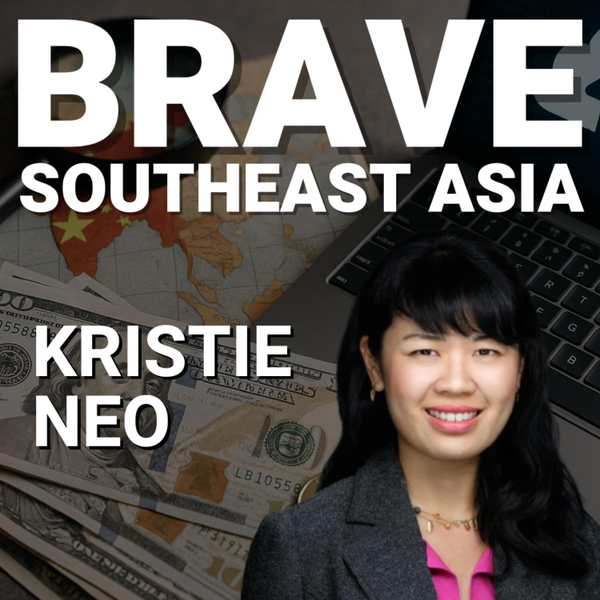
Kristie Neo: Southeast Asia’s Mood Shift, Middle East Optimism & Gen Z’s AI Job Crunch – E619

Kristie Neo: Southeast Asia’s Mood Shift, Middle East Optimism & Gen Z’s AI Job Crunch – E619

"I think only the US and China deserve to be compared to each other, and we see that rivalry take place. Emerging markets are very different from Silicon Valley and other tech and talent hubs. Within the emerging market landscape, it is worth doing more comparisons across global emerging markets, often called the global south, such as the Middle East, Africa, Southeast Asia, and LatAm. There are more interesting comparisons and parallels across these ecosystems. We have seen fund managers like Saison Capital spending more time in LatAm, deploying funds into Brazil and Mexico. There are valuable learnings and lessons that we can borrow from different ecosystems." - Kristie Neo, VC & Startup Journalist

"I really hope that in Indonesia, with eFishery, Investree, and Tiny Heart taking turns to occupy headlines in the last month, we will see justice. The frustration and anger are very real from investors, founders, and the ecosystem because it impacts everybody. If the people who committed wrongdoing are not penalized, whether through jail or other consequences, it will send the wrong signal. Allowing these cases to go unchecked would imply that raising large sums of money and committing fraud carries no accountability." - Kristie Neo, VC & Startup Journalist

"Chinese and Arab cultures share a very strong sense of hierarchy. In Singapore, hierarchy exists too, but middle management is stronger and brings skilled talent that equips the bottom. In Arab companies, decisions often come only from the apex. The person on top makes the final call on everything, and if they decide tomorrow to cut a department, it is gone and many people lose their jobs." - Kristie Neo, VC & Startup Journalist

Jeremy Au and Kristie Neo compare Southeast Asia and the Middle East, exploring how mood shifts, tariffs, scandals, and cultural codes are shaping technology and finance. They discuss Southeast Asia’s dampened atmosphere after 2021, the role of sovereign wealth in the Middle East, and how generational challenges meet an AI-driven job market. Their conversation unpacks scandals like eFishery, co-founder disputes in Vietnam, startup archetypes in Southeast Asia, and the global expansion of Chinese firms. They close by reflecting on how organizational cultures differ across regions and why code-switching leaders succeed.

04:20 Kristie reflects on returning from a year in the Middle East and noticing how Singapore’s CBD felt “like a wet blanket” compared to the optimism she had seen abroad. She explains that sovereign wealth still fuels Middle Eastern investments, while Southeast Asia is adjusting to the reality that 2021’s boom years were not normal.

07:59 Jeremy and Kristie discuss how tariffs and slipping oil prices weigh on both regions. Southeast Asia is forced into restructuring as global trade slows, while the Middle East faces pressure on sovereign wealth funds. They agree that uncertainty is dampening growth and making fundraising harder for local fund managers.

09:06 Kristie highlights how fund managers now avoid hiring fresh graduates, preferring experienced talent as AI tools allow smaller and leaner teams. She points out Gen Z’s overreliance on ChatGPT, while Jeremy adds that pandemic-era remote learning left many under-socialized and struggling with basic workplace norms and meeting etiquette.

33:27 Kristie recounts the Alterno co-founder dispute in Vietnam, where founder Kent Nguyen accused his partners of forcing him out after building a patented sand thermal battery. Legal battles followed, investors stepped back, and public allegations mounted on both sides. Jeremy frames this as part of the normal startup cycle where most companies fail through co-founder conflict and lack of governance, especially when investors hold only safe notes.

39:19 Jeremy outlines five main startup archetypes in Southeast Asia. The first are regional connectors that link countries. The second are local conglomerates building multiple businesses. The third are consumer plays for the rising middle class. The fourth are global-facing ventures with Southeast Asia exposure. The fifth are pure tech companies such as SaaS or crypto. Kristie observes that Chinese consumer brands are also pushing aggressively into Southeast Asia with marketing scale and price competitiveness.

Jeremy Au (01:31)

Hey, good to see you. Wow, welcome back to Singapore from the Middle East. I mean, I was gonna say like, how's the weather?

Kristie Neo (01:32)

Good to see you!

Jeremy Au (01:39)

People complain about Singapore's weather. I mean, Singapore is hot and humid.

Kristie Neo (01:42)

It's not even a fair comparison.

Jeremy Au (01:46)

I have, I was there but to be fair we went there during the winter time. She was so charming, were all walking around with a light sweater.

Kristie Neo (01:50)

Which is nice.

Winter is the best time to be there.

Jeremy Au (01:55)

I can totally imagine it.

Kristie Neo (01:57)

No, really, really like after I always tell people that once it crosses 40 degrees like it's not even possible to be outside. You can't even walk, you just stay indoors, so all of the activities move indoors into like like I think even the straight times covered this also I think there's like a marathon that's being organized inside a mall. It's not even possible to be outside.

Jeremy Au (02:16)

You know what? I would be fine for an indoor marathon. Sounds so much fun taking a pause, getting yourself a Starbucks.

Kristie Neo (02:22)

Well then you're not very serious about the marathon then. You're just taking a break.

Jeremy Au (02:27)

Then I'd run and get some donuts. Cool off, then I'd run and get massage. Then I'd run and you finish off some fruit and ice cream. So yeah, so what's it like? You know, it's been a year in the Middle East and you know, how do you feel like Southeast Asia has changed, you know, with your new eyes?

Kristie Neo (02:31)

Go into the ski section if you want to.

It's interesting. I mean like, so I think earlier on we were talking about how I was just in CBD today. Today was the first day I was in CBD for nearly a year and I can definitely, well, this is how I feel. I don't know if the rest of Southeast Asia feels the same way, but it definitely feels like the mood has been a bit dampened. It's like someone took a wet blanket and put it all over like the CBD area, like you know the Raffles Place area where there's a giant square and everything.

Yeah, things feel kind of dampened, like the mood is dampened. And I mean, I was still following the headlines even when I was in the Middle East, like Southeast Asian headlines. And it's funny how like one year on, it's just been, you know, we're writing about the same stuff, it's the same corporate scandals, but now it's, you know, kind of like taken a step further. We're still talking about it. I guess there's some form of justice for some cases, not for all. It's, yeah,

more of it if anything. the question marks are still kind of hanging over everybody's heads in a way. So yeah, very colourful stories out of Southeast Asia versus say like Middle East, I still feel the mood is still kind of positive. I mean, not to say that the money is flowing the same way that it was before, and I mean, slightly different situation that's happening there, right? I think the

ecosystem in the Middle East is still very much funded by sovereign wealth funds and you're talking like the PIFs, like PAF from Saudi Arabia to ADIA to Mubadala's and all these guys, most of the revenues is coming from oil and gas. So, if you notice also the oil prices have also slipped. So, when oil prices go down, obviously, they're not in a position to be able to, you know, spend on these luxury projects or pick-up projects whether it's new or Mundelein or whatever.

The money is still flowing, but it's not going to be flowing the same way as it did before. If you're a fund manager that's fundraising there. There's also bit of a question mark like, would I still be able to raise money? And then, I think when you talk to Middle East fund managers also, it's a bit of a different story. First first of all, I think it's a more nascent ecosystem compared to say some of the rest of the world. You know, the sovereign wealth funds putting money into the local ecosystem is very different

from sovereign wealth funds having the pocket of money to put money elsewhere. So, you're kind of competing against the rest of the world in some sense. There's more competition.  Yeah. So, there's a bit of a question mark even for some of these local like VCs as well about whether or not you'll be able to raise money. So, but comparatively, in terms of like just pure mood wise, yeah, I do think Southeast Asia does feel more like,

more of a dampened kind of mood because you know, here, there's, not we've also come off the highs of 2021 which you know for me, personally, on hindsight is kind of interesting, and I'm beginning to ask myself like, I mean, when I journeyed through the whole ecosystem, you know, growing with the ecosystem, that was my normal, but maybe that wasn't really normal at all.

Jeremy Au (05:40)

No!

Kristie Neo (05:41)

If

you think about it, right? And then now, when you come into this side of the market, this side of the cycle, I'm wondering like, is this actually the normal? Which is an interesting thought. I guess, you know, markets have ups, and they have downs. And there's definitely a bit of a reality check, that's kind of like, set in to Southeast Asia now. Whereas, in the Middle East, you know, things are still in the boom, you know, things still at a very, very early stage, I would say.

But in terms of going back to the original question, the positivity is still there and it's still kind of driving a lot of optimism on the ground. You know, people are kind of, I guess, willing to take a bet on some more audacious kind of projects. We recently did something on this real estate organization, which in Southeast Asia, you don't see a lot of like, crypto. Well, I guess now, the genius act and all that, there's a bit of that

restarting of conversations about stable points and all that kind of stuff. Dubai has really been kind of going on about that for a long time now. And the relationship between crypto and Asia has been a bit more like forward, backward, forward, backward. So, yeah, it's interesting to see that evolution on both sides. So, it's all evolving at different places and different times. So, long answers to your question, but yes. Yeah.

Jeremy Au (06:54)

Yeah, I think it's interesting because definitely, I would say that Southeast Asia is dampened. I mean, the fundamental fact is that the US-Trump administration with the tariff structure, I mean, it's a tax on both producers and consumers, and so, structurally, even Singapore has a trade surplus, right? Dynamic with the US where

Singapore buys more things from America than it sells to America, even Singapore got a 10% tariff and Vietnam obviously, has, you know, 20 to 30% across the region. So, I think there's a little bit of that, you know, reconfiguration where I think people are still digesting that news. Whereas a year ago, you know, it was just the whole high interest rates. But it felt like the expectation was that

Biden would be the status quo, and then with Trump I think nobody was really expecting the tariff kind of situation to be extended on a global basis because I think, previously in his last administration, he was in his last administration

Kristie Neo (07:52)

I thought he's kind of like talked about this tariff.

Jeremy Au (07:54)

think we agree. I we all can read the news today. A year ago, it wasn't obvious to the man on the street or to most people that "that", because I think there's always, a dynamic where historically, like everybody understood that electioneering, campaigning, always is dynamic of, you know, I mean,

domestic voter's vote, right? It doesn't matter what the international audience is. You know, to some extent, you still can remember the time when was like, George Bush versus John Kerry, right? There's a lot of things that are being said, but after the campaigns are done, then the world keeps going. So, I think there's this dynamic where everybody's economies are being

dynamically rewritten and it's starting to impact and trickle down to everybody. So, Singapore obviously, for this quarter announced a little bit higher growth but they think a recession or slower growth is coming so, all the signposts are there

Kristie Neo (08:48)

And I mean, on top of that also, like, I think there were also some headlines regarding like graduates, struggling to find jobs. I don't think there's, of course, not a Singaporean issue is definitely a global issue. You know, number of people I've met, especially, you know, most of them are like, investment managers, fund managers, these guys. I've had conversations where people are like, some of you are Gen Zs and I'm sorry if you're a viewer, some of them are Gen Z-ers but some of were so blunt, they were like,

some of these Gen Zs are so dumb, you know, they just take the stuff on ChatGPT they think like that is the truth, you know, that's not how you use ChatGPT you're meant to query it and you know, and you think about it, one of them even said like, you know, the way the AI is advancing, I'm just not gonna hire a fresh grad anymore, I'm just gonna get somebody, I don't know, a few years experience and just build the team from them. You know, the way things are moving as well is,

I think organizations and funds, and all that are just going to be finding ways to do more with less. So, teams are probably going to be much smaller than they were before. Everyone's figuring that out, right? Then, what's going to mean for the next generation of kids who are just coming out of school? I don't know. I mean, I guess the positive side to that could be that this could be the most entrepreneurial generation of kids that we will ever see.

You know, you'll never know, right? This is an opportunity for them too. But yeah, I really don't know, and I don't envy them at all. It's quite a scary time that we're in. Everytime there's a new update or AI, everything's getting rewritten again and again. So yeah, I think the next few years are going to be so different. Even from next year when we have this conversation, it's going to be different. Things are going to be very dramatically different again.

Yeah, I really don't envy this generation of kids. I mean, you have kids, so I'm sure when you look at your kids, you're like...

Jeremy Au (10:28)

I think for them, they're Generation Alpha, right? Because they're five years old and three years old this year. So, they have plenty of time for AI and then we'll just watch it happen. I think for the Gen Z people, it's like they just got hit by a truck by both the pandemic, which forced a lot of them to not really enjoy socialization. So, they didn't get to do their internships in person. They didn't get to do classes in person. So, I remember

Kristie Neo (10:42)

Yeah.

Jeremy Au (10:53)

my old UC Berkeley professor, I was just talking to him and he said like, Hey, you know, for the kids who had to do remote learning, when he was teaching them in university after that, he felt like they were just not socialized. Like, they didn't know how to pay attention. They didn't know, I mean, the basic norms, right? And because yeah, they were stuck at home and you know, behaviors that would be weird, you know, like simple one would be like in a meeting, if there's five of us, we should all pay attention to each other. And 80% of the time we're talking to each other, and 20% of the time we're all on our phones,

computers, taking notes. You shouldn't be the other way around where you're like 80% multitasking like crazy on a computer and only looking up 20% of the time when somebody is asking you a question. It comes across as rude or disconnected or gen Z stare, whatever you want to call it. But you know, then, that's where some of these things where it's just like, it's like nobody showed them or modeled for them what good meeting norms

Kristie Neo (11:46)

Yeah.

Jeremy Au (11:47)

should be like, right?

You know, like us millennials, we're only the middle managers now, right? And then the above us, right, we call it boomers, Gen X, or whatever you want to call it. Those are the ones who are like, the ones who are really making promotions or making decisions and they are observing people.

Kristie Neo (12:03)

Yeah, it's gonna change again but there's a whole different set of problems when it comes to like hiring and Gen Z and stuff. I mean, even like when it comes to guys, I just had a dinner conversation with a couple of friends yesterday and the differences between like dating a Gen Z versus dating a millennial. Because you've been out on a dating seafront.

Jeremy Au (12:21)

I'm I'm all in. Whatever.

I had an OkCupid because you know, it had personality quizzes, I don't remember that. And so, it's always fun to do those quizzes.

Kristie Neo (12:32)

But you didn't do the swiping thing?

Jeremy Au (12:34)

No, I didn't do the swiping thing. But I always remember that I met, there was this person who we like, we're like each other's 99% match by OkCupid. But I felt it so weird, because she reached out to me and she was like, 'hey, we should meet up.' And I was like, 'oh, this is too socially awkward for me to actually meet somebody, you know, all over the internet. I never met her.

Kristie Neo (12:52)

So that's the norm now.

Jeremy Au (12:54)

So, that was the total norm. I'm just saying like back then, it was like, oh man, I'm such a weirdo for even considering meeting this woman. But technically, it's great, you know, lawyer, photos are out, 99% on personality.

Kristie Neo (13:08)

According to the algorithm.

Jeremy Au (13:09)

person that sophisticated back then back then was like, do you smoke? Yes, no? Are you okay with your partner smoking? Yes, no?

Kristie Neo (13:15)

This is also kind of my theory, right? Like sometimes, when you rely too much on these dating apps, of course the algorithm will make logical recommendations based on your personality traits and whatever, but sometimes you may also miss out on, there will always be outlier incidents, or outlier people, or outlier companies when you're doing investing that, you may not necessarily bet on, but maybe this is the great, the best bet that you know, that you will make, right?

If you don't give yourself a chance to explore it, then how do you know that this might not be the best investment you would ever make? Make a sense, right? So, I think, like... Sorry, my mind works in different ways. But it's true, it's true, isn't it?

Jeremy Au (13:51)

to add investment to your...

The difference

is that investment deals is supposed to make a portfolio of 20 investments.

Kristie Neo (14:04)

Okay, yes. You say you

also need to make some, you need to exercise judgment, right? if everything is a mathematical process, then, I mean, yeah, I guess it could work for some, but I don't know, you do need to exercise some personal judgment too, like you need to be self-aware, you need to be, yeah, I don't know how I ended up talking about this, but okay, it is true, isn't it?

Jeremy Au (14:27)

Yeah, I think it's interesting talk about, you know, obviously, dating and everything, but I think certainly, looking back, I love that face that you had is like you felt like you and I grew up at a time, and obviously that work in technology at a time, when you know it was only going up. And so, yeah, it was quiet. The ecosystem is going up and then it was growing super hot, and then now it's down. And I was like, oh it's gonna come back up. And now, everyone's like okay, it's not coming back.

Some people are saying like it's never gonna come back ever again

Kristie Neo (14:52)

No, I don't think, it's a cycle, right? At least that's what I believe. Historically, there are ups and there are downs, it can't be just like up forever and down forever.

Jeremy Au (15:00)

Yeah, the cycle could be 20 year cycles, right? I mean, you know, I have to say, I could agree with you that the cycle just takes a long time to come back up, right?

Kristie Neo (15:04)

That's really pessimistic. ⁓

Yeah, How long is your x-axis or your y-axis?

Jeremy Au (15:15)

Yeah,

in our lifetimes, we will see another boom. One time? Two times? I don't

Kristie Neo (15:21)

I'm an expert but yeah, we're definitely on the other side of the bell curve now. So, we've got to wait.

Jeremy Au (15:29)

Yes.

It's like those people who say like, it can't get worse and then they touch wood. Hopefully, they don't jinx it, right?

Kristie Neo (15:37)

And I guess, I mean, if you go by the, you know, all these investment logics, you know, then the downside is always when you're, when the market's in the down. It's also kind of the opportunity, the time where you should be taking. I guess, opportunities. I'm clearly optimist, as you can see, but it's true. I mean, I guess, there's just a lot of stuff maybe that's coloring the the investment landscape and all these things that are hogging the headlines in Southeast Asia now.

So yeah, you're in a better position to be able to tell, that you've been here, but that has been my takeaway, seeing it, you know, and feeling the slight jadedness of this region.

Jeremy Au (16:11)

Yeah,

and it's interesting also because, by the way, you know, hearing your discussion about the comparison, I thought it was interesting because, you know, I think without you saying it, I would have thought that, yeah, like obviously tariffs have caused Southeast Asian economies to have to think seriously about restructuring because of all the pain that's going to happen, but also the knowledge that it may not get better for a long time.

So there's gonna be a lot of transitional pain as economies restructure. Is this that I would have thought, that you said the Middle East would have been chugging along, because everybody still needs oil. That being said, I think what's interesting is that It's a fair point that price oil prices are lower, and actually oil prices are lower because of these tariffs as well, right? Because tariffs are depressing global economic activity because people don't know

whether they should invest in what to build and where. And also, consumers don't feel comfortable buying because of the taxes, etc. Actually, there's a little bit of a, I thought they were totally disconnected, but actually there's a little bit of an ecosystem dynamic where tariffs are also impacting both Southeast Asia and the Middle East in terms of depressing the economic models of these countries and regions.

Kristie Neo (17:17)

No, yeah, to a certain extent. I mean, I'm not an expert in oil prices, but oil prices are also kind of determined by OPEC. So it's just a group of them that actually do determine the demand and supply. Any time that Saudi Arabia wants to shift oil prices, you just turn the tap on and you turn the tap off. To them, most of the oil still comes from that region. So, I mean, of course, there's a lot of other geopolitics in play, which I'm definitely not an expert in that field.

But, I mean, yeah, oil prices are kind of where it is. And, I mean, this whole narrative, I think we all kind of know, the Middle East being kind of, still very much dependent on oil and gas as a huge push to diversify their economies. That's why they've made so much investments into tech and entrepreneurship and all that. A lot of that still like, the logic of that is still very much intact and there's still a desire to do it. It's just that they're much,

I mean, when you compare it to Southeast Asia, they're still much earlier in that cycle, and it will take definitely some time for them to get there. But yeah, I mean, it has its own complexities, I would say. I mean, on top of it, there's also the geopolitics, and I think we've seen a lot of conflicts also. I mean, conflicts have always existed in the Middle East, like awful

years, it's such a long time, hundreds of years of conflict, right? So that also kind of colors into the stuff that's been happening there. But I think, yeah, if you look at what UAE is trying to do, you know, they've also borrowed a lot of the Singapore playbook in a lot of ways, trying to position itself as a hub of talent, the capital hub. Historically, they also positioned themselves as a logistics hub. they borrowed the Singapore Airlines model they replicated for Emirates.

They've been very successful with that. And I think we're in early stages of seeing also a lot of these fund managers from the US also starting to open up offices in the Middle East. They do tend to, and this is my personal point of view, yeah, they do tend to believe a lot of the hype. I don't want to say that it's not good. It is good. But I think there's definitely still some way to go, because

when you see all these headlines, like Brookfield and other really big fund managers in the US opening offices, the expectation is that they're going to deploy. But the truth is, the market there is actually very small, very small and still limited. And I don't think, even on an entrepreneurial talent level, they've reached the level that like where Southeast Asia or India is at.

So it's going to take some time for that talent pool. Like, when I talk to founders in the Middle East, when it comes to hiring, they usually end up bringing people in. Or they outsource their teams to places like Egypt; it could be Jordan, it could be Russia, it could be Ukraine, it could be India, or Pakistan. Which is also very diverse, if you think about it. And that's kind of the uniqueness also of the Middle East, It's literally in the middle of three different continents. But it's

it's going to take some time. They've not seen the corrections in the cycles. I would say, the entrepreneurial talent, they've seen maybe like, some second-generation entrepreneurs whereas in Singapore you're starting to see like three four already, some of them. Plus, on top of that, some of them have had real crisis, like the corrections that we've seen. So there needs to be a bit of that recycling that needs to happen. But yeah, it's going to take a bit of time.

Yeah.

Jeremy Au (20:29)

So

when you think about comparing, I think, Asia tech ecosystem versus the US versus the Middle East, how do you think about it? What do you think is a fair comparison? What do think is unfair comparison? How do you think about it?

Kristie Neo (20:40)

I mean,

obviously I don't think any of us should be comparing ourselves to US. I think only US and China deserve to be compared to each other, and we see that rivalry kind of take place. But emerging markets are very different from Silicon Valley and some of these real tech and talent hubs. And yeah, within even the emerging market landscape, I think it's worth

doing more comparisons across global emerging markets, like what they like to call the global south, Middle East, Africa, Southeast Asia, LatAm. There are more interesting comparisons and actually more interesting parallels across these ecosystems. And we've seen a couple of fund managers like, I think you know, Saison Capital has been spending a lot more time in LatAm recently. They've been doing a lot of stuff with the funds that they've even been deploying into Brazil and Mexico.

Yeah, there are more of these interesting learnings and lessons that we can borrow from different ecosystems. Moving forward, at least personally, that's what I'm trying to explore and learn more about. Because I think, eventually, investors and operators will start thinking more of that way. It would be very unfair for us to try to say that, oh, I want to be the next Silicon Valley.

Jeremy Au (21:43)

I guess, it was the future, right? You think? I mean, right now we're dealing with Southeast Asia, we're dealing with all of the, you know, I guess the cleanup. Right now, I think recently we had the kind of like arrest of the eFishery founders of some of the management team. I think there's other stuff happening. I mean, how do you think about when you look at that span Southeast Asia?

Kristie Neo (22:03)

I really hope that in Indonesia particularly, so we've got eFishery, Investree, and Tiny Heart, three we said in the last month has been taking turns to occupy the headlines. I really hope that we will be able to bring some of these matters, that there will be justice that we shall. I think definitely you do sense, I'm sure you speak to a couple of Indonesians as well. I think the frustration and anger is definitely very real

both from the investors as well as from the founders and the ecosystem because it impacts everybody. And I think if we don't find a way to that, you know, some of the people who have done these misdoings are either put in jail or whatever, there's some penalty or something.

Yeah, if we let some of these go, it will be an issue because we are indirectly sending a signal that you can raise money, a lot of money, commit fraud and get away with it. You know, and I don't think that's kind of the right signal that we want to send. Already, it's colouring the perception of a lot of global LPs and institutional investors. And if our corporate justice system can't even live up to that, then we would have failed

on our own integrity because we saw the vision, right?

Jeremy Au (23:12)

Did you ever

read an industry article about how good they were? I mean, why you're in district Asia? I mean, you know, they had all the unicorns.

Kristie Neo (23:20)

I'll do what it if it's true after the whole thing kind of fell apart. I mean, I wouldn't be embarrassed. Companies that were on the rise and companies that were, you know, on a decline, I guess some different cases are bubbling up. But I think the justice aspect moving forward, and I do hope like this comes to pass. Like, okay, you talk about, say, the industry guy who ran away to Doha.

Jeremy Au (23:42)

Yeah, do you see him? No,

Kristie Neo (23:43)

I don't know.

Jeremy Au (23:43)

He's just follow him with your little camera, your little sunglasses, like you know, spy movie. Lean out of the car, take a few photos. Investigative journalism in Hollywood is always so glam, right?

Kristie Neo (23:50)

Exactly how we do things.

It's Hollywood, that's all I can say.

I do hunch over the laptop, yeah?

Very Iron Man way, usually in pajamas. Like no makeup on, you're like... Yeah, yeah, yeah, that's how it is. That part is real, the rest, you know. Yeah, he's in Doha, and I don't know if the government is going to be able to extract him. It will be interesting to see if they can extract him.

Jeremy Au (24:13)

Shouldn't it be able to? I mean, you know, Doha, Indonesia, feels like, you know, I don't see why would the Doha folks want to protect them.

Kristie Neo (24:20)

So that's

kind of like the big question, right? Who exactly is the person who's cheating this guy? Why is it that they're choosing, why is JTA Holdings? There doesn't seem to be a lot of clarity. I've asked around clearly, but nobody seems to really know where the source of funding is from. It looks like a conglomerate that might be family-backed or something, but

Jeremy Au (24:37)

Yeah.

Kristie Neo (24:43)

if you were JTA and you saw these like headlines, why would you choose to keep this unwanted man from Indonesia, an employee in your company?

Jeremy Au (24:50)

Yeah.

Yeah. Good question. If you know the answer, leave a comment or message her. Leave a comment below.

Kristie Neo (25:01)

Or reaching out to me. Yeah, no, but honestly, either you don't know, you really don't read the news at all, or you don't care. Right?

Jeremy Au (25:09)

Maybe nobody

asked you. Maybe Indonesia did not ask for this guy back.

Kristie Neo (25:12)

I don't think so. And I think Qatar does, and I think there is an Indonesian embassy.

Jeremy Au (25:16)

Yeah.

Kristie Neo (25:17)

I have no idea.

Jeremy Au (25:17)

Okay, so, we should create like a Substack list, like the seven unexplained mysteries.

Kristie Neo (25:22)

I said people

who go to the Middle East.

Jeremy Au (25:24)

Oh, that would be clickbait article. The seven most wanted people of Southeast Asia tech. The seven fugitives. Ah, that's so depressing.

Kristie Neo (25:32)

That's another, yeah, so I get people asking me, like, oh Middle East sounds like you meet a lot of really interesting people. I'm like, mmm, I do. Yes, there's a lot of questionable money to be there too.

Jeremy Au (25:39)

I think what's interesting, of course, is obviously I think at least I think we're starting to see the wheels of justice turn. I mean, six months ago all of us were asking, like, hey, you know is anybody going to make a move on eFishery, especially after I think the founder literally declared that he did it. Of all places, I was like, guys, dude, who's your lawyer buddy? That was

Kristie Neo (25:57)

On Bloomberg, of all places.

the sentiment

light actually.

Jeremy Au (26:04)

I think the lawyers were like, I can't believe he admitted all this, because him saying this was because the VCs made me do it is not a good reason. You admitted you did it. And the law doesn't really take into account the why, because the why is also a pretty weak rationale. So I think everybody felt, the lawyers felt it's a poor legal defense. ⁓

Kristie Neo (26:24)

We

have a line at all.

Jeremy Au (26:26)

Maybe not. I mean, clearly he didn't have legal counsel going into the fraud. He didn't have legal counsel during the fraud. It looks like he probably didn't have good legal counsel during the verifications of this fraud. I don't know what you guys thinking, but I think they put his one-sided on the lawyer's side. I think from the sense of, like,

the different crowds would be VCs and founders. I think that would be the easiest way. For a of VCs, it was just very disappointing to see that, because most VCs, and I've seen a lot of founders actually, were hoping that they were mistaken. Like, oh, I mean, wouldn't.

Kristie Neo (26:55)

Even at that point?

By the time that came out, I was already kind of... Yeah, but

Jeremy Au (27:01)

still, you know, not everybody's clued in, not everybody has read the internal audit reports, not everybody understands what's going on. You know, a little bit like, this was the final nail in the coffin to be like, okay, this guy is really...

Kristie Neo (27:12)

I know saving.

Jeremy Au (27:13)

There's no saving grace, there's no out. Also, you know, anyway, so I think there were actually a lot of founders who were quite impressed by him or respected him or were inspired by him. And then, when the news first came out, there were a lot of like folks who defended him because they felt like, you know, it's like a VC takeover. Yeah, I mean, you know,

Mullen founder

and trumped up charges. And so I think once it came out that he actually did do it and then everybody read it, was kind of like, no. So it's kind of depressing for quite a few folks. I think now that there's some justice coming in, people are going to feel a bit better about it, maybe to some extent. But I think the time period where the article came out and there seemed to be like no action from Biden authorities and the longer it went on,

It just made it feel worse and worse, to the point where it was like, well, this is, like you said, not confidence-inspiring for any LP. It's not confidence-inspiring to any. Yeah, exactly. Because if you're a VC, you're like, wait, if I do due diligence and these guys did sophisticated fraud and were lying to me upfront, you know what mean? Everybody's going to freeze up and say, hey, maybe I can't do due diligence in Indonesia and I can't trust any numbers coming from Indonesia, right? So I think now that there's some justice turning, hopefully that...

Kristie Neo (28:03)

Even GP.

Jeremy Au (28:21)

cleans up the ecosystem a bit.

Kristie Neo (28:22)

Yeah, that is the predicament that we are in.

Jeremy Au (28:25)

Yeah.

I do know of one for sure fraud case in Indonesia that hasn't broken yet. Well, that one I fully understood, 100% happened. So we'll just see how it happens. And then, and I think there's another one that's alleged case. That one is in the Philippines.

Because it's alleged whistleblower, but we don't know whether it's corroborated or not, right? So I think, you know, to some extent, I don't think all the shoes, what do say, like you're waiting for the other shoe to drop. I think there's a few more cases that we have to double drop.

Kristie Neo (28:56)

You know, actually I've been away for the past year. I've been very, very surprised at the number of people who have reached out to me to investigate. I left DSA and I thought, no one's going to, you know, because I'm not part of DSA to expose these things anymore. And I moved all the way to Dubai and people were reaching out to me. You know, I have, on and off, whenever time permitted, actually followed up on some of them. Yeah.

I was very, very surprised that people were still reaching out. It definitely shows that there's a lot more that we don't know and there's stuff that's still kind of bubbling. I guess various sizes, I guess only, yeah, the eFishery ones is very big, right? The rest are maybe like different sizes. But I mean, it's a good thing. I think that some of this is coming to the light. I don't think, I know it's very depressing for everybody, but it's good that it comes up.

Because even when I contrast it to the Middle East, the media scene there is not as active as it is tend to believe a lot of things that they read. There isn't really a sense of questioning some of these things. Of course, there are the real ones who will be like, wait, I know this is media scene. But the environment that hasn't gotten to a stage where the tech in Asia, the DSAs are actually coming up with all this, really exposing some of this stuff. Eventually, I'm sure it will.

But yeah, it's just you're going through the pains, I guess, the growth pains.

Jeremy Au (30:14)

Yeah, you wrote one article actually about Vietnam that I read, so you clearly still have time to write about Southeast Asia. Could you share a little bit more about the video?

Kristie Neo (30:22)

I still cover

two or something Southeast Asia. So this company called Alterno, I think they made the headlines because one of their co-founders, former CEO who was also a co-founder, started blogging. He started with a very harmless blog about his Sand battery technology, which is the technology that Alterno had he built. And then as one blog post led to another blog post, to another blog post.

You began to sense that, okay, there seems to be some agenda here, and the agenda is to get his version of the story out. Slowly, you realize he began alleging that he was pushed out by his co-founders that the investors apparently was part of it, and I guess there's a very strong sense of injustice. So I think DSA was the first one that picked up, wrote a quick story, and then it did the piece.

And then I was following up. I happened to be Istanbul at the time. I was like, this is really interesting, we should definitely follow this thing. It took me a long time to actually get him to speak to me. I was very happy that he managed, he actually trusted me because you know, I mean, okay, I mean, there are a lot of reasons why co-founders fall apart too. I don't know if you've seen your share. There were three of them, and they were brought together actually by Antler. So there's actually also another big question about

Jeremy Au (31:19)

Yeah.

Kristie Neo (31:36)

how successful some of these co-founder programs were. Not all of these co-founders necessarily lead to a successful marriage. In this particular case, it turned out to be quite a bad one. But I think that's a separate story. He was alleging a lot of these different things, and I managed to get him to speak to me even though he was quite paranoid.

I just kind of get that side of the story. I think there are some legal cases that are still ongoing now, both in Vietnam, and think he wants to do something in Singapore. And unfortunately, at least optically, it looks like the investors have just kind of disappeared. Which is also sad, because you would hope that maybe the investors would do something about it or at step in.

But I know, I don't know, this is my point of view. I mean, I think it's just not a big company, it's a small company. In the sense that they haven't raised a lot of money, I think mostly SAFE notes and convertibles. But the difference with this company is they actually had they had IP that was in the US. So, quite slightly unique in a sense. And they also raised from a couple of institutional investors, like EDB Ventures, Touchstone

which is not that common in Vietnam. So for it to fall apart like this is actually a waste of people's money, of everything. And it's sad because you would hope that something could be put off this, but now it's turned into a whole legal case.

Jeremy Au (32:57)

Yeah, I think it's interesting because this story is also bad news, but it's not really huge bad news. Because in a sense that like you said, this company is effectively a C-stage company. It's young, co-founder conflict is very common. I mean, you can watch the movie The Social Network of Mark Zuckerberg breaking up with Eduardo Saverin. Then they also had the whole falling out, a lawsuit, and a settlement.

And then it became Facebook, which is now Meta. So a co-founder conflict is, I mean, I'm just saying like in terms of the news landscape, I think there's one bucket, which is I call like fraud, which I think deserves to be brought to justice and clearly articulated. Like I said, let the wheels of justice turn and put out commensurate punishment or proclaim innocence for the right folks, right? So I mean, I think there's this.

And then this other chunk that you just mentioned is what I call like business-as-usual startups. It's like 95% of startups fail, and co-founder conflict. Exactly. It's like you run out of money, your co-founder of the above. I mean, they're highly correlated. It's like divorce, right? Why did you break up? It's like all the reasons, right? So to me, I just think this is the ecosystem. This has to share the story, people mature,

Kristie Neo (33:53)

Yeah.

Jeremy Au (34:09)

people learn from it and they're just like, okay, I better have a higher buff, my co-founder, I better have a proper co-founder agreement. I don't feel too bad about it, at least based on what you have told me. Obviously, I don't know the situation I kept you about, but if you're telling me supposedly that these investors are SAFE notes, they technically don't have control or board seats. Yeah, exactly. So they don't have the ability to mediate or be able to really...

Kristie Neo (34:28)

What I know observer brought.

I mean,

they're not incentivized to kind of stick their neck out too, because these are SAFE notes. It's not as if they had put in like I don't know a few million into this thing and you really have to kind of save portfolio in a sense. So I mean, it's set for the founders and set for the company I guess they have hired people, and yeah, this could have been something, but it's do you do? I mean...

Jeremy Au (34:50)

Yeah.

Write a good co-founding agreement beforehand, try to separate nicely, and figure out some amicable agreement. I think those are like not necessarily laws, but these are norms that ecosystems need to learn.

Kristie Neo (35:10)

And

maybe experience too, perhaps to a certain extent.

Jeremy Au (35:13)

If all of the founders more experienced have been serial founders, they might have had a more upfront conversation earlier.

Kristie Neo (35:18)

Yeah, possibly. Yeah.

Jeremy Au (35:21)

It's settled

in a way that everybody gets something of something, rather than everybody gets nothing out of nothing. Yeah, it's better than nothing of nothing, because it's not a sweet shadow and it's probably like a messy time.

Kristie Neo (35:26)

Yeah, which is exactly what's happening.

Yeah, then now, you know, everything's all in the public sphere, so it becomes this ARV.

Jeremy Au (35:36)

Every time you Google your name, you're like, it's gonna be there as well. I think it's not easy for sure. So I guess, do you have any advice for folks? I don't know, like more of the story.

Kristie Neo (35:48)

Moral of the story, moral advice on like well, no, I can't give any moral advice on any advice to companies. I mean,

yeah, I the market is still where it is. It'll be interesting to see what happens the next six to 12 months, I guess. I think you earlier mentioned that everyone's kind of hoping that next year will be a slightly better year. I don't know how much of it is people just being hopeful, because I feel like that was said last year.

On a personal basis, mean, especially in the last two to three years in Southeast Asia, it's taken a longer time than I expected for things to really turn around. Definitely from the time that the markets corrected, I thought, okay, maybe we'll see some secondary activity, maybe we'll see some interesting distress deals, but it took a really long time, a really, really long time. Yeah, so

mean, what do you do? You just got to figure new opportunities for yourself. Yeah, I really don't know. I don't know if you've done investments even recently or if you've looked at any interesting deals. Have you seen any interesting deal flow? ⁓

Jeremy Au (36:53)

Yeah,

I think we're looking at some kind of interesting deals because I'm more of the angel side, Because I helped lead the Harvard Angels club in Southeast Asia. And I think for me,

there are five major categories of startups now. Some are old, some are newer in flavor, but I'll say the five are: one is, of course, is your classic regional players. So this would be your grab.

And these regional places tend to be what I call in the "white spaces". What I mean by that is they tend to be about the things that connect countries, whether within country. So for example, travel, logistics, tourism, because these are things that are not, you know, a single-country thing, but people are traveling. And so, you know, if you were in America, you would just call it, oh, I'm in a tourism space. I mean,

I don't know, shipping for America, right? But in Asia, shipping is the distance between Boston to New York is the distance between Singapore and Malaysia, right? So these are different countries. So I think there's a regional part where it's some sort of a regional connective tissue component. I think the second, of course, is your single-country, multiple-business-arms. So this is your local conglomerate

approach or super app. This would be like, you know, your Vietnamese agricultural company doing, okay, first let's do durians, then let's do rice, then let's do kind of like building out from their perspective, like 10 businesses each doing about $10 million of revenue each and kind of like rolling it up to about $100 million of revenue by the same geography, you know, kind of like dynamic. So, I think it's number two.

I think number three, from my perspective, is what I call the rising middle class in Southeast Asia. So this might be like, let's set up a beef rice bowl business in Indonesia. There's halal. It's a rising middle class, F &B, consumer goods. I guess EVO would be a good example of Singapore, doing consumer goods for the rising middle class. I think the fourth is what I call your

U.S.-end market but some sort of level South East Asia exposure. So to some extent, reminds me of know, Kasuri. You could even make an argument for Omni Table and Prism Plus. They're kind of like Singapore, you know, some level of like maybe OEM in China, kind of like suppliers, but with Singapore marketing and global market kind of dynamic.

The last of course is your pure tech, right? It's some sort of we're doing global software as a service, we're doing biotech in the US, but you know, some sort of like, we're doing crypto, but some sort of more virtualized global place where place doesn't matter as much, to some extent. Those seem to be the five different flavors. And I feel like the first two I mentioned were the known,

I would say known playbooks in the past bull market. But I feel like the remaining three are becoming much more popular now, which is your again like private equity, medium growth, the Kopi Kenangan type play. I'm just saying, everyone's trying to be like the Kopi Kenangan for beef rice bowls, the kopi kenangan for instant noodles.

is one. you see a lot of the hotpot places have done well, right? In Southeast Asia as well. So I think a lot of people are just replicating that playbook.

Kristie Neo (40:03)

So, I mean, yeah, again, I haven't really seen, but that was what I was told, that they're seeing more, their presence is more felt in Southeast Asia over the past year. So I was like, okay, interesting. I think the two of them are also looking to do a Hong Kong IPO. I think it's also worth investigating. I haven't done it myself, but on TikTok Shop and some of these like shops, the number of Chinese

players were actually setting up these shops, because I was told that a lot of them are actually pretty fake if you actually look into their numbers. This is just what I heard, and I'm not surprised, to be very honest.

Jeremy Au (40:34)

I think you'll see a lot more brands, actually. The big trend, I think, is if you look at Singapore, for example, BYD is now the the top-selling car brand in Singapore, right? They leapfrogged all internal combustion because it used to be Toyota and all these folks, and now they leapfrogged the electric. But then also they compete on price, right? And if you think about these consumer Chinese brands, they also understand they understand how to do the marketing. They also have the logistics chains, like J&T.

They also have the diaspora, so they don't have any issue with the capital flows. Building a business outside China also is diversification from the headquarters' perspective, in case there's some sort of you US-China trade or broader conflict that's gonna happen. To some extent, these HQs are like, okay, you know I'm willing to invest money to expand to Southeast Asia

and not be tried to be profitable early, because as long as it maintains value, grows market share, and grows top-line revenue. And even though we're losing money on an EBITDA basis, it's valuable for my Hong Kong Stock Exchange good to diversify my revenue base, and it gives me some optionality in terms of geopolitics because my headquarters can move around. So it's interesting to see.

Kristie Neo (41:42)

Yeah,

I mean, even in the Middle East, you see a couple of these Chinese players. Like Kita, who's like a food delivery player that's back then, they've been super aggressive not just in the Middle East but also like Brazil. So we definitely see them doing this global emerging market play, right? You know, the Chinese and they've done this, they're very experienced, they're probably the most experienced in doing this. And now, being able to kind of operate at scale, you do see them, they have some pretty ambitious plans to

expand. So I think Kita now, well, they went Saudi, they have plans to get into like Kuwait, Egypt and UAE as well. And then, of course, Brazil and think this is going to be interesting to watch.

Jeremy Au (42:21)

I'm wondering about this hypothesis that I heard while was on holiday in the Middle East. What I was talking to this local business person, what he saying was that his perspective is that he thinks that Middle East and China is kind of like hand in hand, a great strategic fit for each other. Because what he was saying was that I think for the Middle East, they have very cheap energy domestically, but historically they exported it out of research travel, but they never really burnt all that oil themselves. That's one.

Two, obviously, they are quite comfortable having a migrant worker population historically from South Asia. But in other words, they could be okay with having workers from China come over. And three, of course, is they're looking, like I said, to diversify to manufacturing, etc. And then if you look at China, it's the opposite in many ways, right? China doesn't have

really cheap energy, I mean, it has coal, but it doesn't have fantastically cheap energy the way it could be. Two is, because of all these tariffs, they now have incentive to build out factories in the Middle East or wherever else where there's a very low tariff structure. And three is they have a population that's willing to become factory managers or builders, So this thing, this could be a very powerful marriage.

Kristie Neo (43:30)

It is also a timing aspect now because of all the things that China has been going through recently as well, like a lot of tech talent. We're beginning to see some of these Chinese stuff too, Chinese companies as well and people starting to move into like the Gulf. I think a lot of the collaborations that have been announced so far are mostly beyond a G2G level, and we think of both of them also geopolitically authoritarian nations.

Yeah, the energy aspect as you mentioned as well. think it makes a lot of sense and it works well for both of them. Yeah, it's going to be quite interesting to see and actually I've even been told that even culturally there's a lot more similarities than people feel.

I was also surprised myself. So I worked with the Arab company, was a media company. I was there for a couple of months and I had a friend who is a mainland Chinese guy who lived in Singapore for a number of years. And he happened to be visiting and we were exchanging notes about like Chinese culture and Singapore culture and Middle East culture and him being a mainland Chinese who has spent time in Singapore like, he thinks as a mainlander, like actually Chinese and Arab culture.

Eespecially in a corporate setting, is quite similar. There's a very strong sense of hierarchy. I mean, not that Singapore doesn't have a strong sense of hierarchy, but we do. But in Singapore, corporates, do see that the middle management is actually a lot stronger. actually bringing a lot of skilled talent in the middle. So the middle managers are able to of equip the bottom. But in Arab companies and just to say, oh, this is all just

I know it's slightly stereotypical, I'm sure they're outliers, but this is just based on cultural observations. A lot of comes to the apex. So the guy on top is the guy who makes the final decision on everything. So you do tend to experience a lot more changes. Like if the guy on top decides tomorrow, I don't like this department, it's just cut. ⁓ everything gone. A whole bunch of people will lose their jobs. So there's a lot of a,

Jeremy Au (45:07)

Yeah.

Tomorrow,

Kristie Neo (45:24)

you know? So if the guy shifts here then everyone in the bottom will like move accordingly. So that's apparently how Chinese companies operate according to him.

Jeremy Au (45:32)

Yeah, I mean, I did do some, you know, basic job experience in Beijing. So I got to see some of that as well. And that was also like a startup. It was also quite modern in its own way. But you got to see other companies also in play back in the 2008 to 12 era. think things have obviously changed since then.

I think for me, my perspective is I think Singapore is very influenced by MNC, Multinational Corporations, which tend to be much more of the European and the American style companies, right? So the whole idea of like promotion cycles, feedback, performance improvement plans is very Americanized fundamentally. And also, if you actually look at the talent pool in Singapore, some people study in the US or the UK. So there's a very strong piece of like meritocracy.

I wouldn't say it's like the American like individualism, whistleblower kind of dynamic. think that's exaggerating it. But I think there's these like professional norms that have been calculated because they go like finance team, like everybody's a former ex-KPMG or big four auditor.

Kristie Neo (46:28)

Institutionalization.

Jeremy Au (46:30)

Yeah,

it's a professional dynamic that is quite westernized, I would say. But of course, think the fact is also, think these Chinese MNCs are starting to emerge and they're becoming more multinational. actually, I remember when ByteDance first came to Singapore, lot people were very worried about joining it because they felt like maybe too Chinese because they heard a of bad things about 996 and all this other stuff. But now that they've been here for a couple of years, I actually know a people who are like quite happy with the job,

which is, you know, I think they have to be bilingual, so they have to be good English and Chinese to really be able to, you know, code switch and, you know, be able to present at all levels of management. But I would say like a lot of people are like kind of like, they look at it as like, yeah, it's a job that has, I think, one level growth, intellectual challenges, and can work for the right type of person.

And to some extent, actually, what I also kind of noticed is like the kind of people who are like a US MNC are a bit different from the people who are comfortable with the... think fluency, even cultural affinity is definitely a big chunk. I mean, like if you're not fluent in Mandarin at all, because you never grow with it. I mean, it's going to be hard for you. But I've seen a lot of people who, yeah, know, they're a little bit more Chinese

oriented. Then they are like kind of like feeling quite comfortable in the Chinese environment you know I don't know how to explain it maybe it's like you know in Singapore there's all these schools right it's like Anglo-Chinese school, Raffles Institution, Hua Chong, Chinese school right and so you have your Raffles boys and your ACS boys who are very much more like anglo-file right in that sense I mean whereas your Hua Chong people would tend to be much more China or Chinese culture or affinity.

So to some extent, yeah, I think there's that separation where, you know, like a lot of people who are comfortable with Chinese culture are working in the Chinese companies, right? And so they would not necessarily have been, I don't know, maybe in a better position for promotion or success because they're comfortable in that culture. And you look at, mean, Shoji Chiu, right? I mean, he's you know, CEO for TikTok. He's quite comfortable clearly in both domains, both

representing the American side, but also working with the entire workforce. so I think it's somehow really good at, I don't what it's called, code switching. mean, it's like, Lee Kuan Yew's hero. It's like, oh, someone who can finally speak good English and speak good mother tongue, right? It's like, what is Singapore good at? Code switching.

Kristie Neo (48:39)

I'll see you in bit.

Jeremy Au (48:51)

On that note, let's wrap things up and see you next time.

Kristie Neo (48:54)

Thank you.

Hosted by

Related episodes