
"One of the harder things I've done mentally is to kind of try and take a step back and think where is this going to get me? If I'm being frustrated, what are my options? I can give up, which I was not going to do, or I can keep swimming. And the worst that can happen is just to swim for longer. In that mental state, it's almost like you're so focused you just have these like a couple of choices that you need to focus on and you just go ahead and choose one and just do it. This is one of the things I like about marathon swimming because, at the end of the day, it becomes a very focused, very simple choice. And this is something that, for me is a relief. In terms of daily life, it's much more complex than this, but in marathon swimming at the end, you just need to have that focus and a couple of choices." - Li Ling Yung
"I was definitely physically tired, but with the experience that I have, I knew how I needed to pace myself. I had a fairly very nice and calm day in the channel. That also helped save my energy a little bit, but for me, the mental game was the hardest because you start having these thoughts in your head. “What if I don't finish?” And, your mind plays tricks on you when you've been out there for such a long time, and you forget that most people don't land on the cape. Most people actually go through the current and land on the beach. But at that point, I was tired mentally and physically, and I kind of thought, this is it, I won't be able to do it, when actually, most successful swims actually end that way. So, it was a real test of where could my mind go in that kind of situation. Physically, is my body able to step it up? What would I do in this sort of situation, which is physically and mentally difficult and critical? It was an interesting way to find out myself what I could actually take." - Li Ling Yung
"The backup option is to get on the boat and give up, but I wasn't going to do that because I've come so far. What's the worst that could happen aside from not finishing, is that you probably have to swim for a bit longer. So, I just carried on. Luckily, I was able to punch through these very strong currents because I swam on what's called a spring tide, where the currents are strong. The swim windows are actually on neat tides, where the current is less strong. That time, the current was so strong, that you felt this huge volume of water moving you to the side. And so that's why you have to try and get through that. And yeah, so I swam very hard. It was interesting because I thought I knew where my limits were, but it turned out that I could still swim hard at the end of a very long swim. So I was it's interesting testing your limits mentally and physically." - Li Ling Yung
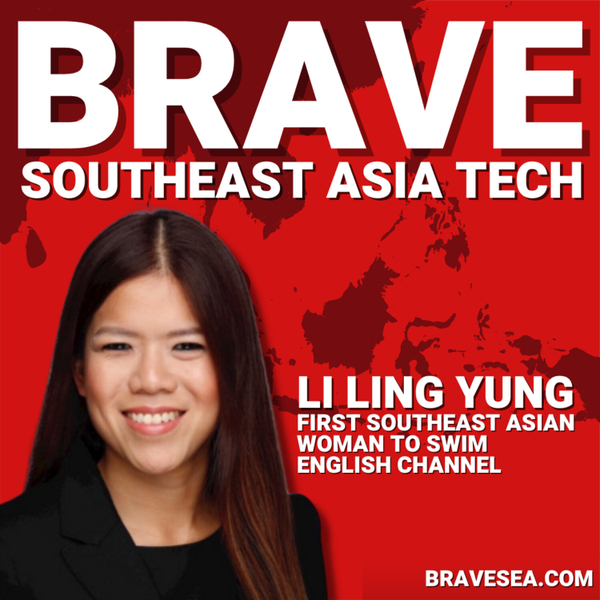
In this episode, Jeremy Au speaks on being the first Southeast Asian woman to swim the English Channel (13 hours, 34km of sea tides) and her childhood journey.
Keywords: Li Ling Yung, First Southeast Asian Woman English Channel Swim, 13 Hours 34km Sea Tides, Childhood Journey, Singapore, Women, Founder Story