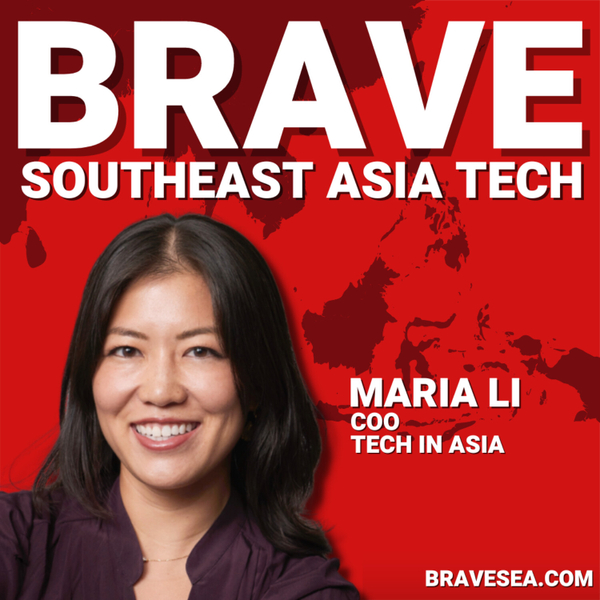

"The media industry is in flux and that's obviously difficult. With that said, it's really important that we figure out a way that media works. Even in the world of TikTok, it keeps working and keeps playing that particular role to provide a balance to the overall system. About Tech in Asia, our mission statement is to build and serve Asia's tech and startup community. It is not to go out there and write the hardest-hitting investigative journalism. It is not to go out there and make the most money possible. We think about the community that we're serving as a whole and what would be necessary in order for that community to learn grow and develop. Southeast Asia's startup community is relatively small and is relatively tight-knit, which I think is a strength for the overall community." - Maria Li
"The public sector is incredibly important, but for me, it is a very strategic partner and it should be used as such. So, public sector-wise, if you are developing something new, Singapore's startup community is a great example. When it first was coming up 10, 15 years ago, the government was supporting with a lot of capital funding with a lot of visas, to be honest, and with a lot of different schemes to basically help develop a capital investor and startup base here that would eventually be able to sustain. So that's when public policy is being used most effectively, is when you have a clear goal to develop a particular specialty or region and you're bringing in all the necessary bits when it comes to talent, talent capital whatever it might be. So I think that is where the public sector works best. Same thing. It can also keep a finger on the scale when it comes to areas like deep tech because it may not traditionally meet what investors necessarily need, but I think the government can play an asset. It is a balancing act as opposed to one that should be really at the forefront once that momentum gets going." - Maria Li
"When things were first starting to get fragmented, decentralized, dismantled, unbundled, I think there's a lot of excitement over that because people can finally pick and choose exactly what they want. At the same time, when Substack first came up, everybody thought it was amazing because they could follow their favorite authors without having to read the ones they didn't care about. But I also think that people have started to see the negative side of that, which is that there’s so much choice and it's really hard to discover new people and new things. It's hard to find that next amazing author because how are you going to come across them if you're operating only in your own silo? I also think that we've seen a bit of a reversion to the idea that there is still some trust in brand names and platforms where you know that they're reputable and there's that base level of understanding in terms of quality values like interest level." - Maria Li
In this episode, Jeremy Au speaks on the Tech In Asia editorial ethos, information opacity, and the COO conundrum.
Keywords: Maria Li, Tech In Asia Editorial Ethos, Information Opacity, COO Conundrum, Singapore, Founder Story