Skip to content
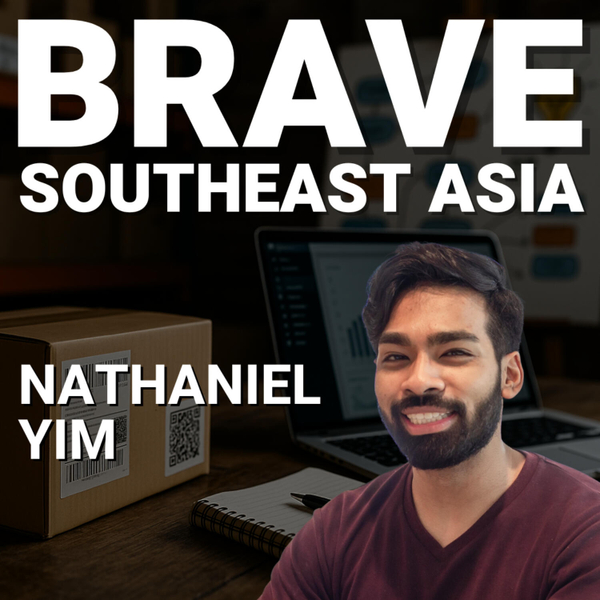
Nathaniel Yim: From Broke Founder to B2B Builder, Logistics Lessons & Why Human Creativity Still Wins – E639

Nathaniel Yim: From Broke Founder to B2B Builder, Logistics Lessons & Why Human Creativity Still Wins – E639

"For the first four to five months, I was working three part-time jobs just to earn enough money to take the bus and then work on Janio full-time. I looked at him and said, all I have in my wallet is all I have, no money left. The next week, the funding came in, and we could finally pay ourselves, and I could eat my chai fan. It was a real moment for me when I couldn’t even withdraw cash from the ATM because I only had five dollars left. The best thing to do was to delete Instagram. Having some social life is important, but just don’t look at what other people are doing because it’s a different path. The only proper comparison is to look at who you were yesterday." - Nathaniel Yim, Founder of Nila Studios


"What is more interesting is the business understanding. When we work with clients like SaaS companies, we don’t just look at your sales deck, put a GPT summary, and use it to write copy. We look at your product. I ask, can you give me login access to your software? I want to use it. Then I know how it works. I look at your competitors, sign up for a trial account, and see the difference. Then I can present you better. The second part is understanding how it fits into sales. It has to flow from digital platforms to your interactions with the sales team or when you put in a credit card. The whole process needs to connect, because if it’s in a vacuum, that’s where things fall apart." - Nathaniel Yim, Founder of Nila Studios


"You will not work with people you don't trust, and in the early days when there’s no corporate brand, your trust is your relational equity. Brand equity means if I look at a company, do I feel good about working with you? Borrowing that equity came through partnerships, and because we stood on their shoulders together, it was much easier to gain credibility behind the brand. When a merchant walks in to drop off goods and sees purple FedEx, red NinjaVan, blue Janio, and yellow DHL, it feels like one category. Small things like that and partnerships were critical in the early days to form credibility." - Nathaniel Yim, Founder of Nila Studios

Nathaniel Yim, Founder of Nila Studios and former Co-Founder of Janio, joins Jeremy Au to share how he went from a fresh graduate to leading one of Southeast Asia’s fastest-growing logistics startups and later building a B2B marketing agency. They discuss how to earn trust in a mature industry, why human creativity remains vital in the AI era, and what resilience looks like when founders face real hardship. The conversation highlights lessons on credibility, adaptability, and building lasting value through learning by doing.

03:14 Startup leap over job offers: Right after graduation, Nathaniel turned down stable job offers to co-found Janio with friends after one pivotal conversation that reshaped his career path.
07:55 Cracking Southeast Asia’s logistics puzzle: Janio built a software-driven, asset-light platform to integrate fragmented cross-border supply chains and navigate customs.
14:22 Reverse logistics as a new frontier: He explains why product returns remain one of the region’s toughest and least profitable challenges in e-commerce logistics.
18:36 Wearing every hat as a founder: Nathaniel evolved from marketer to sales and operations leader, even managing warehouses to improve efficiency and execution.
23:48 Building credibility from zero: Without industry experience, he earned trust through partnerships, educational events, and consistent public storytelling.
28:55 From internal team to agency: After struggling with external vendors, he built Janio’s in-house marketing team, which later inspired his current venture, Nila Studios.
35:40 Defining bravery through scarcity: Nathaniel recalls surviving with only a few dollars before Janio’s first funding, learning that progress, not comparison, sustains founders.

Jeremy Au (01:14) Hey, I'm so excited to have you on the show. You are an expert on B2B sales and marketing, which is so needed and so hard to do in Southeast Asia. Could you share a little bit about yourself?

Nathaniel Yim (01:28) Sure. Thanks so much for having me, Jeremy. My name is Nathaniel. I am currently running a B2B content-led marketing agency called Nila Studios. I work with B2B companies in the SaaS and professional service space, helping them—they can be startups or corporates—using content as a way to grow their business, grow their brands. Prior to this, I was running a B2C cross-border logistics tech platform called Janio, for about five and a half years. That was a venture-backed startup. I was doing that with three other co-founders. Four of us scaled it up across Southeast Asia, and basically, I took the lessons that I learned there. I applied it to my business now to help other businesses grow their brands.

Jeremy Au (02:18) Yeah, so a lot to dig in because you were a university student who went straight to being a founder as your first job, which was venture-backed, and then now you're building an agency or a slower growth business. I think there's a lot to unpack, lots of different angles we can attack from this. But let's go back to the beginning. In university, you're at the National University of Singapore. You were a marketing guy even back then. So what were you like in undergrad?

Nathaniel Yim (02:40) Before I was a marketing guy, I was a finance guy. Aspiring finance bro. Very misguided. Didn't know what I was doing. One of those typical, "I want to be an investment banker, but don't know what investment banking means." I was studying finance initially. I even did an internship at Citibank for half a year. And then at the end of it, I decided, "This is not for me." It's not the most appealing kind of work. Halfway through year three, I took a module on strategy, just strategy in general. And somehow marketing, the function of marketing, just stood out to me in how businesses are run. And I found it easy to understand marketing concepts. Switched my specialization to marketing in year four. Had to overload and clear up to seven modules equivalent in one semester so that I could graduate on time. Academically speaking, it was the best decision I made. My first degree went up. That was great. Things made sense, and I had to stack a ton of marketing internships within one year because I had no marketing work experience. I did three internships in one year, which was a bit crazy. Learned a lot, and I think that was a very good foundation that set me up for Janio, where I came in as a marketing co-founder to help set the marketing from scratch.

Jeremy Au (03:59) So let's talk about that because finance has many internships and a clear career track and hierarchy of banks and roles like investment bankers. So there's that. And then obviously, marketing also actually has its own set of internships and tracks as well. But what's interesting is that you went to do those internships, but you decided to build a company straight out of college. Could you share a little bit more about how that happened?

Nathaniel Yim (04:15) Yeah. It happened by chance, and I think the internships played a pivotal role in giving me the confidence. My first marketing internship was at a startup of just three people. I had no credentials in marketing at the time. The founder is an NUS Business School alumni. He made me do all kinds of things. Shout out to Ming Hu, if you're listening. One week before Christmas, he told me—this is a consumer application startup—basically, you submit photos, they print it for you, and they send it to your house for free, right? They make money on advertising on the back of the photos. So it's a service. It's an app, right? And he told me, one week before Christmas, "Think of a product and sell it." And I'm just a year three student. I don't know. "Think of a product? What product? You don't have any products." He said, "Just think of a product and sell it." So I just cobbled together some gift pack I found from items on Taobao and different places. Then I ran some ads on Facebook, thinking nobody would ever buy it, but people actually bought it. And that's my first foray into entrepreneurship: creating value out of nothing and making money from it. So that really opened my eyes to what's possible. It's not just you learn stuff in school and then you follow what you do in school, and that's your life, right? There are ways to create value, and you get value in return. And then my second internship was at an agency, where I ended up working on branding projects with the MD. I ended up writing content for some pretty big businesses as well. And those two experiences—the startup experience and the content writing experience, even as an intern writing for big companies—those two were central to the marketing that we were doing in Janio.

So how I got into it: a month after I graduated—I graduated half a year late because of the Citibank internship. Pretty sure I was the only guy in my class with a marketing background. My co-founder messaged me—so he's a finance person. He was in PE, has a VC background. Basically, the rest of our class were already working in jobs for a few months. I'm the only guy with no job. So he texts me and says, "Hey bro, do you have a job?". I'm like, "Bro, no." But I was interviewing, and offers were starting to come in, so he told me, "I have this startup idea. You want to join me?". At first, I thought, "A startup? No, la." But because he's a good friend, I just met him for lunch. He told me about it, and I was like, "That's a great idea. I think you should do it." So the next day, literally the next day, I turned down my job offers, and then I just went with him. So he left his job. We found another friend who was running a startup at the time. And then we found another mutual friend as a tech person to come in, and the four of us started it.

Jeremy Au (06:44) That's such an incredible founding story, and I totally imagine it. For this initial team that came together, what's interesting is that three of them are also fresh graduates, and one of them is an older person. How did that team composition come about?

Nathaniel Yim (06:59) So it was mutual connections that set up meetings, and we found that we had good chemistry, we had complementary skill sets. The CEO, Jka, is my classmate. I've known him since 2013. So that decision wasn't too difficult. Our founding CTO was very good friends with a mutual friend. So there was a character reference to vouch for everybody. And then the other co-founder, the operational co-founder—I believe it was an investor who linked us up. Yeah. So again, all just mutual connections, seeing that there's a promising idea. We have good complimentary skill sets. The character, the drive is there, so let's just try this.

Jeremy Au (07:37) Fantastic. And I think what's interesting is that you're talking about you making a decision to join because it's your friend and somebody you trust, and it's a big idea. But can you talk about that product-market fit iteration? Because obviously, it was this idea. Today, the idea is a company called Janio, which has raised venture capital and so forth. But can you talk about that early iteration of the product-market fit? Did you get it correct on the first shot, or what was the first idea the way it was described to you?

Nathaniel Yim (07:58) Basically, in 2018, e-commerce was really starting to take off at the time. And the world was different back then. For local e-commerce, you had a lot of players coming in to support the last mile deliveries, but if you're talking about cross-border deliveries at the time, cross-border was still pretty much, you only had a few options. Either you work with a full-service provider like DHL or FedEx, or you work with a post office provider, right? If you tried to break down the supply chain yourself, maybe you'll get good service, a good price, but you need to manage the supply chain yourself, which is a very manual thing to do. Janio is a software layer that integrates the supply chain from end to end, coordinates shipments from first-mile pickup to last-mile in the other country. We make sure that it passes through the correct hands at the correct time, and we ship it in one piece. So at that time, to my knowledge, I don't think anybody else was really doing it in that asset-light type of way. I think the traditional approach was to just throw more assets into it. But we took an asset-light approach so that made it a bit less risky. Instead of investing in tons of vans and warehouses, you are just coding things and contracts, and then just following SOPs.

Jeremy Au (09:03) And were there any changes in that product-market fit over time in those early days? Because like you said, the early idea was this cross-border...

Nathaniel Yim (09:09) Initially, we started with shipping from Singapore to Indonesia because Indonesia is a huge market. It was the most tricky market to handle at the time, right? So we just went straight for the hardest level, and everything else should be easy. Famous last words. Because every market is different. It has its own complexities. Over time, it did change, right? As we did well for some of our clients from Singapore to Indonesia, naturally they asked us, "Can you do the other lanes as well? Can you go to Malaysia? Can you go to the Philippines?". So we just expanded quite organically, and over time, you're just connecting across the whole of Southeast Asia. And it really became a regional delivery service. No matter where you pick up from or where you deliver to in Southeast Asia, Janio can do it tomorrow.

And then something interesting that came up was, instead of just that good service but also at a good price value proposition, which is still very core and important for our shippers, the value proposition also started to expand. I wouldn't say evolve because the core is still there. If you want a different type of service tomorrow, a different kind of schedule, Janio is able to do that, because rather than being bound by our assets—if I have a plane, the plane must take off at a scheduled time—because we work with so many different players, we are able to route things across different service providers in the same part of the supply chain, which gives us a flexibility that you can't get if you are working with a pure asset player. So that was an evolution. Of course, the software, with the data that comes in, you're able to do a lot of things that improve the customer experience, both for the shipper as well as the consignee that's receiving the parcel. Those were things which over time we started to just build out the value proposition into something that's a bit more all-encompassing.

Jeremy Au (00:10:23) And it's interesting, obviously we're talking about Southeast Asia. Southeast Asia, like you said, is not a region, it's different cities. Different suburbs at best. Rural areas as well. What are some of the challenges in cross-border?

Nathaniel Yim (00:10:59) The common challenge is always customs clearance. Each country's way of doing customs is different. There are different prohibited and restricted lists, different taxes. And recently, especially in recent years, many of the governments' customs, the tax threshold, the de minimis thresholds, are being removed or lowered. Which basically means that if you import goods, even if it's a B2C type of delivery, there are taxes involved. So clearing the taxes, clearing the customs, becomes very complicated. If you want to ship a different product to the same country, there's a high chance that you will need a different type of customs clearance process. Even with the same product, if you go to a different country, it's the same problem. And if the customs update their regulations, then you need to follow along. So customs is traditionally the biggest challenge in the whole cross-border shipping process.

There are also things like, "What is the typical payments collection method in the country?". Is it cash on delivery? Do they use wallets? Are they doing prepaid? These sorts of things. Being able to cater to the local consumer needs also varies across country. In Singapore, basically everything is cashless. It is all prepaid. But in many other markets, you're still doing postpaid, right? You're still doing cash on delivery. Those add a lot of complexities because then you need to coordinate with your service partner on collections. When are you going? How are you going to reconcile the amounts? When I remit, how am I going to get it back to the merchant? It becomes very complicated just to solve for one market. Then you expand it to all the markets. There's a lot to think about. You need people on the ground. Even though you want to be as asset-light and as light-touch as possible, you need people who understand the local nuances, regulatory environment, different types of infrastructure expectations, or tech expectations so they can give feedback and you're able to build along the way.

Jeremy Au (00:12:39) What would be interesting is when you think about point A to point B, which is getting something from here to there, then you also think about getting stuff from point A to point C, right? And then do you have to also do like point B to point C and point C to point B? Yes.

Nathaniel Yim (00:13:08) One of the, because we basically integrate the supply chain and we also break down the supply chain into whoever is best at managing that portion. We have this flexibility of basically offering a modular service. So there are some clients who want to do the first mile themselves because they've invested in their own local delivery fleet. So they can do their drop off on their own. "Okay, we'll take over. You drop it off at a warehouse, and from here, we'll clear the rest." Depending on their current configuration, we're able to set up something that works for them. So it can be A to B, B to D, A to C, A to D—whichever one you want, we're able to do it.

Jeremy Au (00:13:41) And I think what's interesting, of course, is that logistics is a hot mess. It's Southeast Asia, for sure, but also interesting is that there are a lot of players in the space as well. I think there's Ninja and there's also J&T as well. So how do you see that differentiation? Or do you think it's really a function of economies of scale and more hubs and more spokes?

Nathaniel Yim (00:13:58) The whole reason why Janio came to exist was because we were seeing that there are a lot of people coming in with the assets already. Rather than coming with more, there's a lot of optimization that can be done. If you have a van, you have to fill up the van, and the van can only be in one place at one time. No matter how large an organization is in terms of their fleets, there are things they still cannot do. In logistics, there is a lot of collaboration between different companies. Even some of the names that you mentioned, they work with each other. At some point, or even now, we still work with basically everyone that you mentioned and everyone you can think of. Each player has their strengths and also gaps. And that's also where Janio can come in and add value to them because maybe they're strong here in a certain market. We are able to utilize that and give them volume from other markets they might not be able to tap into. On the flip side, if they want to deliver to another market—for example, their own clients are asking, "Can you bring my parcels to this place?"—but they don't have any presence there, then Janio can switch on that side of the supply chain, and we become a vendor to the service provider.

Jeremy Au (00:14:55) Do you feel like the end state is more consolidation for this industry? Or do you think there's space for niches? I'm just curious.

Nathaniel Yim (00:15:08) It certainly seems like consolidation is something that will happen. Whether that's the end state or a big part of it, I'm not sure. Even when I was still at Janio, I was seeing some of the local players in a different market being acquired by larger organizations. Having said that, I think software is interesting because that's where you can unlock new ways of doing things with the pieces that are already there. So where software companies can come in that area, I'm not too sure. Maybe it is something where you fit into the bigger picture, and eventually all the logistics are owned by a few companies. Yes, I do think there's still so much room for innovation and for companies to come in and solve. Even solving a small part of the logistics problem is a multi-billion dollar problem. For example, reverse logistics—returns, right? That's a totally different game from forward logistics. And if you ask me, at least when I was still there in 2023, it's just the tip of the iceberg. There's still 95% of the work not done yet for reverse logistics.

Jeremy Au (00:16:04) What is the dynamic there between e-commerce logistics and reverse logistics? How do you see this dynamic between the two?

Nathaniel Yim (00:16:16) So reverse logistics can be for e-commerce as well. Usually returns are for e-commerce products. You buy something on Amazon, you want to return it. Someone comes to your house, picks it up, returns it to a hub, and it gets shipped back. It's easy to think that if I can do the forward delivery, I should be able to do the reverse delivery, right? On paper, sure. But the reality is, you have to think about the constraints of the assets and the manpower involved. If I'm doing forward, I can pick up from one location a hundred parcels, and then go around Singapore, drop 10 here, drop two there. This flat has five, this area has six. By the end of the day, I've cleared 97% of it. Reverse logistics is one parcel at a time. How many houses in one HDB block would Shopee need to deliver to today? Probably a third to half, possibly. How many of them would return? Maybe two. The economies of scale are completely different. The cost of delivery is the same. If I'm delivering 10 to this block, if I'm picking up one from this block, the manpower cost, the vehicle cost is the same. So the price, the whole cost game is totally different. And that changes the attractiveness of the market because it's not as profitable. You need demand to be sufficiently high, if not, at least the willingness to pay has to be high. Otherwise, people will not do it. That's why it's still just beginning. The only way to incentivize people, or a common tactic among e-commerce companies, is to give free returns, which is not profitable at all. Not sustainable, which is why not so many companies provide it. Certainly, the smaller merchants are not able to do that. So it's a numbers game, which is still being played. Perhaps at some point, the number of forward deliveries and returns is the same. But even then, you still need to walk to 10 different units in the same block and then go back to one place.

Jeremy Au (00:17:47) Rough. And I think what's interesting is you look at American and all these developed markets, free returns is still the status quo, not a default norm. I think it was very novel when it came out 10 years ago. But now it's the norm, right? So probably it'll become the norm, not just in Singapore, but for every market, possibly in Asia. So I think it'll be interesting to shake out. But you're talking about the economics of it, and it's much more profitable to do forward logistics. It's not profitable to do reverse logistics, but I think it's all getting bundled up by the platform, right? I think they just charge it, and what's the word? It's almost like the cost of insurance, right? Instead of charging people for insurance, you just charge everybody a small amount for the implied insurance of somebody doing a return.

Nathaniel Yim (00:18:35) Yep.

Jeremy Au (00:18:38) Oh, interesting. And what's interesting is that you were the marketing person within this entire thing, so maybe your hands were less dirty. As a founder, you...

Nathaniel Yim (00:18:46) You cannot run. Yeah. If there's a fire, you have to put out the fire. So my role started as marketing, but it evolved. Eventually, I started doing sales, and by the end of it, I was just doing pure operations. I wasn't doing marketing or sales at all.

Jeremy Au (00:18:59) So you're a co-founder, doing everything. Then there are lots of fires. You do operations, and eventually you became a marketing leader within the company. Can you walk me through the evolution of your personal role within the company? You were there effectively for eight years.

Nathaniel Yim (00:19:15) I'm still a shareholder, so yes. I wouldn't say I'm an advisor. I try to do my own things and not have to answer why this contract was written like that five years ago. But the evolution was basically, I started as a marketer because that was my skillset at the time. And how I eventually started doing other things like sales and operations came from the things that I was doing as a marketer.

Initially, when I joined as a co-founder, the first thing I did was to Google how to do logistics because I've not been an employee before. I've certainly not worked in a logistics company before. So when I Google searched it, nothing came up. And that was the insight: there's nothing there. And this is a world before GPT was mainstream, right? If you can write in decent English and post things on the internet, you will eventually rank on search. So whatever I was learning by doing deliveries—[00:20:00] understanding the labels, how to package the box properly—I was turning that into content and putting it online for the other people who were certainly asking the same questions as me. And eventually, that became a way of generating leads, getting the brand out there. So it was really just doing the things to learn and then sharing what I learned as a way to market the business.

But as I learned the things, I realized... and of course, in the early days before we had a sales team, everybody in the team, the founders, are all salespeople. So I had to go and put myself out there, go to events, call my friends who maybe they have a blog shop or something, ask them, "Do you want to ship?". And then I would have to do the sales process with them, explain to them our processes, our pricing, and all this. So that initial experience set me up for eventually running sales teams, right? Because I had the sales expertise. I knew how to position the company. The deck was done by me. The CRM was managed by me. Eventually, I was running sales teams.

The operational side of things: over time, when the company evolves, there are some changes that need to be made. Even within a year, you can make big changes. Some to cater to peak season. A lot of it is the evolution of the business to move towards being more asset-light, because in the early days, we had some assets that we operated because when you are a small player, it's a bit harder to be taken seriously by big organizations. We needed a certain degree of control of the quality at certain parts of the supply chain. So that's why we operated some of the assets on our own. Over time, it has moved to basically its asset-light, partner-run, and managed through the tech platform. But the operational staff, as we scale and the changes need to be done, requires someone that understands the business, and is able to understand how to solve things moving forward. So eventually, I would take over some of the operational portfolio. I was running the warehouse in Pioneer for three to six months in 2023. I went there first day with white color Converse shoes. By the end of the day, my shoes were black because of all the dust.

As a founder, you are someone the company knows, they see you, they know who you are in terms of how you work. There's a certain degree of trust. And where there are changes to the leadership in certain departments, or where drastic changes need to be made, but nobody else wants to do it, then the founder has to go. So basically, I went to the warehouse to help change things, restructure things to make it more efficient. Whatever I learned in the early years came in handy. Of course, the scale is different. Had to learn a lot of new things like, "How does the conveyor belt work? Where do the parcels go? How do we configure this?". But those are things that you can learn as the days go by, and then you just be diligent, apply yourself, be there to see what's going on. Eventually, you'll figure things out. So that's the transition from marketing to sales to operations.

Jeremy Au (00:22:27) And what were some of the lessons that you learned from marketing? Because I think there's marketing that's taught in the university, which I think is a little bit centric around the frameworks, the fundamentals, but also maybe more on the big company perspective. It's the case studies and the practices that you do versus, like you said, a startup—nobody knows who you are. So talk to me about some of those lessons that you learned about marketing along the way.

Nathaniel Yim (00:23:06) Yeah. My degree was in marketing. The first few months I was looking through my textbooks to find what was helpful. And to be fair, some of it was helpful in helping me to frame my thinking. But in terms of the execution of marketing, those things are not really taught, because I guess the assumption is you will learn it on your own, or perhaps you will work with a team that is able to help you with that. So things like, "How to do SEO?". When I graduated from university, there were no SEO courses in school. "How to do content writing?". There were no content writing courses. Every module, basically, you need to write, and you can take the writing skill and apply it here. But how do you write for logistics, for a Southeast Asia audience of operations and e-commerce managers? The framing—okay, that's actually marketing. You think about your ideal customer profile, which channels to use. Then the doing—running the channels, like posting stuff, writing stuff—you learn as you go along. It's unique to every organization in every market. You have to figure out what works in that situation.

And I think one more thing that was a bit challenging was because Janio in 2018 was unknown. Nobody knows us. And three out of the four co-founders are fresh graduates, and the industry is a mature industry. I literally have clients telling me, "You're my son. You should call me uncle." Someone actually told me that. How do you build credibility around yourselves, when the company is just the founders? The founders are the brand, right? So how do you build credibility around yourself, and then over time, how do you start to shape credibility and trust around the organization itself? Those are things you need to do day by day and figure out along the way. You make a lot of mistakes. The learning is through doing; you can't read a textbook and learn it.

Jeremy Au (00:24:39) And let's talk about that aspect about building credibility because you're in an industry with people. I'm just curious, how do you build that credibility? Is it demonstrating expertise? Is it writing a LinkedIn post? What do you do? Is it having a better business card?

Nathaniel Yim (00:24:59) At the start, we were incubated in SMU, right? We put the Victoria Street address on our business card, and people saw it and were like, "Wow, you have an address in Victoria Street. That's very cool." Yeah, thanks, man. Anything to close the deal. So it's demonstration of expertise, definitely. As a service-based business, because there's nothing tangible that people can touch or own, you have to showcase that you can actually get the job done. Logistics is a functional thing, right? No matter how good you make me feel, if you don't deliver on time or my parcel is damaged, I'm never going to use your service. The demonstration of what we can do, especially as a newcomer, is important. Along the way, we need to update and share these other different things that we can do. Of course, the channels and the ways that we do that—LinkedIn is one of them. Direct sales is the best. And then bringing people in to see the operations for themselves—those are important.

I think trust is the currency for business, right? You will not work with people that you don't trust. And in the early days when there's no corporate brand, your trust is your relational equity. "Can I believe this person? Can I believe... do I know them?". If you know them, it's easier. You work with people or you work with people that refer you. Without that, you need brand equity. Brand equity is, "If I look at the company, do I feel good about working with you, and can you actually do the thing well?". So it's those two things, the emotional and the functional aspect of things. How we built it was through borrowing brand equity and also a combination of organically building it up over time.

So borrowing the equity was basically partnerships. In the early days, we worked with as many people as we can, and we did live events like e-commerce workshops, mini-conferences. We got a speaker from an e-commerce platform to come and share about trends in the consumer space. Perhaps we talked about the delivery stuff. We bring in someone else to talk about warehousing and inventory management. And through association with these other companies who are reputable brands, the audience that is there and the audience that sees this through LinkedIn and wherever else starts to have a perception that because we are there with them, we should also be reputable enough. And we also had them put in a good word, say, "We partner with Janio," so that also helps us. I took that, replicated that across different countries, had events in Malaysia and Indonesia, even in Australia, where we bring in partners. We don't go in alone. If you go in alone, it's an uphill battle, but because we are standing on their shoulders together, it is a lot easier to come in and get behind the brand.

I'll share one interesting story. In Malaysia, in Singapore we have outlets, right? In Malaysia, you have many third-party companies that run something like Singapore's outlets. There's Parcel Hub, Collect Co, many different companies. And every 7-Eleven that you go to, you will see an outlet when you go in. Basically, they resell the delivery people's service. So DHL, FedEx, Ninja Van. You'll walk in and see the banners, the red, the yellow, the decals, and everything. So when we partnered up with some of these companies, we just sponsored the banners, sponsored the decals, and everything. And they put up the banners, they put up the signposts. If you walk in as a merchant dropping off your goods and see purple, FedEx, red, Ninja Van blue, Janio yellow, DHL. It's like, this is one category. Mentally, we get into the same space as the other players in the minds of the merchants. Small things like this and partnerships—those were the critical things in the early days that helped us to form that credibility.

Jeremy Au (00:28:13) I think what's interesting is that you also had to figure out how to operationalize some of these marketing components. And you built out this eventually agency that came out of your internal efforts. So can you talk to me about that transition, about why and how this came about?

Nathaniel Yim (00:28:34) Yeah. So when we were at Janio, we spoke to at least 50 agencies across Southeast Asia. And what we found was that we couldn't find a single one, at least at a price point that made sense, that could do what we wanted them to do. The best case was maybe they could do a part of it, and even then, there's still a bit of handholding involved. And if the person that we interface with left the company, basically we started again from scratch, right? And of course, we're scaling up as well. So it didn't make economical sense. Eventually, I just told the team, "You know what? Let's just do it on our own." We bought equipment so that we could do the case study on our own. So we built an in-house team, basically an in-house agency with the capabilities of doing all the things we needed.

One day in the middle of COVID, I remember I was in the office at 10, 11:00 PM with my staff. We were working on some launch. I just quipped to them, "If this startup thing doesn't work, we can start an agency and do really well." And so that's what I'm doing now. The team that I work with is the same team that worked with me previously. Of course, I didn't poach them. They were in different companies, and then I brought them in to help me at Nila Studios. But we are taking the lessons that we learned and also the versatility in being able to do the different aspects of B2B marketing, whether it is copywriting, whether it's producing video content, whether it's EDM campaigns. We are able to do all of the above. For our clients, the value is: if what they need is a better LinkedIn presence to build credibility around the founder, we can start with that. And along the way, if they want to pivot into something else or expand, we are able to go into things like EDM, can help to build out your blog, can help you rebrand the whole company if you want. So there's versatility and also business understanding, because marketing serves the business. You have to understand how the business works internally. You must understand how marketing and sales work together, because marketing must interface well with sales. And that is another world of problems, getting marketing and sales teams to work together. So our marketing that works well for sales is something that is very valuable. And also understanding the product and the service, how it serves the other business. So there are many layers of understanding that you need to do B2B marketing well, which, because we have gone through that from scratch, we are able to make sense of the complexity and then come up with something suitable for the situation.

Jeremy Au (00:30:52) Yeah, and let's talk about that because one perspective could be agencies suck, which is they're not aligned with interests. It's better to be in-house and build the approach. That's what you did by building it in-house, but now you're making another agency. The cycle continues. I'm curious, how do you achieve that alignment between a client and the agency? 'Cause that's such a common problem that happens all the time.

Nathaniel Yim (00:31:19) So what I saw when I was at Janio was agencies tend to be very good at those few things that they do. Especially if you're talking about the more boutique kind of agencies. So what happens is if they're good at Facebook marketing, then they come to you, and basically that's the story, right? So if you need Facebook marketing, then it can be a very good fit because they have the experience, they have some kind of processes set up that will help you ramp up pretty quickly. But if you realize two months in it doesn't work, then what are they going to do if you sign a contract for a year and you pay it upfront? As the in-house team, you're going to have to figure out a lot of different things. You manage the work that each of them do, and then coordinate across all of these different players.

We basically can do all the above. Instead of talking to three agencies, you talk to one, and then we are able to do the different parts of your campaign, and we can execute a campaign for you as well. So that is one part, right? The marketing functional skills and ability to mix and match. But I think what is more interesting is the business understanding. When we work with clients, like SaaS companies, we will not just look at your sales deck, put a GPT summary, and use it to come up with all our copywriting. We will look at your product. I'll ask, "Can you give me login access to your software? I want to use it," right? Then I will know how it works. I can look at your competitors, sign up for a trial account, and see the difference. Then I can present you better.

Then the second part, of course, is understanding how it fits into sales, right? It has to flow from digital platforms to your interactions with the sales team. Or when you put in a credit card, the thing needs to flow. If it's in a vacuum, that's where things fall apart. So understanding the sales process, understanding the sales pitch. "When a lead comes in, what do your sales team do? Can you share with me some sales recordings? Can you share with me some sales correspondence? Better yet, can you let me see your CRM and how things are over there?". Then I can help to paint out a picture of what their customer profile looks like. And then from there, I can build my pitch in a way that flows from the first time I see you to a proper handover to sales.

Jeremy Au (00:33:14) Yeah. And I think what's interesting is that you are making a set of decisions. And I'm just curious, you were a founder for so many years. Obviously, you've built this agency. In between, you could have made different decisions, right? You could have gone back to working at a multinational corporation. You could become a founder of another VC type of startup, high growth. You could join another company, but you chose to build an agency. So what was that decision point like? Why did you make that decision?

Nathaniel Yim (00:33:48) Yeah, there were some pull factors involved. Towards the last part of my time with Janio, I was in Malaysia doing work, and I ended up bumping into so many friends from school, founder friends, and my conversations always led back to marketing. The final outcome was, "Do you think you could help me?". Towards the last few months, I was like, "Okay, there's a sizable demand for this. Why not? I just try." That was basically the thing that led me to take that step. There were clients lined up, which in the end, when GPT became mainstream in 2023, everybody was like, "Why do I need to pay you to write content when I can just prompt it into existence?". So that was quite funny. A month after I came out, "Hey, nobody wants to work with me." Suddenly, "Oh no, I came out already. I can't go back." But also because I saw the agency space and how there really is a gap for marketing that works in a different kind of way. I'm not saying the other agencies' marketing doesn't work. It works well for the niche that they're in. But marketing for startups is totally different. Initially, all my client base was startups. Of course, now it has expanded to include corporates. I just really felt that so many people around me need help. No one is really helping them. Let me help them.

Jeremy Au (00:34:52) So in the age of AI, AI is getting more powerful, it's getting easier, and maybe it'll become God-like. What's the end state for marketing agencies in that world where AI can do so much?

Nathaniel Yim (00:35:00) Yeah, so I think it's one of two possible roads. The first one is, either you stay ahead of the AI curve and figure out the most optimal, effective way to prompt everything. Basically, your stack is just all your AI tools, and your operations is people putting in the prompts. For me, I prefer not to do that because it's a game of constantly staying ahead of every single update. I believe it's also a race to the bottom because you have agencies that are like one thousand or lower per month for a retainer, and they promise unlimited.

Then the other route is do things that AI cannot do. So that's the route Nila Studios is taking. Basically, what we do is we talk to humans, pretty much like what we are doing now. We extract original insights—what are your thoughts about the things that are happening today? What was your inspiration for the business? You cannot find it on the internet. You need to extract it from a human's mind. And then it's pretty much a person on the ground with a video camera filming someone with a pen and a stylus, drawing an illustration. We turn a complex framework into simple, visually appealing formats, which is, at least as of now, you can't use AI to do those. It's still very much human critical thinking and creative thinking-centered work.

Jeremy Au (00:36:08) And could you share a personal story about a time that you have been brave?

Nathaniel Yim (00:36:13) Yes. If you are in startup land, basically every day is a day where you can be brave. But perhaps a notable moment was at the start of the Janio journey. When we started back then, things like pre-seed, seed-plus, A-minus—I don't know what rounds you have nowadays—those things were not a thing yet. It was A, B, C, right? When we started working on Janio, it was January of 2018, and our first round of funding came in around May or June. So for the first four to five months, I was working three part-time jobs just to earn money to take the bus and then work on Janio full time. I remember one moment around April or May, we were in the SMU incubator. There's a food court in the basement, and back then, PayLah was just starting to get some traction. The promotions that came with using PayLah was basically every transaction you get 50 cents off. It's like free money, right? We went to the food court with my co-founder and everyone was scanning, but I was paying in cash. My co-founder asked me, "Hey bro, what are you doing? Just use PayLah. You get 50 cents off everything." And then I just looked at him and I told him, "All I have is in my wallet. It's all I have. I have no money left." And if I'm not wrong, next week the funding came in so we could pay ourselves and I could eat my Thai food. But that was a very real, "this is real" moment for me, where literally I couldn't withdraw cash from the ATM 'cause I only had like $5 left, or like $2 left, and that's it. That purple and green note, and that's it. That's terrible.

Jeremy Au (00:37:43) And I think there's a tricky part, right? Because not having money is part of the reality of being a founder. I think obviously being paid very low, but also the risk of fundraising and everything. So how do you manage your own emotions around that? Because you're looking at other people at Asia Square, wearing nice clothes and eating lots of good food after lunch, and there you are with only two banknotes in your wallet.

Nathaniel Yim (00:38:00) Yeah. I mean, to be fair, that was me for six months when I was interning. I had a taste of their life. I think the first thing is don't compare. Comparison is the thief of joy. So the best is just delete Instagram, don't look at Facebook. Your friends want to hang out, like, "I need to work." Having some social life is important, but just don't look at what other people are doing. First, it's a different path. You can't compare your path with their path. The outcomes can be very different from theirs. Of course, things can not work out well. It can work out super well. And then for all you know, they are the ones looking at you saying, "Hey, this person is doing their own thing. They're so brave, they are their own boss. They don't have to respond to nonsense emails at 1:00 AM like a corporate drone like me." And I think the only proper comparison is just look at who you were yesterday. Look at what the company was a month ago. If there's progress being made, and the progress is in the direction that you wanted to go, then that's all you need to look at.

Jeremy Au (00:38:52) Yeah. On that note, thank you so much. I'd love to summarize the three big takeaways. First of all, thanks so much for sharing about your journey to building Janio. It was fascinating to hear about how you were at Asia Square deciding to be a founder, figuring out the early product-market fit, and how the team came together—some of them friends or friends of friends. It was interesting to hear; it's a good reminder of how startups are built. Secondly, thanks so much for sharing about the logistics industry. There's a lot to be understood about getting things from point A to point B, but if there's a border, there's taxes, there are all kinds of hiccups that happen along the way. So I think it was really a masterclass in talking about logistics, reverse logistics, and e-commerce, and how that is working out in terms of unit economics and routing, and software versus asset-light. Lastly, thanks for sharing your experience building an agency focused on B2B and SaaS. It was also interesting to hear about some of the decision-making that you've had about why you decided to build it, and the opportunity in building it. And I think the bonus insight here is I really love the insight that you have of not being able to afford to pay for lunch electronically, but having only just two banknotes in your wallet. That sounds absolutely horrible, but also very familiar to me as a founder. And I'll never forget for myself that the Harvard Innovation Lab always had cup noodles and snacks. Oh, lifesaver. Probably 80% of my calories.

Nathaniel Yim (00:40:17) We also had events where there was like buffet food.

Jeremy Au (00:40:22) Find that fish.

Nathaniel Yim (00:40:24) Beef. Wow. Yeah. So that spaghetti and pasta sauce.

Jeremy Au (00:40:27) The biggest advantage of every accelerator is food to feed us.

Nathaniel Yim (00:40:31) Yes.

Jeremy Au (00:40:32) Thank you so much for sharing.

Nathaniel Yim (00:40:33) Thanks for having me, Jeremy.

Hosted by

Related episodes