Skip to content
Philipp Renner: From McKinsey’s Golden Cage to Building Dr. Shiba, an Eight-Figure Pet Wellness Brand – E631

Philipp Renner: From McKinsey’s Golden Cage to Building Dr. Shiba, an Eight-Figure Pet Wellness Brand – E631

" One thing that became clear to me was that I did not want to spend late nights in a corner office doing advisory work for a company that might ignore our advice. It was a revelation that I wanted to do far fewer things I did not enjoy and instead maximize the time spent on what I truly enjoy and who I enjoy spending it with." - Philipp Renner, Founder and CEO of Dr. Shiba


" I was a junior analyst with a senior partner and I said, 'Yeah, I’m not gonna do it.' He used very inappropriate words, something like, 'Well, you either have blah blah blah or you don’t.' I replied, 'Well then I don’t have blah blah blah, but I’m not gonna do this project.' Most people would have thought that was the end of our working relationship, but it was the opposite. In that moment he wasn’t happy, but looking back it was one of the best decisions I ever made because it leveled the playing field. He later called me many times, and we still worked together a few more times." - Philipp Renner, Founder and CEO of Dr. Shiba


" While many people accepted late-night edits without question, I started testing the boundaries. That unexpectedly worked well and earned me respect from senior people who weren’t used to it. I remember a senior partner, known to be intimidating, approaching me six or seven months in. He said, 'Hey, there’s this project, you’ll be a self-standing senior associate running this,' and then added the famous words, 'It’s a step-up opportunity,' which in consulting means you start running. It sounded absolutely terrible, and I knew it would be a complete disaster if I joined that project." - Philipp Renner, Founder and CEO of Dr. Shiba

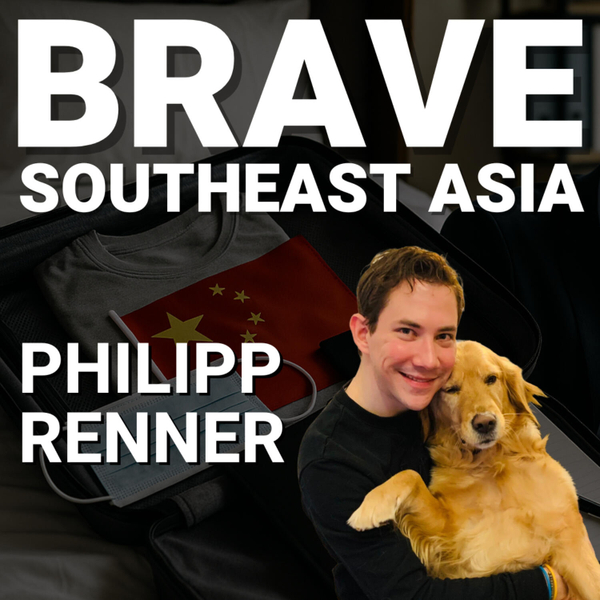
Philipp Renner, Founder & CEO of Dr. Shiba, joins Jeremy Au to share his journey from a global childhood to building one of Southeast Asia’s fastest-growing pet wellness companies. He reflects on how eight years at McKinsey, the personal challenges of long COVID, and the limits of corporate consulting led him to take the leap into entrepreneurship. They discuss the realities of product market fit iteration and the decision to pursue a semi-bootstrapped model rather than a VC-funded growth path. Philipp also shares how his toughest teenage year in Shenyang shaped his resilience and why focus on what truly matters became his personal north star, guiding him as he built Dr. Shiba from functional supplement treats into a wellness ecosystem now serving millions of customers across Southeast Asia and the UK.

02:00 Childhood across Germany, China, and Singapore built resilience and cultural fluency: Philipp recalls being the only foreigner in Chinese kindergarten, summers in Germany with extended family, and adapting to contrasting environments.

07:28 McKinsey years taught structure but came with high pressure: Philipp learned problem solving, investor communications, and performance systems, but he also faced unsustainable hours and a constant cycle of pressure.

14:23 Long COVID forced clarity and career reset: Contracting the virus in New York and suffering heart issues left Philipp fearful and uncertain, which led him to reassess his values and priorities in life.

18:54 Partnership revealed as a golden cage: Observing partners’ constant travel, endless client demands, and limited upside compared to entrepreneurship convinced Philipp to leave consulting.

22:21 Transitioning to founder life meant unlearning: Moving from slide decks to execution, Philipp raised funds, managed co-founder conflicts, and worked from a Manila coffee shop with no salary while building Tyger Brands.

27:36 Product market fit narrowed focus to Dr. Shiba: Starting with three consumer brands, Philipp and his team doubled down on the pet supplies line that scaled fastest, allowing the others to fade.

31:32 Bravery defined by survival in Shenyang: At 16, Philipp lived through minus 30 winters, two-hour commutes, and forgotten Chinese in an industrial city, which tested and built his resilience.

Jeremy Au (01:06)

Hey, Philip, excited to have you on the show.

Philipp Renner (01:08)

Jeremy, it's been a pleasure, it's been a while.

Jeremy Au (01:10)

Yeah, ⁓ could you introduce yourself?

Philipp Renner (01:12)

Sure, I'm Philipp or Phil, originally German, grew up in China and Singapore, nowadays ⁓ live in Southeast Asia, have been there for three years, built a company called Tyger Brands together with my co-founder Tim Michael.

We originally started out as a house of brands focusing on a few different things and have for the last two years been focusing on building up the leading pet supplies ecosystem for the region. Our main brand is called Dr. Shiba, focused on dog supplies. We also have a cat brand called Professor Bengal and initially launched in the Philippines. Nowadays also available in Singapore, Thailand, Indonesia, and very recently launched in the UK. And that's my main gig.

Jeremy Au (01:53)

Fantastic. So, you let's go back to the beginning. What was your childhood like?

Philipp Renner (01:57)

I think it was a fairly uncommon one to be honest, so I mentioned earlier that I am German. Both my parents are German.

But they met in China in the early 80s. They were both working for a German NGO doing development aid, both in the education sector. My dad was working on development aid for teachers education together with the Chinese government. And my mother was actually a German teacher for Chinese university students in Hangzhou. And they met back then in, I think, 83. And yeah, that's kind of how I

came about. So for me that meant I was born in Germany. I was born in Munich but when I was less than a year old, my parents decided to move us back to Shanghai and I spent the first five or six years of my childhood there. Went to an entirely Chinese kindergarten. I was the only foreigner. So I was really in a fully Chinese environment. I did learn German from my parents but everyone else I spoke Chinese to which is also why think nowadays

very luckily for me, it's another mother tongue for me, Chinese, and has come in quite handy over the years. And yeah, when I was six, we moved to Singapore and I did my entire primary school there. I did go to the German school in Singapore because otherwise I would probably have issues with my German nowadays. And then when I was 10, we moved to Germany and then I spent most of my remaining childhood in Germany. It was quite the contrast moving from a multi million inhabitants cities like Singapore to a tiny village in Germany with back than less than 10,000 inhabitants. Luckily enough, somehow it worked for us. I have two younger sisters and never really felt uprooted. The classic culture kid issue luckily did not happen to me. Yeah, it did pull me back to China at some point when I was 16. I moved back to China.

with a non-profit exchange organization and did my 11th grade in Shenyang, a place close to North Korea and yeah, did one year of classic Chinese high school, which was honestly incredibly tough for a lot of reasons.

There were no foreigners in Shenyang at all. Everything was in Chinese and I had actually forgotten my Chinese at that point. That was the main reason for me to go back. So a year earlier was the first time we went back to China. My youngest sister is actually adopted from China. We wanted to show her where she's from. And I was incredibly frustrated because while as a child, Chinese was a mother tongue to me, I couldn't really communicate anymore. So I had decided the summer before that I would go back and try to regain my Chinese.

that was what I went to Shenyang for. Luckily it all came back, it was just somewhere asleep, but the year was a very interesting one. Also just because of, I think, environmental circumstances, it does get really cold up there, so it's like minus 30 degrees in winter, but that year shaped me a lot, yeah. And then I did undergrad in Germany, yeah.

Jeremy Au (04:46)

So what was some good childhood memories ⁓ from all those different countries?

Philipp Renner (04:51)

I mean, there's a lot of them, very mixed ones. So I still remember my Chinese kindergarten quite well. And there's some funny pictures where you see me as the only white kid amongst all these Chinese children. I remember those times as really nice, fun, playful times. We were back then, it was very much restricted where foreigners were allowed to live. So we were actually living on

on the campus of a bigger school, there was housing on there. And I still remember there was a really nice front yard with a small fountain. And I would basically play there every day with other children. And then for us, think summers were always one of the most exciting times for us that we look forward to because

my parents, my younger siblings, and I would always spend the summers in Germany at my grandfather's house and the remaining parts of our family would join us. So my aunt with her children, my cousins, and we did this every single summer. So we're a fairly big family, but very closely knit because we would always spend two to three months together every summer. And yeah, those are really, really nice memories.

Jeremy Au (05:57)

So there you are, you know, all across the world from China to Germany and Singapore. And then, you you did your university in Germany. So what was your first job that you took? And obviously you're weighing different careers at that point in time, but how did you go about choosing your first full-time job?

Philipp Renner (06:14)

So I to this really small business school in Germany called WHU, which is more or less, I think the school where most of the bigger entrepreneurs and also a lot of the classic consulting investment banking folks used to come out of. Some of the more renowned people include the founders of Rocket Internet and...

ventures. So back then during school there was a lot of there were a lot of events bringing us together with people from professional life right from the start and a lot of these companies or even professions I had never heard of in my life right. On a weekly basis we had company presentations I believe twice ⁓ a week in the evenings you could sign up for those and then there would be a company presentation and there would be a nice dinner afterwards you could network.

and then to be honest, I had never heard what management consulting was before studying and I had no clue what it actually meant, but all of a sudden everyone was talking about it and how exciting that was. And I think I was at that point more or less just was like, if everyone is talking about this, it must be really cool. So I almost got tracked into this whole thing. And as everyone or more or less everyone else was applying.

for their internships with ⁓ McKinsey BCG and the likes. I followed suit.

And yeah, they did one or two consulting internships in the beginning with Roland Berger. I did one in China, which brought me back to my other roots. And then I did one with BCG and I kind of liked it. I thought it was exciting to work on very different projects in different geographies, different industries. And then, yeah, I had an offer to join BCG after undergrad.

did a short stint afterwards in Cuba. in Havana for nine months. I wanted to go somewhere to learn Spanish and then came back and

decided against BCG for different reasons and ended up joining McKinsey because I did not know what I wanted to do. I think that was the main reason for me doing this whole consulting gig in the end. While some other friends had absolute clarity on what they wanted to do, have one of my best childhood friends is a dentist. She always wanted to be a dentist. Her parents were dentists. I did not have that calling. I did not know what I wanted

to do. So for me, consulting, at least that's how I explained it to myself, was a path where I would hopefully find out what I would like or maybe at least find out what I wouldn't like. And yeah, that's how I ended up on McKinsey.

Jeremy Au (08:34)

So what was the experience at Bikinsey like? mean, you spent a total of eight years there in terms of chronological time. So what were some of the experiences and learnings there?

Philipp Renner (08:42)

I think the beginning was quite tough. I think it's pretty normal for everyone. It is fast-paced. Back then it surely was still the days when working hours were also longer. The German office is also pretty well known for bad hours. So I think my first year was tough. And I remember even

particularly my very first project was really tough and it made me really consider quitting. I ended up not quitting. And as you said, I'm staying for a long time. I think for me, one of the main things that I luckily managed to figure out probably after nine months was that I had to get my lifestyle under control. And I started speaking up quite a bit for myself and also for the team, even though I was really, really junior. I joined after my undergrad with a bachelor's

degree and was basically a junior analyst but that ended up working out really well for me so while a lot of other people when there were edits to be done at don't know 11 p.m. they would say sure have it done by tomorrow morning I started testing kind of the boundaries and interestingly enough that turned out to work quite well and I think that actually

earned me respect with some of the very senior people because they were really not used to this. So I still remember a conversation, for example, with a very senior senior partner who was known to be kind of scary. And he at some point approached me when I was, I think it was six or seven months in and he was like, Hey, there's this project, you'll be a self standing senior associate running this and

Then he said the famous words, it's a step up opportunity, which is when you're in consulting, you know that's when you start running. So it sounded absolutely terrible. I knew it was going to be a complete disaster if I was going to join this project. And there I was this junior analyst with a senior partner and I was just like, yeah, you know, I'm not going to do it. And then he used very inappropriate words, something along the lines of, well, you either have blah, blah, blah, or you don't.

And I was like, well, then I don't have blah, blah, but I'm not going to do this project.

And then I think most people would have thought that this was kind the end of the working relationship with this guy, but it was the contrary. Actually, of course, in this moment, he wasn't happy about it. But looking back, that was probably one of the best decisions I ever took because that really leveled the playing field for me. And this guy would call me a bunch of times after, and we did still work together a few times afterwards. And I think that's one thing that I'm glad I realized approximately one year in because that

completely changed my trajectory at McKinsey and it made my whole life there much more sustainable. So while other people oftentimes ended up working crazy hours, I managed to be very selective about the projects and the teams and usually ended up having fairly good lifestyle.

Jeremy Au (11:22)

I empathize with that because I was at Bay for two years, and after two years, I was very much like, I would like to build something of my own. And I had the opportunity. I think what's interesting is that you did...

eight years and obviously you spent two to three of those years also going to Columbia to university for your masters. Could you share a little bit more about some of your evolution of your thinking about whether to stay at McKinsey or what you're exploring during this timeframe?

Philipp Renner (11:47)

Yeah, so I think before doing... my grad degrees. I wasn't even sure if I would stay for the three years that I had to stay until I was going to be able to go to grad school and get that paid. But then once I kind of managed to stay for those three years, I was like, I just don't want to pass on the opportunity of getting my graduate education paid for. And I was officially a part of the German office of the Berlin office. But the two years before school, I was already doing most of my work in the US. And the German office had a particular,

I it still has a very particular setup where you would only have to return to McKinsey for one year after your graduate degrees. And that was quite appealing to me. So I did that grad education and actually extended it. started with an MBA and then I saw other people doing this interesting international affairs public policy degree and I said, I kind of want to do this as well. And then I got very lucky because there ended up being this dual degree and I kind of managed to sell this to McKinsey. So they also paid for that one.

And then was out for three years and I honestly wasn't very excited about going back for that one year afterwards. I kind of like my school life. I've been out for almost three years and what I one year seemed short and it flew by. And then I think the evolution of leaving, there was a bunch of different things. So one thing was that COVID actually hit and I was one of the very first COVID patients in New York.

I contracted COVID in, well, end of February or beginning of March back then, and was quarantined in a hotel room in the city for three weeks, which was not a lot of fun because hotel rooms in New York are not very big. And then ended up having to leave the U.S., came back to Germany, had to crash at my parents' place. And then I unfortunately developed a very, very strong version of long COVID, which eventually put me on medical leave for half a year.

And that really shifted my perspective on everything. Aside from the fact that I never really wanted to be a McKinsey partner because I didn't really like seeing how these McKinsey partner lives apparently are still flying around all the time, not being the decision maker but only being the advisor. But then also me being sick made me really rethink what I wanted and also what I did not want.

And yeah, then in the end when I decided to leave, it was honestly a very easy decision. I always thought it would be super hard because of course, McKinsey is a little bit like a golden cage. You know exactly how things are going to play out. need to know what you need to deliver. It's just so planned, I, at that point, I was very clear that I didn't want it anymore.

And then the decision to leave was very easy for me. And I was very lucky because a few months before I fully took that decision, friends of mine approached me and asked me whether I wanted to join a new venture startup in Southeast Asia. And the idea back then was to build a house of consumer brands. So basically an evolution of the FBA aggregation game, instead of buying brands, building them rapidly, scaling them.

And I kind of like the idea.

because this playbook has been done a few times. I also liked the geography. as much as I had spent a lot of time in Germany and the U S the previous 10 years, I was ready for a change. And I liked the idea of going back to Asia where also spend significant parts of my childhood. So we started working on this while I was still a McKinsey and it started to become more and more interesting. And I started seeing a path for this being a real thing or being a full-time thing and then started raising

money, angel money, found really good angels, kind of managed to fully raise the round and then decided to leave. Yeah, so that was kind of the evolution.

Jeremy Au (15:21)

I'd like to actually break that up into three parts, I think one is obviously experience of long COVID to your decision regarding whether to go to be a McKinsey partner. Because I think it's not very clear to everybody. And number three, of course, is your decision around building a company in Southeast Asia. So let's go through part one, which is what was your experience getting COVID and more importantly, long COVID as one of the first few patients in New York?

Philipp Renner (15:27)

Yeah, I think that was probably the toughest time of my life, to be honest, because at some point I really didn't know if I was still going to live or what kind of life I would still live just because I was really not in a good place health-wise. And I think that really triggered this internal discussion in me on what I want to spend time on in my life and what I don't want to spend time on.

Jeremy Au (16:08)

What was, was maybe more specifically like you were going through long COVID. What was the experience like? ⁓ Were you in bed? Were you tired? What was the experience actually? How were you trying to recover during that period of time? Because it was a scary time that people didn't know what COVID was. People didn't know what long COVID was. internet was full of theories and rebuttals. So what was that experience for you personally?

Philipp Renner (16:23)

Yeah.

So I started developing a lot of heart related symptoms. My heart would just pound out of nowhere, which was very, very scary. I started having this tachycardia, which then of course led to also some kind of level of anxiety. At the same time, my just physical state was quite impacted. I had lost all of my cardio fitness.

and was quite scared of rebuilding it because my heart was doing all these strange things. So yeah, my life was really impacted. I was not in bed, I was not bedridden, but I did feel like, yeah, I didn't know if I was ever gonna be able to do normal things again at full scale for quite some time.

Jeremy Au (17:07)

Yeah.

How did you feel that? that like grief? Was it sadness? Was it fear? Was it anxiety? I mean, I was kind of curious how you were processing those emotions at that time.

Philipp Renner (17:17)

It was mostly

fear, to be honest. Fear of, because I also didn't really know what the problem was. As you said, COVID was not well understood and people basically, or doctors couldn't really tell me what exactly the problem is and also what exactly the or a recovery path could look like. And I think that was the scariest thing, the uncertainty. Because I, yeah, I think it's always easier to

live with or address a problem if you know what exactly the problem is. If there's a lot of this uncertainty it just makes it really hard. At least it was for me. Yeah.

Jeremy Au (17:48)

So what's interesting is that, know, you having these heart issues, you know, you are medical leave and you started doing some of that processing about your life or some of the reflections that you had about your life at that point of time.

Philipp Renner (17:59)

I think one thing that was pretty clear to me was that I did not want to spend 1130 PM evenings sitting in a corner office somewhere in the middle of nowhere doing advisory work for a company that in the end might do something completely different than what we would advise. Right. I mean, that became very clear to me. So it was, I think, very much a

revelation to me that I, I wanted to do much less things that I didn't really enjoy and maximize just what I actually enjoy doing. What I enjoy spending time on people I enjoy. And actually I love the people at McKinsey, don't get me wrong, that's not a good point. But there were, especially in the last two years at McKinsey, a lot of times situations in which I had to do things that

I very much disagreed with because I either thought they were unnecessary or I thought it was the wrong decision, but I was not a decision maker and I kind of had to live with it. And I started to feel this inner struggle more and more during that time. And I think while before,

before my graduate degrees, could kind of live with it and I could just power through and even if I questioned something, I kind of could get myself to do it. I started feeling like really my inner body rebel. Like I had, I sometimes had to do things and I physically felt, it wasn't really anger, but I just really, I had to force myself and it just didn't feel good at all. And that started happening more and more.

like, yeah, I just don't want to be in that situation anymore. Yeah.

Jeremy Au (19:25)

Yeah. And I think it's actually something that empathize with because I also had those hours and so forth. And one just in pieces, you know, I think there's a bit of dissonance between what people view, I think the partnership at McKinsey Bay BCG versus I think what you and I saw from the inside, right? So could you share a little bit more like, because I'm sure you saw that for yourself, right? Like before you had to be Kinsey, you saw the partners life versus the actual reality. Could you share a little bit more about what that...

Philipp Renner (19:42)

Hmm.

Jeremy Au (19:51)

difference was from your perspective.

Philipp Renner (19:53)

I mean, I think from the outside, the key thing that you don't see is really how much work and pressure there is all the time. And that just never really changes. think no matter what seniority level you are, there always is this pressure and McKinsey and the likes do this incredibly well because a lot of this pressure is self-generated.

Because technically you don't compete against anyone else, right? You compete against yourself. You get rated against certain standards. There's not a certain number of people that can pass. You compete against yourself. But somehow all these top consulting firms manage to build a system in which people go above and beyond, right? It's this constant pressure, leveraging insecure overachievers.

And I think in the beginning, the pressure comes maybe more from the more senior managers. But then once you're a partner, the pressure still comes from other partners who are more senior from senior partners. Even when you're a senior partner from other senior partners who are even more senior.

And then in the end, if the partner isn't the one, then there's still the client. So in the end, it never really changes, right? You're always on constant alert because even as a senior partner, if your phone rings on a Saturday evening at 10 PM and it's your CEO client, you're going to pick up. So I think that is something that I started seeing much more also happening because I was of course there during the week and saw these people and also just the constant running around. I used to love.

flying, I felt so cool on these business trips. But at some point I also was like, I mean, these people are insane. They go there Monday, here, Tuesday, there. I remember there was a senior partner in the Berlin office who would sometimes fly to South Africa from Germany on a Monday, fly back and then fly there one more time on a Thursday. was just a lot of this like nonsensical stuff. I mean, nowadays people I think wouldn't do that anymore. But yeah, people were just...

They were cutting short their lives. think both in terms of actual time available in that very moment. They were not at home, right? They were constantly on the road. And then people are like, okay, I have no problem to work until midnight because I'm somewhere where I don't know anyone anyway. But then also cutting short their remaining lifespan, right? Because there's no way of working these crazy hours, being on the plane all the time for years without having an impact longer term.

Jeremy Au (22:03)

Hmm.

Philipp Renner (22:11)

So I think a lot of the

just really not there for me anymore. And also, I think the last point on this, the upside, I mean, of course you're going to have a very good life financially as a McKinsey partner, a senior partner, or in a comparable role, but it's also not

an immense upside, right? You kind of know what's going to happen and what you can maybe make, but you always have to work for this. It's never going to change. Well, compared to entrepreneurship, of course, risk reward is completely different, right? There's a high likelihood that it's not going to work, but then of course the reward side is also a completely different one. Yeah.

Jeremy Au (22:45)

And that's interesting because it ties directly to what you did, which is that you chose to make the bet to build this company. yeah, you're building on a side, you decided to double down, but it's a new geography in a sense of Southeast Asia, right? It's a building a business, you previously were consulting across New York and Europe. what was it transitioning to Southeast Asia, house of brands, startup, founder mindset, you know, those are, you know, like a triple jump, right? In that sense, right?

a change in geography, a change in role, and frankly, a change in industry as well. So how is that transition like?

Philipp Renner (23:14)

I mean, it was a complete transition as you described it. I think also just the way of working, moving from effectively drawing slide decks back then to executing, raising money. I'd never raised money in my life before, right? And effectively I was the one who took charge of that. Finally activating the network that I had built over the previous 10 or 15 years. It was super exciting at the same time. It was also pretty scary because

I think, I mean, it ended up changing. It wasn't entirely clear what we would do. We wouldn't, we of course didn't really know if it was going to work out. And we had a lot of issues in the beginning. We unfortunately also had quite some issues in the founding team. Something I'm not going to get into details today, but we were originally four co-founders and then eventually ended up being two. So there was a lot of turmoil that we had to navigate. One thing that surprisingly enough,

work quite well for me. One of the worries I always had was that I was going to weigh way too much what to do and wouldn't be able to get into execution mode. And I think I really tried to make a point of not falling into this trap because I know a lot of consultants tend to have this over analyzing issue.

So I think one of the things that I forced myself into also had my co-founder hold me accountable to was really that we started executing and just iterating quickly. But of course it was a very, very different type of work. It was not glamorous at all. I mean, we basically did not draw a salary. I think, yeah, we actually didn't draw a salary, a completely marginal salary. We started this out of Manila.

co-founder was living in this apartment in BGC. I rented a very small apartment on a different floor. We obviously did not have an office. Our first office was downstairs. There was this coffee shop called Shaka in BGC, great vegan coffee shop, and that was our office. So nowadays when we go back, people still know this was Phil's and Tim's first office where it all started from. But yeah.

was quite the change compared to the McKinsey Glamorous life, I have to say.

Jeremy Au (25:08)

I think that's fascinating, right? Because we're talking about the difference between the consulting versus the founder. And you talked about one thing that you let go, right? Which was changing from making slides to executing. Could you talk about what things were helpful from consulting that ported well to the founder life versus what were the things that you said you had to intentionally change in order to succeed in the founder mindset?

Philipp Renner (25:31)

Yeah, I think. so one very general point, I had thought about building a startup also before business school and I just didn't feel ready. So one of the things on a more generic level was that I felt ready. Of course, I did not know what I had to expect, but I felt much more ready just given the additional work experience I had.

I think if we look at specific things, so things that certainly helped me from consulting was the ability to structure and dissect bigger problems into smaller ones. I think some of the other things include also being able to find very clear and

purpose, intent-based messaging for the right audiences. So when talking to potential investors, finding the right way to pitch, building of course the pitch deck. But also when talking to potential customers. I think one big thing also on the HR side, once we started building a team, kind of leveraging what I learned on performance management, right?

I think McKinsey has, also BCG and so on, have a very well working performance and review system. So a lot of these things I could apply to the way we run our company. I think the key thing on what maybe really wasn't ideal, but that's kind of the point that I made in the beginning was that...

McKinsey really was a lot of analysis all the time, right? It was a lot of analysis, a lot of if scenarios, a lot of scenario planning. And I think the key difference was, of course, you would also want to think about different scenarios in a startup, but you would want to like, maximally shorten that time of thinking and then maximize really the trying out time and the iteration. And this was, I think, a key difference. Yeah.

Jeremy Au (27:02)

I find that super fascinating, right? Because I totally agree, right? Like this analysis and then this analysis paralysis and then this founder life where you don't have time to do even analysis, you just have to do it. I'm just kind of curious, how did you change your mindset? Was it just like, I don't know, reality? Was it books? Was it your co-founder? How did you kind of like push yourself through this transition?

Philipp Renner (27:24)

I honestly cannot tell you. I think it was just reality to be honest. It was not books. It certainly wasn't. I love books. I read a lot of books. It definitely was not books. I'm not sure if you can learn entrepreneurship from books. I think it was a reality just getting hit by so many different issues at the same time sorting out.

regulatory issues, sorting out funding, sorting out burning cash. Like, it just hits you, right? And then you start, at least for me, was just sorting through the different issues and trying to tackle them one by one. I think just the sheer number of issues that you kind of knew was going to await you the next morning, every single day, kind of got me into a mode of execution. So it naturally happened. I wouldn't be able to tell you what specifically I did.

Jeremy Au (28:03)

And what's interesting is that, you you came out with also ⁓ a product market fit iteration. And that's where I met you, right? Because you were very much at the early days pitching the house of brands. We had a bit of a debate about house of brands, aggregators. And I think the logic point that we had was like, what happens if a brand succeeds? And was that a repeatable skill set of innovating new consumer brands? And think that was our debate that we had at that point of time. And I'm just kind of curious, like,

How did you go about that product market fit iteration?

Philipp Renner (28:29)

One thing is pure time constraint, to be honest. So we started with three brands. We don't have to talk about the other two. They were in very different areas. There was a coffee brand, there was a natural cosmetics brand, and what is nowadays Dr. Shiba, Prof. Bengal, and then there's also Dr. Akita nowadays. And in the beginning, we kind of managed to set all things up and push them slowly. I had the belief that

we would, from an organizational standpoint, be able to maintain and push all three of these. And I think that was a flawed view, to be honest, looking back. part of the issue was that once these brands, and especially Dr. Shiba, started to scale, there were just so many additional issues and things that had to be solved to make sure that it would grow further. I think the other thing that...

probably it was specific to our case, was that we actually, we changed our direction quite a bit ⁓ during the time also when we spoke. We were originally planning to really go down the VC road, raise quite a bit of money, try to build the next unicorn. And we really changed our thesis on this once we had these first conversations. And I think both Tim and myself started seeing a lot of appeal in...

doing more of a semi bootstrapping route and not following the VC route. And that's the route that we ended up taking. And I think that is one of the best decisions looking back that we took building Tyger brands, but that obviously also had an impact on how big the team could be, for example, right?

so we had to be quite careful in hiring decisions in, personnel spend. And I just think we would not have been able to finance a really fully capable sizeable team to maintain and grow three brands. So once Dr. Shiba started taking off and we started seeing very good early signals, we were just like, okay, let's double down on the winning.

course and see what happens. And then it kind of was a gift that kept on giving and Dr. Shiba just started, continued growing like crazy. And at some point, just from a pure resource perspective, almost all resources were focused on Dr. Shiba and the other two brands just started being much more afterthought. probably I don't even know.

six, nine months later, looking at our revenues, it was just all of a sudden like, okay, there's Dr. Shiba and then like somewhere down there, there's the other two brands. Like, why would I even still spend any time on those? So that kind of just naturally happened. We honestly, almost, I think we never actually took a very active decision.

where we stood in front of all of our team members and said, Hey, starting tomorrow, the only thing we're all going to do is Dr. Shiba. We're not going to touch the other two brands anymore. It was really much more evolutionary. We just started shifting everything towards Dr. Shiba. then technically these two brands still exist. There's still, you will still find them. still sell some stuff, but no one really does anything with them. Yeah.

Jeremy Au (31:14)

I think it is interesting to see how you've pivoted, especially because Amazon brand aggregators, as you shared at 2021, 2022 was super hot. And I think it made sense that theoretically there was a way to build multiple brands, but from an entrepreneurial bottom-up perspective, was better to prioritize. From your perspective as a result, could you share a personal story about a time that you've been brave?

Philipp Renner (31:34)

Yeah, I mean, I think braveness is oftentimes also measured by what other people think is brave.

I think... For me, one of the things that was indeed very brave was doing this move to China when I was 16.

I did not know where I would be sent back then because it was a not-for-profit. So the way it worked was that you had to apply for the program. In theory, you were supposed to choose multiple countries. And I basically put all my money on one bet, which was only putting China, which already reduced my chances, but somehow that worked out. But then I did not know where in China I would be sent and I had no influence over this.

And little did I know that they kind of changed their plans because in the previous years everyone was sent to either Beijing or Shanghai. So two big cities also back then 2006 fairly developed. But in that specific intake that I was a part of, they decided to try out some new places. And we then learned that there was a bunch of smaller cities, but definitely the most unknown.

and kind of off the grid location was Shenyang. And out of the, think, 20 people or 30 people that we were from all over the globe who were sent to China, everyone was like, okay, okay, I don't really hope I don't get the sent to Shenyang. hope I don't get it. So I remember I received this letter one day where we kind of get our host family assigned. Of course, I was the one who was sent to Shenyang. And honestly, that was pretty shocking because

Nowadays, of course, it's a little bit different. Shenyang is a fairly developed industrial city, but back then, most people had never heard of Shenyang. Of course, back then it was also already a multi-million city. BMW actually already had a plant there, but it was really off the grid. It is fairly close to North Korea, as I mentioned. It was an entirely industrial production focused.

city with really bad smoke as well. Pollution was really bad and there were no foreigners. So I ended up going there and as I mentioned earlier, I had forgotten my Chinese, right? And that was a key issue in this whole equation because while in Beijing and Shanghai maybe there were still some people who would know some English. It was abundantly clear to me that that would absolutely not be the case in Shenyang. So

I think we had a month of prep or so in Beijing altogether, a little bit of language classes. And then luckily enough, after that one month, my Chinese started slowly coming back, but still it was very rudimentary. I mean, I left China when I was six, so I had the vocabulary of a six year old, luckily no problems with grammar and so on.

But still I was 16, so topics were slightly different compared to when I was a six-year-old child. And then, I mean, this one year really brought a lot of challenges with itself. I was, think, one out of only three out of the 30 people who went to China who did not switch their host family once. So I stayed with my host family the entire time through Thick & Thin. It was...

challenging both from an external standpoint, just I mentioned the winters earlier, it was minus 30 degrees. It took me two hours one way to get to school on multiple buses in the dark, oftentimes standing in the cold. So I think just from an external standpoint, it was incredibly tough. But also for me as a 16 year old teenager, right, being in an unfamiliar environment where people did not speak my language initially.

Yeah, so that was actually probably one of the bravest things I've ever done. I managed to power through and I'm very thankful that I did this looking back. It very much, I think, shaped who I am today, also in terms of resilience and keeping on going even when it's tough.

Yeah, and think that the cool thing is I still have a very good relationship with my host family. I actually just went to China, I think three or four months ago to attend my host brother's wedding. that was a brave moment of mine.

Jeremy Au (35:11)

Wow, I'm crazy. Yeah, time flies. And I would love to see those photos of you and your host brothers wedding. It sounds like ⁓ quite a blast, especially because there's some sort of visual comparison between both when you're younger versus now, guess, married and happy. On that note, I'd love to summarize the three big takeaways I from the conversation. First of all, thanks so much for sharing about your global childhood and teenage years. And I think there's such a...

cosmopolitan or international globetrotting from a location perspective, but really fantastic to hear the internal monologue and the resilience and the lessons that you took away from that international set experiences across Germany, China, Singapore, New York, right? And circling across these areas as well. That's one. Two, thanks so much for sharing about your experience in consulting.

I think it was just great to hear, think, ⁓ insider's perspective on, you said, you know, the gold standard consulting company. And I think this is a certain view from the outside versus the view from the inside. And. You know, was fantastic for you to hear about how consulting can be the right role for some people is just that it wasn't the right role for you. And I think it was very illuminating for you to share it from your perspective. And more importantly, how you reach that conclusion over time. Lastly, thanks so much for sharing about,

Jeremy Au (36:27)

your transition to founder life about what lessons worked and what things you had to unlearn in order to become a founder. And I think it was great to hear about how you also ⁓ iterated on your product market fit, your approach to the market, but also in parallel also had to rethink about whether you wanted to raise venture capital and instead decided to bootstrap instead. So thank you so much for such an illuminating set of insights.

Philipp Renner (36:52)

Thank you for having me. This was a pleasure.

Hosted by

Related episodes