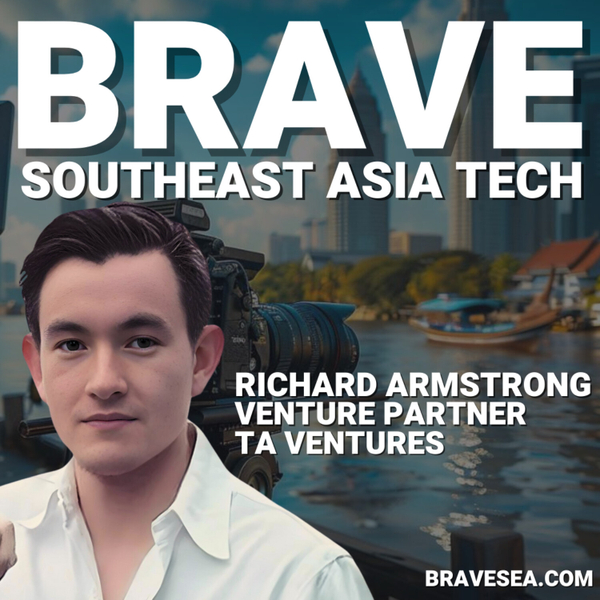

"As a startup, you can move a lot quicker. You don't need to sign 20 things off to get approval of things. If you want to do something, provided that the team agrees, you can move a lot faster. In the US, it's like disruption. In Asia, it's like finding a way how you can get corporates on the cap table, but not get it to a limit where it's not fundable in the next round." - Richard Armstrong
"Some people aspire to be top movie stars. Nowadays kids want to want to have tens of millions of followers on TikTok. That's what they aspire to be. That's how this generation has changed, but in a way, it's actually smart because what they don't realize is that by having this massive distribution channel, they're really able to leverage themselves in many ways. Maybe they’ll be able to build businesses because they have a massive audience. Having a couple million followers on YouTube and TikTok can help leverage to grow businesses, launch new product lines, or do collaborations." - Richard Armstrong
"A lot of business models don't work for Southeast Asia. Consumer subscription is quite hard because it’s based on spending power and people’s view of Maslow hierarchy of needs. Buying a subscription to a startup isn't the most important thing. The second thing is B2B SaaS. You've got to be very smart to solve SaaS, and you’ve got to solve it at a particular level. The third one, generally, is the AI companies for Southeast Asia. To build a strong AI company, you need to build it for the world. You start off in Southeast Asia and then leverage the engineering or the tech talent, and then you sell globally." - Richard Armstrong
In this episode, Jeremy Au speaks on Thailand startup ecosystem challenges, creator insights, and the media founder transition to venture capital.
Keywords: Richard Armstrong, Thailand Startup Ecosystem Challenges, Creator Insights, Media Founder Transition to Venture Capital, Thailand, VC, Founder Story