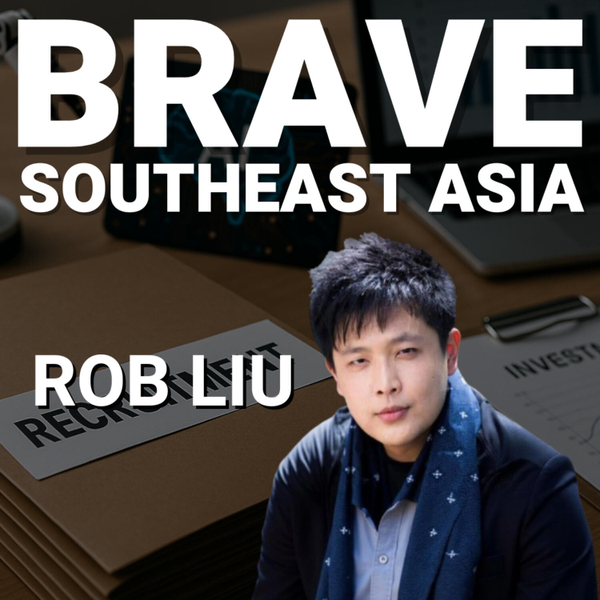
"I see venture capital as credit card debt. If you don't need to take it, don't take it. There are downsides to it. If you can't pay the bills or can't find time to focus full time on your business and just need some capital to start, then maybe taking a credit card loan or an angel investment could help." - Rob Liu, Founder of ContactOut
"What I regret is if 12-year-old me had found out about what Demis Phisabas was doing or read Richard Feynman’s popular books like Surely You’re Joking, Mr. Feynman and gotten more into science. And then actually started learning the science. I optimized too much for wealth building and then realized that after a certain amount of income, which really is not that much, maybe 200K or 300K for a family, you don’t gain any more happiness beyond that." - Rob Liu, Founder of ContactOut
"I really resonate with the man in the arena quote where he says even if you try something and fail for the rest of your life, it's better than not trying. That was how I thought about doing my own business. I dropped out of college with two subjects left because I didn’t want a plan B. If I didn’t have a degree, I could never get a corporate job, I’d be unemployable. It was succeed at business or keep trying until I die. From the man in the arena quote, what resonated was that if I kept trying to do business my whole life and still failed, I would be okay because at least I tried. This is what I love doing, so I’ll just do it." - Rob Liu, Founder of ContactOut
Rob Liu, Founder of ContactOut, and Jeremy Au dive into the realities of building a profitable SaaS business, the myths of venture capital, and the role of lifelong learning. Rob shares how he scaled ContactOut by stacking insights from competitors, why bootstrapping gave him more control, and how he now invests in young founders. Their conversation also explores his shift from chasing wealth to pursuing impact, his family’s role in the journey, and the brave choice that defined his career.
05:23 Bootstrapping versus venture capital: By focusing on recruiter data, ContactOut secured a foothold and achieved 70 percent margins without outside funding. Rob contrasts this with VC-backed peers who scaled faster but gave up equity, comparing venture capital to credit card debt that adds confusion more than growth.
08:56 Wealth lessons from small businesses: Rob notes that many traditional entrepreneurs, like car dealership or farm owners, often end up wealthier than startup founders because steady profits compounded over years can match billion-dollar exits.
11:07 Early solo founding and first customers: After failed co-founder attempts, Rob pressed forward alone, with his wife later closing the first million in revenue. They grew sales through 500 Startups in Silicon Valley, while Rob taught himself to code to evaluate engineers and guide product development.
15:33 A disciplined approach to learning: Rob listens to audiobooks at triple speed while exercising, studies science and engineering textbooks on his phone, and uses AI tools for clarity. Inspired by Elon Musk’s method of self-education, he is spending two years building technical depth to explore deep tech.
21:28 Shifting from wealth to impact: Rob reflects on wasting much of his twenties chasing money, parties, and relationships. He now believes happiness plateaus after modest income and regrets not focusing earlier on science and impact, drawing inspiration from pioneers like Richard Feynman and John von Neumann.
Jeremy Au (01:19)
Hey Rob, good to see you. I think we've been friends for quite a while and so I'm really excited to finally have you on the podcast.
Rob Lui (01:21)
Yeah, good to see you.
Yeah, yeah, we're happy to be here.
Jeremy Au (01:28)
So Rob, you introduce yourself?
Rob Lui (01:31)
Yeah, so I'm Rob. I've been working on startups throughout 15 years. My main business, ContactOut, is a prospecting tool. So we provide contact data, phone numbers, and email addresses to recruiters and sales teams. I bootstrap that to roughly about 70 people on the team and doing 9 million profit per year. And then I also do a bit of angel investing and have a startup accelerator called Athena Ventures.
which is like the little like Luger that you see here, the little phi Luger.
Jeremy Au (02:01)
Yeah, amazing. And I think you're one of the few, I think say regional founders in Southeast Asia who are push-track profitable and also kind of like thoughtful about what the business is and your own personal journey. But I'd love to just jump straight into it. So tell me about the company and how you got started on it.
Rob Lui (02:21)
one approach that I like to take is, as Paul Graham says, to do a startup, you have to be an expert in a space and you have to create something that is 10 times better than what currently exists. So what I did when I started was I looked at
Lots of venture funded companies just basically go on CrunchPace, look at all the venture funded companies, look at all the companies in the YC startup portfolio. Picked an industry, for me it was like Contact Data that I thought like, okay, there should be strong demand for this, if everybody kind of needs Contact Data. And then I went in detail to study basically every company that existed in the space,
in depth pretending to be another company and taking sales calls with all my competitors and then getting the pitch decks, like recording with a collateral. then, yeah, they kind of say that creativity is like stealing from a hundred different sources. So obviously if you've seen everything, then you can make the best of all aspects of that. So that was the first phase. The next phase was, I guess, getting insider knowledge.
So I would find all the ex-employees of similar companies. For example, ZoomInfer is a Nasdaq-listed company that's like a billion revenue. Apollo is another one, like a billion-dollar company. So I reached out to a lot of the ex-employees or ex-C suites. Just on LinkedIn, be like, hey, I'm building something similar for like...
this different geography, I'd love to get your advice and mentorship. Would you be open to a consulting call and you're happy to pay you for your time? It's like $500 or whatnot. One interesting thing was after doing a bunch of these, I might've done a dozen or so. And for the especially good ones, I'll try to keep a long-term relationship. So I'd be like, okay, can we do every month or twice a month and then...
giveaway a small amount of equity, like half a percent, was what I gave to some of my early mentors. The surprising thing was, like one of these guys, Santosh, he was the VP product at ZoomInfer, built that to a billion dollars, and he was the CRO at Apollo, also helped them build to a billion dollars. He actually ended up coming on to work me as my co-CEO for two years.
And then before that for a whole year, he was like advising us. So we got a lot of like inside information via this kind of approach.
Jeremy Au (04:55)
And I think what's interesting is that, yes, you wanted to build a product that's better, but how did you feel like you could be 10x better? Because people have been selling contact information or doing research. I'm just kind of curious how you thought about doing it differently
Rob Lui (05:11)
Yeah, I think once you look into all the ways that people are doing it and you study dozens of different sources and you combine everything together, it's not one thing, but it's a variety of things.
There's like, you know, different like data vendors and data brokers that you could buy from as well. There's like different ways to clean the data. Obviously there's like a grocery market piece with, you know, like a sales process and, you know, like pitch decks, et cetera. another...
Another guy that we worked with was Doug Hall, who was the first sales manager at Glostore and also VP of sales at one of our competitors in Teller. So it took them to like 30 million revenue. So he showed all of the sales practices, but I think it's everything like stacked together.
Jeremy Au (06:01)
And so you felt like maybe when you say stack together, you mean like all in one or more seamless or how do you mean by that?
Rob Lui (06:07)
As in it's just like 20, 30 different ways to be slightly better. So maybe you'll learn the sales process from one company, you'll learn data sourcing from another company, and then you'll combine all this. And in aggregate, if you study 100 different sources and you put it all together, then you're probably going to be better than any of the individual sources.
Jeremy Au (06:30)
So, you know, how would you say that the company is differentiated from, for example, ZoomInfo obviously is one, but I mean, the other players are also going quite aggressively after this space and need their venture capital backed as well.
Rob Lui (06:43)
Yeah. be honest, like it's not really. When I started, there were a lot fewer players who were able to get a foothold and then we focused on recruiting and the data for recruiting is a bit different than for sales. So we got a bit of a foothold there, honestly we didn't accelerate like
some of our competitors did where, you know, if they raise like hundreds of millions of dollars. But then I guess the benefit of that is, because we didn't raise them, you know, the team owns like, basically all the equity and, you know, the profit margins at like around 70%. As opposed to, you know, if you raise like, two, $300 million, like some of our competitors,
the outcome for the founding team is probably not so good, especially kind of dependent on the times.
Jeremy Au (07:42)
Yeah,
makes sense. mean, I think what you're saying is that the end state is not too different in terms of the product set and so so far by the path to get there is a night and day in. You you've talked about bootstrapping and you talk about venture capital. How would you compare those two experiences? I mean, you yourself have many friends who are venture capital backed, you yourself are bootstrapped. How do you think about it?
Rob Lui (08:03)
Yeah, I think we talked about this before, So like the founders of Loom like exited recently, right? And I think I was talking to one of them. And yeah, I think, you know, they walked away with maybe 50 million off the tax. I think he quit early, so he probably gave up some of the sort of vesting.
But yeah, 50 million off the tax, spent about like 10 years doing loom, a billion dollar exit. that's, you know, the likelihood of that happening is like very low. That's like the dream scenario if you're venture backed. But at the same time, like joining some sort of local business communities like entrepreneurs organization in Singapore, there are folks that have like just traditional businesses, like maybe they're selling secondhand electronics, or maybe they have like a coconut farm in the Philippines. And these guys,
They've been making like a million dollars a year, but they've been doing it for like 15, 20 years. And I calculated this that if you just make a million dollars a year for 15 years and you invest that like just in the NASDAQ or, you know, out like 14%, 14 and a half percent per year, you will also get to 50 million. And I think the crazy thing is that like most of the wealth in the world is made by these sort of like small to medium business owners. think they were doing like a study of, okay, of all the private jet.
or is in the US, like who are they? And it turns out like, okay, they're just some like car dealership owner in the Midwest or something like that.
Jeremy Au (09:31)
Why do you people really like venture capital so much?
Rob Lui (09:34)
I think it's misguided. think it's kind of like credit card debt in a way in that everybody likes to max out their credit card. and instead of thinking about how can I grow my business? think, okay, if I just like take around or solve all my problems, it doesn't, usually like more money doesn't help with growth. Like figuring out how to grow helps with growth. and usually like, you know, more people, more money, probably adds more like
chaos and confusion to that process.
Jeremy Au (10:00)
And I think there's a lot of good statistics you mentioned about, know, obviously bootstrapping and businesses. Why do think people don't really see it or understand it? I mean, it's one thing to be attracted to venture capital, but I think, you know, it's also people seem to have a blind spot around, you know, bootstrapping.
Rob Lui (10:16)
I mean, I think that might just be a function of like us kind of playing more in the venture backed like startup space where perhaps like, you know, tech startup founders, you know, would do it less. But I think more generally the vast majority of businesses are bootstrapped.
I would even say the vast majority of like, they're not like just called startups, they're just called like business owners, right? Like small business owners. They probably never heard about venture capital. And yet, these folks are probably way wealthier on average than your sort of Silicon Valley type founder.
Jeremy Au (10:54)
Hmm.
Do you think there's some aspect where it's like some sort of like geographic component to it as well, like America versus, I don't know, global distributed versus Asia, is there some geographic component to it?
Rob Lui (11:07)
I don't know, I think even globally, Like it's probably most of the wealth is just like small business owners. then startups is just like a subset of that.
Jeremy Au (11:16)
Yeah. And so I think what's interesting is that obviously you've been thinking about this like funding paths and so forth. And what was it like, you know, building a company in the early days and when you were like, you know, really small, like, were you the first person in and, know, like, who was your first employee? Like the, did you get that MVP up?
Rob Lui (11:36)
Yeah,
So I started as a sole founder, tried to have a co-founder several times, didn't work out. Yeah, I think really is just like trying to, like as Paul Graham says, like be the world's like sort of foremost experts on what I was like building and then just like learning, like learning really fast. I can go more into that if you want.
But yeah, think just like reading a crap ton of books. I like kind of like doing audiobooks or whatever I need to read. Doing it at like two, three times speed, like exercising whilst I'm listening, because otherwise if I'm just reading I'll fall asleep. But I think you have like better stamina or you can like, yeah, like learn stuff for like a longer amount of time if you're like being active.
Jeremy Au (12:19)
Yeah. And those early days, you you build out the MVP, like how did you get your first customer?
Rob Lui (12:26)
Yeah, initially it was just like emailing people. So using like dog food and wearing products, emailing people about it. From there, I had a background in like SURs or did like a bunch of SUR. And then from there, we did 500x setups in like Silicon Valley. So when we were there physically, we reached out to some of our like
customers who were already using the tool and then went to the office and kind of did like more of an enterprise sales process. So mostly my wife and business partner in Mourney, she ran that.
Jeremy Au (13:03)
And I guess, you know, a lot of people are curious about solo founding, right? Because a lot of advice is about, you need to have a co-founder. I think that's one. And then two, course, is can you actually succeed as a solo founder? So what are your thoughts about that?
Rob Lui (13:19)
I don't get the whole like co-founder thing. think, well, in a way, like I wasn't exactly solar either in that like before my wife, like started, before my wife was like working with me, we weren't really making that much like revenue. So she closed like probably the first million dollars of like revenue, like pretty much like mostly herself. I have a CTO that,
work with as well. But between me and my wife, we kind of earned the majority of equity and then I started like by myself. So that's sort of the caveat. But I would say it's better to be solo or to work with like just your life partner because you're one family anyway, because I think that equity is like very expensive.
You only have to make a company half the size if you earn double the amount of equity. if you build a multi-billion dollar business, it doesn't matter. I think for most companies, it is a lot harder to double the size of your business as opposed to just go solo or build something smaller but earn more of it.
Jeremy Au (14:32)
Right. And you what's interesting is that, you you also shared that your wife is also still your business partner as well. Was it like, because a lot of people, you know, like, you know, worried or scared or, know, how's that experience been?
Rob Lui (14:49)
Yeah, so we never fought over the business. We always had a fairly clear division of responsibilities, like children's sales, I'll do product and stuff. And then we only fought once we had kids, over kids and other stuff. So not over business.
Jeremy Au (15:06)
Not over the business. So I guess the other part about it is, you know, how did you get the MVP up? Did you quoted yourself? Did you hire engineers to do it? Did you get the CTO to come in? Because I think a lot of people are like, hey, know, like I would want to make something happen, but I need to get a co-founder because I need a CTO or a guy to do sales. I'm just kind of curious how you thought about that.
Rob Lui (15:35)
Yeah, I taught myself how to card because I was kind of like, okay, if I'm doing a tech business, should probably know the tech. I think that from there, then, you know, I didn't, well, initially I did some carding myself, but then, you know, hired a team, worked with the team to build stuff and work with my net CTR. But I feel like it's...
It's almost like a necessity to know the technology if you're going to build a tech business because that is what will enable you to be like, okay, well, who are the good engineers? And like, what exactly do I need to do? I think it's very difficult to like, product manage something and, you know, split it out into, okay, what needs to be done if you don't know how to do it yourself. Yeah, that sort of goes to what I'm like.
spending a lot of my time on right now, is, I'm not spending like, mostly it's my wife running the core business and I've been trying to figure out, what useful stuff can I work on next? So I'm actually spending probably like the next two years just like learning about science and engineering. So yeah, just reading textbooks, trying to get like more technical depth that would like enable me to do, I guess like more interesting or more like impactful stuff.
Jeremy Au (16:51)
What's your approach to learning?
Rob Lui (16:53)
Loaded question. Where to begin? So yeah, obviously like the things that we're about, like studying companies, reading books, like audio books whilst running is really good hack. Cause with that, right? Like if you go for like an hour run every day or you go to the gym and then you listen to books at like two, three times speed, you can probably finish a book like every week because you know, book probably nine hours or something, three hours a week.
it's a lot more time efficient. more recently I've been diving into like textbooks of, like science engineering. I don't know. So I have like a foldable phone that I bought and, I'm basically just reading PDFs of like textbooks. so I'll ask chat GPT like, Hey, what are the
like engineering or like physics or biology textbooks that like Harvard or MIT or Stanford uses. And then I'll just get that, I'll put it on my phone. I'll read it or I get it. You know, you could just have it read out loud and the voiceover is like good enough these days, just on like Acrobat, like Adobe PDF that you can listen to it basically as an audio book. And then if you don't know what it's going on about, you could just like send a screenshot over to chat GPT or now like Android has it such that you just hold the power button. You can ask Gemini.
And yeah, the explanation is probably better than like any university professor anyway. So I think like in recent months, like the speed that you could kind of learn about this stuff is maybe like three times faster than it was before, because you don't know the answers, ask and you will know. So yeah, that's what I'm doing right now. I feel like I need like more background knowledge. And then eventually I can probably work on some.
uh, like deep tech stuff. Uh, I take a bit of inspiration from, guess, like what Elon did after he sold PayPal in that, you know, he spent like a couple of years reading about, um, like chemistry and like, you know, rockets, uh, like car manufacturing, uh, all this sort of like engineering stuff. Um, and from there, after there was, you know, a few years of study, then he went to like find the experts in those fields, uh, maybe made some investments and then.
started getting more involved operationally and that kind of led to like SpaceX and Tesla and I guess like Neuralink and everything else.
Jeremy Au (19:09)
So when you're doing all this learning, do you think there's a purpose to it or do feel like it's more like, you know, just kind of like exploration and more of such?
Rob Lui (19:18)
I guess I'm, I'm a bit like bored of my main business, to be honest. I'm kind of like, okay, is this the. Like most meaningful thing or the highest impacting that I can be doing with my time, you know, doing like a SaaS company, like providing kind of contact data. and it's not, so now I'm trying to find what to do next. I think it's.
It's partly thinking about like, okay, what is like high impact? But a lot of it is just like curiosity. It's just like, okay, now I'm like reading like Bruce Albert's like microbiology. And it's just like, this is how like the cells in your body work. Or like going through like Richard Feynman's physics lectures in textbook form. And it's like, this is how the laws of the universe work.
So I think this was really fascinating to know. And then I think I'm especially excited by some of the stuff that like Google is working on. Like I've been following Demis Hasabis, cause I was surprised that this guy, know, no-go prize winner for AlphaFold, was like half Singaporean or he like, you know, spent a lot of his childhood here. But yeah, some of that stuff is like really exciting with like, obviously like AlphaFold won the Nobel Prize in biology, but also, you know, they're using AI to control
the plasma for nuclear fusion to help create better energy. Or they have this thing called Alpha, called Genome, think, which is using AI to predict new types of materials. So they're like, they predicted 2 million new types of materials that are chemically stable. Whereas before we have like 30,000. And out of that 30,000 was things like lithium batteries.
graphene, solar panels. So there could be like, I don't know, like a battery that's like five times more efficient. So I don't know nearly enough to actually work on some of this stuff, but the plan right now is just spend like two years, read all the textbooks and grow from there. And I kind of regret not doing that like earlier on in my life.
Jeremy Au (21:11)
So obviously, know, there's the question obviously of what to do with your life and studying all that stuff. So what were you studying in your early years? I think you were law students in the past.
Rob Lui (21:22)
Yeah, I feel like I wasted a lot of time in my 20s. How so? I had a lot of fun. you know, so I studied like, I kind of changed around a lot. I did law, I did a bit of computer science, I did a bit of maths, I did like finance. But mostly I was kind of just bumming around going to parties. I think I spent a lot of my 20s just like figuring out
my own mental health and like untangling my own mind. Cause I think growing up as very socially awkward kid, had a lot of anxiety, spent a lot of my twenties, like, I guess like chasing girls as you do, cause trying to like feel less lonely or find like a life partner. And, you know, read a lot of self help as well, which I think some of the, like the new age kind of meditation stuff or self acceptance, like there's a book called,
self-compassion and, you know, Eckhart Tolle and like Tara Barkov, that all helped. But I think what helped the most is, yeah, just settling down with like, with my wife, Moni. And it's like really surprising how much mental capacity is freed up once you stop worrying about like dating. You redirect all that like mental capacity to, you know, to learning or to business and, and doing other.
other stuff. Yeah.
Jeremy Au (22:42)
Yeah, it's interesting because, you know, would there be any advice that would give to your younger 20 year old self?
Rob Lui (22:47)
I think when I was like 12 or something, read like Richard, Dad as like, know, everybody does. I think what I regret is if like 12 year old me had picked up, I had like, you know, found out about like what Demis Phisabas is doing, or, you know, picked up like Richard Feynman's, like books, his popular books, like, you know, Surely You're Joking is the Feynman or, and got more into science.
And yeah, and then actually started learning the science. think I optimized too much for wealth building. And then I realized that, you know, after a certain amounts of income, which really is not that much, I think maybe, you know, like 200K, maybe 300K for a family of spending money, you really don't have any like gain in happiness beyond that.
And then, yeah, you know, spent like decades just trying to like, like make money or to guide my life towards like, you know, financially, driven decisions. Whereas, I regret not like spending more of my time on like, okay, run science, figure out stuff that can really, that can really make a broader impact. so now I'm like following, you know, guys like John von Neumann who like,
created like the computer or, you know, the creation of like the transistor and like, John Bardeen and William Shockley that made the transistor and the sort of background in chemistry that led to like computer chips. so I'm like, okay, like maybe I should have spent like 10 years, 15 years building up that expertise so I can do something like that. Cause I think if you're excellent in any field, you're going to make money anyway. So why not like
do something that can be useful as well.
Jeremy Au (24:25)
Yeah. And when you think about useful and signs and all that stuff, like what are you most excited about these days?
Rob Lui (24:33)
I think the stuff that like Google DeepMind is working on, because if you have like a new, a new like way of computing, which is like all this AI stuff, then that can lead to like a lot more like new discoveries in whether it's in like biology, and, chemistry of like discovering new materials or, I think Google just like
open sourced all the drugable targets in the human body to help with disease. To new chemicals, it's like, okay, well, we discovered the transistor. What other materials or things can we construct that would have the same level of impact as the transistor? think Microsoft just created some new material that allows quantum computing to happen on a new chip.
So it's like stuff like that. It's like, okay, this could create like the whole new like computer age or I don't know. Maybe we'll figure out like how to solve like all disease and or maybe we'll get like, like basically like limitless energy from figuring out like nuclear fusion. Yep.
Jeremy Au (25:32)
So what's interesting is that you have kids now and you're also thinking about a future, building a future as well. What do you think, you know, we have kids about the same age as well. So this is kind of curious, what do think their life is going to be like? Because we grew up with what? The Nokia phones, the BlackBerrys and the new iPhones. That was our coming of age moment. I don't know what you think about their future would be like.
Rob Lui (25:54)
Yeah, that's a good question.
I don't know. Yeah, I don't know. Hopefully good.
Yeah, hopefully good. I don't really have an answer to that. I'm still sort of thinking about like, you how can I be like a good, how can I sort of help my kids like go down a good path? Yeah, I don't know.
Jeremy Au (26:10)
So how would you raise your kids? you know, how maybe how would you raise them from your protocol, your approach? How would you think about it? Would you let them do law? Would you let them explore their fields? Would you push them to a small science? I'm just kind of curious how you think about that.
Rob Lui (26:24)
Honestly, I don't think I'm much of an expert at this. I'm more trying to think about what should I do with my life? And if my kids are interested in what I'm working on, then they can follow. But if not, I'd want to give them all the freedom to decide their own path and to sort of...
do stuff that is of interest to them. Because I think at the end of the day, it's hard to give an opinion on what is a meaningful life. Because I think for some people, could be like, OK, I just want to go surfing all day, or I want to play music. I think it's so subjective. My wife would sometimes say to me, OK, I'm too obsessive over wanting to make an impact.
It's like, why be so focused on trying to make an impact as opposed to just like spending time with family or traveling or just like having a good time and you're like just enjoying the day to day? Because I mean, if the universe has been here for billions of years, it's gonna be here for billions of years after. It's like the universe doesn't need you to make an impact. It's it's fine as it is. It's like, you to think that you can even make an impact? Like, we're just all kind of like specks of dust.
And at the end of the day, it's just like this whole impact thing is just like, I guess we do it because, well, okay, this is kind of like interesting or pleasurable or like a way to spend time, but somebody else can have a completely different perspective. And it's almost like, well, who's to say like, who's right? There's no, yeah.
Jeremy Au (27:56)
So what's your philosophy in life then?
Rob Lui (27:58)
well, for me, I think the, yeah, the impact part is important. also like just enjoying the day to day is important because sometimes I like think about if I, you know, welcome this stuff for too much and I think about, okay, what am I doing in the moment to moment? It's just, I'm staring at a screen of pixels. I'm bashing like keys on a keyboard and then I'm telling myself how meaningful this is. and you know, maybe I should like step away and like,
spend more time with my kids, with my family, or like hang out with friends. Travel, think, you know, I try to travel like every, like once or twice a month. I spent most of my 20s backpacking. I love like scuba diving, I go spearfishing. I think just like seeing nature and having like, yeah, just having like awesome experiences, like seeing the world is like really cool.
Jeremy Au (28:47)
Yeah, amazing. What do you do for fun as a hobby?
Rob Lui (28:49)
I think all of the above, like either learning science, thinking about like, what should I do that's like useful, working on the business, working on the startup accelerator, spending time with kids, traveling. I think all of it is, I'm pretty much like trying to optimize for like, what balance of like all these activities is like, you know, the most like pleasurable.
Jeremy Au (29:12)
Yeah. And I think it's a good point that you raised about Accelerator because you've been running that. So you're not a fan of venture capital, but you have been funding startups. So can you walk us through a little bit about what you're thinking there and your approach?
Rob Lui (29:25)
Yes, it's very contradictory. I think, you know, I kind of see venture capital as like credit card debt in that if you don't need to take it, don't take it. There's a lot of like downsides to it. if you're like, if you're, you know, if you can't pay the bills or you can't like, you can't find time to focus full time in your business and you just need some capital to start out then yeah, maybe taking
either like, you know, credit card loan or, or like an angel investment could help. I think the first check is the most, what was the most meaningful for me? Like I took, I only ever took like one check from, from start mate. I did find my own startups, but I actually backed out of the program, which is like a different story. but that first track from start mate got me to commit to doing my business. And then it was also an accelerator. So it was like guidance on, okay, here's how you build the business. you know,
went over to Silicon Valley, we met other successful founders. And I think that probably more so the guidance and the commitment from taking a check from external investors and having other people be like, okay, I believe in what you're doing. Making me commit and change my career to going for, just spending at least a good next couple of years on doing a startup. I think that was more important.
But I think, you know, if you're a business and you have like money, you're making revenue already, maybe you plateaued, you don't know how to get to the next like, next growth cycle, I think then like taking money might not solve your growth problems. I also think that if you just spend like long enough, like a lot of people are okay, like, you know, nine out of 10 businesses fail or something, which I think is like totally wrong. think
businesses failed because people quit. you know, if you like, for most of my friends, I don't know if they spent 10 years doing a business, they're making like at least half a million, a million profit. some of them like took too much BC money to get there. So if you're making like a million profit, but you raise like 5 million, then you don't see any liquidity, which is a problem because you spent like five, 10 years. So, but if you, if you don't take that much money and if you could take that out as liquidity, then
like most of my friends that if they spent that amount of time, 10 years, then they'd have a good outcome. I think it's, you know, if you take, and it's like that for any like, Phil, right? It takes 10 years to be a doctor or a lawyer. It would almost seem absurd if somebody was like two years into med school, three years into med school, hey, I'm dropping out because I'm not making any money yet. It's like, well, like, no shit, you're still like in college. A lot of founders are like, okay, one year, two years, I'm not making money, I can't get traction, I quit. It's like, well.
It takes 10 years, like any other profession. So I think that is probably misrepresented in just in people's perspectives.
Jeremy Au (32:02)
Could you share about...
So how are you approaching the accelerator differently because you're writing checks? How are you doing it and what's your goal?
Rob Lui (32:09)
I'm writing like pretty small checks, like 50k, maybe 100k, 50 to 100k. How I'm approaching it is like my main goal is just to get as many people to try and have a go at starting their own business as possible. Because I think the risk reward ratio is like really good if you spend the time, which you'll have to do in any career.
I made a bunch of like YouTube videos on just like how I built my own business and like trying to make a little mini course out of it, make it as like actionable as I can. And then I've been buying a lot of like views to that because it's like a cent or a fraction of a cent for views in a lot of developing countries or outside of the West. Yeah, so I bought like tens of millions of views to that.
And from there, people would apply to join the accelerator. Honestly, I struggle to find more than 10 people a year that I could work very closely with directly. But my sort of thought is, hopefully other people can maybe get something out of the videos or other stuff that I can put up.
Jeremy Au (33:13)
Yeah, for those 10 people, what attracts you to those 10 people? Is it people who are really strong ideas? mean, is it caliber? Is it, you know, something that is more bootstrappable in nature? How do you think about that?
Rob Lui (33:27)
I'm trying to do like first check idea stage because as mentioned, I think that's the highest impact. gets people to commit to like a career path of being a founder. I, I studied a lot of what like early YC program, read all programs essays, tried to study Peter Till a lot as well. I talked to some of the folks who set up the Till fellowship initially, like Michael Gibson and them. so I've.
kind of borrowed from their approach of like, I'm trying to look for folks like very early in their career, maybe one to three years of work experience or like, you know, under 30, ideally like, know, ideally 25 or younger. And then I'm just looking for like really like simple things. So the questions that I'll ask might be like, you know, what's your most impressive accomplishment? Like how many books did you read last year and what did you learn from them?
and, yeah, just what's your business idea and, you know, they, they have to be technical. So to people that, not necessarily in like coding, but it could be in like, or someone engineering some of the technical field. I think if folks are young and they have done something impressive, or even if they like, right. really clearly and they're like, Hey, I, you know, I read like 30 books last year and I could like, they, they, they show like a.
a strong trajectory of learning. That's a really good indicator. think also they probably have to have some unique insight into a particular industry. if they have no insight, then it's like, well, it takes some time to develop that muscle of researching fields, industries deeply and coming up with lots of ideas.
I think I'm more looking at how strong of a learner and executer is a particular person as opposed to what have they done so far and how much traction do they have. So yeah, really just betting on young people who learn fast and can execute. And then it's like, well, in 10 years time, this person will probably go far.
Jeremy Au (35:27)
And when you think about all of this, know, have you any case studies or examples that you like out of the groups that you have already invested in?
Rob Lui (35:37)
Uh, I think it's too early to tell. Cause I'm doing like idea stage. Um, so I wrote, I think like 12 checks so far, um, at idea stage. Um, the most successful ones probably doing about, I don't know, maybe 30K revenue so far. Uh, raise the follow on from iterative. Um, yeah, so we'll, we'll, we'll see. But I think this is on like the scale of like 15 years.
Jeremy Au (35:39)
Hahaha
Yeah.
Rob Lui (36:03)
I think, when I just went through StartMate, I did not look good at all. I broke up with two co-founders within the space of that program. There was no traction. And then it took me maybe another two years before I got anywhere to the point where I think some of the partners of that program were discussing. I think there was an email that went around and was like, why'd you let this Rob guy into this program? He doesn't listen.
He's not getting anywhere. So I think you can't tell on a timeline of a couple years. You can't tell. It's like a 15 year timeline. Yeah.
Jeremy Au (36:35)
I'm so curious, when you entered StartMeet, did you have the idea already for contact management or was it something?
Rob Lui (36:40)
No, I had a different idea. I pivoted like four or five times. Yeah, so it was a complete mess.
Jeremy Au (36:47)
Walk
through like what you walked in with and all the various ideas that you had because you're searching for product market fit, right? So could you start from there?
Rob Lui (36:55)
I worked in with a software to manage viral ad campaigns. you set up a prize and then it's like referral tracking. So kind of like referral candy where it's like, okay, if you refer like, you know, 10 friends, you get this prize. If you refer more and then you have like a nice tracker. That didn't work.
because I couldn't get e-commerce stores to implement it. Yeah, I don't know. Maybe people just didn't want to refer other people to stuff if they don't believe in it themselves. What else would we look at? Like a social media dashboard sort of thing. I think contact data did come fairly naturally though, because I was just like, well...
How did I even come across this? saw, so yeah, I was studying like recently exited companies. I was like, okay, there was this company that exited, they sold for like 150 million. I managed to talk to somebody on the early team from that. He just sort of happened to like go to the same high school as me. And then he shared a lot of like ideas and that kind of put me down that path. But yeah, on a separate story, it's like, you know, like two co-founder breakups and yeah, lots of other like not so smooth sailing.
Jeremy Au (38:02)
Any personal story about a time that you've been brave?
Rob Lui (38:05)
I don't know if it's like one particular story, but I think,
I think I really resonate with like the man in the arena quote where he says like, okay, well, even if you like try something and you fail for the rest of your life, it's like, it's better than like not trying. that's sort of how I thought about like, so a specific story would be when I decided to do like my own business, I
dropped out of college, even though I had like two subjects left because I didn't want to have a plan B. I was kind of like, okay, if I don't have a degree, I can never get a job in corporate. I'll be unemployable. it's like succeed at business or die or just like keep trying until I die. And then from the manner in the arena quote, what I thought about and what resonated was like, if I just keep trying to do like business for the whole rest of my life,
and I still failed at the end of my life, I would still be okay with that because at least I tried. And then I was just like, okay, well, this is what I love doing, so I'll just do this. But yeah, I think choosing to do that.
Jeremy Au (39:11)
Yeah, amazing. On that note, thank you so much for sharing. I'd like to summarize the three big takeaways. First of all, thanks so much for sharing about your company and what was it like to bootstrap it in terms of how you went to figure out product market fit, figure out the competitive space, figure out how to the features and how to rally the team together. So really fascinating. Secondly, thanks for sharing about your approach to learning. So about how you go about not only doing research, but also how you think about...
researching sciences, kind of like some reflections about what you would do and travel back in time to help your younger self also kind of explore sciences and other topics.
And lastly, thanks so much for sharing about adding your thoughts around fundraising and venture capital and about how you are also looking to invest and write checks to people, but try to do it in a way that really impacts them where it's most impactful, which is at an ID stage. So on that note, thank you so much for sharing.
Rob Lui (40:04)
Yeah, thanks for having me man.