Skip to content
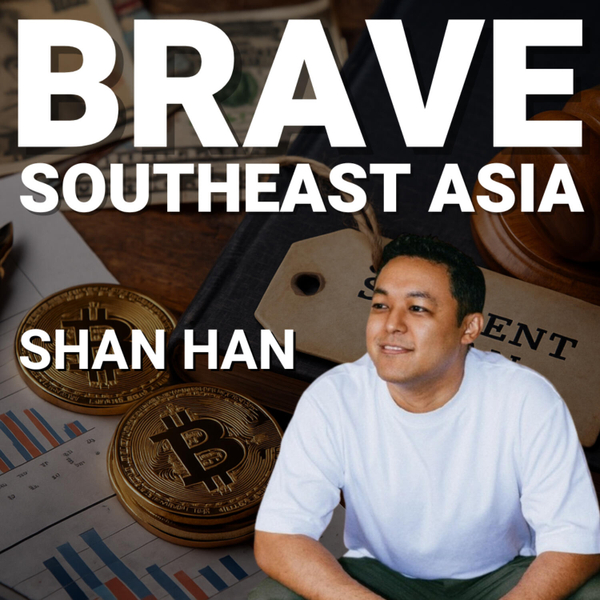
Shan Han: Crypto Lessons, Boom Bust Belief and Funding Students the Web3 Way – E648

Shan Han: Crypto Lessons, Boom Bust Belief and Funding Students the Web3 Way – E648

"Education is expensive, and in emerging markets many students have limited options; the crypto and DeFi markets offer a single global liquidity pool that lets anyone place capital into one source that can be distributed to underserved places like the Philippines for student loan financing, and real loans have already been originated to fund students in the Philippines and Indonesia with plans to continue scaling." - Shan Han, Portfolio Manager at Animoca Brands


"Fundamentally all on-chain capital is seeking yield and we're bringing a high-quality yield that exists in the real world that's hard to access but we're bringing it on chain and making it investible for people; that is one of the key things we're doing here, and importantly we're simplifying access to it because if you think about it an investor in London who wants to invest in student loans in Vietnam faces multiple steps and might have to put money into a fund that goes into another fund that then gets distributed through probably five intermediaries before the capital reaches the borrower, and at each step there is structural inefficiency and additional cost, so that is the simplification piece on chain." - Shan Han, Portfolio Manager at Animoca Brands


"But what's also exciting is that with blockchain technology you can do meaningful things, such as creating alternative credit by using data points that students already have; in Web2 this raised privacy concerns, but with zero-knowledge proof technology you can take that data, create a ZK-proof, and build new alternative credit scoring models for students who would not otherwise have one, bringing ancillary benefits that are driven by capital and supported by the technology." - Shan Han, Portfolio Manager at Animoca Brands

Portfolio Manager at Animoca Brands and former Chief Investment Officer at Node Capital, Shan Han joins Jeremy Au to trace his path from Hong Kong trading to fintech and Web3, discuss how early crypto grew from ideology, and explain why tokenizing assets like student loans can unlock education across Southeast Asia. They explore how customer urgency validates real problems, how global liquidity reshapes emerging markets, and how regulation and permissioned systems will define the future of crypto. Shan also reflects on leaving hedge funds to build companies that solve urgent needs.

06:00 First startup taught real founder lessons: Shan overbuilt the product and underinvested in speaking to customers, which he now sees as his biggest early mistake.

09:00 ICO wave created opportunity and chaos: Node Capital traded markets and backed early tokens as crypto cycles repeated with massive upside and sharp crashes.

10:00 SME lending proved a painkiller need: Borrowers called him for loans before a product even existed, showing that real demand always leads.

14:00 Tokenized student loans expand access: Global liquidity meets local underwriting so students in the Philippines and Indonesia receive financing they previously could not access.

14:55 Benefits emerge for investors, lenders, and borrowers: On-chain capital finds high-quality yield, local lenders scale faster, and students get more affordable financing.

17:15 Blockchain reshapes student loan markets: Unified liquidity, alternative credit models, and on-chain verification make lending systems more efficient and more inclusive.

22:00 Every major asset will become tokenized: Stablecoins lead the way, followed by T Bills and real-world assets as liquidity and tradability improve.

29:00 Courage means leaving comfort for impact: Shan left a hedge fund he loved to build companies because solving real problems mattered more than staying safe.

Jeremy Au (00:01:21)

Hey Shan, I'm so excited to have you on the show. You are innovating at the intersection of DeFi, Crypto, as well as education tech, and I think there's such an interesting story there about the future. But also you've been both a serial founder and so entrepreneurial. So much to dig into. Could you please introduce yourself?

Shan Han (00:01:42)

Sure. First, thanks for having me here. Really honored to be here speaking with you. A bit about my background—we can go into a lot more depth later—but I'm a portfolio manager at Animoca Brands. We are big investors in the Web3 space. My personal background is working a lot in finance and later entrepreneurship, actually starting and running my own companies, mostly in the FinTech sector. Now today at Animoca Brands, what we're doing is we are building what we like to think is the future of education financing. So really merging the intersection of finance, technology, and Web3.

Jeremy Au (00:02:05)

Yeah. Amazing. So let's get all the way to the beginning, right? I'm just curious, what was it like growing up in Hong Kong, and you took your first job in trading in 2008? I'm just really curious about why you decided to go into trading as your first job?

Shan Han (00:02:20)

It was actually completely by accident. When I was in university, I actually ran some bars and restaurants. Wow. Yeah, so I started in entrepreneurship, but more brick-and-mortar F&B. I ran five bars, three restaurants at the peak. That was what I was doing. But one day a regular comes in. He just moved to Hong Kong from London, and we started hanging out socially afterwards as well. One day he says, "Oh, a friend of mine's moving up from London, set up an office in Hong Kong. He's looking for someone young and hungry to join. You should go chat to him." At that point, I had no idea what trading even meant. I decided, "Hey, it seems like a lot of people around me are in this finance thing. They seem to be doing well. Let's go have a chat and find out." So went, had a chat. There's a longer story there, which we can get into later, but ended up actually joining finance that way. So completely by accident.

Jeremy Au (00:03:07)

So what was it like being a trader in Hong Kong in 2008 to 2013? It was the heyday. The heyday of the boom.

Shan Han (00:03:19)

Trading, yeah. No, it was a fun time. I was lucky enough to join just before the GFC. I remember the market falling out, and everything collapsing. Exchanges were limit down every day. I spoke to my boss, "I've just got my license," I said, "Hey, is this normal?". He goes, "Hell no. This is absolutely not normal." Thanks to the massive stimulus that China had, things really took off. So the IPO pipeline went crazy. It was a massive V-shaped recovery in Hong Kong, so the trading market was really hot. This was a lot of kind of the old school trading mentality that was still there, which was, "Yeah, work hard, party hard". We were expected to be at the trading desk at 6:30 in the morning. Prepare for market open, start trading throughout the day. Finish at four, five, depending on which market you're covering. Then go out drinking, going out with clients, going out with brokers, drinking till often 2:00 AM and sleeping for three hours, getting straight back at the desk every morning. And I basically did that for five years.

Jeremy Au (00:04:19)

I know those are the legendary times. And I was in Beijing in 2008, 2009. I was at Singapore University, interning at some education tech companies in the boom years. But yeah, those were the really boom years, because it's like the Summer Olympics 2008, big time. So what was interesting is what did you observe at the time for the trading and the financial liberalization, I would say, of Hong Kong and China at the time?

Shan Han (00:04:47)

I think a lot of it was really a story of liquidity. I think Chinese tech was still very early in its infancy then. People were very entrepreneurial, always have been, but all of a sudden there was a lot of liquidity coming into the market. And you couple that with a lot of the more storied investors from overseas, like your Sequoias of the world? The banks as well. They were all aggressively moving into China because they saw this huge opportunity. So I think that's why from 2008 to really up to 2018, that decade. You had such a massive growth in the market, right? The liquidity was going in. There were huge success stories coming out. The tech giants, modern tech giants in China, really emerged in this decade until just before COVID, when there was that essentially crack down on the tech sector, right? So I think it was a very interesting time. I'd also say the liberalization of the market itself, where you had not just tech, the broader economy, all of these companies were listing in Hong Kong as well, right? They were tapping the foreign capital markets for the longest time. So I would characterize that decade as Chinese companies being investible and accessible to Western capital for the first time. I think now it's the other way, right? So it's capital coming out of China, going into the rest of the region, which I think you see even for example, somewhere like in Singapore now, so many family offices set up from China, and I think that is gonna continue to be the trend going forward.

Jeremy Au (00:06:06)

Yeah, we're definitely gonna go into that later. But I would like to go and visit this there, which is the world trader, and then eventually you went on to build your own businesses. Also get into crypto. Can you talk a little bit more about that career after trading? Yeah.

Shan Han (00:06:20)

Yeah. So I was working at a hedge fund, right? And I really just wanted to build the tools that I wanted for myself. It was really scratching my own niches. Somebody said, "I like the idea, here's a check. Go and do it." So that was my first foray into tech. Made all the classic first time founder mistakes: spent way too long, building the product, not enough, actually getting in front of customers. Very common stories. I had to go through that myself. Especially the region was a lot less mature back then. Yeah, so I think that was definitely a headwind for founders back then. But that did give me a lot of insight and access into tech industry, and that's actually how I first came across Crypto as well. Back in 2014, I was speaking with a few engineers. They used to go to engineering meetups, and they were talking about this Ethereum thing that had gas and smart contracts and programmable money. And I was like, "That's cool. I don't quite get it, but I'm a trader. I do get that there's a market for it and I can trade this." So I used to do Ethereum arbitrage, and that was my foray into crypto.

Jeremy Au (00:07:34)

Yeah, and I think what's interesting is that you were building these tools, you're being entrepreneurial and going into crypto, and I think crypto in those early days was a huge amount of, I don't know, philosophy, economic theory, even I would say, idealism. And I feel like crypto has changed a lot between those days versus where we are today. I'm just curious about, instead of comparing, contrasting, what was it like back then when you were meeting all the folks talking about Ethereum?

Shan Han (00:08:08)

It was definitely a lot more, I'd say, ideological. Yeah, because remember, crypto was born off the back of the GFC, this idea that banks were going under. Of course there's a lot of resentment to traditional financial markets, right? So people wanted something that was immutable, that was decentralized, not controlled—that kind of ethos. Definitely still exists, that kind of anarcho-capitalist model, but I think the industry has come a long way now. There are a lot more actors in this space. Often things like decentralization are traded away in favor of things like performance. Which is the best model for going forward? I don't know, right? But I think the market will ultimately dictate about that.

Jeremy Au (00:08:49)

So what's interesting is that there you are in this crypto wave, and you built two companies in the space. Could you share a little bit more about what you were doing during that time?

Shan Han (00:08:58)

Yeah, so it was two things, right? Both fell under the umbrella of what eventually became Node Capital. A very simple thing we did was actually just running smart beta strategies in the market, because I had a lot of friends who were coming to me saying, "Oh, this Bitcoin thing, you know about it. Can you help me invest?" That's really how it started. But of course there's a whole secondary aspect, which is, that was the ICO boom, if you might remember that. So we had a lot of projects coming our way, and we're making some sort of VC checks into these very early stage ICOs. So yeah, that was a really wild ride. Very fun times. But the market definitely repeats itself in every bull run.

Jeremy Au (00:09:48)

And I think what I just think is that this time you are like effectively a second or third time founder as well. So what were you doing differently as a founder during this time?

Shan Han (00:09:54)

Like I said, I made all the first time founder mistakes. That definitely informed a lot of what I did next after my first FinTech startup. In between the crypto stuff, I ended up doing a Web2 FinTech in SME lending. So this was operating in Hong Kong and Singapore initially. We eventually started funding places like Australia, Malaysia, Philippines as well. Even the way I started the company with my co-founders was completely different. Instead of actually starting with the tech, we started with the customers. It was a lending business. Before we would even decide to do this, we went around to 10 potential borrowers, said, "Would you sign an LOI to say you would use our service?". And I said to my co-founder, "We get 10, we can do it." We got 10. I was still a bit skeptical, and it wasn't until two of those guys who'd signed the LOIs, they started calling us. "Hey, you remember that thing you said you'd do? When I need it, I need it today." And that's when it clicked. I was like, "This is a painkiller problem." Yeah, so that's how I started it. But again, polar opposite to how it was before, where before I was like, "This is my idea of a product that I think the market wants." Instead, I turned it around and went, "What does the market actually want? And I'll build that instead."

Jeremy Au (00:10:57)

I think what's interesting is that you also since then, been now joined Animoca Brands. So could you share a little bit more about that transition as well?

Shan Han (00:11:09)

Yeah, so this was interesting. After seeing DeFi Summer happen, I was busy with my Web2 FinTech, saw a lot of opportunity there, and definitely saw maturity in the space that didn't exist back in 2017, '18. So I decided I wanted to come back into crypto, right? So started asking around, speaking to a few people, eventually had a chat with now the guy I worked closest with at Animoca and said, "Hey, do you know any teams that are looking, right?" And I said, "Come to Animoca." I just thought this is, it makes lots of sense, right? Because what I do now is essentially entrepreneurial, but with the backing and resourcing of a large organization, that kind of market brands.

Jeremy Au (00:11:47)

Yeah. Fantastic. So I think before we go into kind of like the new kind of like financing tool on education tech, I just wanna talk, what has been the difference you think between the early days of, say, 2014 versus today, 2025? How have you seen crypto evolve as an industry approach?

Shan Han (00:12:07)

I think a lot of it comes down to the market, realizing what it's good at and where the bad. So what I mean by that is things like tokenomics and incentive structures have become much clearer. There are much more stable institutions that have survived the test of times, whether it's your centralized exchanges or big organizations like Animoca Brands who are clearly here to stay and are able to make long-term investments. I think all of that leads to more maturity in the market, and we're also finally starting to see real world use cases, and that is something that we're really passionate about because ultimately if the money just stays on chain, it's not gonna change people's lives. It must interact with the real world, and that's what we're pushing.

Jeremy Au (00:12:39)

So that is a perfect segue to what you're currently building right now, which is the intersection of education and decentralized finance. Could you share a little bit more about what you're building?

Shan Han (00:12:54)

Sure. Maybe start with the problem that we see in the market, right? Education is expensive, and especially in emerging markets, it means for a lot of students or would-be students, their options are limited. They can either not afford to go to school or they have to borrow at extremely high rates to pay for their education. The reason for that is the market is structurally inefficient for capital formation in emerging markets—places like Indonesia, Philippines, Argentina, a lot of countries where it's hard for capital formation to happen, and therefore the liquidity is limited and therefore the rates are high.

Now, when I look at the crypto markets, when I look at DeFi, I see a single global liquidity pool. It allows anybody, anywhere in the world, to put capital into a single pool that can then be put and distributed into many different places, especially places that are underserved, like the Philippines in student loan finance. So what we're building is essentially a student loan tokenization platform. So we work with licensed local members in each key market who know the borrower. They can underwrite, they can collect, they have the relationship, but they struggle to raise capital. We provide a source where on-chain investors can put money in. Then that money goes to these local licensed lenders. So that's what we're building. Still very early, but we've done our first pilot. Real loans have been originated and are now funding students in the Philippines and Indonesia, and we hope to continue scaling down.

Jeremy Au (00:14:26)

That's fantastic, and I think it's such a benefit for students. Maybe let's spell it out, like what are the benefits for each of the different stakeholders? So let's talk about it from the lender's perspective, from the people who are putting money into this asset class. Why don't we spell it out? So how would you spell it out? The benefits for each stakeholder group.

Shan Han (00:14:48)

I think from the Web3 perspective, it's really about tokenizing a new asset class. Because fundamentally, all on-chain capital is seeking yield, and we're bringing a high quality yield that exists in the real world that's hard to access. We're bringing it on chain, making it investible for people. That is really one of the key things we're doing here, but importantly, we're also simplifying access to it. Because if you think about it, let's say today you've got an investor in London and they want to invest in student loans in Vietnam. How do they do that? There are multiple steps it takes to do. They might have to put money into a fund that goes into another fund that then gets distributed. Probably five intermediaries by the time that capital reaches the borrower. And as a result of each step, there's structural inefficiency and additional costs. So that's the simplification piece on chain.

For the lenders, it's all about scaling capital access. You speak to any lender—myself, I ran a lending business—it's exactly the same. You can find an infinite number of borrowers, but the more niche you are, the harder it is to raise capital. So having purpose-built sources of capital make it a lot easier for these guys to come back and say, "I've got a million, I need 5 million, I need 10 million," and they can really start scaling that up.

And then finally, for the borrowers themselves, as I mentioned, because there's so many intermediary steps, and because capital formation is so weak in those markets, the limited liquidity that does exist becomes very expensive, and we're now able to actually drive that cost down. So that's really the value chain in the entire ecosystem.

Jeremy Au (00:16:19)

Yeah, I think that's what that shows up, is that for students, they will be able to either get a loan, which they could never have gotten because they were disqualified for some random reason, and if they do get a loan, then they will also be able to get it with lower interest rates or less onerous repayment terms. I think what's interesting is that, I'm curious because it's always been such a struggle because like you said, capital formation or each country has a very specific liquidity pool. There's a night and day difference obviously between America, where the American education market, the loans are pretty much supported by the American government. Backed by the American government. For now. For now. That's true. So I think that in obviously the Ivy League, there's so many scholarships and endowments or financial aid as well. What do you see is the end state of this DeFi and education access asset class?

Shan Han (00:17:15)

My broader answer to that question is I actually think this idea of traditional capital markets and DeFi capital markets are gonna become one and the same. I think best practices will proliferate and hopefully they just become one good capital market. So that means things like 24/7 trading, instant settlement, unified liquidity across trading venues. I think all of that should come to fruition. And I think what that means for an asset market like student loans is that it just becomes more structurally efficient. That's where you're looking at it from the pure financial side. What's also exciting is with blockchain technology, you can do a lot of really interesting things. For example, you can create alternative credit by taking data points that students have, right? There's already a case in Web2 where perhaps a bit aggressive in data privacy issues, but with zero knowledge proof technology, right? You can actually take that data, create a ZK proof, and then create new alternative credit scoring models for these students, which otherwise would not have one. So there's a lot of different ancillary benefits that come that are led by the capital, but supported by the technology.

Jeremy Au (00:18:23)

When we think about this, obviously there's always been some attempts to innovate for student financing. I think the big one was really income share agreements and then as well as all of the coding academies. And I think those have seen that have fallen out of favor recently. Coding academies got, they got disrupted by AI, increased coding, augmented coding. I'm just curious how you think about all of these innovations from your perspective? Yeah.

Shan Han (00:18:47)

I think really these innovations will be around to stay. I would say the loss of interest, I would say in ISAs, is lesser a function of ISAs having systemic issues and more a function of global liquidity. Right. Rates went up, that means capital going into innovative products goes down. I think when that normalizes, we'll see things like ISAs pick up again because these things are needed, and that's something that we're very keen to support as well.

Jeremy Au (00:19:15)

Yeah.

Shan Han (00:19:16)

Again, the technology's only going to mature and improve. A lot of the challenges with ISAs, like how do you actually reconcile people's earnings? Maybe people's earnings become more digital as people do more jobs that get paid digitally. Open banking access supports that. If people get paid on chain, it becomes instantly verifiable, right? Like I fully expect to see ISAs on chain at some point. So all of this I think, will continue to develop.

Jeremy Au (00:19:42)

That's actually really interesting. I think the problem of income share agreements is also the authentication, the contract verification, and then after that there's no sort of legal tussle whether you actually earn this much or not. And then the administrative cost of that is actually so much more higher than people thought it was. Versus a simple debt, which is, "You better pay me, otherwise I'm gonna, I don't know, repossess your food or something like that." So do you see income share agreements coming on chain? How do you see that happening?

Shan Han (00:20:20)

Yeah, to your point, the administrative overhang is very high, but you put that into a smart contract, it becomes very simple. Now, the limiting factor today is just that not enough of that activity happens on chain. So it starts with "Can people get their employment contracts on chain?" "Can people start getting paid on chain, their salary?" And if you can start doing things like this, then it becomes significantly simpler. And as the industry grows, I think that will continue to actually develop and it will become well the norm in the future. I wouldn't be surprised if you see new financing models emerge because of it. I had a great conversation earlier today about, in the past, credit was a social thing. You were beholden to your community because you borrowed from your neighbor. You had to repay 'cause of the social contract. Finance became more institutionalized, that got disintermediated. But with technology, you can bring that back. What happens if you have actual social networks that are built on chain verifiably that allow you to vouch for somebody else and say, "Oh, I know that this person is trustworthy." "I put money behind them, I stake, I support them, and if I'm wrong, I'm happy to get slashed." You can create new collateral models that come out of it. All of this can be supported by good token incentives.

Jeremy Au (00:21:30)

Yeah. I'm curious because there's this big push around tokenization and smart contracts, which are I think, two different features. I would say from my perspective, and I love to actually dig deeper into that, which is what is the virtue of tokenization like, because I think a lot of folks they hear, I think in crypto, I think all of us know what tokenization means. For a lot of lay people, tokenization feels like a very big word. Like what is a token and why do you need to tokenize something, and why are we tokenizing it? So I'm just curious if you, how do you explain that to somebody?

Shan Han (00:21:58)

Yeah, there's a few different things that I think we tackle, and really it's the same as tokenizing student loans. The benefits are primarily around liquidity and commercial. So it is actually being able to tap into new sources of capital. That might not be easily accessible on the traditional markets. So being able to have that is a huge plus. The fact that you can enable secondary liquidity very easily is very valuable. 'Cause it makes the contract itself tradable. So as an investor you are not necessarily locked into a position for a long time. That makes it much easier to invest, right? So more liquidity will flow in as you enable more secondary marketing liquidity. Even if you look at primary issuance, the number of tokens that raise insane money in very short periods is huge. For, and that's because liquidity flows. Ease of projects like Hyperliquid have scaled to $4.5$ billion in liquidity in just two years. That's virtually unheard of on traditional markets. So primary issuance of assets on chain I think will start getting attention because they'll be able to raise money faster and cheaper than they could in traditional markets. And then finally, around all of this, it is the administrative side. Actually taking control of the title on the assets, being able to prove its provenance to say, "Yes, I do actually own this," and make it easy to trade. All of that just supports liquidity coming into the asset, which fundamentally should support the asset prices better.

Jeremy Au (00:23:30)

And you know what interesting is that you've talked about the tokenization of this asset class, and I think that's been interesting because I think we're starting to see all the various asset classes getting tokenized. Obviously real estate has been a big one back in the day, used to be called fractionizing real estate. I think we obviously see this for gold as well. Now we're seeing this for educational loans. So is your vision, you think that every asset class will get tokenized from your perspective?

Shan Han (00:23:57)

Absolutely. There's no reason why it shouldn't, right? Yeah. All of these benefits apply to any asset. The more esoteric the asset, the longer it will take to tokenize. So if we look at the assets that most heavily tokenized, we don't think about it, but it's the USD. Stablecoin issuance has been the key use case, followed by things like T-Bills. They're now actually gaining all the prominence. Money market funds are starting to come on, and I think you go along the risk curve, the more mature the market gets. So eventually we will start hitting things like tokenized stocks. It's already happening. Yeah. So I think it's just a matter of time before everything does actually become tokenized.

Jeremy Au (00:24:38)

I think there's a lot of fear around the crypto industry in a sense that we've gone through several boom and bust cycles. We just had a crypto winter from 2022 to '24, '25. I think we're back. I was just curious because I think people had that question mark in their head that what do you think? How do you think people should approach that question?

Shan Han (00:24:52)

Yeah, so I would say this boom-bust cycle is not gonna go away anytime soon. It's a big part of any early market. You see this in any tech, right? But I actually think it's a necessary part of building something sustainable and big. You liken it, something like the gold rush in the West Coast America. Massive gold rush. Everyone came in. After it burst, you ended up with California. The way I see these massive booms is it attracts lots of attention. A lot of capital comes in. The smartest people I know from my finance days are all in crypto now. Right? So when you put that much capital and brain power together, you're gonna get good things that come out of it, right? But you need that boom cycle to actually attract people in the first place. So is it a painful process? Yes. But is it a healthy one? I actually think it is.

Jeremy Au (00:25:40)

I think so. And I, it's funny because you also mentioned like the great financial crisis, which was also a giant boom-bust cycle, the traditional or conventional finance system as well. What do you think are some of the advice that you give for folks that are entering the crypto industry? Not necessarily from an investment perspective, but from a career perspective?

Shan Han (00:26:07)

I think there's probably a couple of things. The first is understand which part of crypto you wanna get into. You've got the very institutional side, which is very focused around working. In the deeply regulated space. If you wanna work on stablecoins, you wanna work on the legal side of asset tokenization. There's a lot you can do there. There's also the entire crypto markets side of things, which is everything from NFTs to meme coins to DeFi projects. There's a lot of different ways you can go there. I will say though, that the industry is moving incredibly quickly, and the only way you're gonna be able to actually be a part of it is to be in the trenches. That means find a few key opinion leaders who you vibe with, follow them, follow the news. Actually put some money into projects. You'll care about it more. When you have ownership of a token and actually do the hard work, you can't look at it academically from outside and learn about it. You have to be in the trenches to really follow it.

Jeremy Au (00:27:04)

And I think the tricky part for folks is that they get in as a job. There's a lot of fear because of like some of these like boom and bust, even within crypto, right? I think we saw NFT was a huge boom and bust cycle, or virtual land. There's another one. So I think people find it tricky from a career perspective: "Is this legit? Is this a fad? Is this something that's totally speculative because we don't know what's going on?" What lessons can we, should we take away from this? Yeah.

Shan Han (00:27:47)

I think at this point we can probably put to bed the question whether it's gonna be around for the long run, right? The fact that it's already in adoption by governments, there's proper regulation coming out. The fact that banks are using blockchain technology, large institutions are adding digital assets to their treasuries. I think the adoption is here. The institutional adoption from governments, big corporations is here. I don't think people have to worry about it still being around. Yeah. In the future you do have to worry about the boom bust. That is true. Yeah. But to your point, I think that's the same in any industry, right? Yes. It's more aggressive here, but if you can go in with your eyes open, right, and you expect and anticipate it, and you are willing to ride it out, I think there will be benefits for you.

Jeremy Au (00:28:10)

Yeah. How do you think about this aspect about governments increasingly interacting? Obviously there's KYC, there's AML, there's all these kind of like dynamics there, but what do you see that dynamic shaping up to be?

Shan Han (00:28:28)

To the earlier point, I think the ethos that started Web3 and Crypto was very much around permissionless. When you start interacting with the real world in governments, things that need to become permissioned. I see the market bifurcating into two. I think you'll have the permissioned side of things that are well regulated and they'll resemble traditional markets more. And then you'll have the sort of unregulated, permissionless, DeFi world that exists. Over time, I would expect just by nature of the capital available in the real world, the regulated space is going to be larger, probably by orders of magnitude, but that's okay. People can pick and choose where they wanna play it. I think what's been proven is that the average user, not necessarily builder, but the average user, is okay to sacrifice things like privacy, decentralization, in favor of better protections, better UX. So I think that's just the way the market's gonna go.

Jeremy Au (00:29:21)

Yeah. And wrapping things up here, could you share a personal story about a time that you've been brave?

Shan Han (00:29:28)

For me, it was definitely actually leaving finance in the first place. I had a great job at a hedge fund. I loved the job as well. I was one of those guys who hated it. I loved coming in every day dealing with the markets. But yeah, to actually leave that, try and start something new is terrifying, man. Yeah.

Jeremy Au (00:29:52)

I'm glad I did it. And why did you do it? 'Cause you love your job, but you wanted to do something new. What can you zoom into that? Did you wake up in the morning and you're like, "I'm gonna build something new?" How is that?

Shan Han (00:30:04)

I guess I've always had an entrepreneurial track. As I mentioned, I was doing F&B even from the beginning. So that itch has always been there. I often call it an entrepreneurial disease. If you've done this startup, you know what it is. If you're thinking about it, you probably have it. But when you have it, you wanna scratch that itch. Yeah. And to me, that's all it was. I just love solving problems.

Jeremy Au (00:30:30)

Yeah. I'm just curious because when you were solving these problems, was it scary because, did you feel like you shouldn't do it? Or whether people told you not to do it? 'Cause eventually also you were a first time founder, you made mistakes as well. I think people often find that moment tricky to be like, "Maybe I'm ready. Maybe I'm not ready." "Am I self aware? Am I overconfident?" Any advice that people thinking should take?

Shan Han (00:30:54)

At this point, I would say if you're thinking about going to do business, don't think about it. Go do it. You don't actually have to quit your job to validate some early ideas, right? If you think you've got a good idea for a product, don't try and build the product first. Go and speak to your potential users. See if you can get them to commit. If they're willing to commit before you've even got a product, then it's just an idea. Like the guys who are calling me an LOI, then it's a real problem. And sure, maybe they would prefer to see a real product, but then you wanna pinpoint that it's so big you don't even need that product for them to buy in.

Jeremy Au (00:31:18)

Yeah. On that note, thank you so much for sharing. I'd love to summarize the three big takeaways. First of all, thanks so much for sharing about early days as a trader in Hong Kong about the lifestyle, both on the work side, "work hard, play hard", but also I think the fact that you are already entrepreneurial. You have F&B as a far was just such an interesting kind of capture of that mood surge of the 2008 era really. So that was really helpful. Secondly, thanks so much for sharing really about, I think decentralized finance and education about how the decentralization works and the benefits to the various stakeholders from folks in crypto, to the students, to the lenders. And I think really like a masterclass, not only going at the level of what the product is, but also I think the trends, the tokenization, the benefits, and the future of it. So really helpful to hear all of that. And lastly, thanks so much for sharing about your own entrepreneurial experience. I think what it means to be both a founder as well as be entrepreneurial in different organizations. I thought this is fascinating to hear you talk about problem solving, not only from an individual perspective, but from an organizational and also from an industry perspective. And I really love that. Instead of insights you had about crypto, the fact that there will be boom and bust cycles, but that if you are thoughtful about it, that there is a path forward that makes sense and that crypto is here to stay. On that note, thank you so much for sharing.

Shan Han (00:32:48)

Thanks so much for having me. This has been fun.

Hosted by

Related episodes