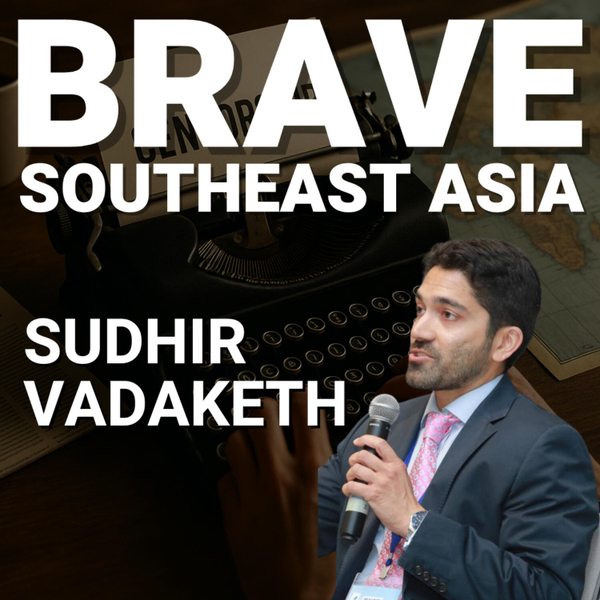
"There's a lot of space in Singapore for honest journalism. I understand why people are fearful of saying certain things because of our history, but Singapore today is not Singapore under Lee Kuan Yew, when information was much more tightly controlled. The government hasn't necessarily been benevolent in opening up space—it’s been forced to do so by digital disruption. We have quite wide latitude to discuss different topics in Singapore today." - Sudhir Vadaketh, Co-founder and Editor-in-Chief of Jom
"What has worked really well is that as a writer and journalist, you naturally learn to form close relationships with your team and with the people you talk about, write about, and interview. You learn to form collaborative relationships with them. Not all journalists do—some have a very predatory relationship with the people they cover. The formal journalism I was trained in, certainly at The Economist Group and other places I worked, instilled in me a very collaborative approach to the people around me." - Sudhir Vadaketh, Co-founder and Editor-in-Chief of Jom
Sudhir Vadaketh, Co-founder and Editor-in-Chief of Jom, returns to BRAVE after four years to share how he built a long-form journalism outlet in Singapore. He and Jeremy Au discuss the journey from solo writer to team manager, the real risks and support systems behind independent media, and how Jom navigates Singapore’s evolving boundaries on speech. They unpack the emotional weight of managing editorial freedom, public fear of backlash, and what bravery looks like in today’s media landscape. Sudhir also explains how Jom could grow across Southeast Asia while staying rooted in local storytelling.
02:00 Sudhir founded Jom to fill a missing niche in literary journalism: After years of contributing to platforms like Mothership and RICE, Sudhir realized that Singapore lacked a long-form, English-language publication focused on literary, thoughtful reporting. He launched Jom with ambitions to serve not just Singapore but a growing English-speaking audience across Southeast Asia.
04:00 Building the team started with salary stability and trust: To attract good people and avoid early burnout, Sudhir promised his co-founders and first employee a two-year minimum runway with modest pay. He prioritized financial stability overgrowth, knowing many media ventures collapse when salaries can’t be sustained.
09:49 Collaborative journalism values shaped Jom’s internal culture: Sudhir brought the collaborative instincts from his journalism background into Jom’s management. Team members collectively weigh in on everything—from editorial language on sensitive topics to pricing event tickets—creating a shared sense of responsibility and editorial rigor.
12:25 The team’s reaction to POFMA exposed leadership blind spots: When Jom received three POFMA correction orders, Sudhir took it in stride, but his teammates—especially younger ones—were rattled. He learned that being a leader also means holding emotional space and directly addressing the team's concerns in moments of pressure.
22:53 Fear of online backlash affects contributors and limits open dialogue: Writers and interviewees are often hesitant to go public, even on non-political pieces, due to fears of doxxing, trolling, or professional retaliation. This culture of fear, fueled by social media and polarized discourse, creates challenges for independent media.
30:38 Jom’s expansion model will prioritize local content through decentralized teams: Sudhir envisions future Jom teams embedded in cities like KL, Bangkok, or Jakarta. Each would produce 80 percent local content and 20 percent regional stories, ensure relevance and avoiding a top-down, Singapore-centric approach to Southeast Asia.
Jeremy Au (01:13)
Hey, Sudhir, good to see you!
Sudhir Vadaketh (01:14)
Great to see you! Thanks for inviting me here again, man. Yeah.
Jeremy Au (01:17)
Yeah,
I mean, you were episode 53, so that was like four years ago. We were online at Zoom, it was audio only, it was the pandemic.
Sudhir Vadaketh (01:24)
I know, I know, I know. It was crazy. I remember kicking myself for not having a better microphone that time. I was just using the inbuilt iMac.
Jeremy Au (01:32)
I mean, I think all of us are all figuring out and had to buy our new laptops and cameras and microphones.
Yeah, you know, we've kept going and amazing. So, you know, I wanted to invite you back because, I think so much has changed over the past four years, right? Obviously, one was the pandemic ended. So obviously, thank God for that on one side. But of course, on yourself, you know, you've set up job media publication, right? So I think that's big piece. So, you've changed both in terms of your writing focus, but also who you are I think as a day-to-day, right?
Two, of course, was that we've seen obviously a lot of big shifts other than the pandemic. We also see the world, macro components, Trump presidency, I think AI, for writing. So, lots of changes. And of course, third is we recently had the Singapore general election. And then obviously, there's a lot of learning from that. And you're a big part of that as well. So, there's so much to cover. And I was just like, it's great opportunity for us to hear from you.
Sudhir Vadaketh (02:29)
Yeah, yeah. No, totally. And I'm excited to be here. Yeah. All these things. Yeah.
Jeremy Au (02:34)
So maybe let's go back in time, right? So obviously, we've covered a lot about your prior history. You studied at UC Berkeley, then Harvard Kennedy School. We covered that in episode 53. So check it out for that episode. But what's interesting is that at that point of time when you did that interview, you were primarily focused on writing in 2020, 2021. At that time, I remember you had an inkling of an idea that you might want to set up, Jom this media publication. love to hear a little bit about
your founding story, like why did you decide to build Jom and how did you come up with that idea?
Sudhir Vadaketh (03:05)
Yeah, I think for many years, people have been sort of whispering in my ear about, you know, why don't you set up something in Singapore? We need an alternative media. And you know, having seen the evolution of independent media in Singapore, you know, I always was sort of banking my hopes on some outfit emerging so you know, mothership came up in the late 2010s or sorry, early 2010s.
And I was actually on an early mothership board as well and I was hoping that mothership could be that solid alternative media outfit and then later RICE came around and RICE, some of my favorite articles that I've written are on both RICE and mothership till today, right? So, I supported them however I could but still, the new narrative came around and there were different players in the scene but I think we still felt that they didn't necessarily fill the gap that we saw which was
good literary long form journalism. And so, the sort of vibrant ecosystem that I perceive that a global city like Singapore should have, I think there's an important role for the mainstream media to play. I think some particular structural and institutional changes are necessary at the mainstream media, I 100% believe in the role of the mainstream media. But I also think that there are these gaps. And I think the big one that we saw was
good literary long form of the kind that you might have in The New Yorker or the kind that you might have in The Atlantic, in the US and not just in Singapore but you know I think our sort of more ambitious plan is to actually expand across Southeast Asia. So, I actually think across Southeast Asia there's potential to have a really solid English language long form literary magazine. Partly because it's not just Singapore
you know, they're increasingly critical masses of, you know, whether it's your second, third generation of Thais or Indonesians who are very proficient in English. And, you know, I think that there's enough of an English language market across the region, whether it's people of first language or second language English, you know, I think to support a magazine like that. So we started in Singapore and but eventually we'd love to move to other cities in Southeast Asia.
Jeremy Au (05:07)
Yeah, amazing. And I think what's interesting is that, you know, you've started this out and, you know, was it scary starting out in, you know, putting together this idea in 2021, 2022?
Sudhir Vadaketh (05:17)
Yeah, it was exciting, but I mean, the scary bits were more around for me, around the people, right? Convincing good people to come on board and then making sure I could also pay their salaries, you know, given how difficult it is to make it in the media world. So, I'm making the point because the fear and the scariness is not around things like regulation or, you know,
government censorship and things like that, which people frequently think about in Singapore. And not to say that that's not an issue. It's an issue that we obviously have to deal with things like POFMA and, you know, "fake news law" and so on and so forth. Those are things we think about, but that wasn't really top of mind. It's still not top of mind. The main thing is, you know, getting good people, keeping good people. I'd never actually been a
proper long-term manager of somebody before, you know when I was at the economist group, I did manage a couple of people in very junior roles, but I'd never before been in a situation like this where I'd have to manage a bunch of people. And actually the whole management part of it still scares me, still stresses me out. But those are the things I was worried about and convincing good people to come on board, making sure I could pay their salaries for at least two years. That's the promise I gave people.
You know, because I'd seen other media outfits after three, four months cannot pay salary really. And then how do you convince good people to join you if you can't provide them that sort of, you know, at least a decent runway to let's try this out. So, part of the initial bargain with my co-founders and our employee number one, who, you know, I'm totally grateful to the three of them for joining me on this journey. And but part of the initial bargain was like,
hey dudes, you know, I'm going to pay you all a minimal salary, for the top tier, was about $4,000 a month, Singapore, right? Which is three of us, me and my two co-founders. I'm going to pay you all a minimal salary and at least for two years. So, let's give this a two-year shot at least and see what happens.
And yeah, I mean, now, we're almost about to celebrate our third birthday and we have enough money in the bank now to go for at least another two years. You know, we will at the very least be a five-year-old organization before we die.
Jeremy Au (07:24)
At least you achieved K1, K2, kindergarten, but didn't make it to primary school.
So I think it's really interesting because you said that you had to change and learn to be a manager, which you hadn't been before. I mean, I find it interesting because you obviously had been a journalist and a writer, but what was that transition like for you?
Sudhir Vadaketh (07:42)
It was just, it was very difficult. You know, I'd always seen myself as a sort of solo artist, creator, writer kind of person. And then to move from that having to build something, you know, the building part of is actually quite fun, right? Putting in place, processes, thinking of ideas for stories, thinking of ideas for format, you know, how much text do we do versus video versus podcasts, you know, all these sorts of questions that,
what's our social media presence going to be like? How do you translate a 5,000-word essay to a Carousell on Instagram and make it as compelling and attract a different kind of audience? These are all things that, along with Charmaine and Wei, and Jean, I had a lot of fun talking about and figuring out, right? I love that whole process. We had a three-month sort of boot camp when we started where we all just went,
basically, went back to the books. We read a bunch of books on the media, and just to sort of go back to school, right? Before we decided, you know, that was a period before we even had the name Jom, even coming up with the name Jom was a whole exercise, which is fun. But the part, that was very difficult for me was just having to think about putting different people together and
finding out complementary skills that would work together and then having to, as the "boss", having to manage that team. And it's still a struggle for me today. I'm constantly sort of swinging between very laissez faire, very laid back, you just do your own thing, which I think is my sort of steady state and that's me as a person. I don't like to be telling others what to do.
But then I swing from that to having to sometimes micromanaging a bit too much when perhaps something goes wrong, right? So, if something goes wrong in the organization and things go wrong every week, both my sort of individual mistakes or others, things go wrong every week. When something goes wrong, then I have this sort of instinctive, sometimes unfortunately reactive way of like, oh no shit, something went wrong because I wasn't paying close enough attention as the boss.
And I should have been paying more attention. And that's why something screwed up over here. When actually it's not always the case, actually, you know, it's just circumstance like everybody's, you know, as the craziness of a startup is, you don't quite know where the sort of lines are between one role and another, especially as organization is growing. You know, you don't know how much time you should be spending on selling versus creating content.
How much time do I spend figuring out our pricing tiers? Jom has three pricing tiers for our membership versus content and editing people. So, there's a lot of stuff that falls in the cracks when you're slowly growing this team for a new media company. And so it's not always the case that something screwed up because I wasn't paying close enough attention to. But there's almost like this reactiveness because I'm quite
inexperience, I'd say I'm quite an inexperienced manager, right? It's my first time really doing it. So I think that's something I've had to get a grip on, like stop swinging from one extreme to the other, which I think in the first year I was doing a lot of. And my co-founders who speak very frankly to me, which I appreciate eternally, they also give me feedback on my management style.
So I think learning how to not swing between those two extremes was very important and something I found very difficult in the first year. I think I've gotten better at that.
Jeremy Au (11:03)
I think it's interesting because there's things that you had to unlearn and things that you had to learn. What do you think carried over well from the journalist and writing side into this new phase? What do you think carried well versus what do you think you had to distinctively unlearn?
Sudhir Vadaketh (11:19)
You mean as a founder/boss? Yeah, exactly. Okay. I think what has worked really well is that I think as a writer and journalist, you naturally learn to form very close relationships with your team and with the "subjects" I don't like to use the word subjects, but you the people you talk about and write about and
interview, you know, you learn to form very collaborative relationships with them. Not all journalists, some journalists have a very predatory relationship with the subjects they cover, And you can look at, you know, the classic example is sort of British tabloids and the way they went after the Princess Diana story and still consider, you know, continue to harangue different members of the establishment, which some people support. But anyway, I think the
formal journalism that I was trained in, certainly at the economist group and other places that I worked in, sort of instilled in me a very collaborative approach to the people around me. And I think that actually has carried on very well and informed the way I do things at Jom and the way we do things at Jom. So we actually have a very collaborative, almost consensual decision-making process in the team. We have a lot of transparency in terms of
our wages internally in terms of the outlook for our wage growth, right? If our company, MRR, monthly recurring revenue hits a particular target, everybody knows their salaries will go up to a particular point. And so I think there's a lot of transparency around things like that, which I think has been very useful internally in terms of building team strength, cohesion,
collaboration within the organization and also frankly improving the quality of our decision making, right? To have this kind of collaborative decision making. And when I say collaborative decision making, I mean on everything from how much should we price our tickets for our next event, right? We talk about it as a team. Two stuff like, should we call what's happening in Gaza a genocide?
Is it time to call it a genocide or do we use some other language? These are all decisions that are taken by multiple people in the team. I think firstly, as a business, it improves the quality of the decisions you make as a business. But internally, it helps in terms of building that team strength and cohesion and belief in the journey that we're on together, as opposed to a decision being made by
at the top and filtering down through everybody. Both decisions that I just mentioned, I can cite other examples. I literally mean everybody in the organization has input on them, right? Even if you're not an expert on Israel and Palestine, even if you're not an expert on the word genocide, everybody can have input on these decisions. And these are things, to get back to your initial question, these approaches and things that I think
come very naturally to journalists and to writers because we've had to do these sorts of things our whole life. And so that gets transposed into a business management setting as well, Jom, to answer your question. So I think that was very useful. And you also asked, if I'm not wrong, what I had to unlearn. I think certainly, you know, there's always the risk that
with the sort of collaborative decision making that you have some sort of stasis or like, you know, the company isn't moving forward because there isn't somebody to make a call on certain things. And I think sometimes I've had to learn to be a better autocrat. And this again gets to that balance, which is analogous to that balance between
swinging from being a micromanager to being a very late hands-off person, which is that there have been moments where I think I should have been more decisive. I shouldn't have just been, you know, hey guys, let's talk about this for another two weeks and figure something out. So I think I've had to unlearn sort of my natural my natural inclination for
democratic discourse and decision making. I've had to unlearn that because at certain points as the boss, I have to make the decision. And I'll give you a good example. The decision is something as simple as when we got our first POFMA orders. We only got one POFMA order, but we three separate sub orders. But we got a POFMA, which for the viewers who don't know is basically Singapore's fake news law.
And it's meant prevention of online falsehoods and manipulation act. I think it came out in 2019 and it was meant to stop the very real scourge of online falsehoods, which I think is a big problem in the world today. It still is across many different forms and outlets and everything else. But obviously in the Singapore context, there's always the suspicion that it's kind of used
against non-mainstream outlets and figures. So anyway, so Jom got a few POFMA orders and the reason that's important is because of this perception, it's come to the stage now where not everybody takes POFMA very seriously. Some people almost consider it a badge of honor. I don't really consider it a badge of honor but I know some people do, you know, means you're doing something right if you've got a POFMA. I don't necessarily agree with that but anyway, you know, I'd rather we didn't have POFMAs.
But anyway, we got three POFMA orders. I somewhat agree with one of them in the sense that I think we could have done a better job with that one. And I regret as an editor not doing a better job. The other two I don't really agree with. But anyway, we got these three POFMA orders and I, getting back to the question, I was very, very relaxed. This gets back to the question of me having to be more decisive as a leader.
I was kind of very relaxed about it. was like, oh, no big deal, POFMA, we'll just deal with it, right? And obviously, there was a Streisand effect. So more people started following Jom because of the POFMA. But what I didn't realize is that a few of my much younger colleagues were actually quite shocked, worried about this POFMA. And then I think one of them, her mom had like,
'hey, why is your publication in the newspaper? What did you all do wrong?' And I had been through several cycles of that, having written something that the authorities may not like and then facing some of that blowback. But I think, at that moment, it was a great learning moment for me because I realized I had to be much more decisive as a leader in terms of calling a team meeting, getting everybody around the table,
listening to their concerns, you know. But that was part of me just, you know, hey guys, everything's chill, don't worry about the POFMA and that was it for me on Slack, right? And I think that's something again that I had to unlearn, that at particular moments like this as a leader and a boss, I do have to be a lot more decisive in like just holding space sometimes for everybody in the organization, which is again not my natural
Instinct, I'm more like, hey, you do your thing, I do my thing and everything will be wonderful.
Jeremy Au (18:04)
And
I think what's interesting is that, I think there is that fear, I think there's two parts right there. There's the financial fear and then there's like the kind of like fear of stepping over some invisible marker and so forth. So, what's it like to manage the teams emotions or decision-making throughout those things? Because you gotta make sure people subscribe and also how do you think about that?
Sudhir Vadaketh (18:29)
So, I'll just deal with the concept of journalism and writing and the media in Singapore and things like the OB markers, out of bound markers and what we can and cannot say. I actually think that there's a lot of space in Singapore for honest journalism. I do, right? I understand why people are worried and fearful of saying particular things because of our history. But you know, Singapore today,
is not Singapore under Lee Kuan Yew, right? When information was much more tightly controlled. And part of the reason for that is obviously because of the internet. I'm not sure, I would say the government has been benevolent in opening up space, but more that it's been forced to open up space because of digital disruption. So I actually think that we have quite wide latitude to discuss different topics in Singapore today.
But I think in terms of the team, what really has strengthened confidence in our ability to do our job is also the supporting network. To give you an example, when we last spoke, I didn't actually know that many pro bono lawyers who would be willing to support. This is just four or five years ago, right? When we last spoke, I didn't know that many Pro Bono Lawyers would be willing to support an outfit like Jom. Today,
we have incredible pro bono lawyers. A couple of them represented us in our POFMA challenge at the High Court, but there are others also who work for us behind the scenes. And this is the sort of support network that Jeremy would not have existed five, seven years ago, lawyers willing to help out independent media outfits. But that gives a lot of confidence to our team because when I, and I'm still the chief political analyst at Jom.
So we have a couple of others, but when I write about the Lee family or when I write about the PAP or the recent piece that a lot of people got worried about for me was I wrote a profile of Shanmugam, he used to be home and law affairs minister, now he's just home minister. And, you know, probably one of the most fearsome people in Singapore. So I wrote a profile of him. People got worried on my behalf, but obviously, you know, nothing happened.
Whenever I write something like that now, the team has confidence because we've got lawyers who look at it as well. It's not the case, again, like I said, five years ago, in independent journalism. And so there's this supporting cast of people that infuses the team with collective strength, collective confidence for whatever topic we want to talk about. And it's not just the lawyers, it's
everybody in the team as well, keeping an eye out for each other. It's putting in place extremely good fact-checking processes, which our employee number one, Jean, she put in place for us. And I think it's all these things coming together to give us collective confidence in what we're saying. I think in Singapore today, political analysis is not really necessarily
the trickiest or most treacherous area. I think sometimes business corporate investigative firstly, that there's a lot more that should be done in that space. You know, that there's almost a surfeit of political analysis content. Now, if you look at all the podcasts and everything during this last GE. But the real gap, if you ask me, is in business and financial investigative journalism. And I think sometimes that area is a bit trickier and more treacherous. The other whole area that's also tricky and quite treacherous
is you know sort of "culture issues", you know anything that might somehow get embroiled in the larger culture wars or what we might consider woke and anti-woke sort of discourse right whether it's on minority rights, transgender rights, you know, all these sorts of issues are quite delicate for journalists and people in media to talk about today and so
sometimes, you know, the obvious political OB markers are the ones we think about but I think they're also this whole realm of culturally sensitive issues, debt penalty, drugs, right? How do we have honest conversations about these things? And I think that's also areas where the setup that Jom has today with an ideologically diverse team. It's a point I made to Jeremy before, but I'll say it again here. I'm very happy that we have got an ideologically diverse team. We've got a couple of,
sort of PAP supporters in our team, you know, even though a lot of us are quite left leaning, not all of us are. And I think that helps build the ideological resilience, if you will, of the whole team. And that helps us approach all these topics with care and empathy and concern and perspective.
Jeremy Au (22:57)
And I think what's interesting is that, we're actually talking about the limits of speech in the context of today's world, right? And like you said, it's not just OB markers, but also like the online internet, you know, it's just like scary, right? So everybody's like, I remember that age, like what?
30 years ago, 20 years ago, when people wrote everything on the internet. I remember like they'll write the blogs on the internet, on WordPress or Tumblr, they'll just be very honest about whatever they feel like. And then now everyone's like, if you write anything on the internet, you can get downvoted or cancelled or doxxed. And then also add in the fact that there's, I think a lot of AI bots today that are increasingly
pretending to be humans and making comments in support of this or that. So I think there's a little bit of fear as well of putting your head above the parapet and saying anything. And I feel like there's something like this concept, like the overturned window, right? Like there's this band of acceptable speech that society accepts. But
Sudhir Vadaketh (23:57)
Yeah.
Jeremy Au (24:00)
everything you want to say here or there or left outside it kind of gets hairy, right? So, I'm just kind of curious how you think about that.
Sudhir Vadaketh (24:06)
Firstly, I'll get to the overton window at the end and I'll talk about it briefly in terms of death penalty drugs and transgender rights, which Jom has talked about. But your earlier point, just very quickly, absolutely there are a lot of people very afraid of getting cancelled, getting doxxed because of the nature of the internet today. It's very unfortunate.
And it's not just AI bots, I mean they're huge troll armies, even in Singapore. You know, the very unsavoury end of the PAP, what we call the PAP IB, Internet Brigade. You know, I think there are quite a lot of trolls there that go after a lot of people in the online space. And it's not just a PAP thing, you know, I'm sure there are...
opposition trolls as well who go after PAP supporters. So you know, I think it happens both ways. Given my position, I'm exposed more to the PAP trolls. So I think, and I'll give you a couple of examples which highlight this point, somebody who had appeared in Jom's pages, we had profiled this person.
This person made a very innocuous comment about a political leader in Singapore. And it was a very supportive comment of this political leader. So he was supporting this political leader. And I said, hey dude, why don't you put this as a letter on Jom's letters pages? And this person who's a very experienced, accomplished professional in their own right,
this person was very afraid that if they put their view as a letter on Jom's page, they might get attacked by some people who didn't like this leader they were supporting. And they told me, oh no, is the page going to be on social media? Is it going to be on this platform? Is it going to be on that platform? I don't want to get attacked here, I don't want to get attacked there. And finally they agreed because I said, no, no, it's just going to be on our website. No comments on our website. We haven't enabled
comments yet on our website which is another thing people are worried about you know I would love to enable comments on all our articles right like you have at the bottom of a New York Times article or Financial Times article. But we haven't yet and one of the reasons we haven't yet is also because some of the writers who write for Jom are a little bit concerned you know if we suddenly have like 50 trolls like whacking my article or something like that and how do we content moderate and so on and so forth.
And one more example, recently, there was somebody who wrote for Jom, let's just say in the last six months, who wrote a wonderful piece about family life, which in my view is sort of, you know, there's nothing at all wrong in the piece, nothing at all that somebody should be worried about in the piece. But this person was also worried that, you know, somehow somebody will,
in their industry will find something that they don't like about it and attack them in their professional life. So there are many instances that I have to deal with on a week, month-to-month if not week to week basis of trying to cajole people to be a bit braver about voicing an opinion on something. And it's because of this somewhat toxic environment that we've somehow developed today about, you know,
the unsavoryness of social media. I would say that that's the main reason.
Jeremy Au (27:19)
You know, I think what's interesting is that, you've made this set of like decisions to navigate all of this. And you mentioned that you want to talk about the overton window. ⁓ So, how do you think about the overton window? Not necessarily in the sense of politics, but in the sense of like a broader sense of, what people can agree on versus what people disagree with. I think that's one way of looking at it. But also, I think to some extent, society is changing, right? And things that were
Sudhir Vadaketh (27:29)
Yeah.
Jeremy Au (27:44)
impossible to say five years ago become possible to say I mean the classic example would be like the world is round versus the world's flat you know at some point saying the world was round was not acceptable and now it is acceptable, but I'm just kind of curious about how you think about.
Sudhir Vadaketh (27:57)
Yeah, I mean there have been many shifts if you ask me in terms of journalism in Singapore, in terms of shifting the overturned window on what's acceptable discourse or not. The classic example also for me is, I think today most people would say it's fairly acceptable to fairly criticize the Lee family if you wanted to.
That was not the case 20 years ago in Singapore. People would be very worried. Both the criticiser and the reader of the criticism would be like, how dare you say anything negative about Lee Kuan Yew or Lee Hsien Loong or Bo Ching or whatever. But I think that shifted, you know, the whole Oxley Road saga of the past decade probably helped shift that particular window, right? You know, because suddenly the family's
troubles became sort of public gossip and information, not always in a nice way. But I think about it at Jom, all of us at Jom think about it, and I'll talk about a few issues that we approach a bit more delicately because I think as journalists, we approach different issues with a different tone and rigor and language sometimes,
depending on the language we think people already have or maybe don't have. Today, if we were to write about an issue around climate change or the environment, I think we would use a very open, normal, direct tone and conversation because that's acceptable discourse, right? But if we wanted to talk about drugs and the death penalty, or if we wanted to talk about transgender rights, I think there's a different
couching, framing, there's a different approach we need, partly because society doesn't yet have the emotional toolkit, doesn't yet have the linguistic toolkit to understand and discuss these issues openly. It's still seen as fringe issues that these small activist groups on maybe on either side want to talk about, either you're anti or pro for the issue. It's not seen as something that's percolated yet into
the broader public dialogue. And so when Jom comes and sort of wants to talk about an issue and the best example, I think one of the best "products" we've put out in the three years we've been around, we're celebrating our third birthday in about two months time. One of the best products we've put out is a video on a transgender person's transitioning journey, Juliana.
Juliana went to Bangkok, had a surgery there and Jom made a video about the entire journey. And what I love is that we also had such great interviews with Juliana's family members, right? Because somebody who faces gender dysphoria, it's obviously a huge thing for the individual, but it's also
huge thing for the people around that individual. And I think we ended up creating, you know, and transgender rights, you know, is such a contentious issue around the world today. And I hope people, if they see this video, they also go on and watch our video on Juliana, because I think what Jom produced was such a caring, empathetic
transparent, open sort of video in terms of discussing all the numerous issues that an individual and the people around them might face during such a moment. As opposed to something, you know, very sort of righteous or volatile or, you know, which is not the role of Jom. I admire activist groups that want to
pursue that particular agenda in that form, I think activist groups are very important in society but that's not the role of a publication like Jom. The role of a publication like Jom, I think, is to provide space for people to have a real genuine conversation about a somewhat contentious issue. So, that's how we would approach an issue that maybe is on a different part of the overton window.
Jeremy Au (31:51)
And I think what's interesting is that, you've obviously been quite intentional and now you're approaching this, third birthday and you mentioned that you suddenly look at the future for Jom, right? So, one thing you mentioned was like, for example, expanding to more countries or look at South East Asia. I'm just kind of curious, would you see it more as one publication for the whole region or would you look at as, you know, for example, three publications
for three countries, for example.
Sudhir Vadaketh (32:20)
Yeah, I
really like this question because it's something I've pontificated on a lot. So let's take the classical example, which is The New Yorker, which is a, you know, a hundred year old magazine. I think they just celebrated their hundredth year. The Economist is 170 years. They have a weekly print edition. They both have a weekly print edition and it's
more or less one standard edition. I think the Economist makes slight tweaks to the cover and other things depending on the region, but it's more or less the same edition that goes out across the world. I think given where we are today in terms of the media, not just in terms of print and the decline of print and the decline of print advertising as a model, but also just in terms of the saturation of the market.
So, let's say Jom tomorrow suddenly magically was operating in five cities around Southeast Asia right. Let's say KL, Penang, Jakarta, Bangkok, Manila maybe. The model that I see functioning actually is that you have very small localized teams, right? I think one of the great mistakes of
traditional media is having a sort of nerve center that becomes an ivory tower that conducts operations for everybody, So, Jom would never want to be in a situation where all decisions are made in Singapore for the entire region, right? So, I think sort of this distributed decision-making, distributed localized teams is the way to go. So if we move to KL, I would go to KL and completely hire a completely separate
Malaysian team there, you know, give them enough equity for their own business and interests and have that sort of a model almost more like a franchise model. But what would happen in terms of content, if you ask me, is that we would not have a single publication for the whole region. We would have extremely localized content making up about 80 percent of the publication and regional content maybe making up 20 percent, depending on which city you're in.
Jeremy Au (34:12)
Yeah.
Sudhir Vadaketh (34:13)
And I think that as opposed to the current New Yorker model, which is one single publication that goes everywhere, I think the future of media and digital technology allows you to do this in a much more efficient way would be 80 % local and 20 % regional, which I think, and this is all much more of an art than a science actually. I mean, we can use data and metrics to look at these things, but I actually think more of an art than a science. That's my sense of what the
"Southeast Asian English-speaking elite" probably once. Because there's a particular... and a lot of them sort of come through Singapore. Singapore being this bit of a global city, the same way maybe New York is for that part of the world. A lot of the quote unquote "Southeast Asian English-speaking elite" would have sometimes one foot in Singapore, the kids that go into school here or whatever.
I think there's a lot of similarities in that group, in that segment, but I think ultimately they wouldn't want 100% regional content. You you do want very localized content if you're living in Bangkok, so you understand the art scene in Bangkok, the cultural scene in Bangkok, the local politics in Bangkok, you know, as opposed to necessarily wanting to find out about all those things from the whole region.
Sorry, long answer but I suspect it's an 80-20 model as Jom expands around the region in terms of the content and the offering.
Jeremy Au (35:30)
Yeah, I think that makes a lot of sense as well. And I'm just kind of curious because you know, you shared a lot about how I think there's an evolution of Jom, the evolution of you as a business manager. I'm just kind of curious about, has there been an evolution yourself as well over the past four years? I notice now that you're wearing an STFU, a unicorn, I need to be on a podcast, you know.
Sudhir Vadaketh (35:45)
Jom wants to be a unicorn. No, just kidding. Just kidding. I was being facetious with the last comment because I do like the fact that the unicorn is connected to the startup world and with the valuation. But I think one thing I have appreciated from everybody at Jom is that we have a very long term outlook. You know, this is a decade long project. I don't expect that we will become a unicorn.
And nowhere near that anyway, but it's fun to have this T-shirt and it has become sort of a uniform for me at Jom and I don't know if people can see but it's the STFU and it was actually on a trip back to Berkeley and you know Jeremy and I, our alma mater and there was this dude selling T-shirts at the ferry terminal market in San Francisco and I just fell in love with his T-shirts and I love the word, the phrase STFU.
You know, as the linguist in me loves the word, right, loves the phrase because, you know, it's like you can use it in a more aggressive way, like, you know, like shut the fuck up, right? Like, what are you talking about? You know, but you can also use it in a gentle way, like, hey, Jeremy, are you sure? Shut the fuck up. That didn't really happen, man. You know, so I love the adaptability and fungibility of the phrase STFU. And also as a journalist and editor,
it's a little bit of like bravado like, let us do our work, kind of thing. And it's also kind of funny because so I was wearing this, I visited my parents once and I was wearing this and then my dad, my dad saw it and then my mom who's a bit more comfortable and familiar with my use of profanities
already knows, like MOFO and STFU. My mom is familiar with all these little phrases, right? But my dad is totally not. My dad, when he hears me say, even when he hears me say shit, my dad freaks out a bit, right? So my dad was looking at his t-shirt and then I was like, Papa, do you know what this means? Then he's like, he looked at it, then he's like, STFU, right?
He thought ST as in straight stripes. He thought that ST F you. So he thought I had chosen as a Jom uniform. That was telling the straight stripes to fuck off. I was like no no no no no. When I set it out in front of him and then I was like Papa it just means shut the fuck up. Then he was like you know.
But yeah, it has become a bit of a uniform, which is fun. I use it in my Jom videos. Yeah, sorry, your earlier question was what else has changed?
Jeremy Au (38:14)
I'm just kind of curious...
oxymoron feeling or paradox kind of dynamic.
Sudhir Vadaketh (38:22)
It's become a little bit of my mask, my armour, my Jom. You know, I'm assuming this identity that I'm that thrills part of me because I love being a journalist, but also gives me a lot of anxiety and fear because I, you know, I am still
feeling my way around being a manager. I think this is a little bit of armor for me to put on this t-shirt and appear for Jom. So I've started wearing this for conferences and things like that when I represent Jom.
Jeremy Au (38:51)
And I love to share, like, you could you share, you know, some moments of bravery in that you've experienced at Jom over past four years?
Sudhir Vadaketh (38:59)
Yeah, so I know this is a fairly common question on your podcast. The one thing I will say is that I don't think me personally, I'm very brave. You know, because I have a lot of privilege, both financial because of my parents and my upbringing, you know, but also
educational, the opportunities I got which we've talked about, going to Berkeley and Harvard and then joining the economist group, out of college and my amazing mentors there, you know, so I got many forms of privilege, I think along the way and I don't feel like doing something at Jom is like, I don't see it as courageous or brave necessarily, even when I'm writing, so the way I do want to answer that question is
there have been so many instances of individual bravery at Jom, not necessarily from me, but from people around me, which I really want to salute. I think both our youngest employees, the first was our employee number one, Jean, and then the second was person who took over Jean after Jean left after three years. Somebody took over her, Saki. So I think Jean and Saki, as coming fresh out of school,
they both graduated from NTU. They probably had, you know, numerous opportunities of what to do next in life. You know, I think choosing to join something like Jom and not just in Singapore, you know, choosing that people talk about a media apocalypse all over the world, media outfits are dying by the dozen every week. So for a young grad who has numerous options to choose to join the media
in today's world. I think that's a huge leap of faith and they're both incredible, right? And I'm so happy that they are part of our team. And the other person, you know, in a very different way who I'd say has shown bravery and courage in joining Jom is Abhishek, our head of content, who's a new citizen, right? So same thing, he moved to Singapore from India, I think 20 odd years ago.
He went to NUS, you know, and I think last year or two years ago, got his red passport, right? So he and his wife got their red passport. They've now adopted a wonderful young kid. So three of them, family unit. And again, you know, I think this is that little bit of fear that exists in Singapore when it comes to independent media. I think when he was thinking about joining Jom,
there were many voices in his immediate circles who were like, are you sure you want to do this? Why don't you join a of quote unquote "safer organization", whether it's the Straits Times or whatever it might be. And the joke I tell him is that, because he got his red passport from Josephine Teo, who was the head of MDDI, which is the ministry that sort of regulates the media sector.
So I joked with him. I said, Josephine Teo gave you your red passport and you thanked her the week after by joining Jom. So I think there's a little bit of courage and bravery from those people. Sorry, I've gone on for a while, but there's another group that I'd really like to talk about, which is the bravery and courage of some of the writers and interviewees who've appeared on Jom's pages.
And if I could just mention to I've already mentioned Juliana, who's a huge show of courage to the transgender person to put themselves out there and appear on Jom's video. But the other people I'd like to talk about is somebody called Cheri Tan. So Cheri wrote a piece, an essay on Jom, on her experiences with sexual assault and even rape.
And, you know, the piece was around consent, right? The whole concept of consent and the importance of the concept of consent. But in articulating consent and what consent actually means, actually revealed, fairly intimate details of her own experiences with sexual assault. I was amazed. We, you know, the whole team, again, there's our collaborative approach. think everybody in the team
helped and sort of shepherded this piece to completion. And that for me is such an act of courage and bravery to put yourself out there because of the interests of future potential victims, you know, other women, young girls, you know, for the sake of improving their lives. You put yourself out there like that. Very different context. I'll mention one last person.
One of our more popular pieces last year was a profile I wrote of Harpreet Singh, who's a WP politician. He lost in the recent GE, but there was a lot of hope around his candidacy. And Harpreet, last year, over probably 10 to 15 hours of interviews, which I conducted along with Jean, he was really, really struggling with how much to put himself out there.
What sorts of things to talk about, how much to talk about my children, his four children, how much to leave them out of the spotlight, how much to talk about my attitude towards the death penalty or my attitude towards Israel, Palestine, demonstrations, or every single thing. And I'm sure you'd appreciate Jeremy and your listeners too. In today's Singapore, any politician from any party
who puts themselves out there, you're really taking a risk. You're putting yourself in the public eye. And I'm making the point in Singapore because you could say this exists, this sort of camera and spotlight in your face is par for the cause for politics. And it exists in the UK and it exists in the US for sure. But it's actually not historically been the case in Singapore. Only in Singapore for many, many decades
politicians could live very private lives away from the media glare. In the last 10 to 15 years against social media, it's completely changed. And I think people are still getting used to that element of, I'm suddenly now on display for the whole world. And walking that journey as a writer and Harpreet being my interviewee, walking that journey with him about, you know.
And I'll be encouraging him at some point, you know he'll say something and then he'll want to pull it back and I'll be like, no, no, no, dude, I think that's a good thing for you to say, you know, you should put yourself out there at that point. And these were the sorts of conversations we were having. I think that not just Harpreet, I was exposed to Harpreet, so I saw him, but I would say any politician, PAP, opposition, whoever, any politician who puts themselves out there, you know,
it's a tremendous act of courage and bravery as well. And so I'm grateful to the politicians like Harpreet who've demonstrated this courage on Jom.
Jeremy Au (45:14)
Yeah.
No, I really appreciate you sharing that and I agree with you that I think the politicians life is not easy. I mean, the moment you stand up for politics, I think 30% of people immediately dislike you. You can't go for your jog in the morning. You know, your life is stuck to being at home or being very private places. You can't go to shopping mall with your kids. I mean, it's just a rough life, I think, for many politicians.
Sudhir Vadaketh (45:24)
Yeah, yeah,
What?
Yeah, yeah, yeah. That's why think they all are a bit narcissistic in order to put themselves out there. You must have a little bit of it. You must be okay with it. ⁓
Jeremy Au (45:45)
Self-selection ⁓
As not everybody
knows, it's a big price to pay for sure. On that note, I'd love to summarize the three big takeaways. I think first of all, thanks so much for sharing about what was the founding story for Jom and what were really the scary parts and the tough parts ranging from the financial part to rallying people who believe in you, to also managing your own sense of self for that transition. Secondly, thanks so much for sharing about
your own professional journey in terms of evolution, how you've changed as a person over past four years in terms of being a manager, both of the things that you feel like you do well and brought over versus things that you're slowly learning and changing and improving. And it was also fun to hear a little bit about your personal evolution as well in terms of wearing a new shirt with the unicorn and the phrase on top. And lastly, thanks for sharing, I think about what people are
you know, questioning the hits, right? Like what is the impact of AI on news and in your sense, for example, going more local, the opportunities obviously just to exist. I thought it was interesting. Also talking about some of the, dynamics for so many people who are thinking about, you know, celebrity life versus politician life versus, you know, kind of exposés versus private life versus public comments versus the overton window. I think there's a lot of people are anxious about
in this new age of media and transparency and publicity. On that note, thank you so much for sharing.
Sudhir Vadaketh (47:15)
No, no, no. Thanks, Jeremy. So good to be here and chat with you.