Skip to content
Leaked Power Calls, Cannabis Crackdown & Why Thailand’s Startup Scene Is Quietly Rebooting with Wing Vasiksiri– E597

Leaked Power Calls, Cannabis Crackdown & Why Thailand’s Startup Scene Is Quietly Rebooting with Wing Vasiksiri– E597

"Paetongtarn had a call with the Cambodian president. There was a border clash, which I think ended up killing one Cambodian soldier. But part of this audio clip was leaked to the press, and in it, she referred to the president as 'uncle.' I think they have close family ties. The Shinawatra family and the Cambodian Senate president's family have been close—friends and political allies for a long time. And then, in the leaked audio, she also ended up criticizing the Thai military commander, kind of referring to them as the other side—her own Thai military. So after this phone call was leaked, there was a lot of backlash, a lot of people were not happy. But I think the context here is important too: people had not been super happy with her as Prime Minister for a while." - Wing Vasiksiri, Investor and Ecosystem Builder


"It's the same story that you cycle out many times, right? It's the same power play dynamic with the Shinawatra family. They continue to return to power over and over again, often with very high electoral support, but sometimes maybe they overestimate the lines in which they're able to play. Even a phone call with Cambodia that some people might view as just a friendly call between two people with a long family relationship—most people saw it as a betrayal of Thailand and maybe of the sovereignty of Thailand relative to Cambodia." - Wing Vasiksiri, Investor and Ecosystem Builder


"Democratic instability has been very much a recurring issue and theme across Thai politics, right? I think the biggest thing to keep in mind here is that this is just the latest escalation in a very long-running conflict—it’s been happening for, what, almost 20, 20-plus years. And even though the government was elected democratically, if the people aren't happy, you see protests, and they can still be removed by the courts. I think it shows that the Constitutional Court is still one of the most powerful players in Thai politics. But the ripple effects—from tourism, overall morale in the country, investor sentiment, investor confidence—it’s going to be, yeah, we’re going to continue feeling this, right?" - Wing Vasiksiri, Investor and Ecosystem Builder

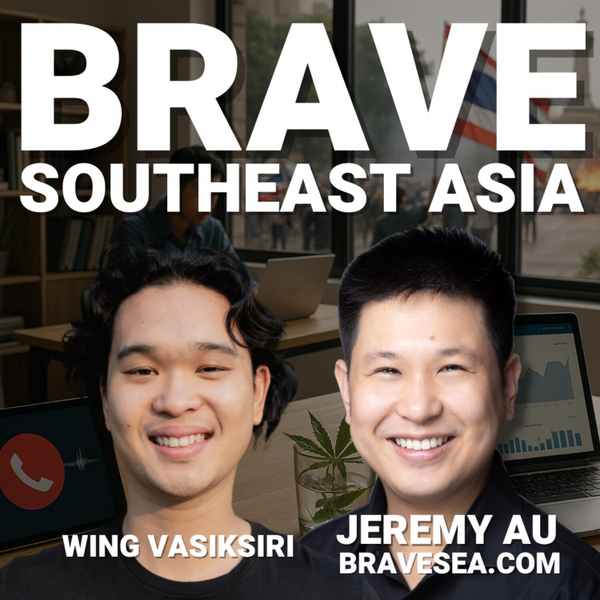
Wing Vasiksiri, investor and ecosystem builder, returns to unpack the recent political upheaval in Thailand, the shifting startup landscape, and how these dynamics intersect. He and Jeremy Au explore the Prime Minister’s suspension, the ripple effects of leaked diplomacy, and what these events signal for foreign investment and local sentiment. They also discuss the country's cannabis policy reversal, new crypto tax breaks, and the comeback of early-stage incubation. Wing introduces “Project Thailand,” a new public resource and investor-backed report aiming to support Thai founders by mapping out the entire ecosystem. Their discussion offers a real-time pulse check on Thailand's path toward stability, growth, and tech-driven innovation.

00:22 PM Paetongtarn Shinawatra suspended after leaked audio call with Cambodia’s president: The clip revealed her use of informal language and criticism of Thailand’s military, which sparked a political backlash. Her comments raised concerns over national loyalty, leading to her suspension and a cabinet reshuffle that further destabilized the coalition government.

09:45 Seven Thai PMs in ten years erode investor confidence and stall economic reform: The pattern of court removals, protests, and reshuffled coalitions makes it harder for Thailand to project long-term policy stability. Investors hesitate to back sectors like infrastructure and data centers, where long planning cycles are incompatible with unpredictable governance.

15:10 Thailand cuts capital gains and crypto taxes to zero from 2025 to 2030: In contrast to Singapore’s stricter stance, this move signals a bid to attract crypto entrepreneurs and capital inflows. Wing suggests the tax break may position Thailand as a regional hub for blockchain innovation, while Singapore’s ban on token sales drives founders elsewhere.

19:01 Recreational cannabis re-criminalized despite 18,000 dispensaries nationwide: The sudden policy reversal now requires medical prescriptions for purchase and forces dispensaries to register under stricter controls. Wing explains how this ties to shifting political coalitions—particularly the exit of pro-cannabis Bhumjaithai—and hints that further policy flip-flops could follow.

24:07 Wing launches Project Thailand and updates startup report with MVP: The open-access Notion resource maps investors, accelerators, universities, and service providers to help Thai founders navigate the ecosystem. The new report shifts from data-heavy charts to a stakeholder-based framework, offering specific ideas for universities, corporates, and government bodies to strengthen startup formation.

Jeremy Au (01:08)

Hey Wing, good to see you.

Wing (01:09)

Hey Jeremy, good to see you. Always glad to be back on here.

Jeremy Au (01:12)

Yeah, so lots of exciting news in Thailand. mean, a lot political, also in startup land. So I think maybe let's go straight to it, which is, you know, the prime minister has been suspended. So she is a Shinawatra and she's been around for about a year, I believe. So what's going on there?

Wing (01:30)

Yeah, I think every time we catch up, there's always a flurry of news happening coming out of Thailand. It's funny we record this kind of just in time. I think it's kind of hot off the press here. yeah, I mean, think the big context kind of just factually what happened was a couple of weeks ago, there was a phone call that the Prime Minister, Paetongtarn she had with the Cambodian president.

There was a border clash, which I think ended up killing one Cambodian soldier. But part of this audio clip was leaked to the press and in it, she referred to the president as uncle. I think that they have close family ties. The Shinawatra family and Cambodian Senate president's family have been friends and allies, political allies for a long time. And then in the leaked audio, she also ended up

criticizing the Thai military commander, like kind of calling them as like the other side, right? Kind of the own Thai military. So after this phone call was leaked, a lot of backlash, a lot of people not happy, but I think the context here is important too, that people had been not super happy with her as a prime minister for a while. I think Thailand recently revised its economic forecast, GDP is supposed to be cut from

something like 2.7 % to 1.8 % GDP growth. So there have been kind of a lot of criticisms and it was almost like this leaked audio was kind of the boiling point of everything coming together. So what ended up happening was that there was a petition by some senators that said she breached some of the political standards and wasn't acting in national interest. And just three days ago, I think,

on July 1st, or on the 4th, there was a ruling that's basically suspended her. So she's no longer the acting prime minister, the deputy PM is in charge now. And she's, suspended as a PM, but she just still has a cabinet position. So she was actually sworn in as the culture minister. it looks more like a.

reshuffling of the cabinet more than kind of a complete overhaul of the party. But yeah, there's been a lot of secondary effects from this as well, following that suspension, another prominent party, Thai political party, Bhumjaithai withdrew from the ruling coalition, causing more instability. And there was a very large protest that just happened a couple of days ago, I think.

tens of thousands of people gathered at a national monument kind of expressing their disapproval with kind of the ruling political class. And yeah, mean, the saga kind of continues, right? I think this is another saga for the Shinawatra family who have been kind of struggling to walk the power lines for many, many different regimes. And yeah, interesting times for sure.

Jeremy Au (04:14)

Yeah, so I think, you know, there's an interesting cause and effect and, know, in terms of the macro, right? So one, obviously, you said is domestically, there's pressure. Now, obviously, domestically, there's always been a conflict between the royalists, the military, the Shinawatra, and obviously the middle class in Thailand. I think there's different factions that clearly at play there. But I think let's go into the Cambodia side, because I think that's an interesting angle, because

It wasn't until recently, and you also reminded me about this, is that Cambodia and the Thaksin family did have strong relationships, right? So, you know, when Thaksin was exiled, you know, he was an economic advisor to Cambodia. Thaksin's daughter had a Cambodian passport to leave Thailand, right, during the political turmoil, which who is

the former prime minister's older sister. So, you know, It feels like they didn't they already have that? Why would Cambodia or Huntsman want to leak this audio? I mean, what's going on here?

Wing (05:14)

Yeah, I think they've always had tight relationships. The Texans family and Hun Sen's family have been always super close. It's not clear, I think, right now who leaked the audio or how kind of the press and the general public got their hands in front of that. I think kind of to your point, right, it's there are a lot of echoes of what's happened historically in Thailand between the Shinawatra family and kind of the military and

the other political parties, right? In 2006, Thaksin Shinawatra was ousted in a coup. 2014, his sister, Yingluck Shinawatra was the PM at that time, removed by court ruling as well. And now his daughter is kind of suspended by the courts for an ethics violation. It's super unclear what the Cambodian 40 chess move here is, right? think the board of disputes obviously is not going great.

Thailand's had always had somewhat of a friendly relationship with Cambodia, even though they share a border. Yeah, I think there's a lot happening underneath the rulings here. It might be tied to some of the new casino initiatives in Thailand. And then there's a lot of news around the marijuana stuff, which we can get into as well. But I think it's just...

It's the same story that you cycle out many times, right? It's the same power play dynamic that you want family. They continue to return to power, over and over again. a lot of times of very high electoral support, but sometimes maybe overestimate the lines in which they're able to play in, right?

even a phone call with Cambodia that, you know, some people can look at it like, was just like a friendly call between two people who obviously have like a long family relationship. But to most people, it was seen as like a betrayal of Thailand and maybe kind of the sovereignty of Thailand relative to Cambodia, right? I mean, the criticism of Thai military is obviously something that people are very clearly upset about. things like informal

language calling Hun Sen uncle. think, you know, if times were better and the economy and maybe the government were doing more favorable things that people were happy with, then it probably wouldn't have been as big of deal.

Jeremy Au (07:23)

Yeah, I think this is a tricky situation because I think that my guess is that a Cambodia side wasn't Hun Sen who leaked the audio. My baseless speculation with absolutely zero understanding is that probably, that recording was, shared, they tapped it, recorded it. And they, one of the people of the factions leaked the audio, right? Kind of like how in every American administration, right? There's always a leaker.

Wing (07:32)

Mm-hmm.

Jeremy Au (07:49)

that's you know, the 20 or 30 people in the room are leaking that audio. Right. And, so my guess is that somebody junior did it, because they wanted to see what would happen if this kind of, audio. And I think that's really, and of course now that it's done, the damage is done, it's, think they just have to own it. Cambodia's audience here. did it intentionally and live with it. Right.

Wing (08:10)

I was going say it reminds me of the recent Signal Chat where some reporter was accidentally added to a Signal Chat of like JD Vance and some US politicians and like some military folks who are talking about bombing some specific country. I mean, I guess these things happen, right? So yeah.

Jeremy Au (08:26)

Yeah.

Yeah.

Yeah. So I think it's just quite rare that within Southeast Asia, because normally information is held quite tightly. But in America, everything is leaking all the time, right? Like, for example, I think recently Matt Gaetz in America, he was like, you know, was flying commercial and was texting his mom and his screen was extra large font. And so somebody was recording his text messages. So there's all kinds of leaks happening all the time, right? So I think it's just rare.

Wing (08:36)

Mm-hmm.

Hahaha

Jeremy Au (08:56)

But I think it's increasingly happening more, I would say, in Southeast Asia. In Singapore, during a pandemic, we had a minister, Chan Chun Sing, who was speaking privately, some private remarks. And then somebody recorded him and released it. And then obviously he got a lot of negative comments about it because he thought he was speaking to a small audience about the pandemic and ended up, all of us was,

at home listening to this audio being forwarded over WhatsApp. So I think this is a tricky thing. think in Southeast Asia, I we should just expect to see more leaks. I think happened over time. people are recording each other all the time and so forth. I would say the question is, this Thai political musical chairs is a problem, right? I mean, I think there's been about seven prime ministers, including acting prime ministers over past 10 years. So

Wing (09:24)

Yeah.

You

Jeremy Au (09:45)

I think it's tough to have that political stability, which is I think a foundation for economic growth. How do you feel about that?

Wing (09:53)

Yeah, mean, you know, democratic instability has been very much a recurring issue and theme across Thai politics, right? I think the biggest thing to keep in mind here, this is just kind of like the latest escalation in a very long running conflict, right? It's been happening for what, almost 20, 20 plus years. And, you know, like,

Even though the government was elected democratically, if the people aren't happy, you see protests, they can still be removed by the courts. And I think it shows that the Constitutional Court is still one of the most powerful players in Thai politics. But I mean, the ripple effects here for everything from tourism.

overall morale in the country, investor sentiment, investor confidence, it's going to be, we're going to continue feeling this, right? And I think in order for Thailand to kind of move to that next level and continue developing, you know, similar to the way some of our neighboring countries, Singapore, you know, folks might look at like Vietnam or Indonesia as Philippines, as economies on the rise. I think for Thailand to project that kind of

external confidence for investors, you need to have stability in the political party. Investors who are looking to take emerging market risks do not need or want political risk, political instability layered on top of that emerging markets risk everything from the public backlash to the new coalition, folks withdrawing from the coalition, I think there's just a lot of disillusionment.

in general in the Thai economy. I think it's pretty clear that we're in a phase of governance about clear stability. especially if you look at sectors that are particularly volatile, you look at things maybe that have high government's reliance, like infrastructure, energy. You need to factor in political volatility into that, which makes it more difficult.

You look at data centers has been a huge theme recently. Google and Microsoft have announced very large data center builds in Thailand about an hour and a half away from Bangkok. Things like this will definitely give investors pause and I think their confidence level can't be high after this. definitely something we need to figure out moving forward in order for us to kind of boom and get to a place where we want to be.

Jeremy Au (12:07)

Yeah, I mean, it's kind of confusing because, one thing you're totally right about is that you have reminded me that here's been about 20 years since the military coup against Thaksin Shinawatra So I forgot about that, actually. That's been a long time. And I think you're right to say that this recent set of news is this a new chapter of a 20 year conflict, right? That's been out in the public between

Wing (12:18)

Mm-hmm. Yeah.

Jeremy Au (12:31)

conservatives, royalists, Shinawatra family, business elements, middle class, rural. I mean, there's all kinds of different components there. And I think what everyone had been hopeful for, and I think was that return to political stability and a pro-growth mindset. I think that's what people have been hopeful for over the past one year, I would say.

Wing (12:47)

Right.

Jeremy Au (12:51)

And I think there's also a very good reminder that had, is when you talk about democratic instability has an impact on economic growth, obviously we see Thailand and Vietnam geographically very close, but there's a big difference. Vietnam is growing at 7 to 8 % and Thailand is growing at about 2 to 3%. And

Wing (13:06)

Mm-hmm.

Jeremy Au (13:09)

is so much going for it. Education is there. The middle class is there.

You know, so I think it's a little bit, I don't know, saddening, I guess, to not have that Thai story accelerate.

Wing (13:23)

Yeah, I mean, I think it's very much a story of like, short term versus kind of long term priorities and long term thinking, right? I think short term effects that are felt right away from like a political perspective is things like a fiscal stimulus or kind of boosting tourism quarter on quarter building, legalizing casinos and building entertainment complexes and kind of over indexing on things that maybe are good for short term gain. But you need to kind of

run in parallel those long-term investments, right? Heavy emphasis in engineering and science curriculum and attracting investments from global tech companies to be in market. yeah, think balancing that short-term with long-term is kind of the government's goal. And I think that there's been an overemphasis on the short-term as opposed to emphasizing long-term.

kind of pro technology, pro growth kind of things that might be beneficial.

Jeremy Au (14:14)

Yeah, and that part about attracting foreign capital is actually quite important difference, I would say. I would say that Singapore and Vietnam are very aggressively pushing to attract foreign direct investment. Obviously, Vietnam has been handicapped because of the tariff uncertainty of Donald Trump and negotiations, which makes it difficult for some factories to make that decision about whether their original thesis plays out. But they've recently done a good job, I think, negotiating and landing a deal.

Wing (14:24)

Mm-hmm.

Jeremy Au (14:40)

that Donald Trump announced. Hopefully it sticks and doesn't change. But I think at least there's a big push by the government to make it stable so that therefore foreign direct investment can flow back in. Whereas I think Thailand and Indonesia strike me as kind of like a little bit more conservative, like not really looking to absorb foreign direct investment, limiting the amount of foreign direct investment ownership of multiple sectors.

Wing (14:40)

you

Jeremy Au (15:04)

to like 49 % or lower. So I think it's an interesting dimension of Thailand.

Wing (15:10)

Yeah, 100%. Well, maybe, you know, one kind of recent legislation that's I think it's good news is that Singapore has always kind of been seen as a hub for tech, for investors and for crypto, right? But I think recently they banned token sales or it is said any companies operating with any kind of token aspect has to either be licensed and regulated under the MAS or basically get out of Singapore in a very short timeframe.

That was quite unexpected to see that, right? Because crypto as a sector, think that continues to be one where there's a lot of investments, a lot of capital and regulatory uncertainty in the US. So that's changing a little bit now, but historical regulatory uncertainty has made Dubai and Singapore and Hong Kong really is global capitals of crypto outside of the US. And Singapore making a move like this.

I think is in direct conflict with Thailand that actually they just announced that I think from 2025 to 2030, there's going to be zero capital gains tax and zero taxes on crypto

the next five years. unclear what the motivation is for that. My hope is that it's an attempt to kind of attract entrepreneurship and attract kind of, you know, people who are innovating in that sector to be excited to move to Bangkok or to other parts of Thailand and really

you know, maybe cement itself as like crypto capital and in Southeast Asia. think that that's one area of opportunity that potentially can be can be exploited.

Jeremy Au (16:32)

I think from the Singapore perspective is just that, there were multiple high profile crypto collapses. I think that's one piece. And I think a lot of people are doing regulatory arbitrage, right? Where they were using like Singapore's reputation as a high trust location, but avoiding stricter overseas rules, which I think obviously is a big use case of crypto, right? Frankly, a lot of people using crypto, they don't have to pay local taxes or remittances fees.

Wing (16:37)

Mm-hmm.

Jeremy Au (16:54)

So then you combine that with the fact that, you know, there's a trickiness of enforcing anti-money laundering as well as KYC, right? Know your customer measures that. I think you can see where the regulators kind of coming in from, but it was kind of weird because America, last year under the Biden administration was very against crypto, in which case Singapore looked like you know, fair and tough, but decent place,

Wing (17:08)

Mm-hmm.

Right.

Yeah.

Jeremy Au (17:19)

not solely inverted where like America is really like freewheeling. Everybody's going to America. You know, all the rules are suspended I think crypto as a sector has gone a little bit from boom to bust within Singapore. And I think some of you obviously go to Thailand. But I think a large chunk also is going to America as well, unless I think you're a Chinese national, right? In which case,

Wing (17:31)

Mm-hmm.

Jeremy Au (17:39)

you would rather continue to stay in Asia, whether that's in Thailand or Singapore.

Wing (17:43)

Yeah, maybe like, the UAE and Saudi Qatar potentially emerging as, hubs there as well. But I mean, my opinion here is that there are maybe three to four very key areas of innovation and growth in the world right now where tech investment is going. That's AI, that's biotech, that's crypto robotics and maybe like energy, right? There's like four or five things that I think most people agree are like the exciting tech areas.

And as a country that's kind of playing catch up to the US, to China, just kind of like technologically, I think you want to build yourself a brand as like the hub for one of these, right? That's how you attract top global talent. That's how you're able to get folks into your country. And, little things like potentially reducing the taxes is a step, I think, in a direction that potentially can do that, especially when Singapore is taking

opposite stance. So I think that's some area of hope or hopefully some positive branding signaling that can come out of this as, hey, crypto founders leaving Singapore, just come to Thailand and come build here. We'll support you through other various ways as well.

Jeremy Au (18:46)

Yeah, I think they enjoy the sunshine, enjoy the good food. what's up with the weed thing going on? Because you and I talk about the marijuana legalization, and now it's getting criminalized all the way again. What's going on there? And I think I believe it's also linked to the political changes as well.

Wing (19:01)

Yeah. So yeah, this is a topic we've touched on a lot. I was always on the other side, which is like, I don't think that they're going to recriminalize this, the genies out of the bottle. It's very hard to kind of put it back in. There's a lot of stakeholders bought into this industry growing. It's one of the few industries that is like very clearly growing and booming in Thailand. Right. So my opinion is always that I don't think they're going to recriminalize it. Um, even kind of like visiting, right? Me living here, I think the latest number is like,

18,000 dispensaries or something like that, kind of nationally. So walking on the street, you see like every prime real estate, a lot of the prime estate has become like dispensaries and easily, know, high investment in the fancy looking kind of places. But yeah, I think last week, they basically reclassified cannabis as a controlled substance. So what that essentially means is that all recreational sale

is banned and you need to have a medical prescription to legally purchase cannabis. So yeah, no longer legal for anyone to kind of just walk into a cannabis shop or and buy you need a prescription base. And that I think shops that are open already also have to get a license, become a licensed medical dispensary. And what that involves, I think is just like more detailed supply chain tracking as to where you source the weed from.

track monthly supplies and things like that. Some of the reasons why they gave as to why they enacted this policy was, surge in unregulated recreational use, especially amongst the younger population, which is, I think kind of to be expected when you, when you legalize something. And then there were concerns about how easy it is to access. I think the big focus was among like minors and youth and then tourists as well.

And there were a couple of cases of smuggling where tourists were trying to smuggle weed from Thailand on planes to other countries. And so that's kind of the high level reasons. But to dig a little deeper, kind of what you're saying, there are some political undertones here as well. One of the parties that was part of the coalition, the ruling coalition, Bhumjaithai they were a very strong advocate for legalizing cannabis. However, they recently left the coalition.

which I think made it easier or cleared the path for the Shinawatra party to recriminalize weed. So there's some political undertones there as well. But I think, you know, what's happening next is that, weed will now be treated like any other narcotics. So it's only available under the medical prescription. So I think we'll see more regulatory clarification soon about what that actually entails and what that means. But

think we're gonna see more protests. think there's already a planned protests. I believe it's either Monday or Sunday and like a couple days outside the health ministry. And yeah, it's kind of shifted back, which has been kind of, it's a surprise to me, because it's really, it was one of the like, really clear growing industries. I think it was like almost 2 billion a year projected to or last year was that and it's projected can continue growing. And so yeah, I think

Definitely some political undertones to the decision there.

Jeremy Au (21:55)

I think it's interesting because for that party, I remember that they represent, I think the farmers, right? and I think their point of view was that farmers could switch from rice farming, right? To cannabis. I mean, maybe this is a newbie question here, but.

Why did they pull out of the coalition? If this is such an important policy for them, why would they leave the coalition? is it because they think the boat is sinking and better to go on the winning side? Because if that's true, then maybe the winning side would re-legalize it in a few years' time. I'm just kind of curious.

Wing (22:24)

It's prop.

I think that's very possible. And I think if I was to like, had to guess today how to play out, I think I'd probably kind of put a similar bet to you, which is, you know, it's more a political hot topic versus kind of like a very clearly thought through, I guess, decision, right? And I wouldn't be surprised if in a few years, it's like really, or maybe it's even like,

a couple months or they reach some compromise and they rejoin or something like that. But I think the main reason with the pulling out is probably the feeling that this coalition isn't going to be successful moving forward in the future. I think that's kind of the main reason any of the pullouts happen, right? So yeah, I think that's probably the undertones here. And yeah, we'll see in the next couple of months how it shakes out.

Jeremy Au (23:15)

Okay, no, I think this is actually really helpful because I think we're not talking about the fact that it's being, you know, kind of like, uh, regulated again, but more like saying that it's tied to political moves and those, this party is a little bit of a swing. Um, he has a veto. I know what's the word. I mean, it's kind of right in the middle where he has some balance of power pendulum dynamic to it. So what this means to you and I basically what I'm hearing is.

Wing (23:35)

Right, yeah.

Jeremy Au (23:39)

that maybe changed this policy again in a few years time as political things change because of the political recurring changes are happening every year and a half right now in Thailand politics. So stay tuned. we'll talk about this again in a year and a half. But I think I also understand that you've been thinking through this and saying, okay, you know what? There's a lot of good stuff about Thailand in terms of the ecosystem, the education, the fundamentals, the demographics.

Wing (23:48)

Yeah.

Jeremy Au (24:03)

So I know you've been building out resources for Thai founders. Could you share more about that?

Wing (24:07)

Yeah, no, that's something that I'm super excited about. So a couple of years ago, I think when we first started in the podcast, I released this report with BCG and that was essentially just to check in on the Thai ecosystem at the time. Talked about what's worked well, what hasn't worked well and what the role of all of the, what the role moving forward is of Thailand kind of in the wider regional tech ecosystem. You know, it's a topic I'm very passionate about, one that I care deeply about. And so.

MVP, the team there, Mayank and Sherwin, especially who kind of spearheaded this project. We started talking a couple months ago about, maybe we revamp this. It's been two years since you released that. MVP also is one of the few funds that have made quite a few investments in Thailand. They've led a couple rounds here, despite not having, I think, anyone full time here. I believe they've done three to four investments where they were the lead investor. So they're quite familiar.

the Thai ecosystem. so yeah, these conversations started a couple of months ago, basically wanting to put more into ecosystem. And the main goal is really, you know, if you're a Thai founder starting up, how do you navigate the ecosystem? How do you orient yourself? Where do you go to? What's exciting? What's happening? And so we released two things last week. So very recent. Number one is this resource called Project Thailand.

Essentially, we wanted a comprehensive database of all the stakeholders in the Thai tech ecosystem, right? This ranges from investors to programs, accelerators, incubators, universities, key government initiatives that are supporting founders, where to find events that are worth attending, service providers from who to use for legal to HR to finance.

and really have like a central hub that we could continually actively refresh and keep up to date for, you know, like a young new Thai founder wanting to start up something, they're able to access this hub and basically reduce friction, make it easier for folks to start companies. So we put this out there. It's called Project Thailand. It's, it's lives on a notion page right now. And yeah, the main goal we're hoping is to reduce information asymmetry for aspiring founders. want to incentivize.

Thai entrepreneurship. think that there's a lot of things that can be built here. We think that we can be a regional hub. We're hopefully starting to see some liquidity in the ecosystem very soon. We have a couple of companies that will go public and yeah, the guide is basically a start for anyone to kind of orient themselves. So that's number one. And then number two is kind of a refresh or an updated version of the BCG report I did. And

We took a slightly different lens last time for BCG, very quantitative. They had access to a lot of really cool data sets and we were mapping out everything historically by sector, talked a lot of experts. Um, with this one, we focused more on the different stakeholders. So what we did was we kind of identified some of the key stakeholders in the ecosystem. And we talked about what they're doing well and also what can be improved kind of giving suggestions, looking at.

Singapore or other neighboring countries that have done things well to kind of suggest, Hey, maybe universities can focus on this in order to incentivize more entrepreneurship and startup creation. So yeah, we're hoping this sparks the conversation and gets folks more aware of one, the current state right now, and then two, what's exciting moving forward and how everyone can maybe play a small role in kind of, you know, increasing the number of entrepreneurs that come out of Thailand. So.

Yeah, happy to dig into a bit more, but it's something we're really excited about.

Jeremy Au (27:29)

What's some surprising findings or insights that you think people would be surprised by?

Wing (27:34)

Yeah, great question.

The big one, I think, is that there is a bit of a change, maybe like a vibe shift is the best way to describe it in terms of incentivizing entrepreneurship in Thailand. A lot of people have always said that the trickiest parts in Thailand is kind of that early stage, right? That incubation stage where maybe you have an idea but you don't know where to go for your first source of financing.

And maybe your idea is closer to that of an SME, but you're looking to how do I reorient that to look more like a technology startup and do I want to do that? two main pauses right now that I'm seeing from the ecosystem. It's kind of a rebirth of early stage incubators and accelerator programs. Two in particular stand out. There's one called VentureSparks, which I think has done a really good job. They've made

A lot of waves. so this is started by A2D Ventures on Kit, who started A2D Ventures. VentureSparks, they just finished their first cohort. I think it was like 15 or 20 companies went through this first cohort, either Thai companies or companies that have a presence in Thailand. And I think he did a really good job involving not only the local ecosystem, but also regional investors, getting these startups names out there, hosting a nice demo day.

getting mentorship for a lot of these startups is quite, quite well organized. had the chance to talk to a couple of these founders. think there's some really exciting companies coming out of there and these are companies. At the earliest stages. And I think he's kind of helping them reorient to be like, all right, this is how you pitch as a tech founders, how you your story to investors. This is what would be, you know, you make, make your results legible to like the capital markets, help you raise money and things like that. So that's one.

thing I'm excited about. other one's the other accelerates Grungsi, Finnovate. You know, we had that big CVC boom and bust during like 2017 to 2019, but Grungsi has come out. They've hired some really great ex-founders, ex-operators to kind of go ahead and come out and run this program. And also some really cool Thai companies coming out of that program as well. So those are two strong points I'd say that I'm excited about. In terms of other surprises, I think

The funding data that we found was that it's very heavily skewed towards three core sectors in Thailand, which is logistics, fintech, and e-commerce, Three kind of core backbone sectors underpinning the growth of the economy. It's heavily skewed towards these three because there are very large companies in each of these three sectors. So this is like by percent share of total venture funding, as opposed to like number of deals.

but logistics, know, very skewed towards like flash express. And so that's a surprise. And then the last thing that comes to mind is I do feel like startups and entrepreneurship and tech innovation has become, is becoming more and more part of the zeitgeist. And my hypothesis is that this is actually largely driven by a Netflix show. So Thailand recently,

released this Netflix show, I think it's called Mad* Unicorn. And it was essentially the founding story of Flash Express and how they got started, the founder story. Flash Express was like, so the history is, know, they're like one of the first unicorns in Thailand. They do a last mile logistics, but they didn't raise a lot of external capital from names that like you and I, or maybe listeners to this would be very familiar with. They're very much part of like, they raised mostly from Chinese investors. So it was like,

very well funded by a couple of CVCs. Alibaba was like a big shareholder. And so they raised capital from that group as opposed to like the more traditional Thai and regional VCs. And so it's an incredible story. But because they raise capital from maybe a more, different source of capital, their story isn't amplified out there. So I think this Netflix show really kind of highlights the journey, the founders trials and tribulations and

I would highly, highly recommend watching it. So it does feel like startups, entrepreneurship is more part of the zeitgeist I guess It's called Mad Unicorn, not Mega Unicorn, but it just came out about a month ago. Really, really cool, cool show.

Jeremy Au (31:27)

Oh, wow, we should watch the show and we should do like a reaction video, you know, like, you know. so you're watching again with me. Don't watch the rest of it. were like, we'll do like a watch party. And then there was this, you know, and then I all the basic questions. We're like, sorry, what do you use?

Wing (31:31)

That's yeah, I'm like halfway through it so I can I can watch the rest of it and yeah. ⁓

Yeah.

Jeremy Au (31:47)

you flash express for, you know, things like that. So, okay. Yeah. Um, on that note, uh, any advice you have for kind of like founders looking at the Thai ecosystem or people looking at business in Thailand,

Wing (31:49)

Yeah, that's it. That sounds good.

Yeah, I mean, I think in the report, the key thing here was like we identified six different stakeholders, right? Ranging from existing startup founders to universities to investors, corporates, governments. I think no matter where you are, where you fit in the ecosystem, if you're eager to get involved in the tie startup ecosystem, there's a way for you to kind of support innovation and entrepreneurship. I would say that.

you can play a small part, right? And there are very easy ways to kind of give back to the ecosystem. I think that we are at an interesting time where, you know, there's all this political instability in the background, but there is kind of this hope and excitement on the ground for folks to kind of start new things, push forward, hoping we're going to see some liquidity events soon in the Thai ecosystem, which we can talk about next time. But I think that's really just going to continue to, fuel the growth and.

Yeah, I mean, think the big thing is there's a lot left to be built, right? There's a lot of problems that are not solved, that can be solved leveraging tech, AI. And I think that hoping Thailand can position itself more as like the next exciting playground in Southeast Asia.

Jeremy Au (32:59)

Thanks so much Wing, peace out.

Wing (33:01)

Awesome. Thanks, Jeremy. Always good chatting.

Hosted by

Related episodes