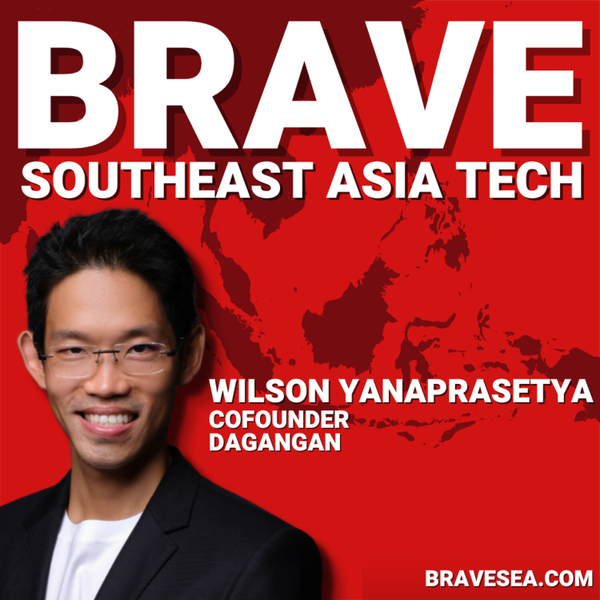

"My experience at Northstar gave me the ability to know what's working and what's not working. You know what you need to look at when you're running a business you know what to do when you are actually building a business or even scaling a business. Being on the investment side, when you run, it's very different. You can only see it from the above. You're not really doing things, running things. Right now, being in the operation, we actually have to drive the goods ourselves and talk to our customers ourselves. We have to negotiate. We have to figure out what happens if let's say the company cannot meet the demand that is out there. There are many different moving pieces that are not just theoretical, but it’s actually very different, especially in Indonesia, where there are 83,000 villages, 83, 000 different personalities different cultures, and different behaviors. You cannot just put one bullet that fits everything." - Wilson Yanaprasetya
"We know what's the problem, we just didn’t know how to solve it. It has been there for many years. So, we did trial and error. Initially, we were not doing daily necessities, we started selling electronics and we found out that it didn’t work. More than 90 percent of the spending of the people in Tier 3, and Tier 4 areas are actually on dairies and shelves, and mostly fast-moving consumer goods, and the issue is that the supply of those goods was not consistent. I couldn’t find my mocha-flavored ice cream in Banyuwangi. We wanted to solve it. We wanted to increase the availability, and when you do that you’re not really cutting the value chain of the supply chain, of the way things are already running, but you're actually getting a new market. You're helping people to be able to get what they need fast, easy, and cheap. So that's basically how we do it." - Wilson Yanaprasetya
"If you want to build a better business model that can attract or go into the rural area on its own, from the financial perspective, it’s good because it's sustainable. We talked to customers, and to the suppliers, and heard them say that without Dagangan, they wouldn’t be able to be where they are today. We’re able to provide not only cheaper goods, but we’re also able to keep it sustainable, closing that demand gap and helping in the area’s economic growth and well-being. Not many of us actually have the luxury. I have to admit I'm privileged to be able to go to school abroad even though I'm from Banyuwangi, but at the same time, when you look into the people in the rural areas, if you can actually give them something more than just income, like the ability for them to provide for their families and to increase the number of production that they have in the field, it gives me a different type of happiness." - Wilson Yanaprasetya
In this episode, Jeremy Au speaks on the warung tech deep dive, bridging social gaps, and a different kind of happiness.
Keywords: Wilson Yanaprasetya, Warung Tech Deep Dive, Bridging Social Gaps, A Different Kind of Happiness, Indonesia, Founder Story